Quaker Ridge Golf Club – Played Fall 2024
- Rankings: Golf Digest #69, Golf Magazine #39
- Location: 146 Griffen Avenue, Scarsdale, New York
- Year: 1918
- Original Architect: A.W. Tillinghast
- Additional Work By: John Duncan Dunn, George Low, Tom Winton, Robert Trent Jones, & Gil Hanse
- Course Access: Private
- Walking Rules: Carts & Caddies Available
Score Card Information:
- Black: 7,023 yards, Par 70, 74.9 Rating/143 Slope
- Black/Blue: 6,769 yards, Par 70, 73.7 Rating/141 Slope
- Blue: 6,456 yards, Par 70, 72.3 Rating/138 Slope
- Blue/White: 6,288 yards, Par 70, 71.5 Rating/136 Slope
- White: 6,163 yards, Par 70, 70.9 Rating/135 Slope
- White/Green: 5,940 yards, Par 70, 69.7 Rating/133 Slope
- Green: 5,611 yards, Par 70, 68.3 Rating/131 Slope
- Green/Gold: 5,328 yards, Par 70, 66.9 Rating/128 Slope
- Gold: 5,009 yards, Par 70, 65.3 Rating/126 Slope
After an August trip to the area that was plagued by rain, I got back up to NYC to see Quaker Ridge Golf Club. A welcome development from the rescheduling was that I got introduced to a member of the club. That meeting provided me with some playing partners and a very enjoyable day. When I was younger, I embraced solo rounds. I’ll still play them now but I much prefer having someone join me.
Quaker Ridge has a long history in golf. The history dates back to the 1910s when the existing course was purchased out of financial distress and reconstituted as a new country club. As many courses of this era evolved, holes were added to get to the full 18-hole layout. Other changes have occurred over the years but the layout remains without significant deviations from the original after what was deemed a “sympathetic restoration” by Gil Hanse.
Quaker Ridge also has a history in golf competitions. It has hosted the big events for the Metropolitan area including 3 Met Opens, 3 Met Amateurs, and 3 Met PGA Championships. In addition, the 1997 Walker Cup and 2018 Curtis Cup have visited the club. Some of the names that have played the course include Gene Sarazen, Paul Runyan, Tommy Armour, Walter Hagen, Johnny Farrell, Henry Vardon, and Ted Ray.
With that brief history lesson, let’s check out Quaker Ridge!
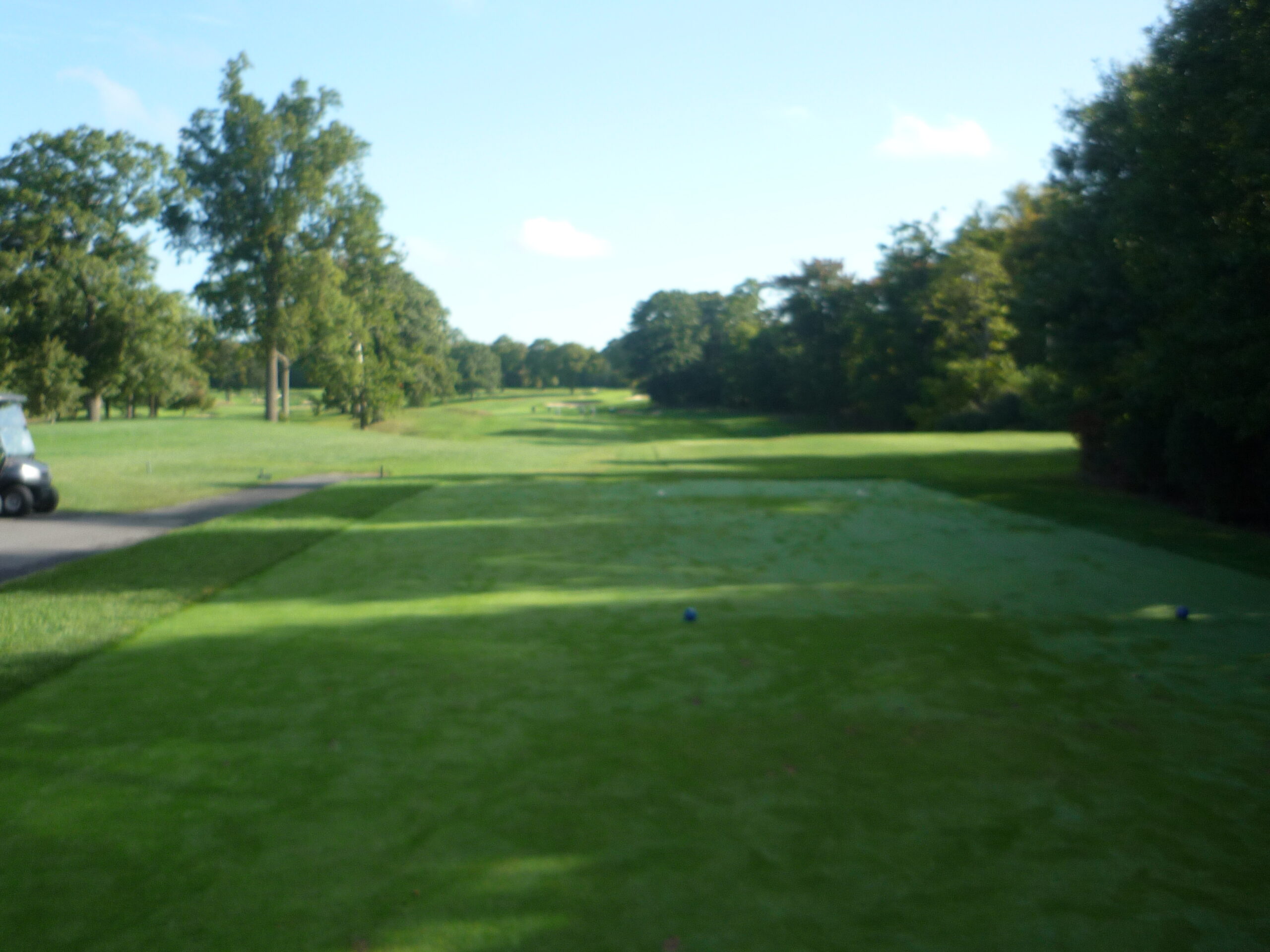
Hole 1 – 510 yards – Par 5
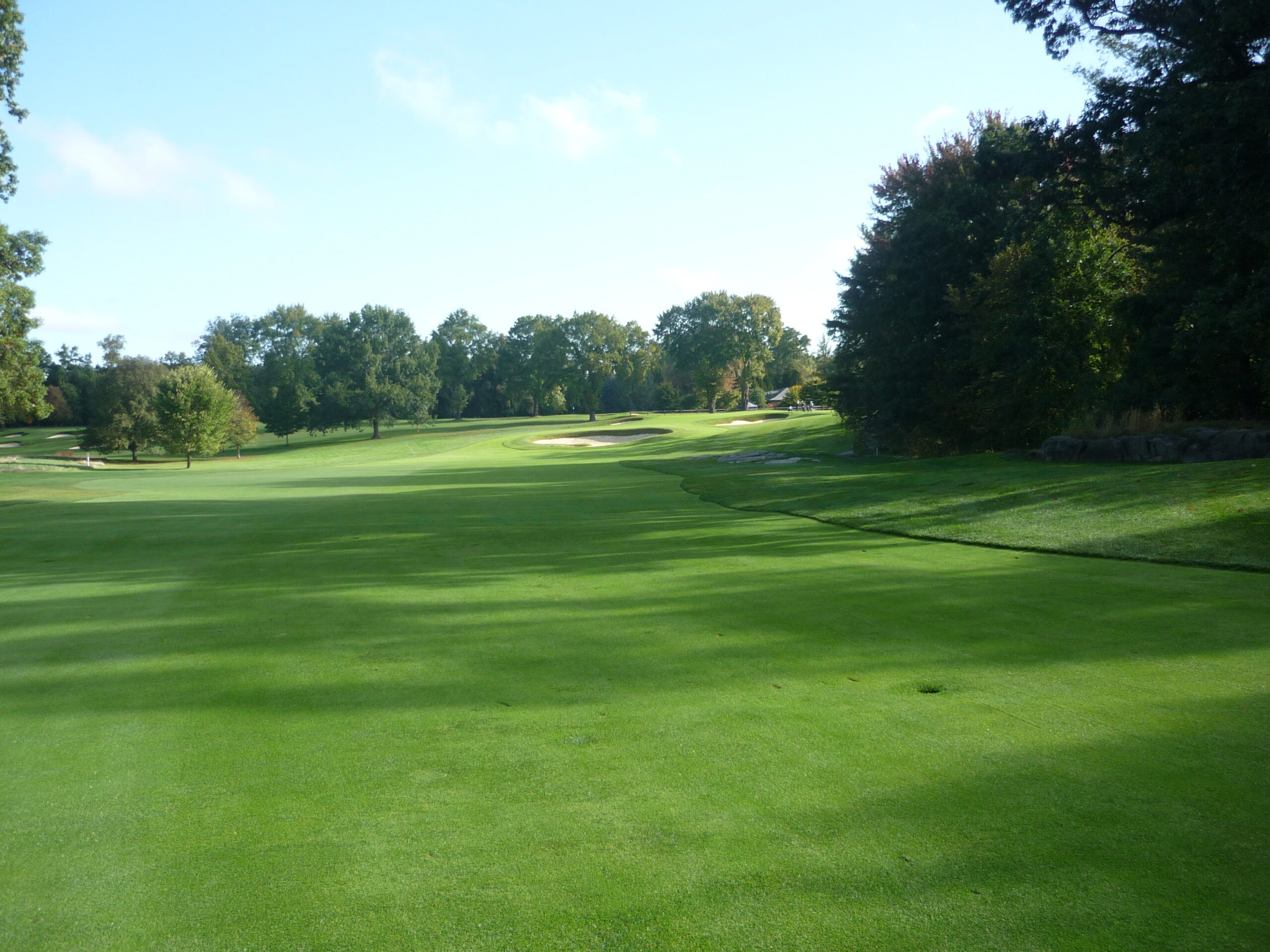
As is tradition, I got a blurry photo to start. It might be time to pivot to the phone or upgrade the digital camera 😂. On this hole, you have a generous fairway for the drive. With the second shot, you have to navigate some fairway bunkers if you’re laying up.
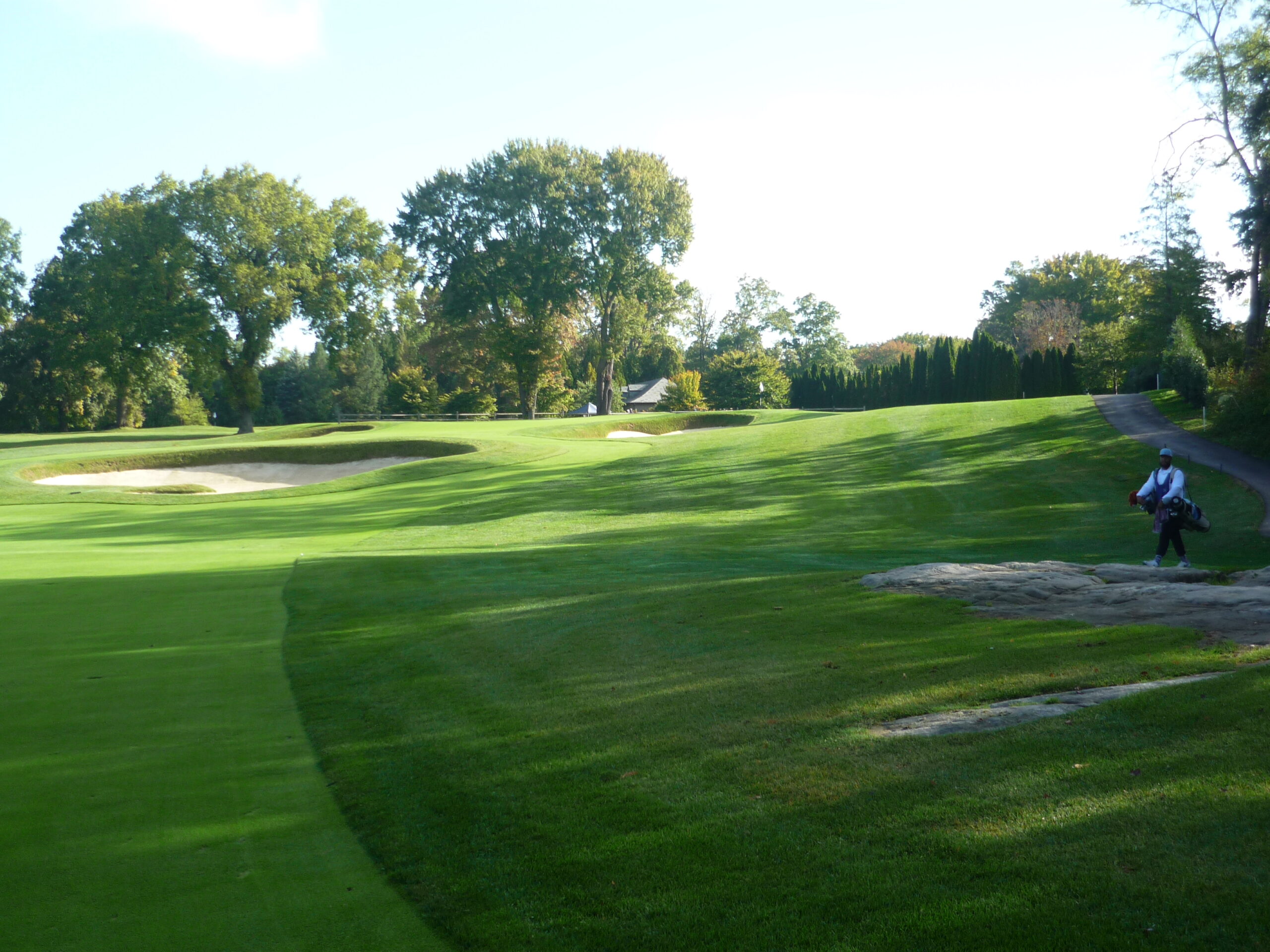
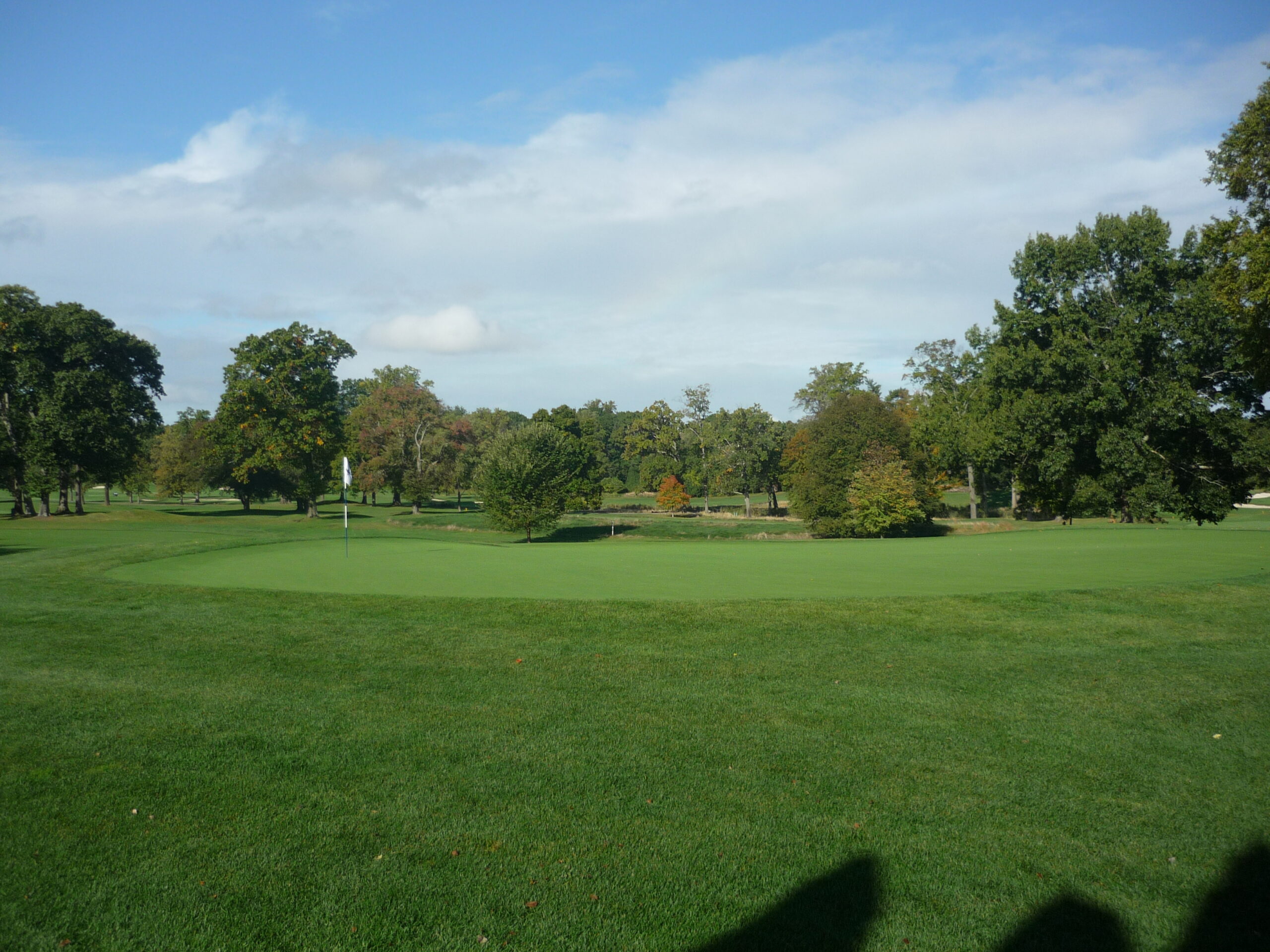
It’s best to avoid the front right bunker if the pin is on the right side. It gets difficult over there with very little green to work with.
Hole 2 – 405 yards – Par 4
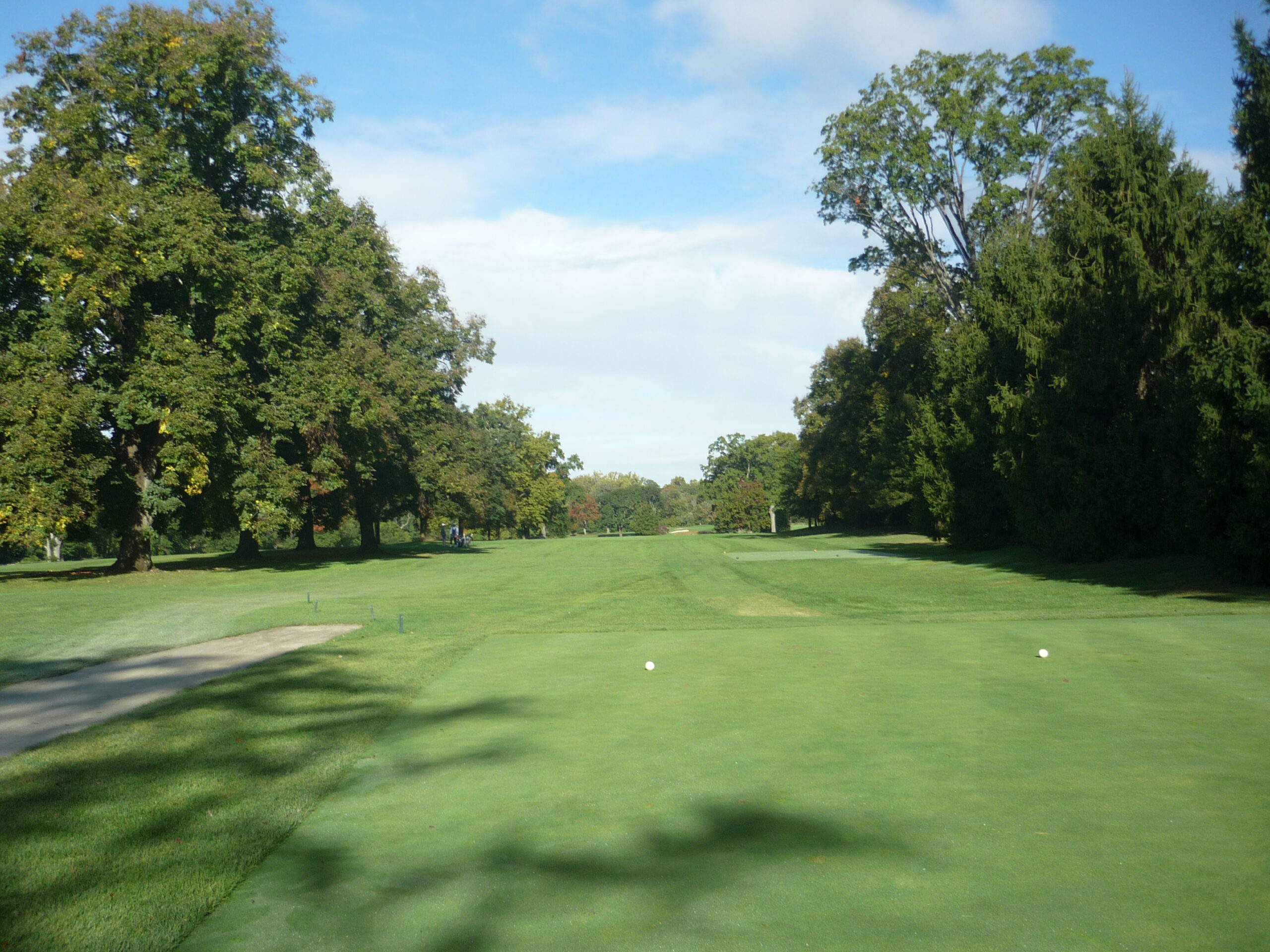
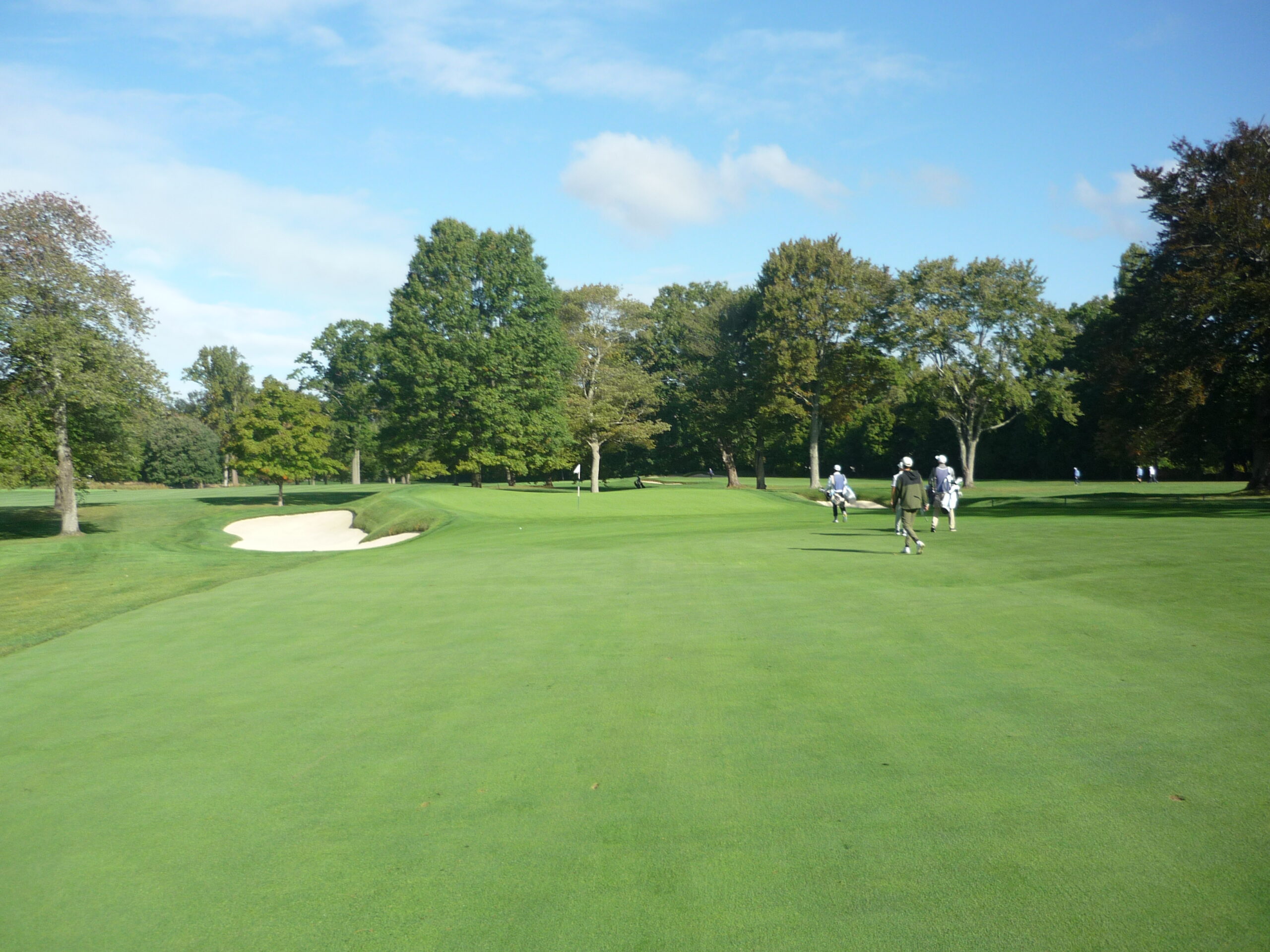
I had heard that right is a bad miss for the first eight holes at Quaker Ridge, and that seemed to be true. However, there are trees and bunkers down the left here, so you still need to be accurate.
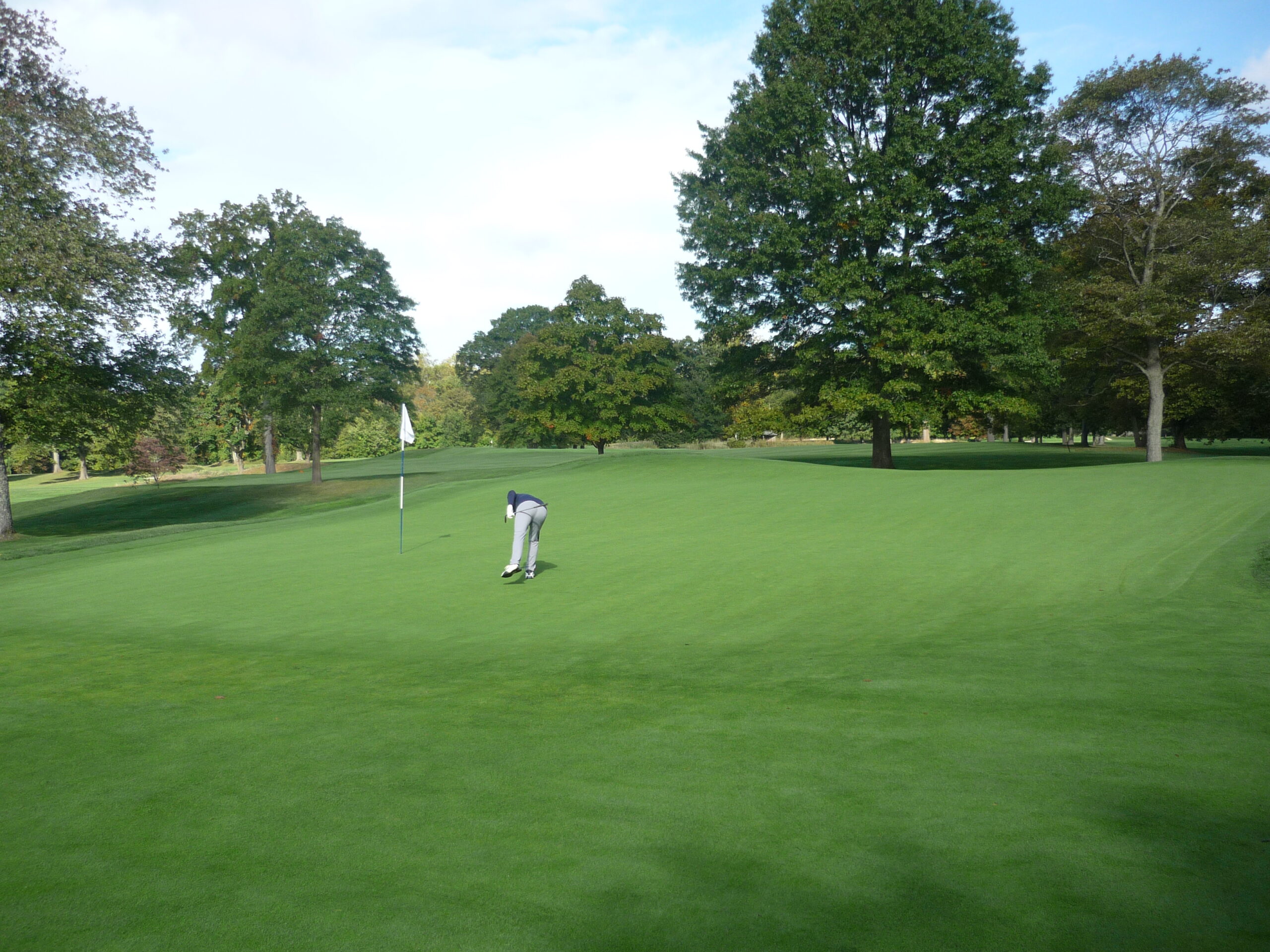
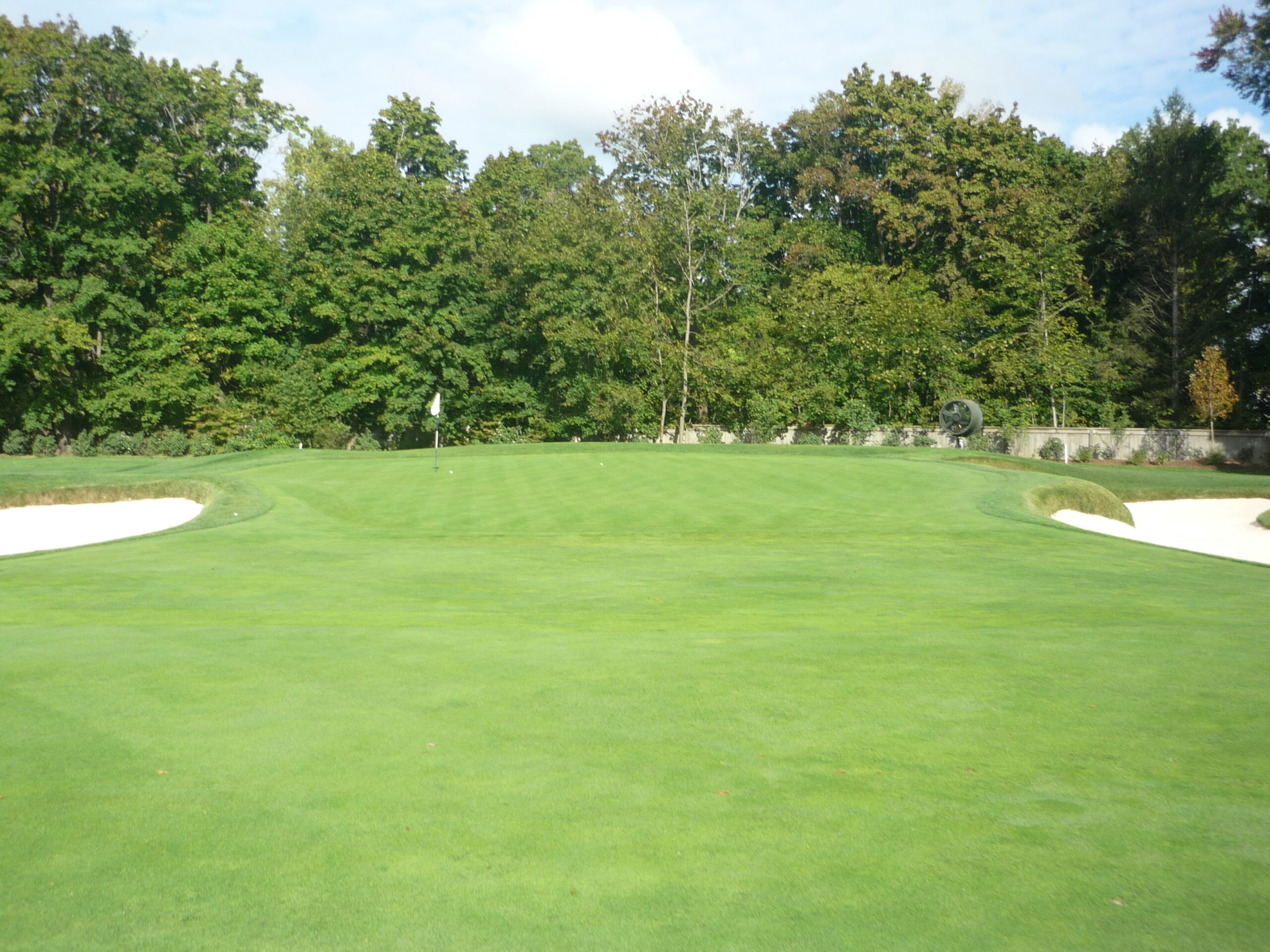
The hole doglegs right to reveal this sloping green guarded on each side by sand.
Hole 3 – 424 yards – Par 4
Many players will be able to carry the bunker on the left. Combining that with a green that slopes from back right to front left, the left-center of the fairway is a great result.
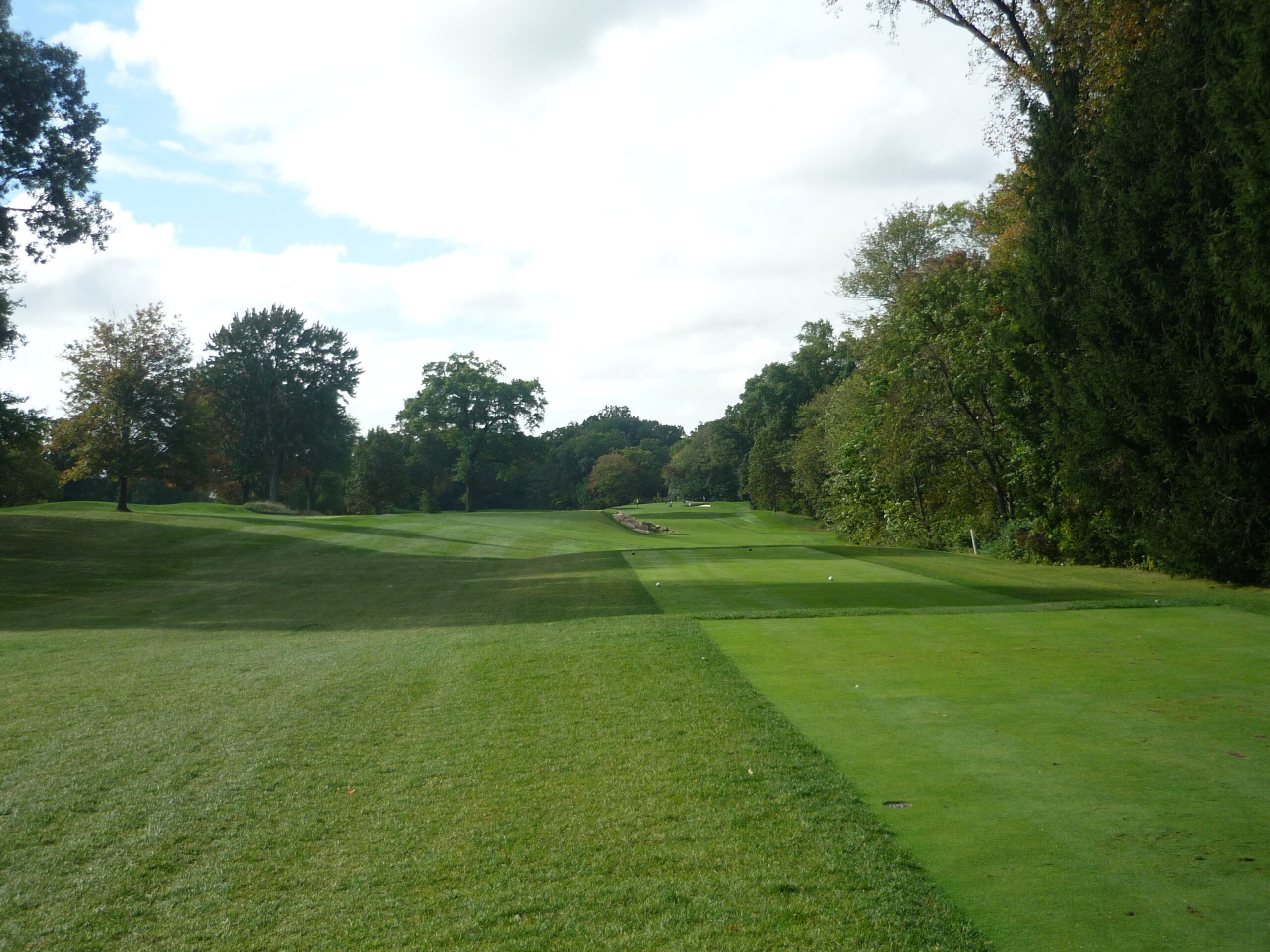
Hole 4 – 408 yards – Par 4
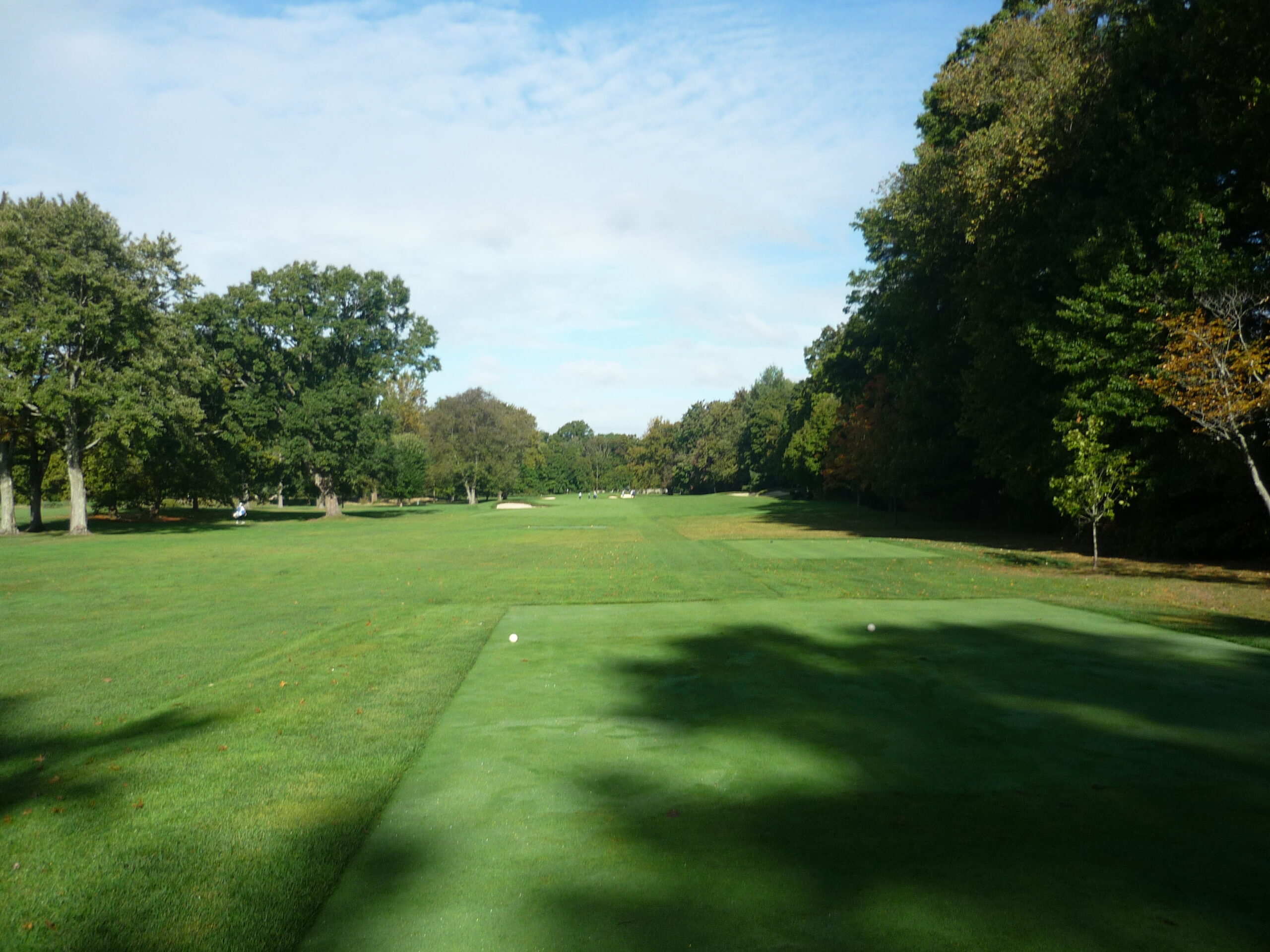
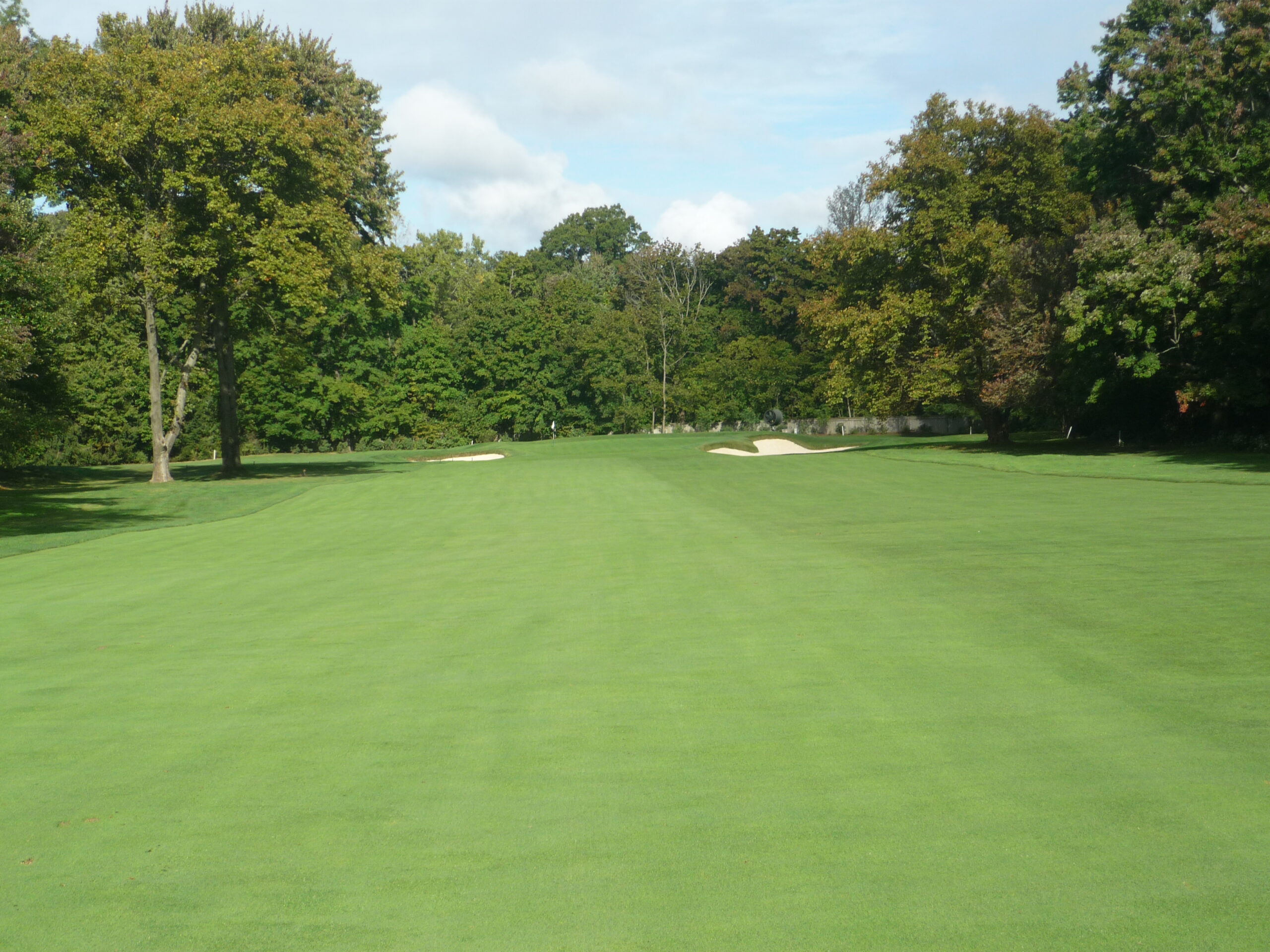
The string of demanding par fours continues here. Rough cuts in on the left side, so the rock outcropping you can see below is a good line. Again, missing to the right has disastrous results.
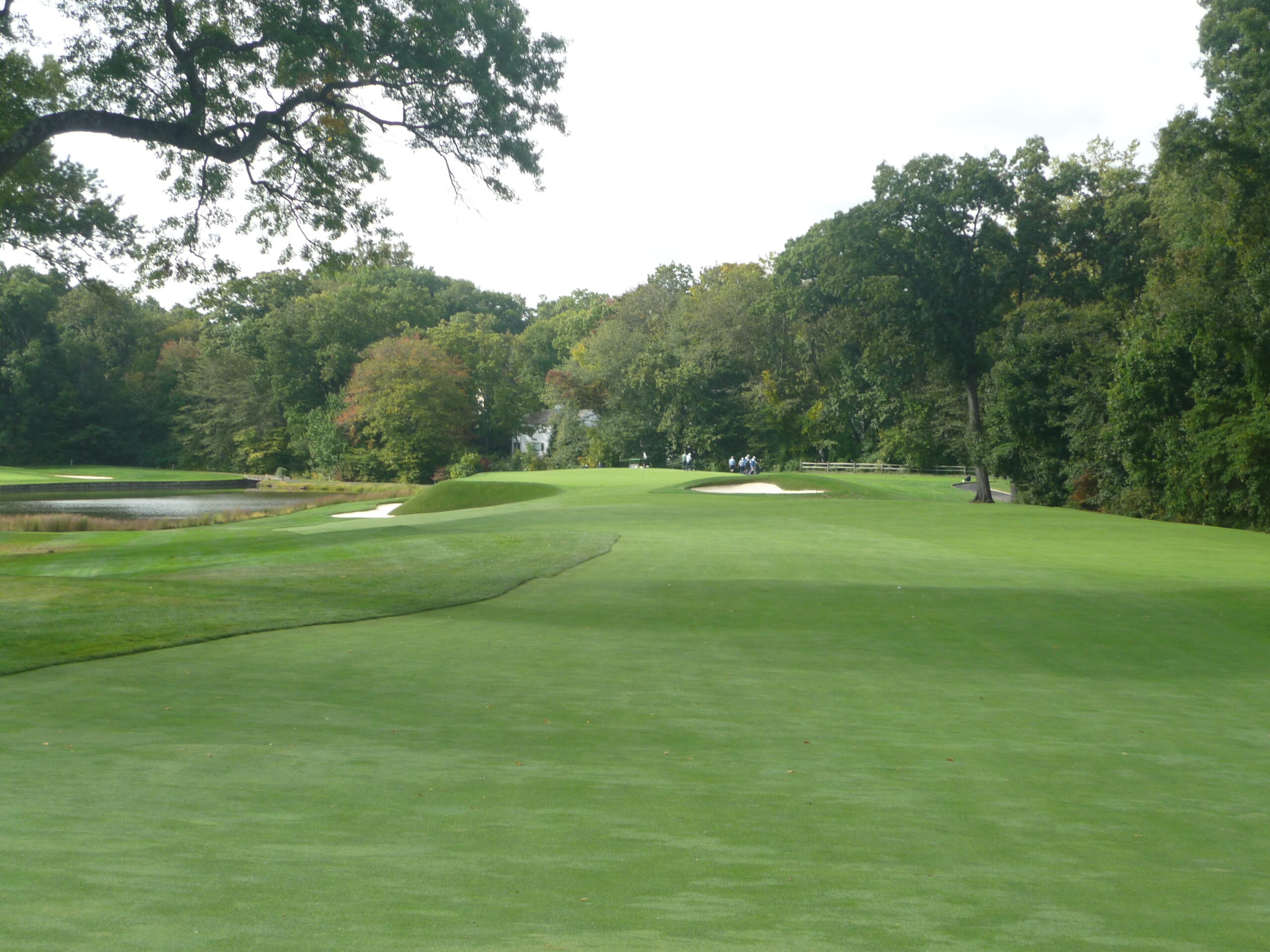
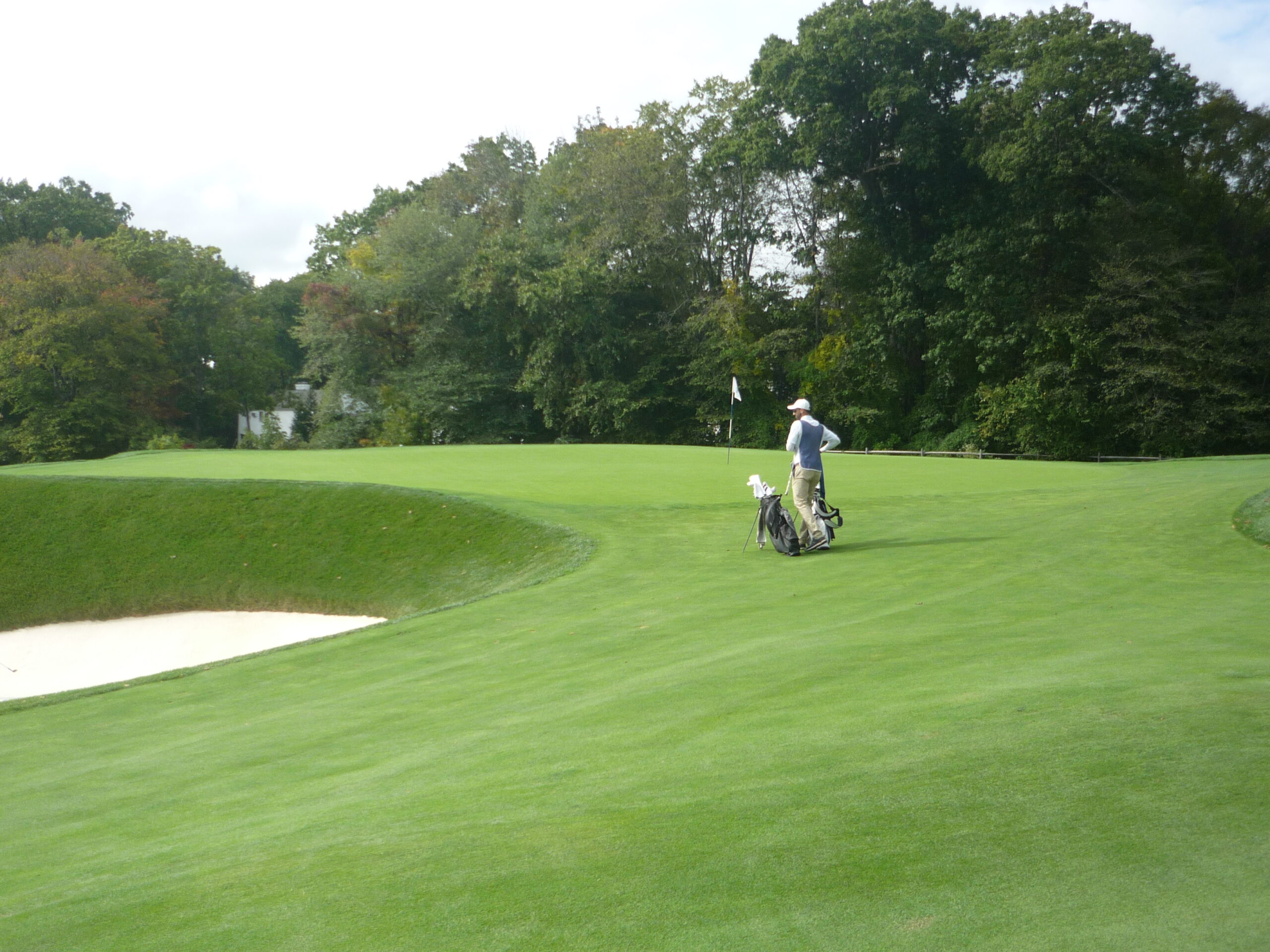
Take note of the drop-off on the left side down to the bunker. The scale is great to look at, but I’m not sure you’d want to be down there hitting a shot.
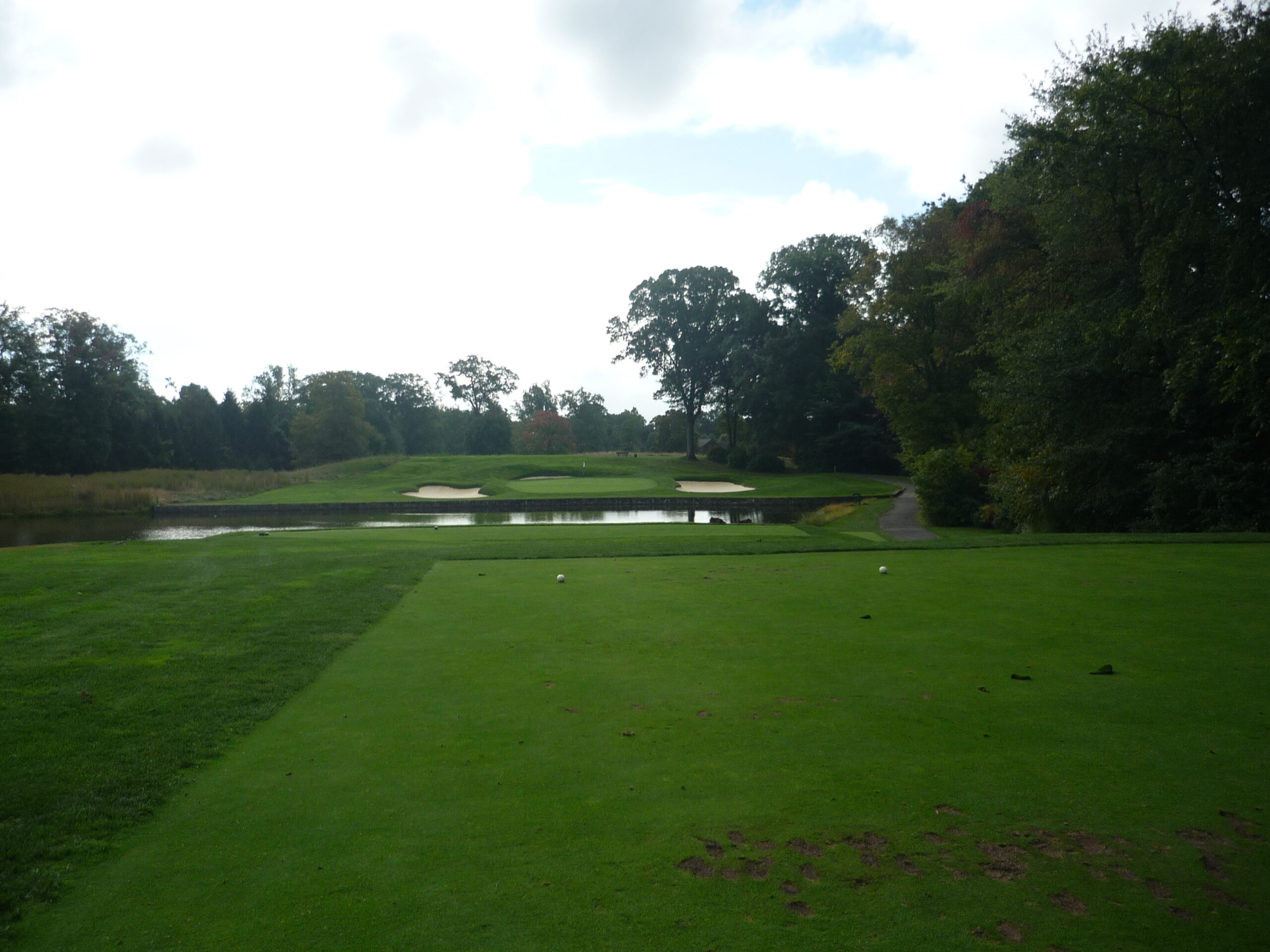
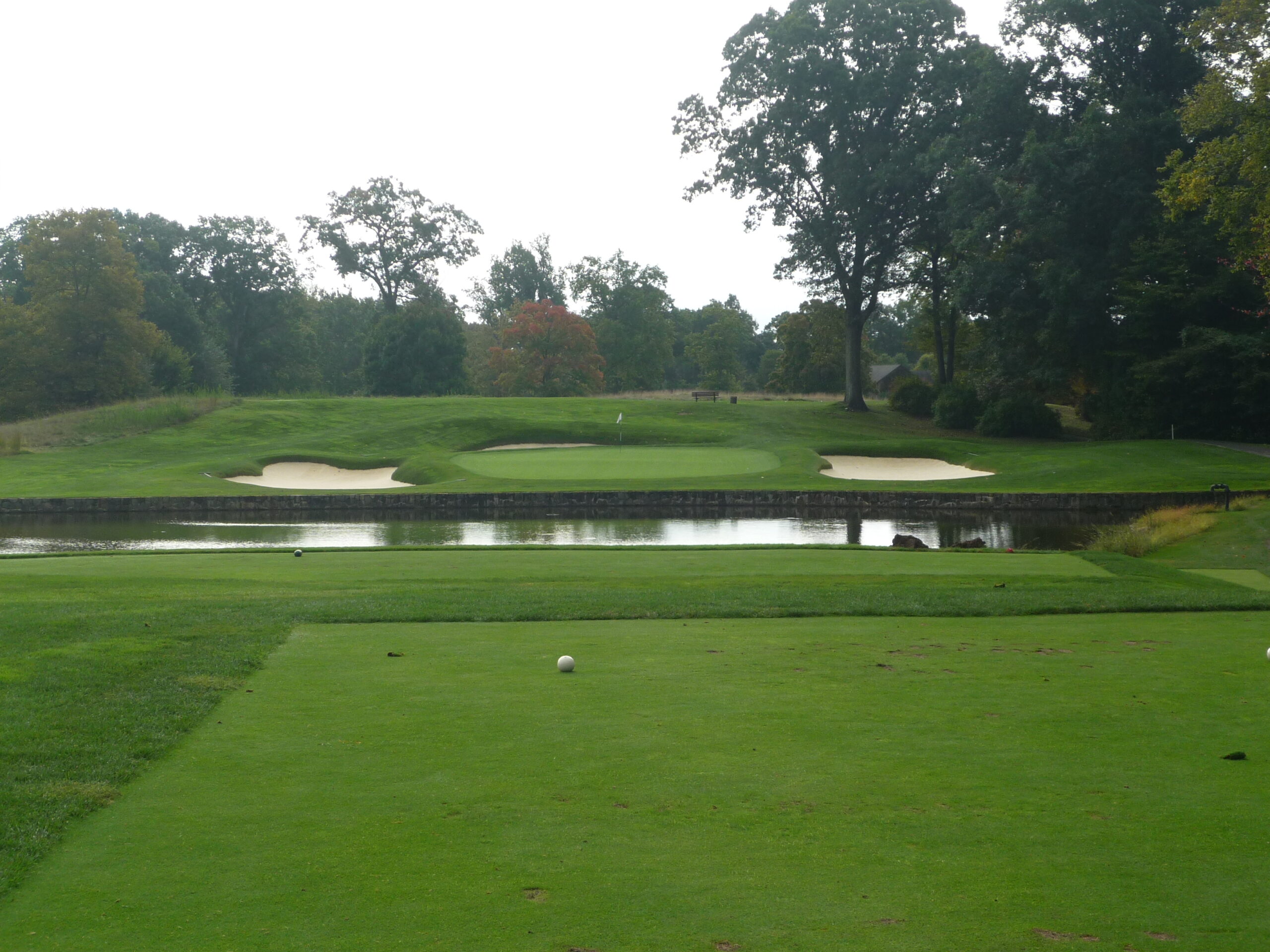
Hole 5 – 151 yards – Par 3
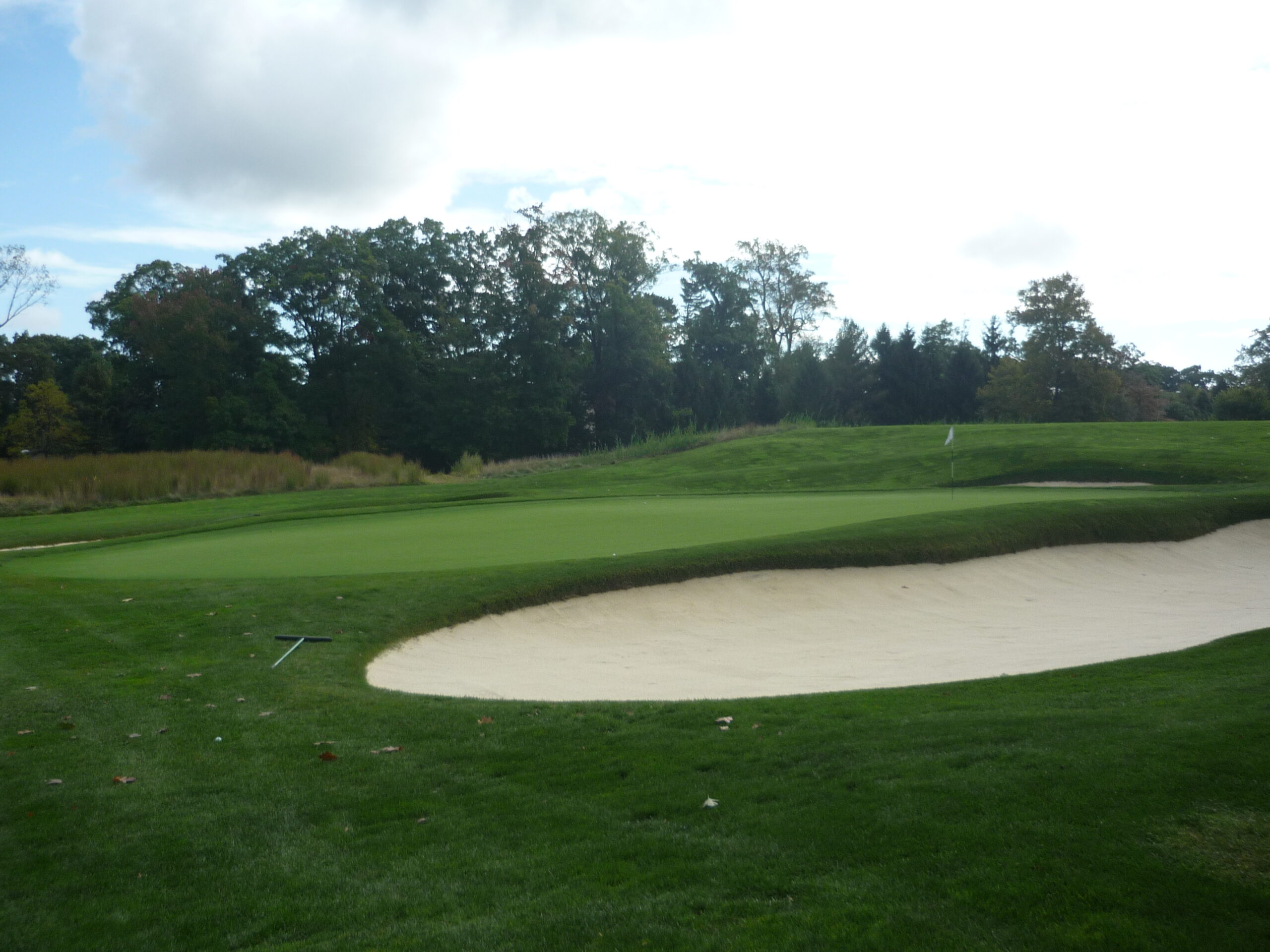
The only pond on the course at Quaker Ridge guards the front of this green. There is room between the water and the green, though, so only very poor shots should find the hazard. A ridge bisects the green, so you’ll want your distance control to be on point. Up and downs from the back bunker are exceedingly difficult.
Hole 6 – 434 yards – Par 4
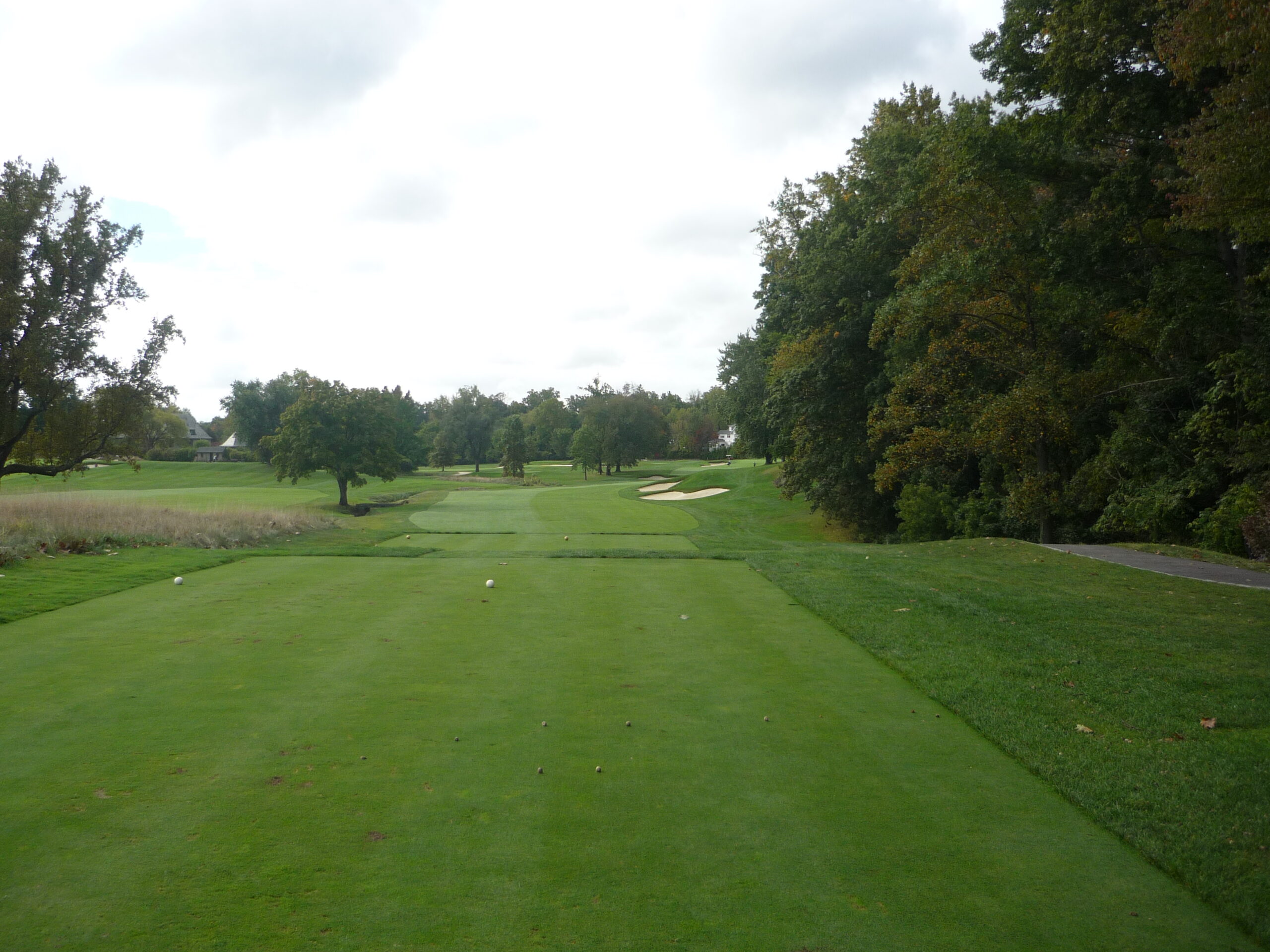
The direction of this hole is in contrast to the slope of the fairway. It was originally played as a par five, which makes sense when you see it. Fairway bunkers about 100 yards short of the green recall this past.
A creek up the left and the slope of the fairway call for a fade here. Longer players can challenge the right side of the fairway with a straight ball.
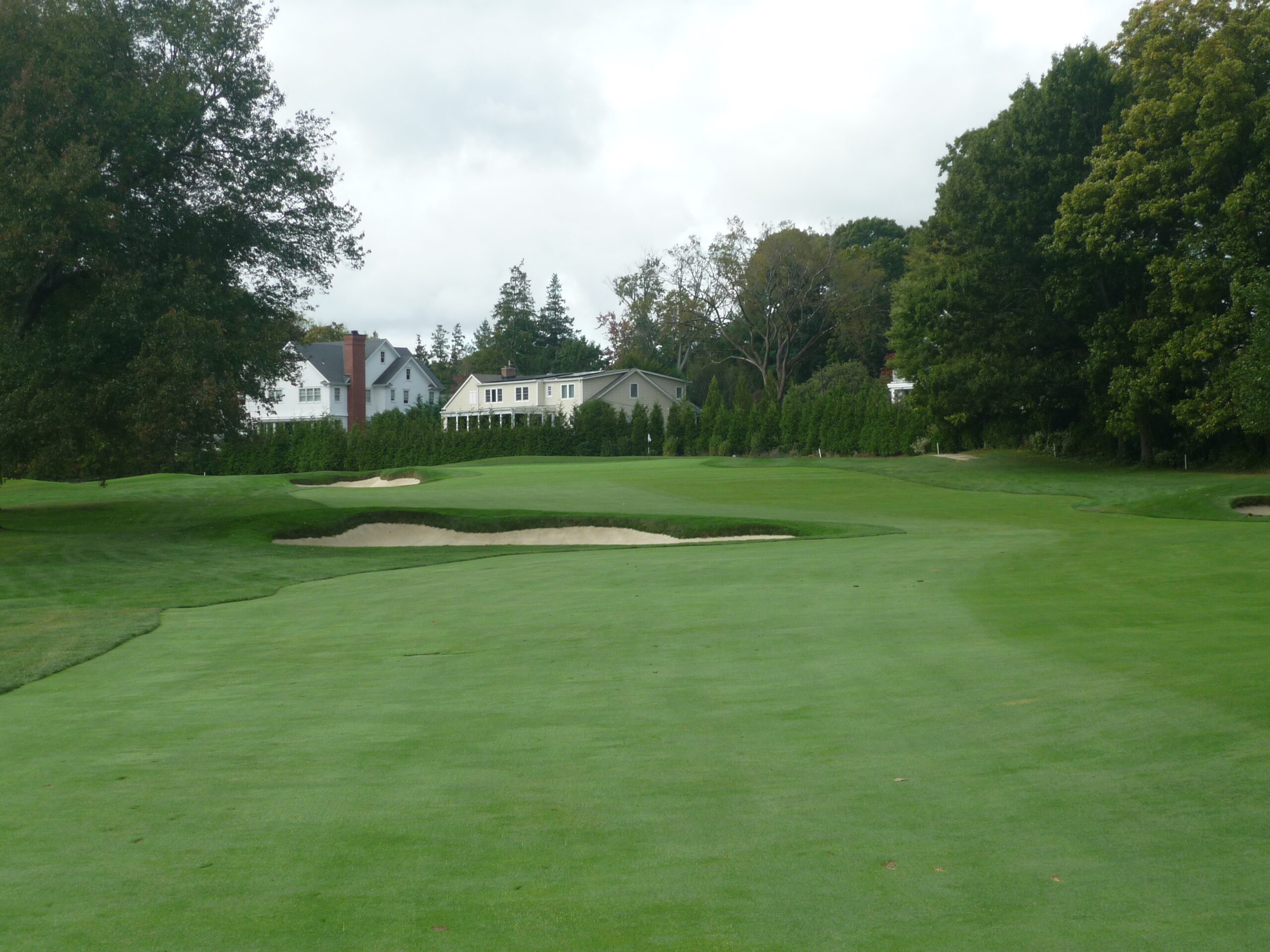
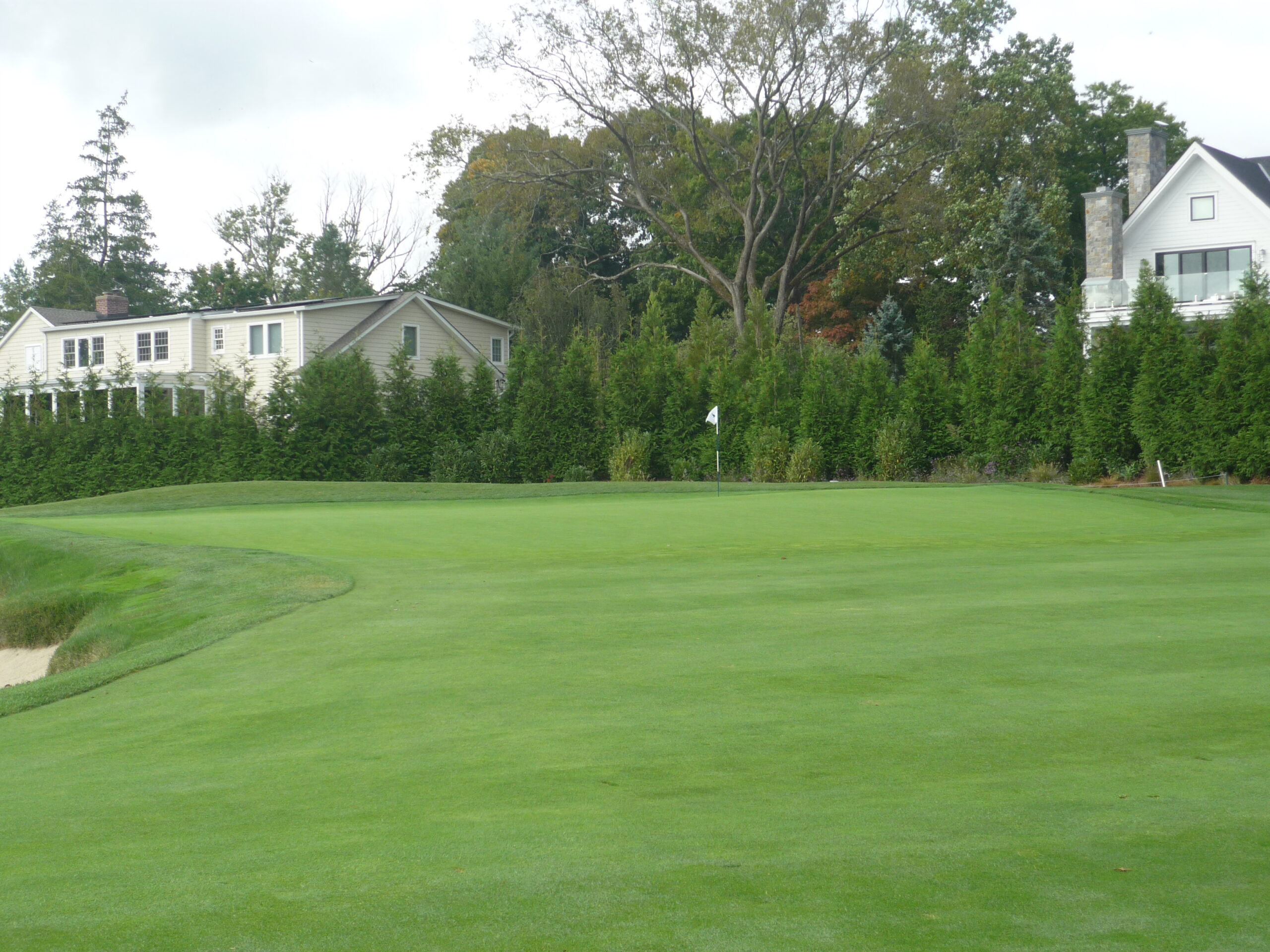
Shots to the right or long can get into quick trouble here. The green has ample slopes, making precision a requirement.
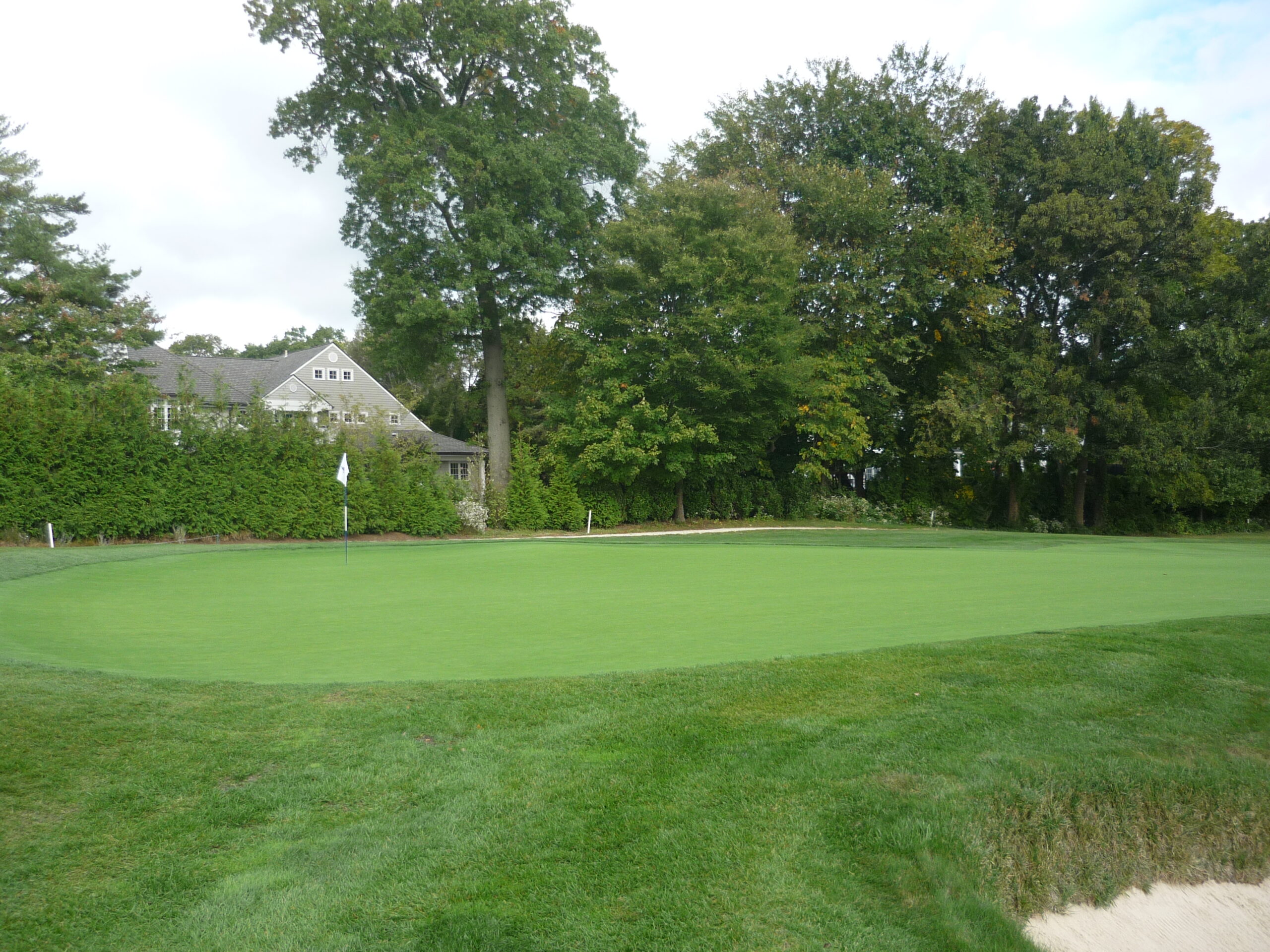
Hole 7 – 416 yards – Par 4
Power players can cut the corner on this dogleg right. That’s not my game, but you can get away with one on that side like I did.
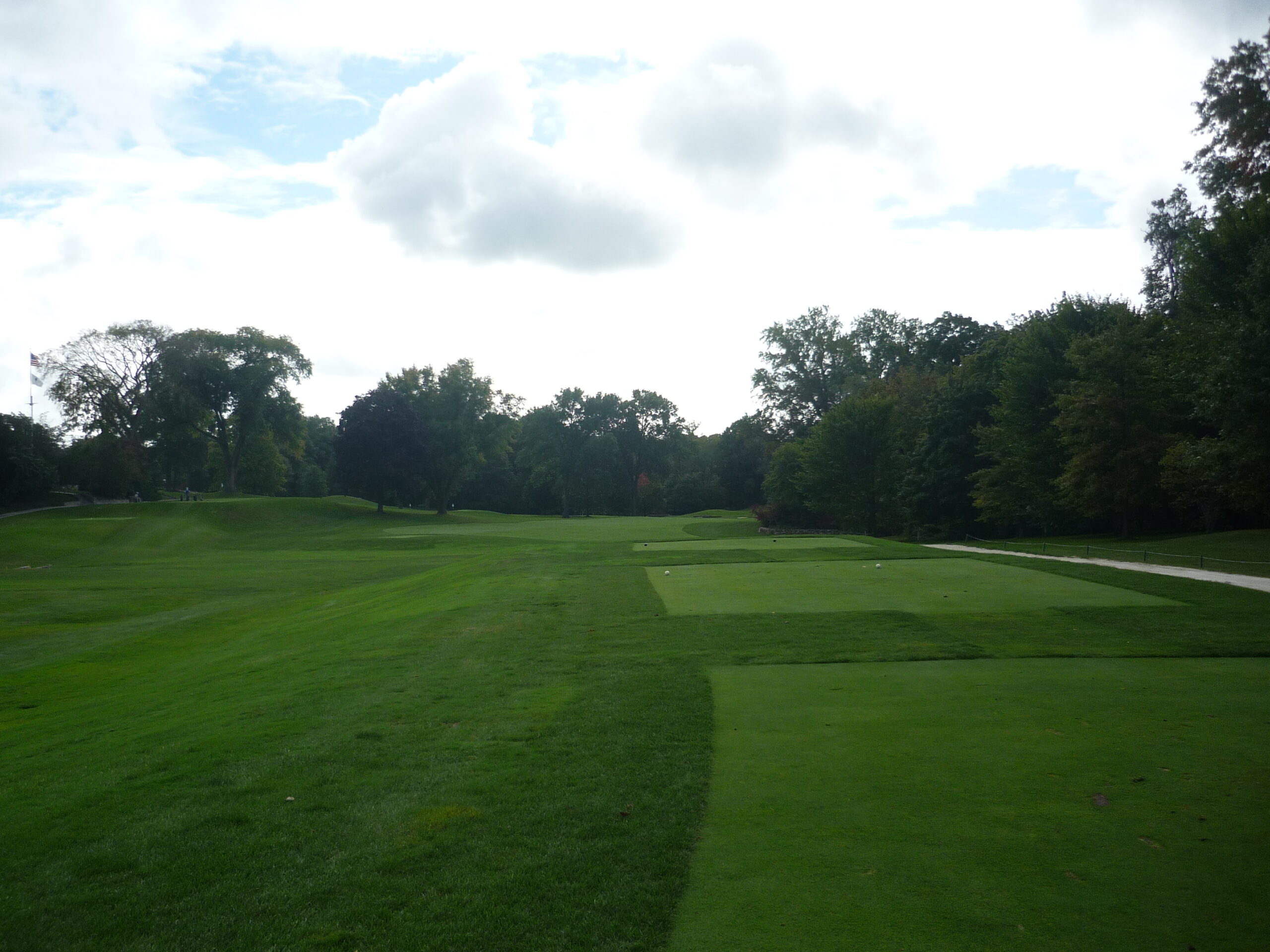
The elevated green has a false front that will repel shots missing a bit short.
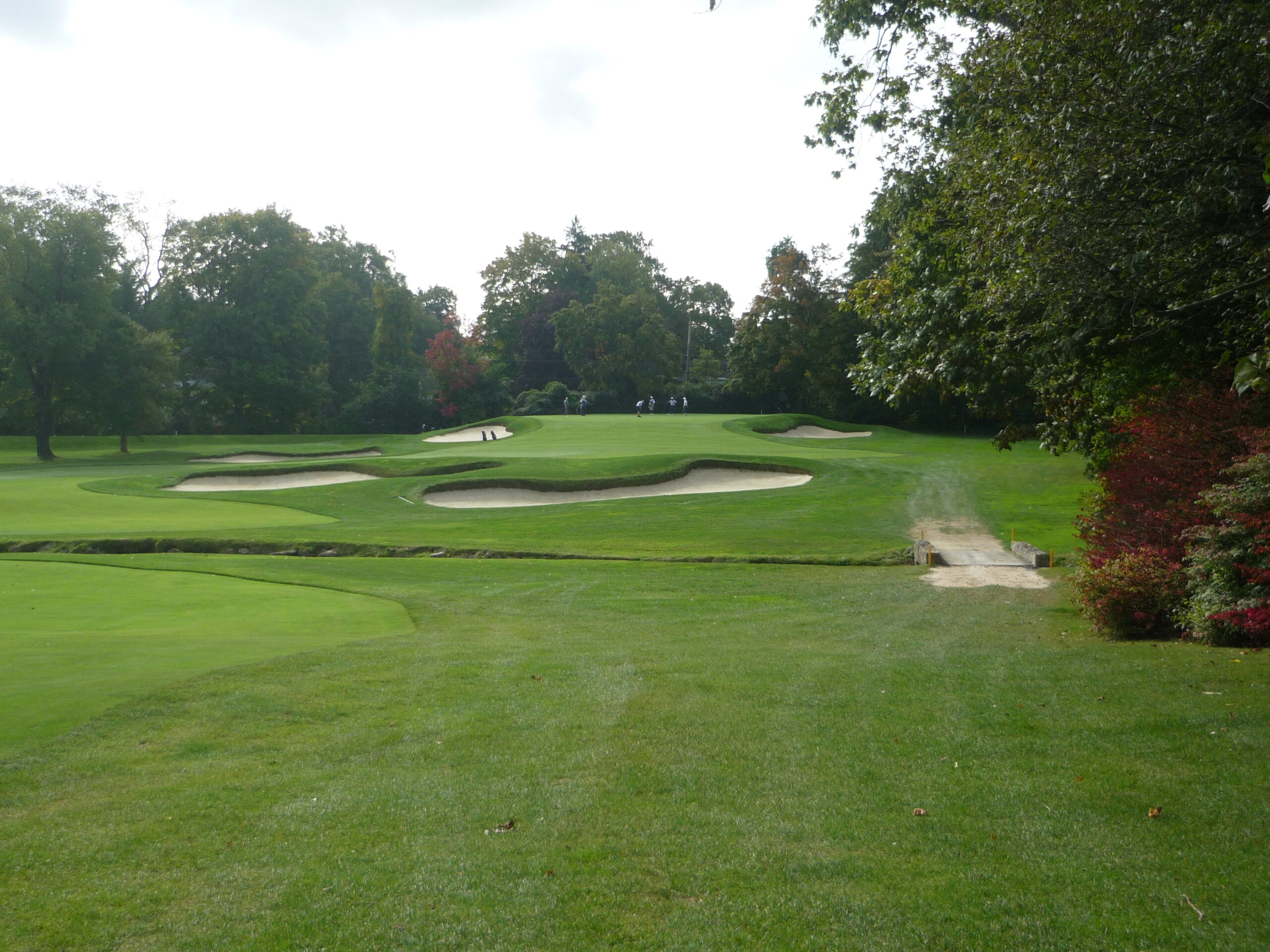
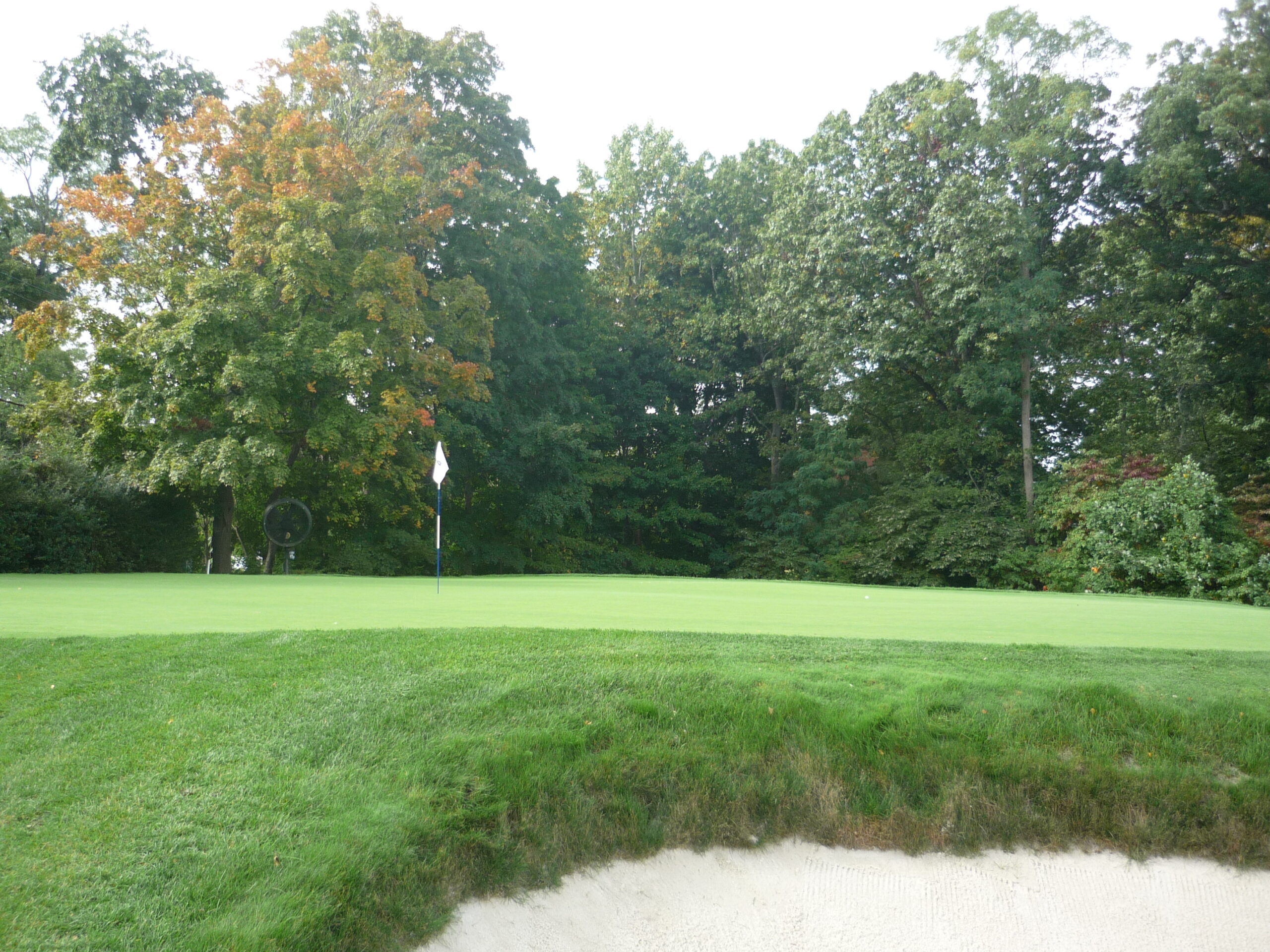
Hole 8 – 335 yards – Par 4
The mound is the eye-catching feature on this hole. If you can’t carry it, it forces a decision on which direction to go. Shots to the left have to deal with a bunker on the approach, and shots to the right flirt with the OB on that side.
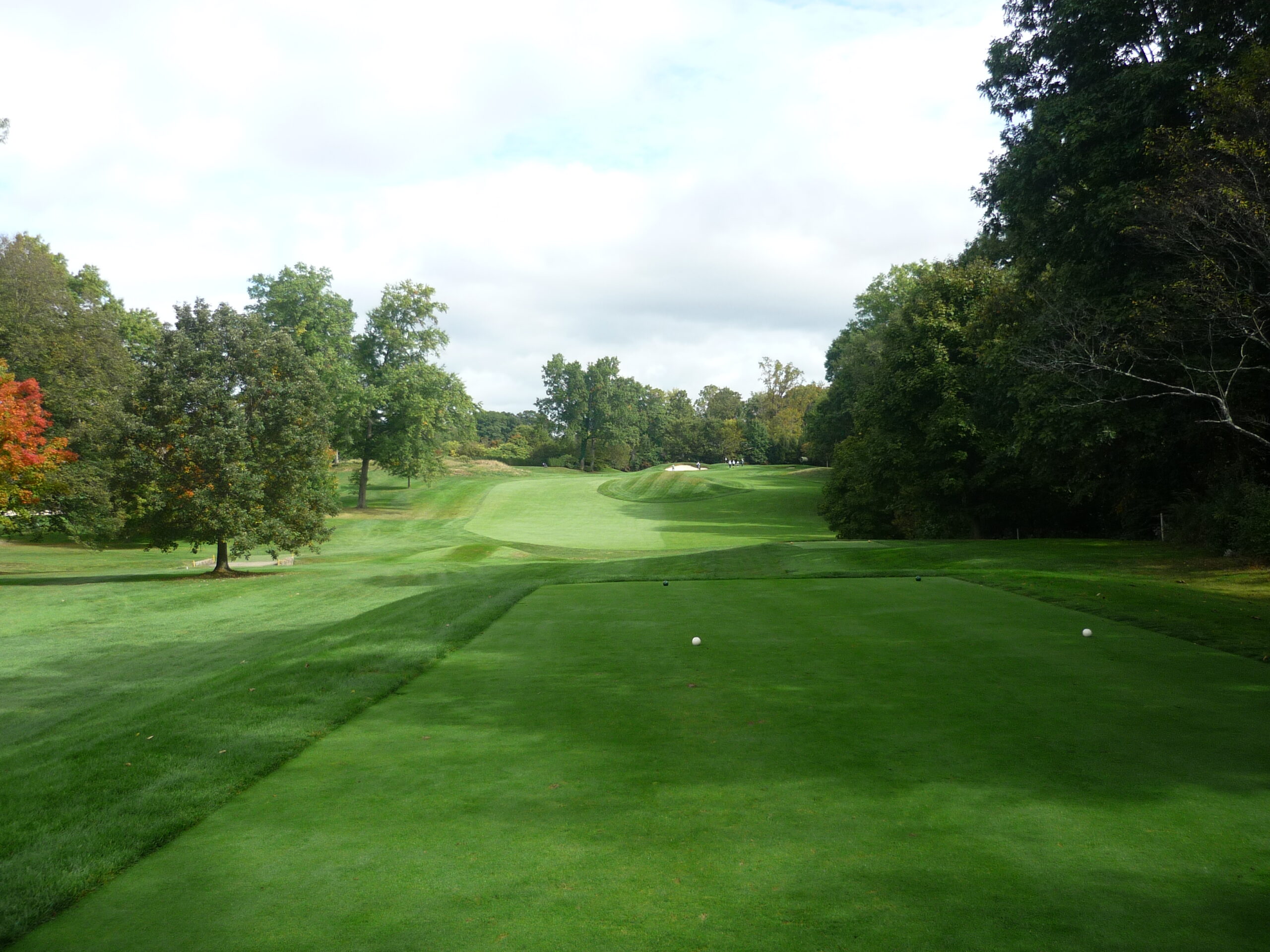
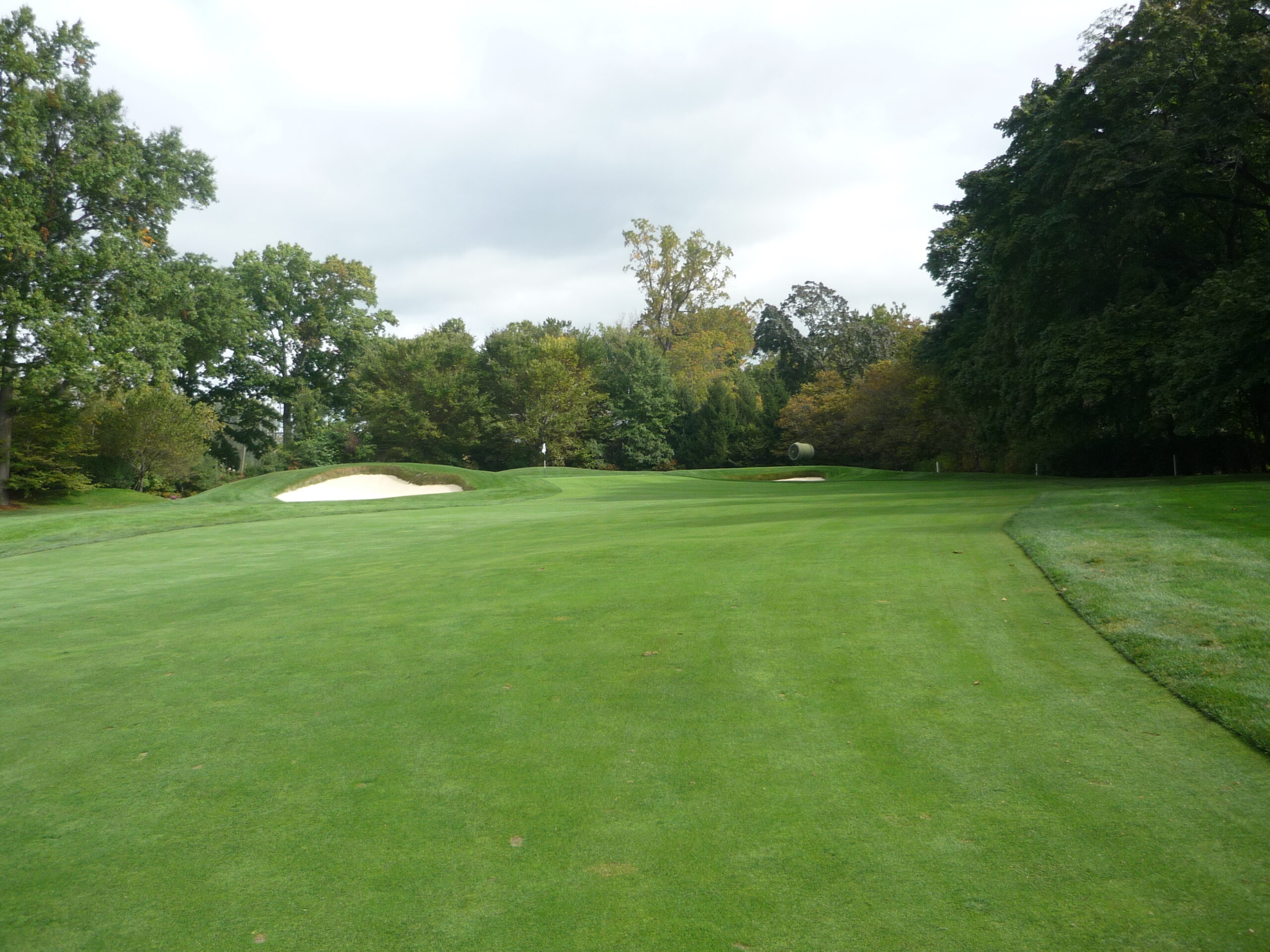
While this green is flatter than the ones we’ve seen so far, it is on the smaller side.
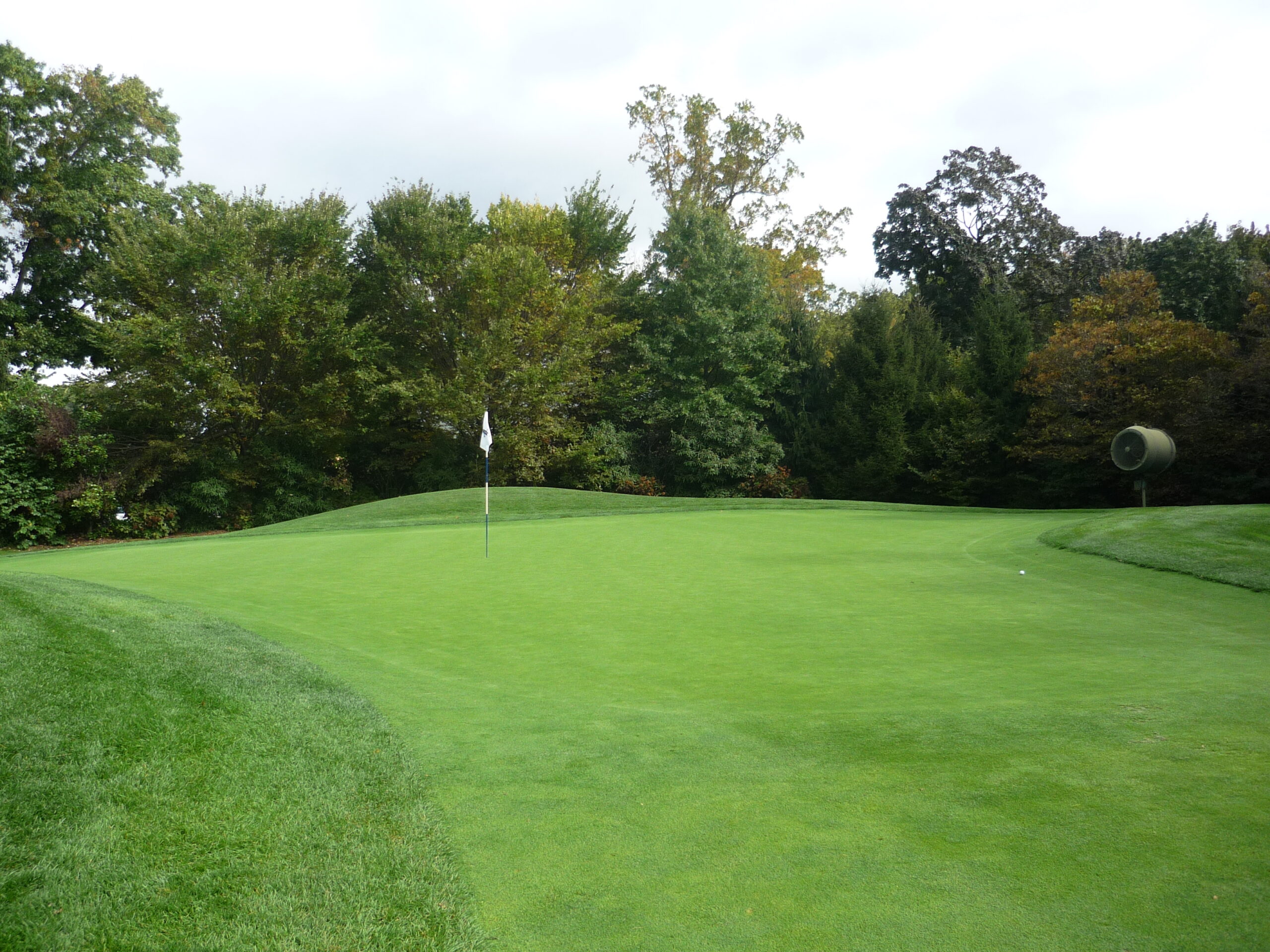
Hole 9 – 143 yards – Par 3
A first glance at the scorecard will show this as the shortest par three on the course, but seeing the hole illuminates the challenge. This is a Redan-inspired hole, but it lacks the distinct shape and slope characteristic of that template. If you find the green birdies can be had, but putting is no easy feat. Chips around this green are quite difficult. The large tree behind the green to the right was one of the remaining “aiming trees” that Tillinghast installed.
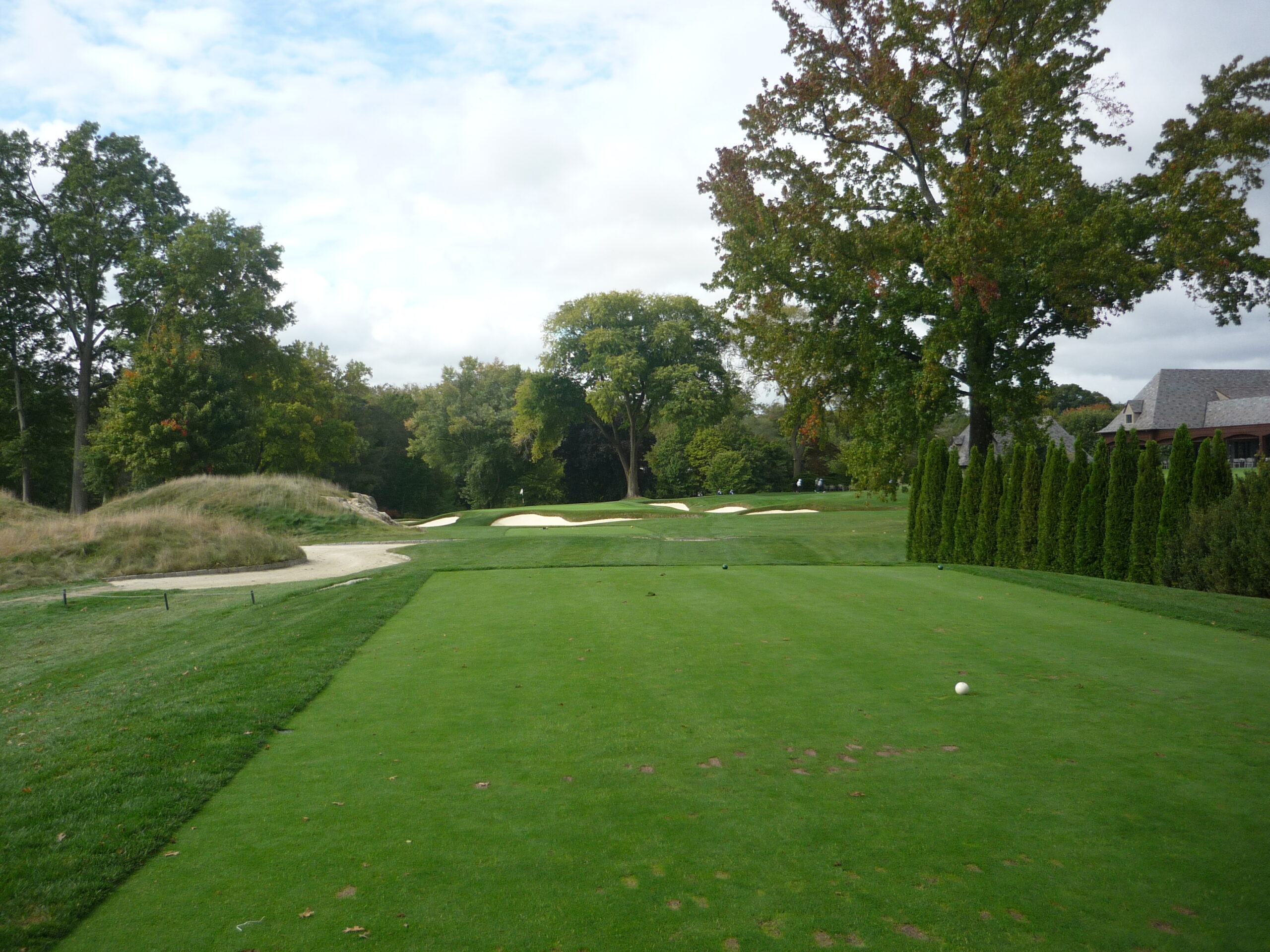
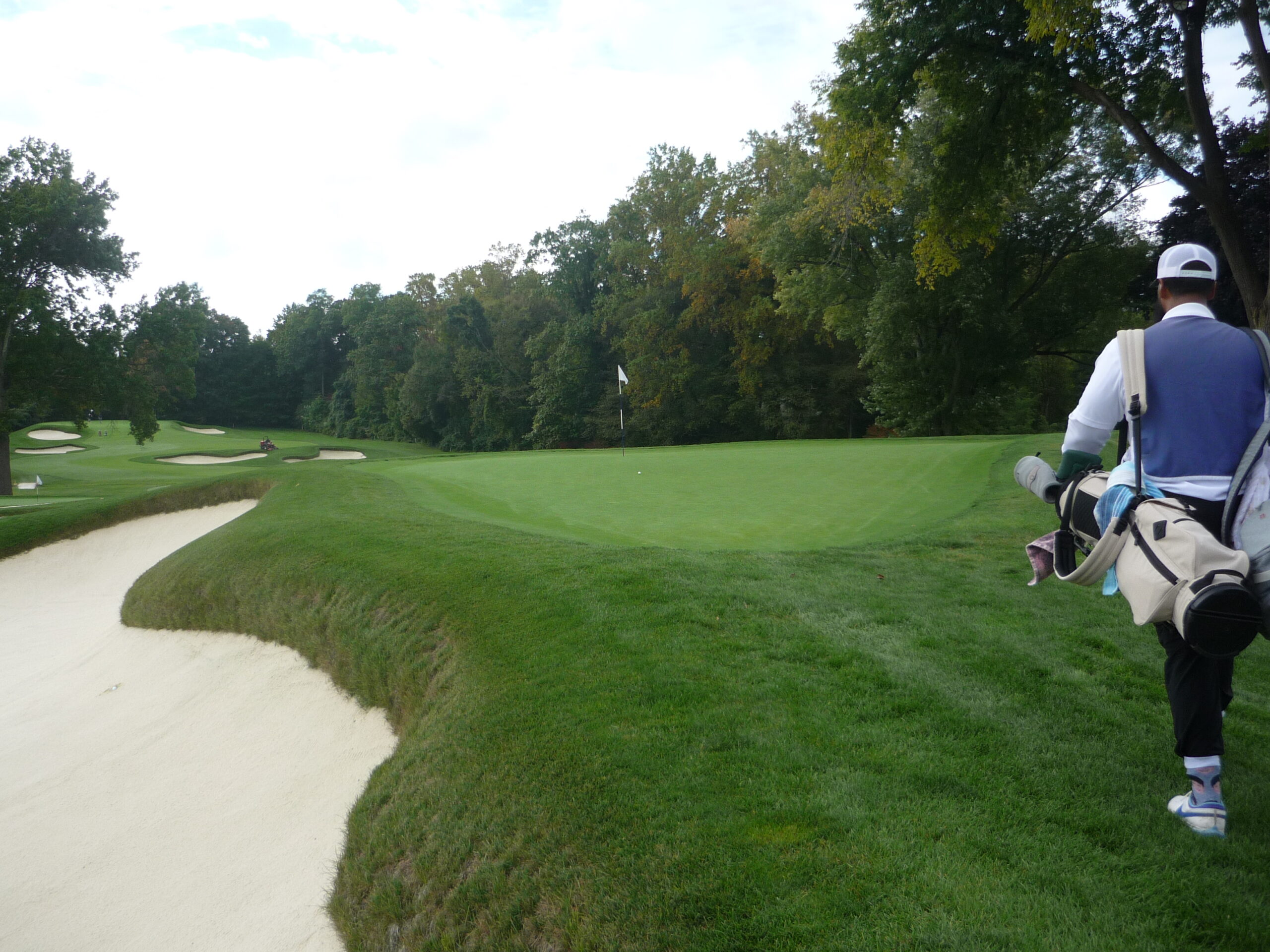
Hole 10 – 186 yards – Par 3
Back-to-back par threes here, but they are quite different. Compared to the previous iteration, this one is longer with a larger green.
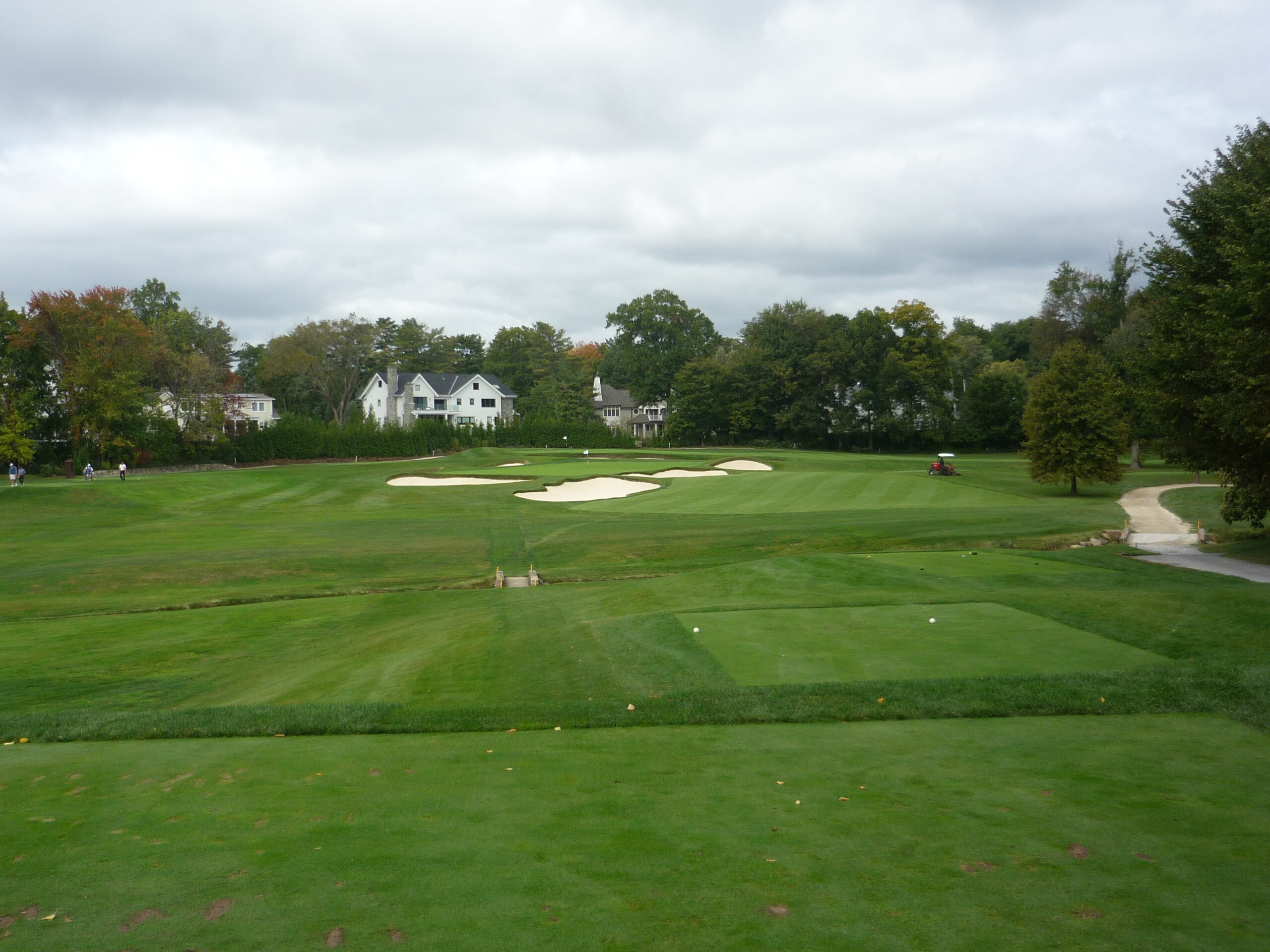
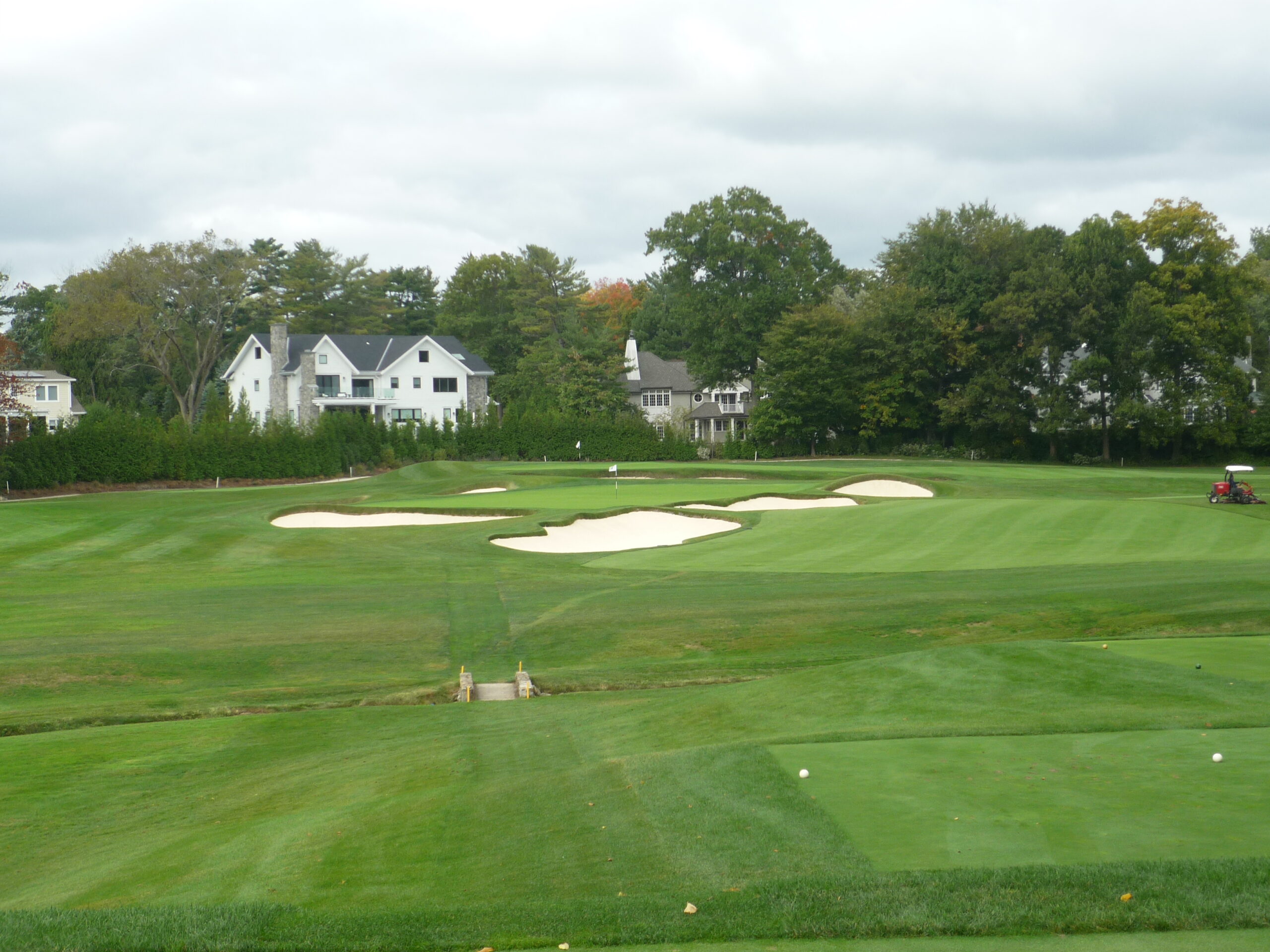
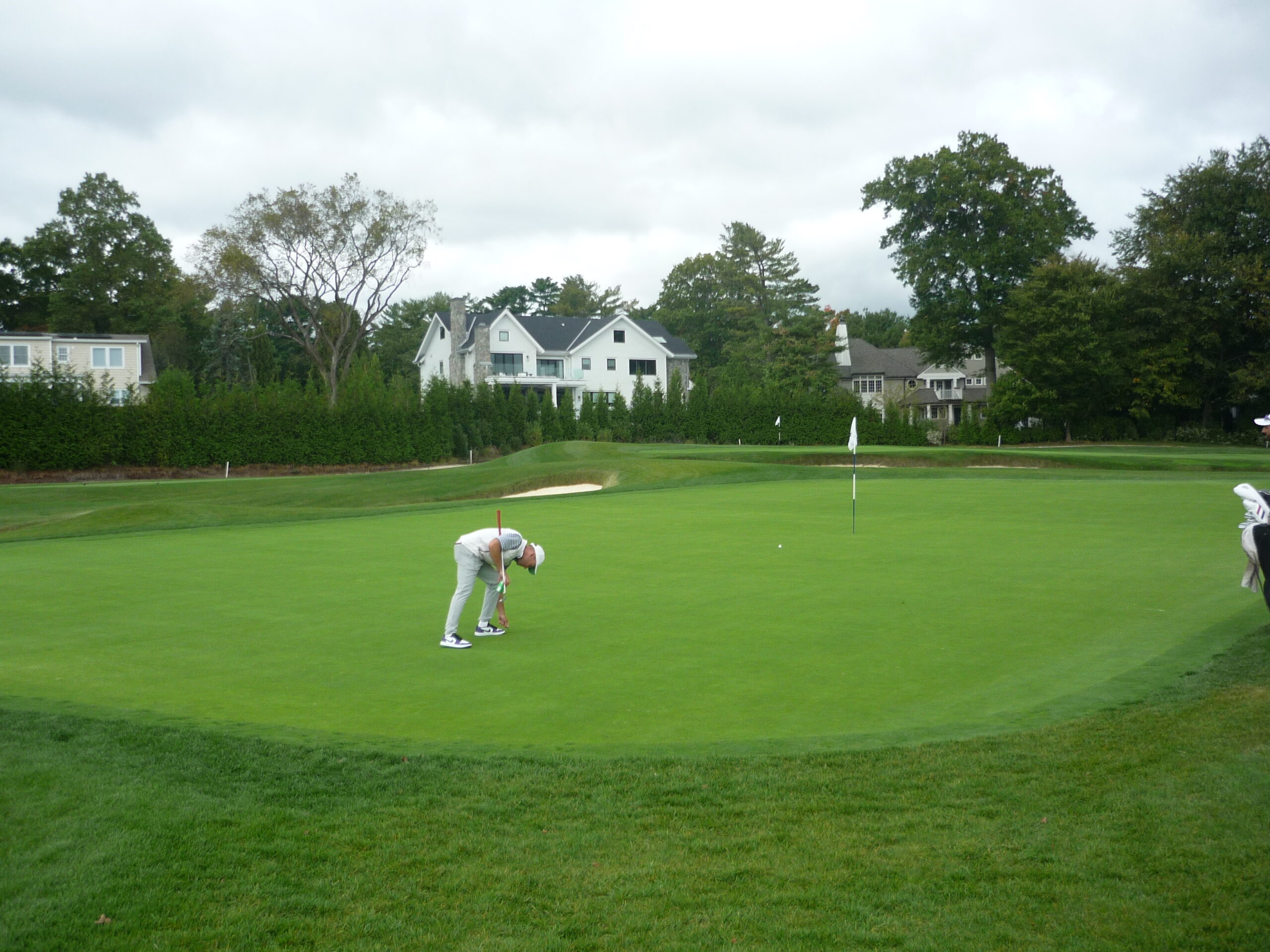
The majority of the slope on this green is in the back section, so missing long is not good.
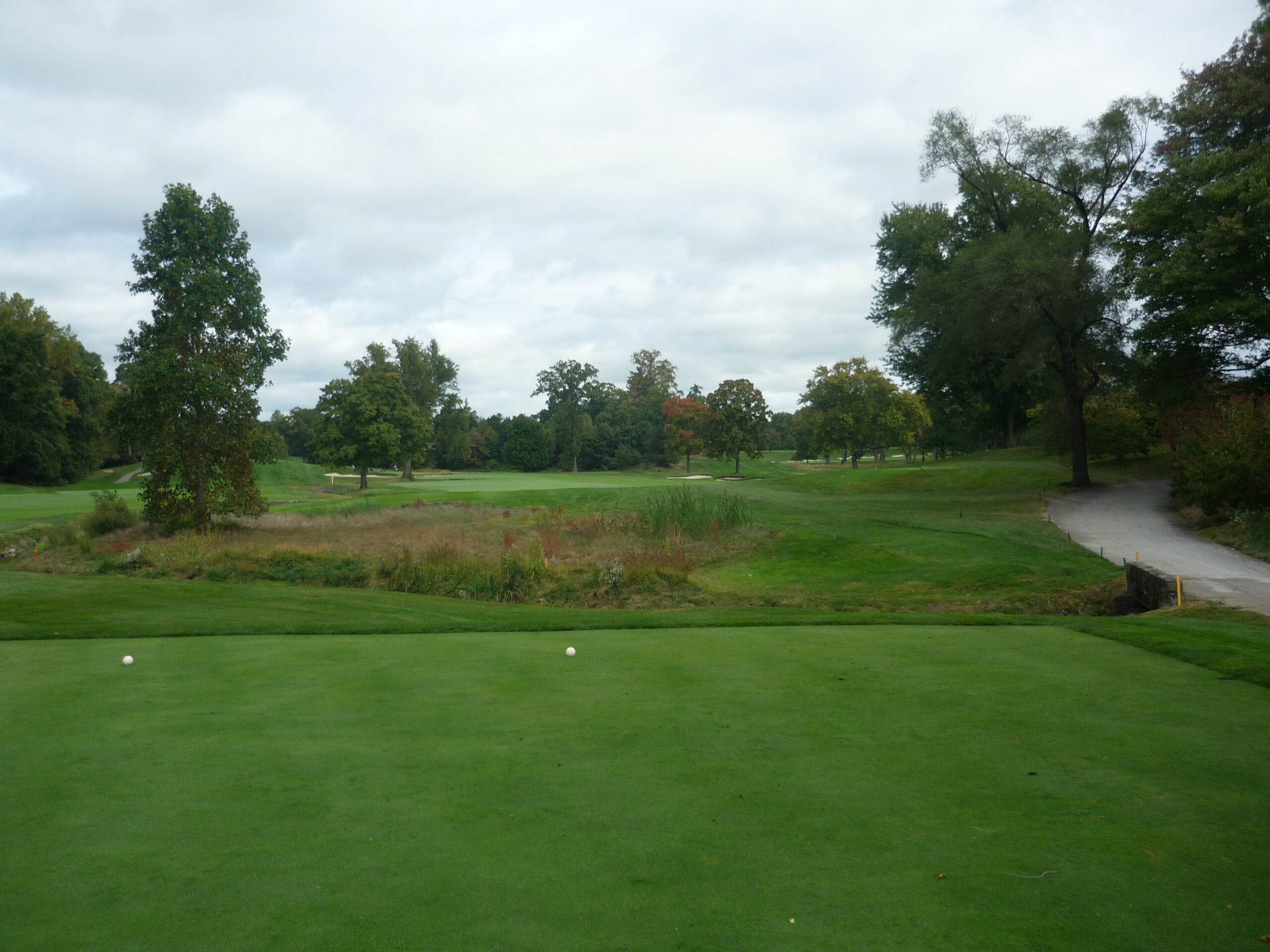
Hole 11 – 372 yards – Par 4
This shorter hole is filled with challenging features. Trees can block out shots on the left side of the fairway, and a creek runs up the left and in front of the green. If you push your drive up the right side, you will create the best angle to the green.
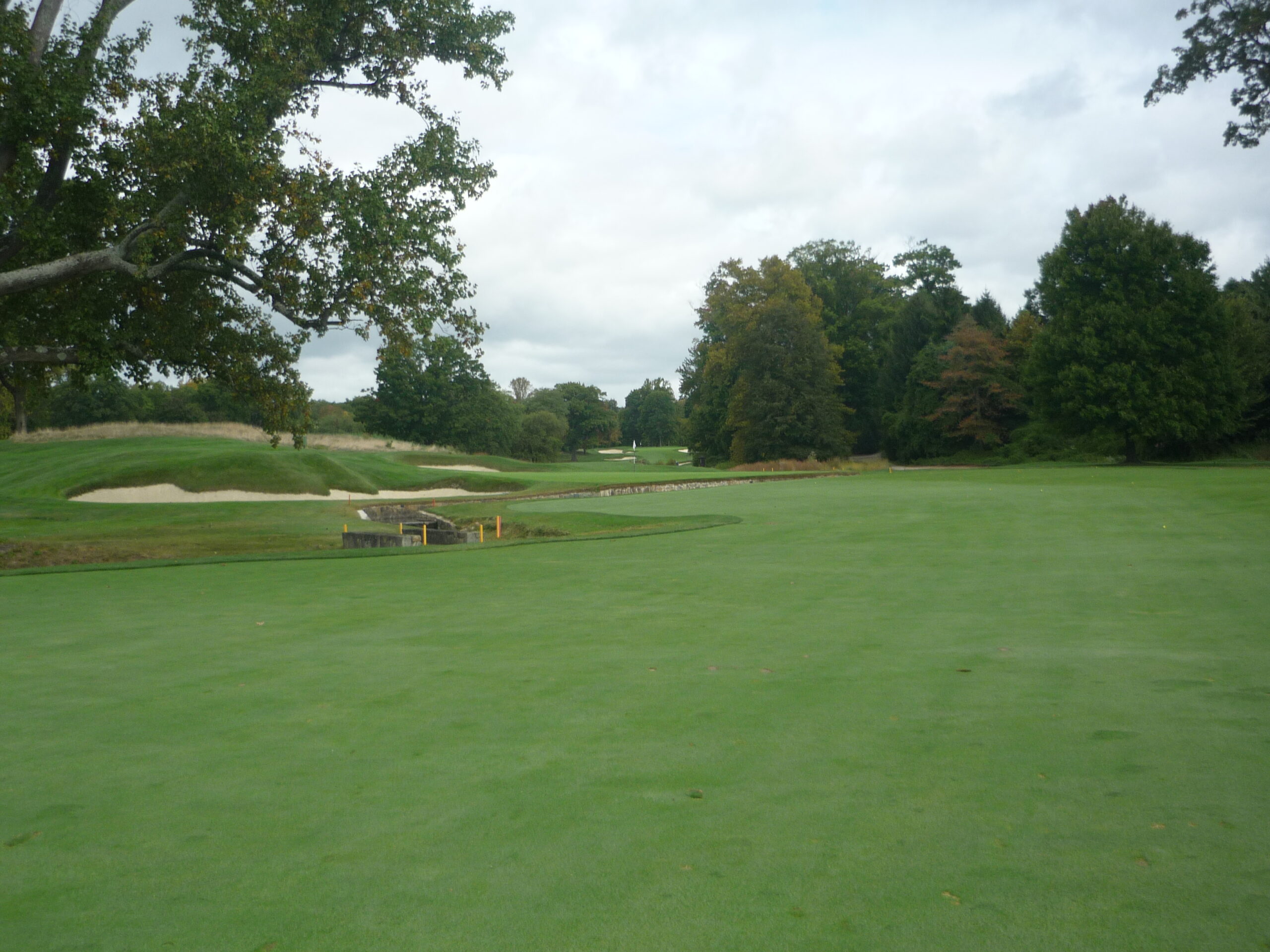
This look from the mound to the left of the green illustrates the proximity of the creek and the slope of the putting surface.
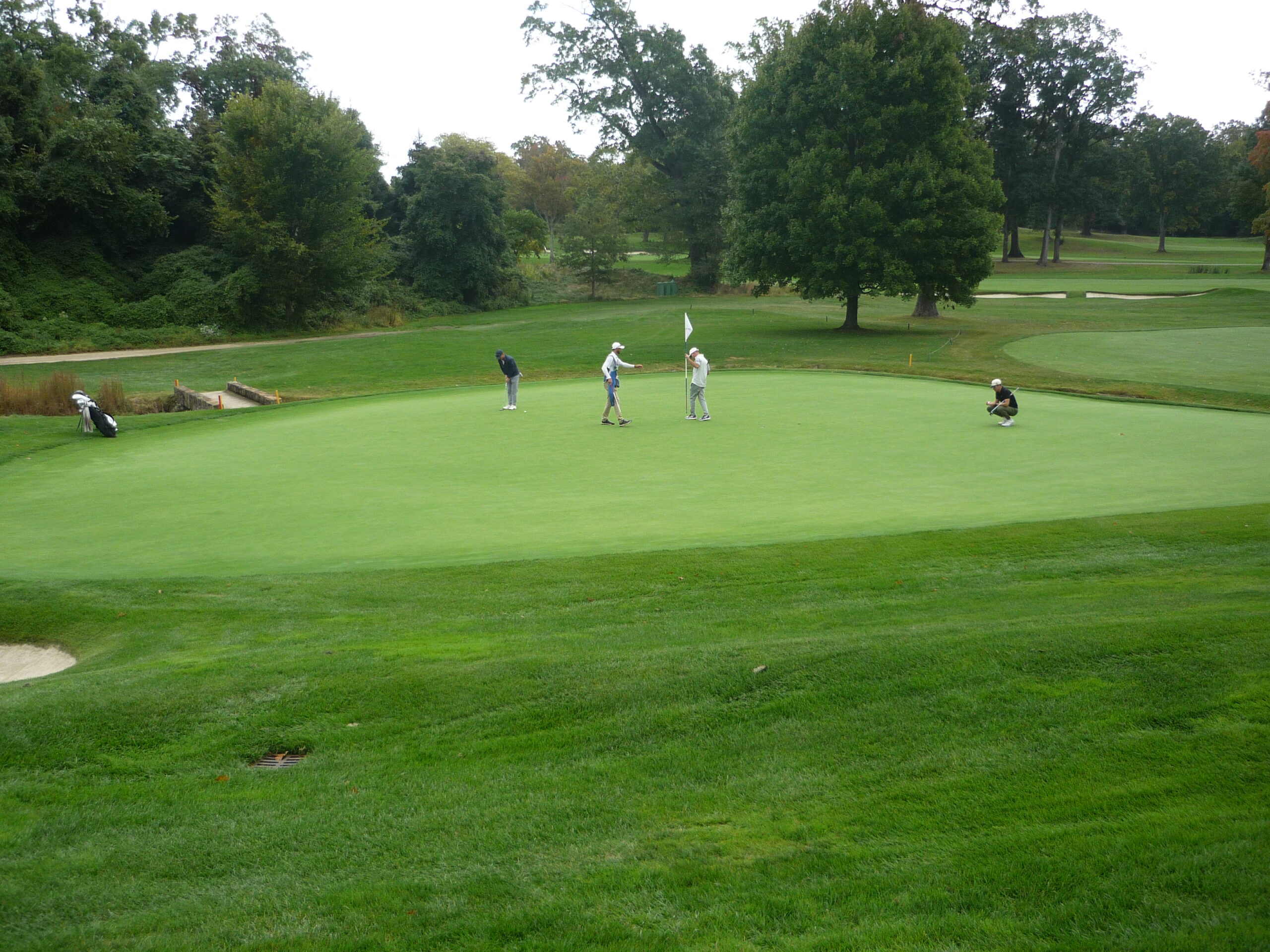
Hole 12 – 403 yards – Par 4
This tee shot can be played with a fade or a draw since there is a wide corridor. The bunker on the left is well short of the green despite not seeming that way from the fairway.
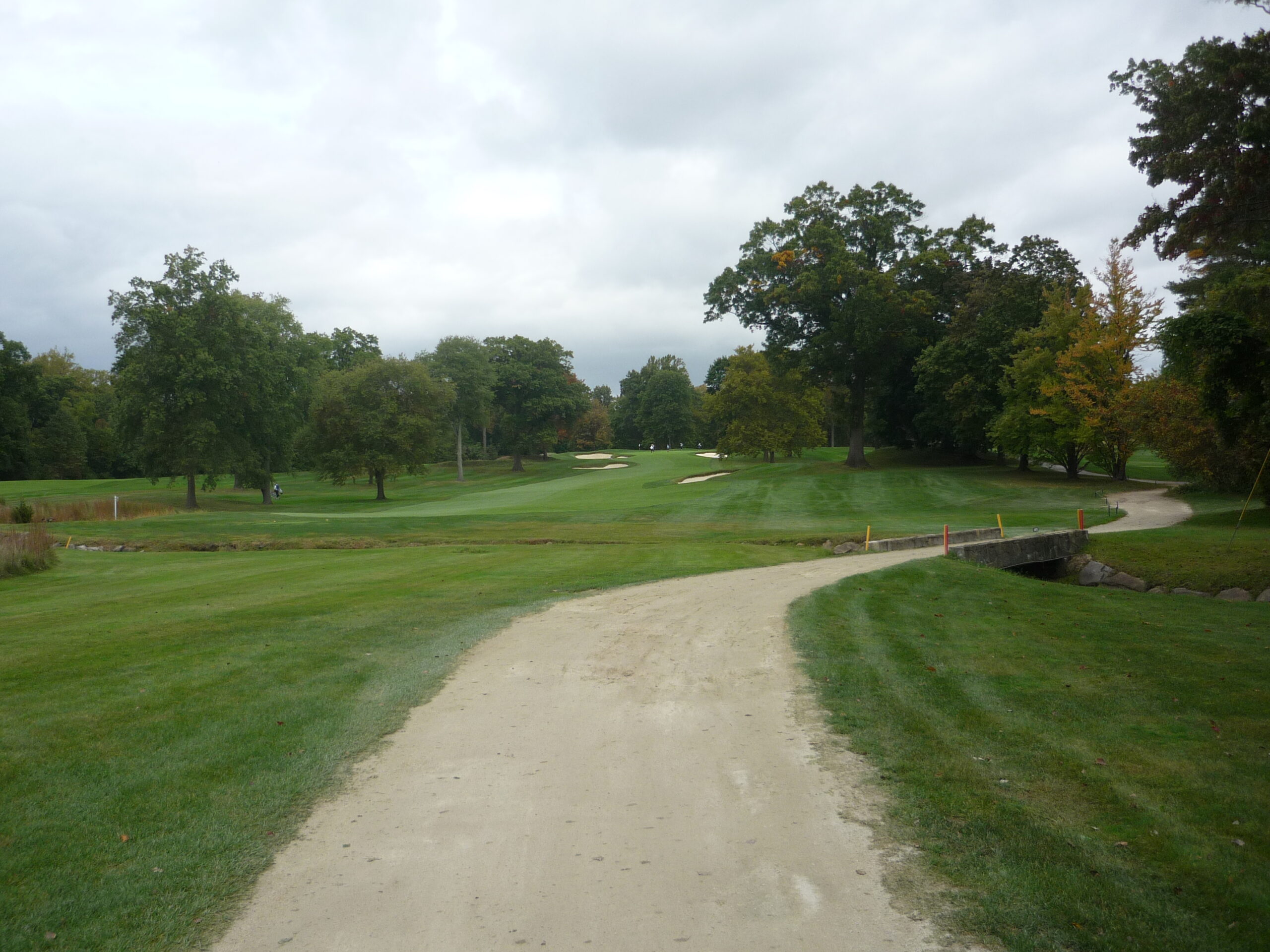
Trees encroach on your second shot if you miss a bit to the left.
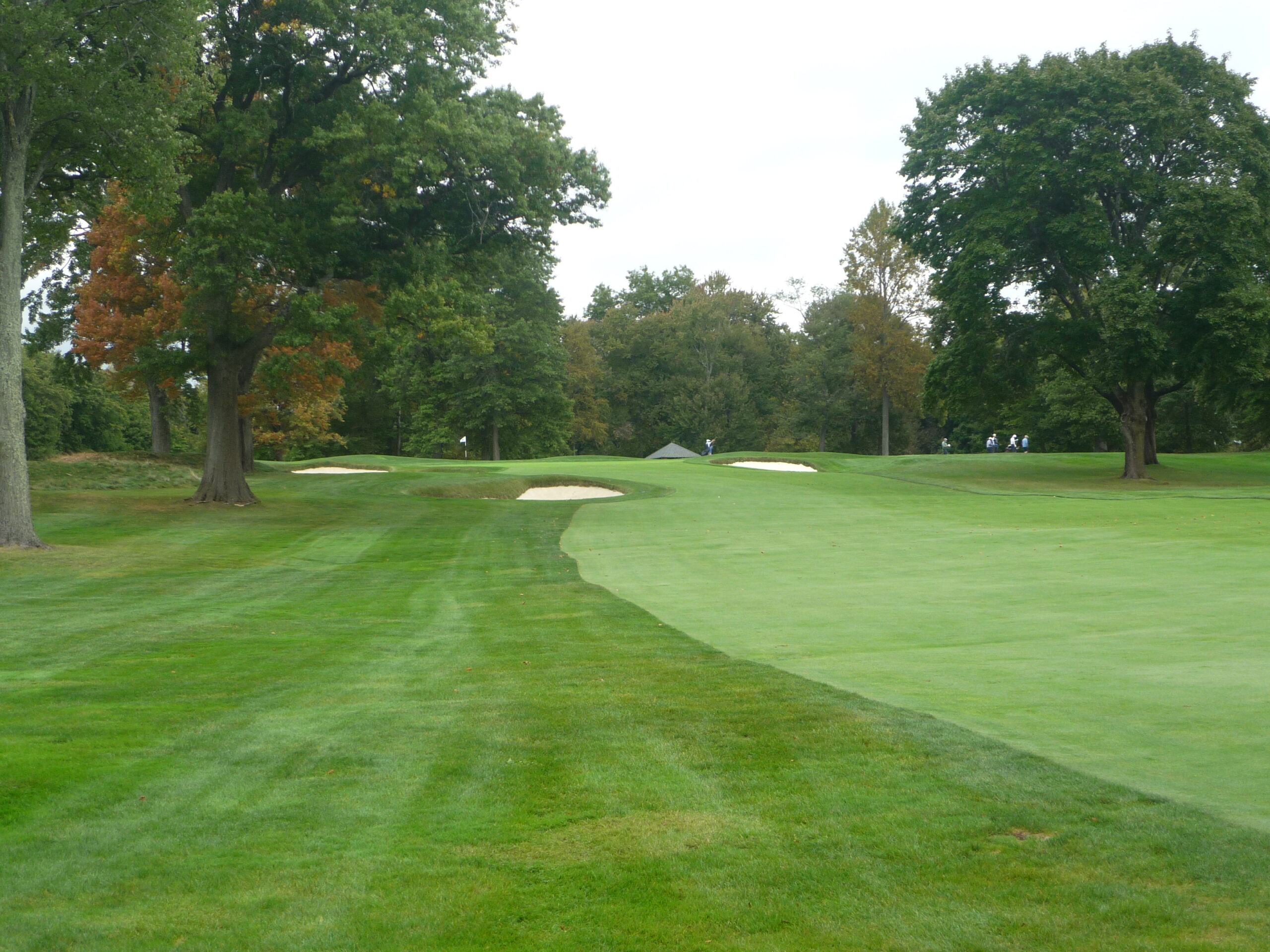
The green here slopes steadily from back to front.
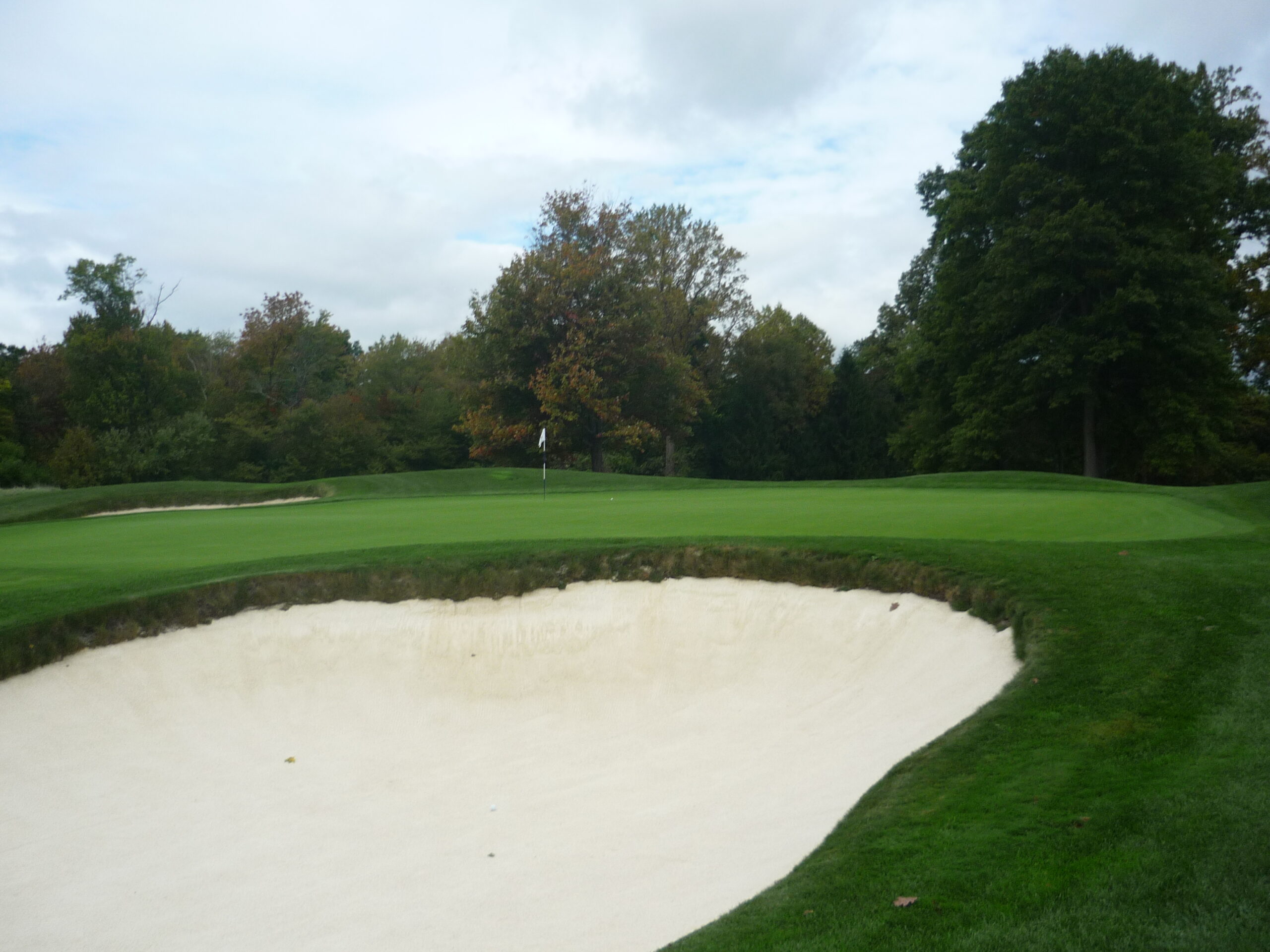
Hole 13 – 209 yards – Par 3
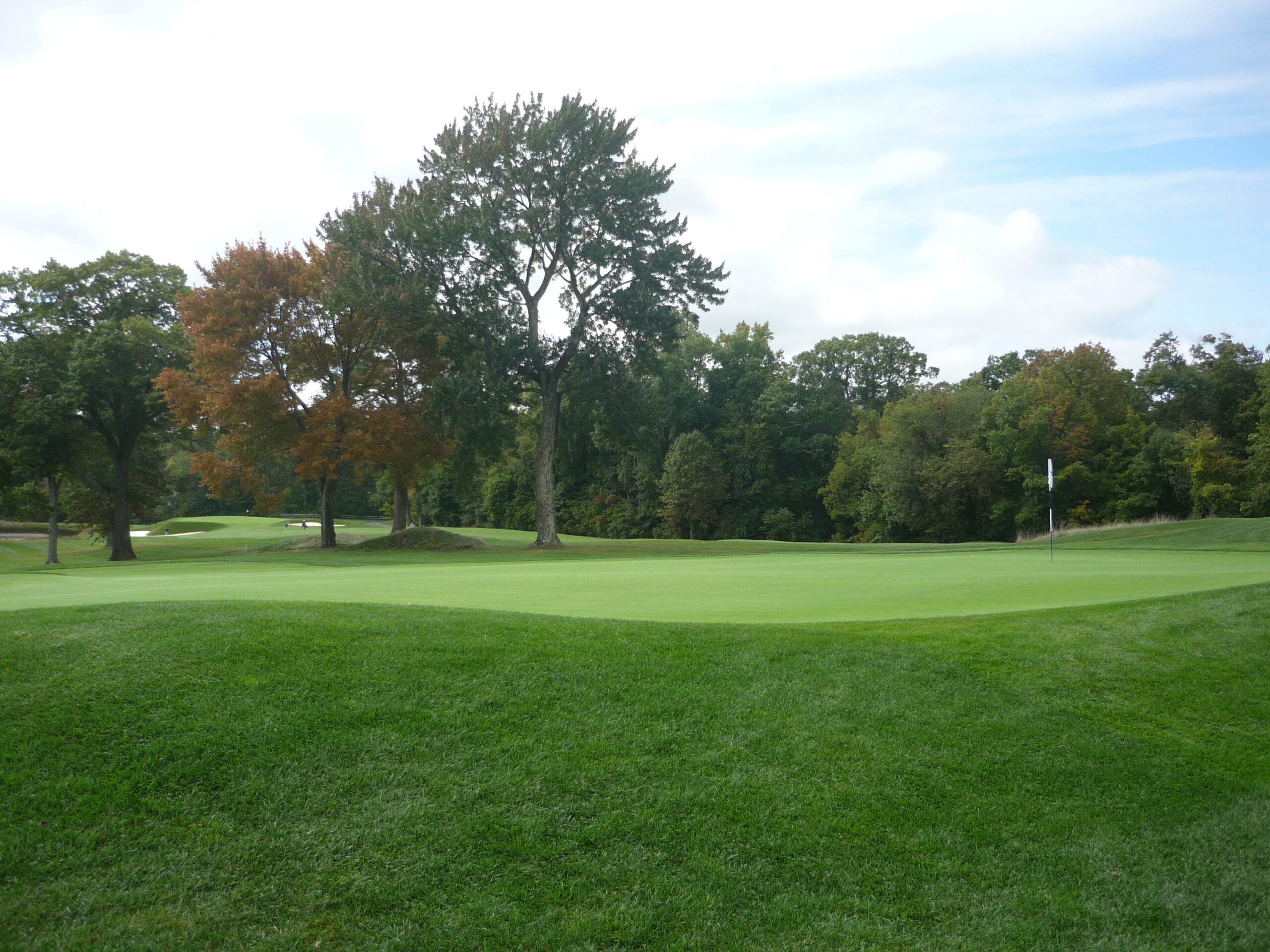
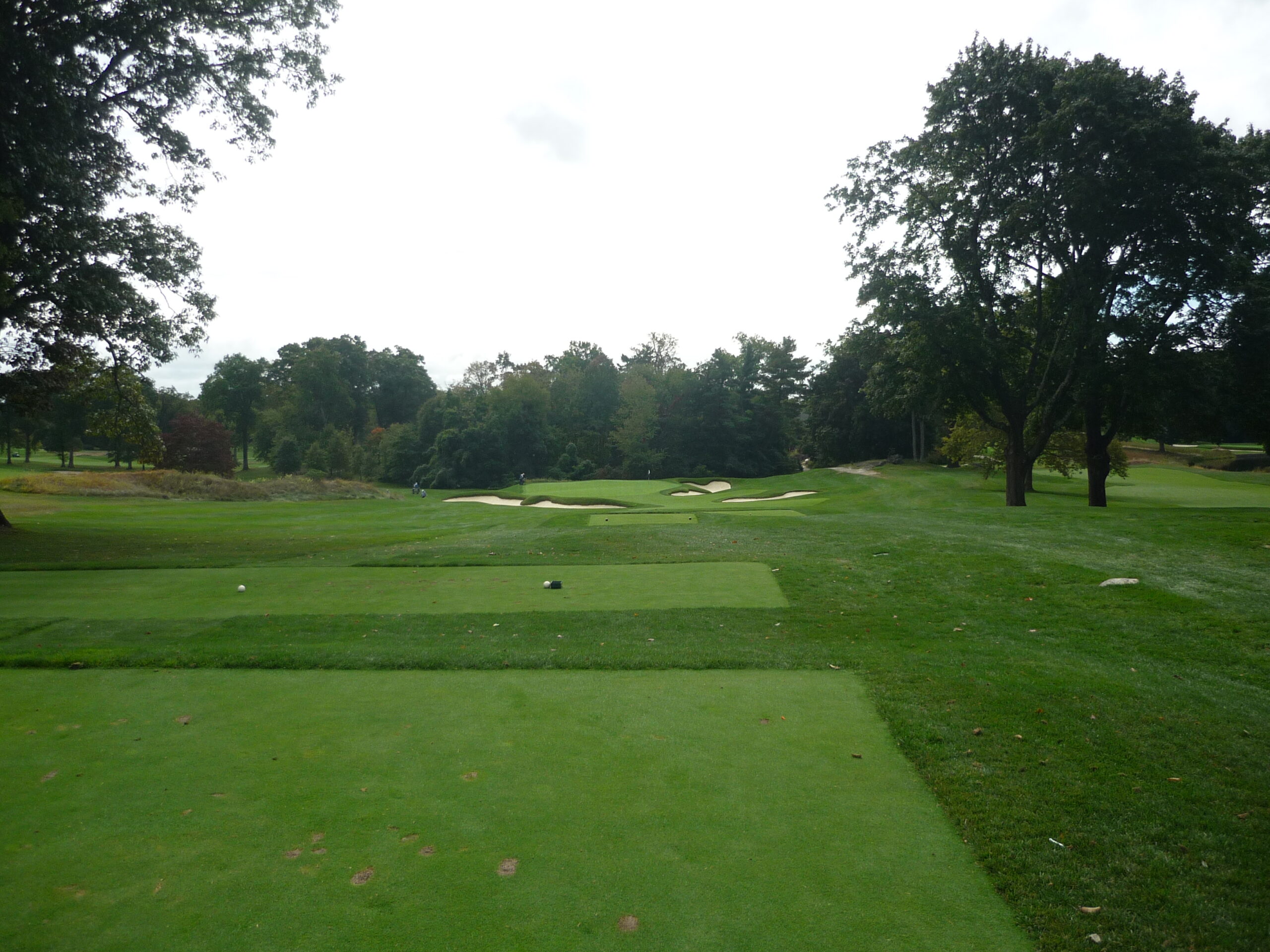
If you don’t have a yardage book, the deception bunker on the left might trick you. There is plenty of room between it and the green. With the downhill slope, this hole will play a bit shorther than the yardage.
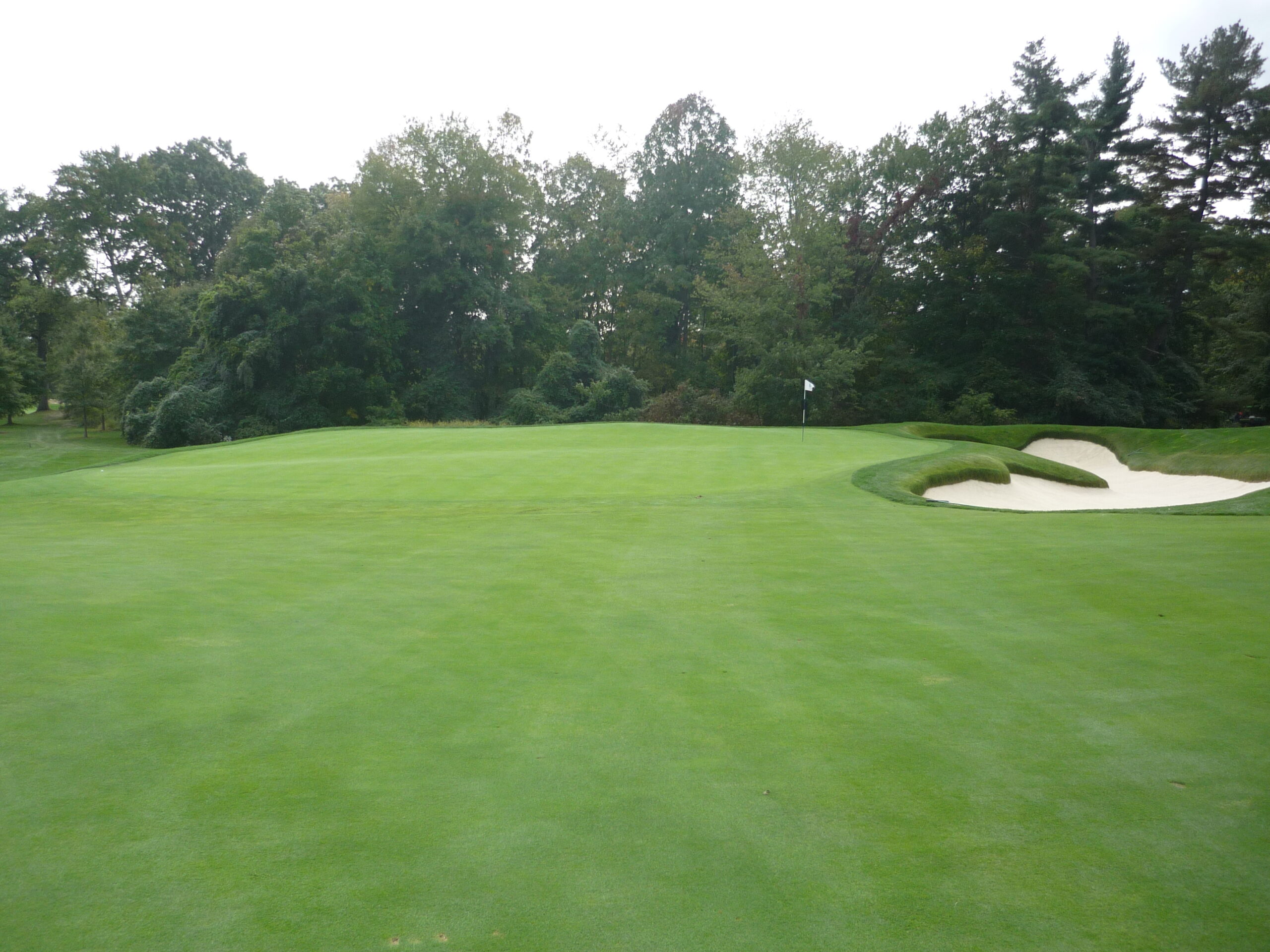
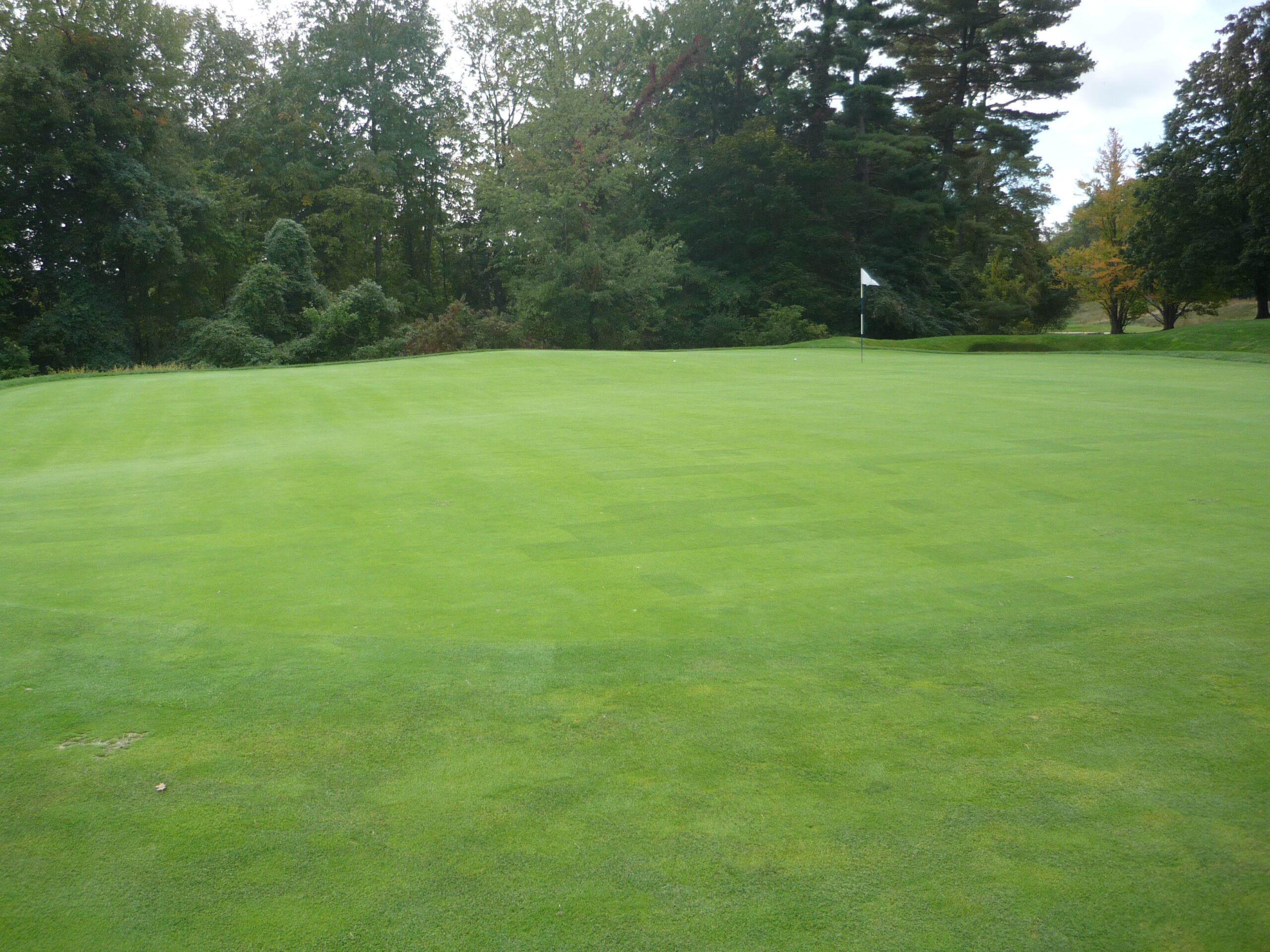
The large trough running through the green can make for some difficult putts.
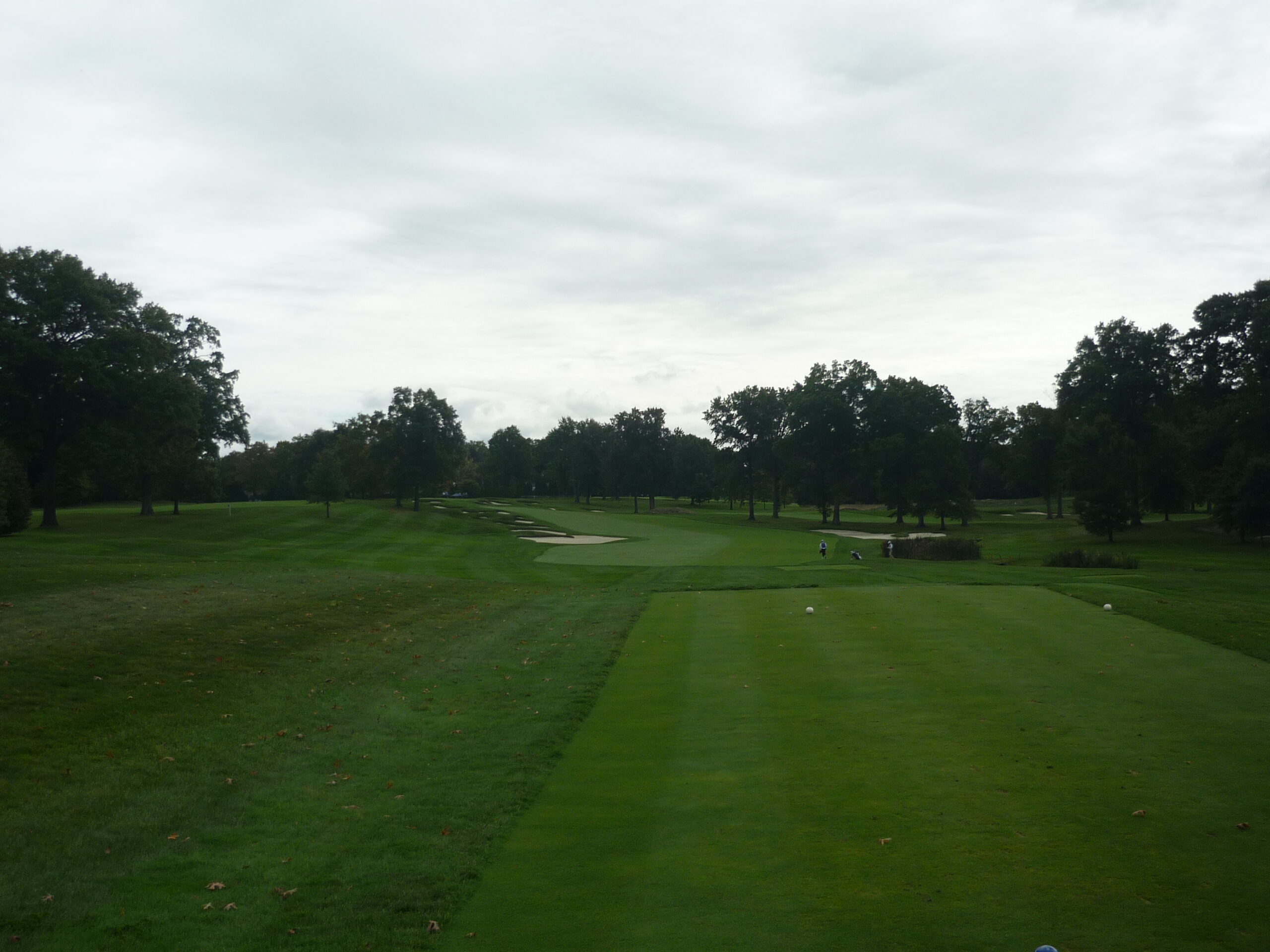
Hole 14 – 517 yards – Par 5
You must take care to avoid the bunkers on the left that continue up that side and cross the fairway. Drives in the fairway will provide some players the opportunity to get home in two at a green with plenty of surrounding sand.
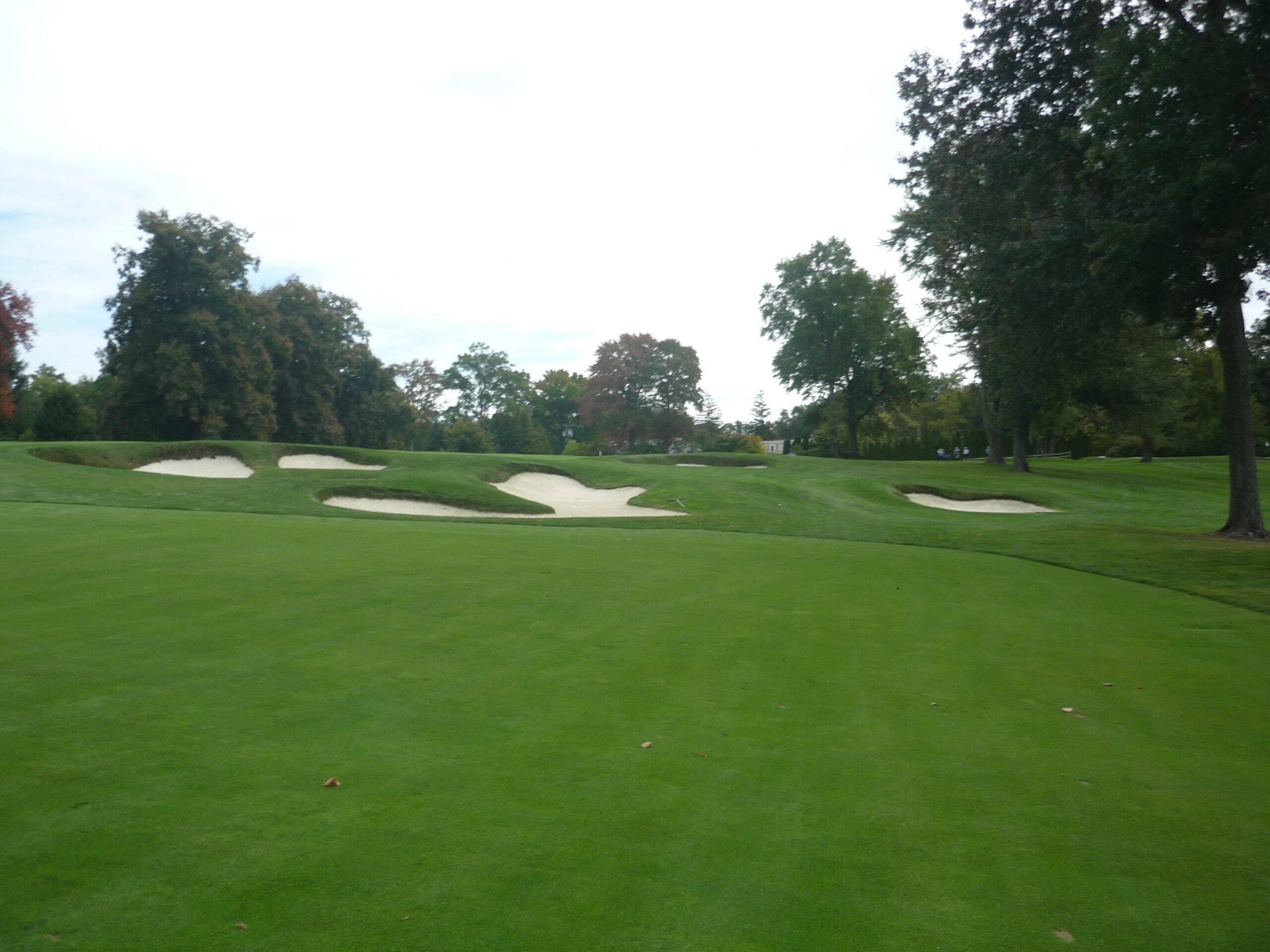
The second shot will play blind due to the slope of the hole.
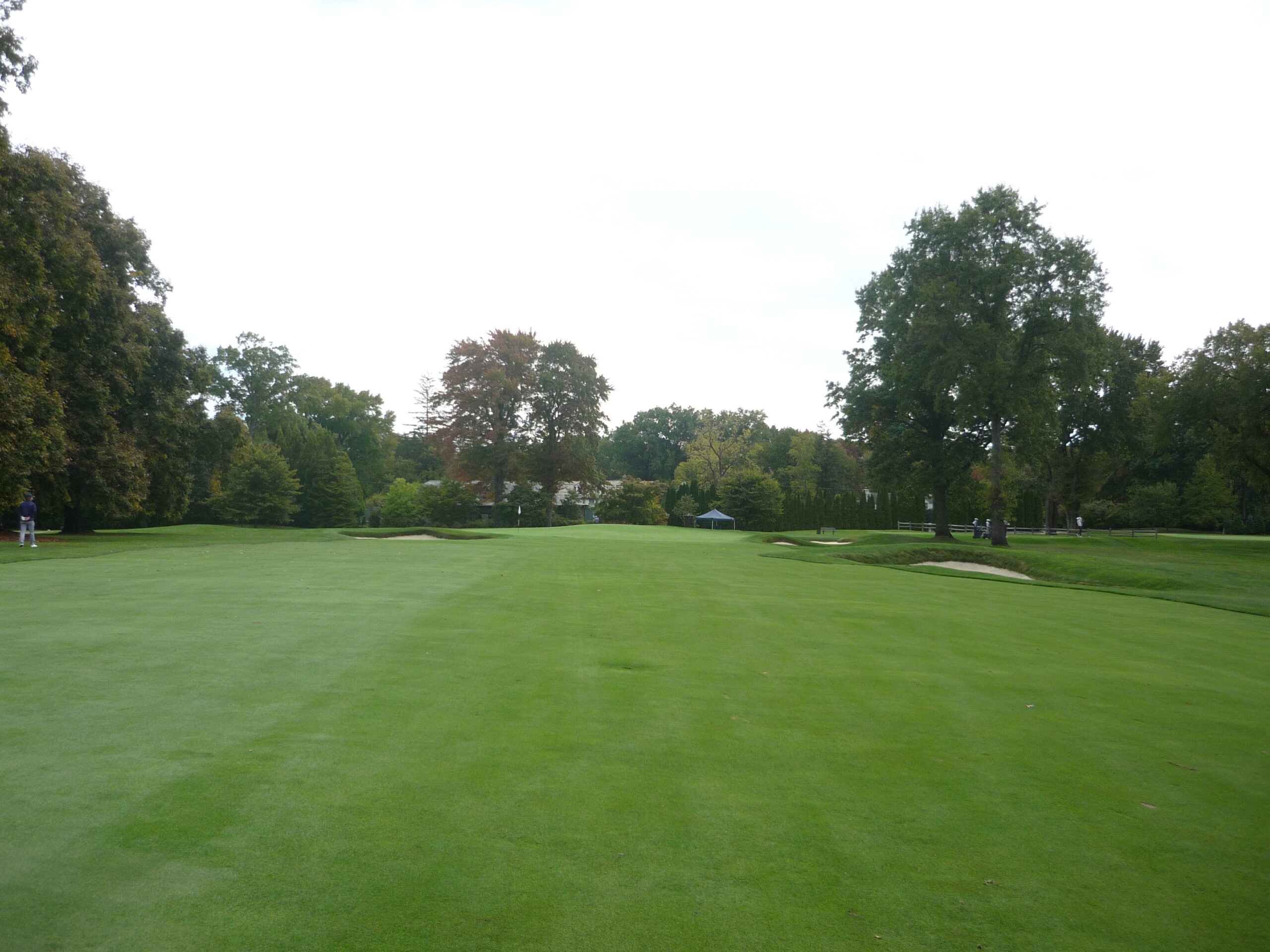
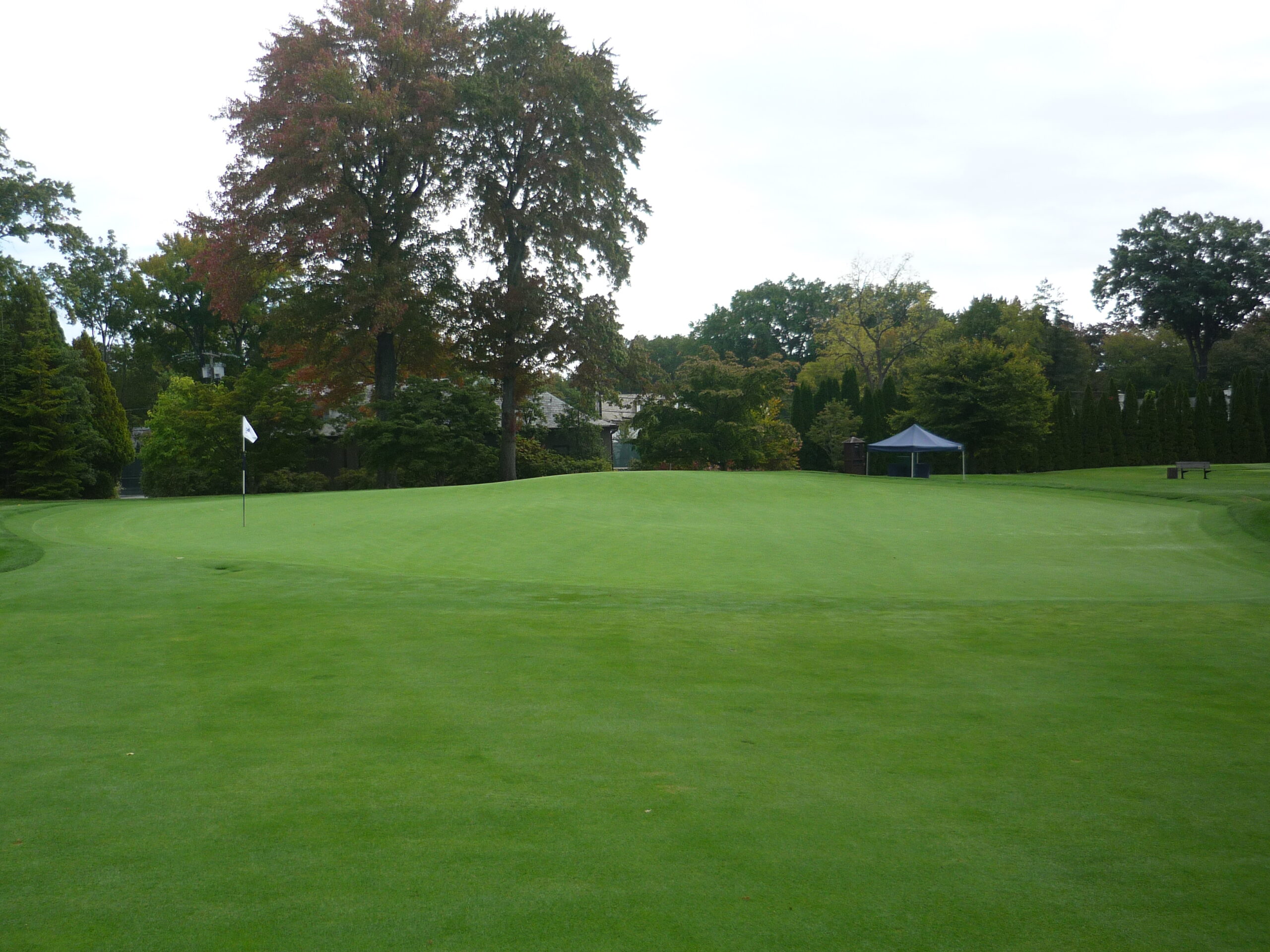
The green has some wild slope in the back section.
Hole 15 – 375 yards – Par 4
Longer hitters must account for the creek that crosses this fairway. More deception bunkers can be seen from the tee. A drive to the left-center of the fairway provides the best angle to the small green.
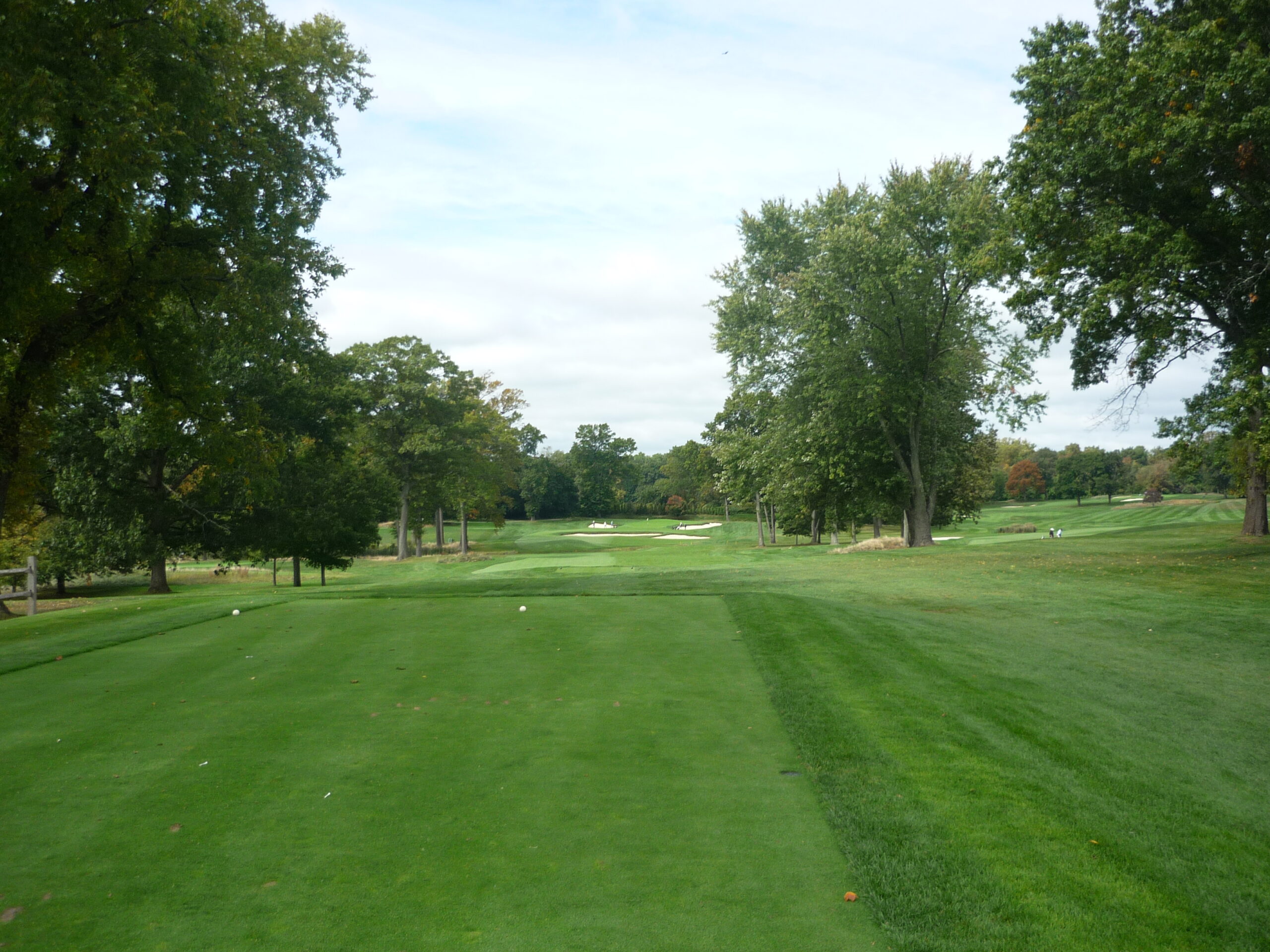
Take note of the slope in the back section of the green. You don’t want to be putting from back there.
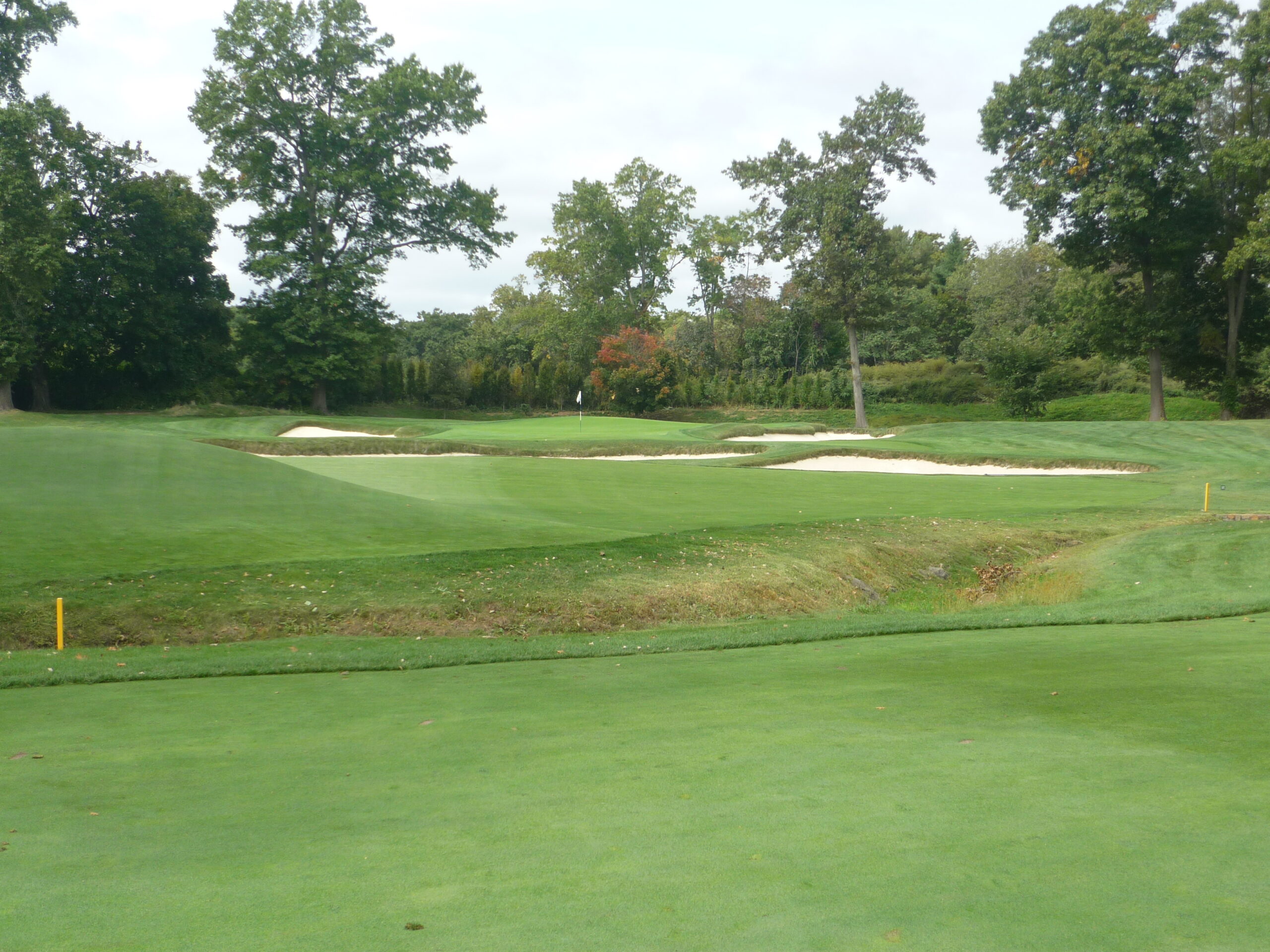
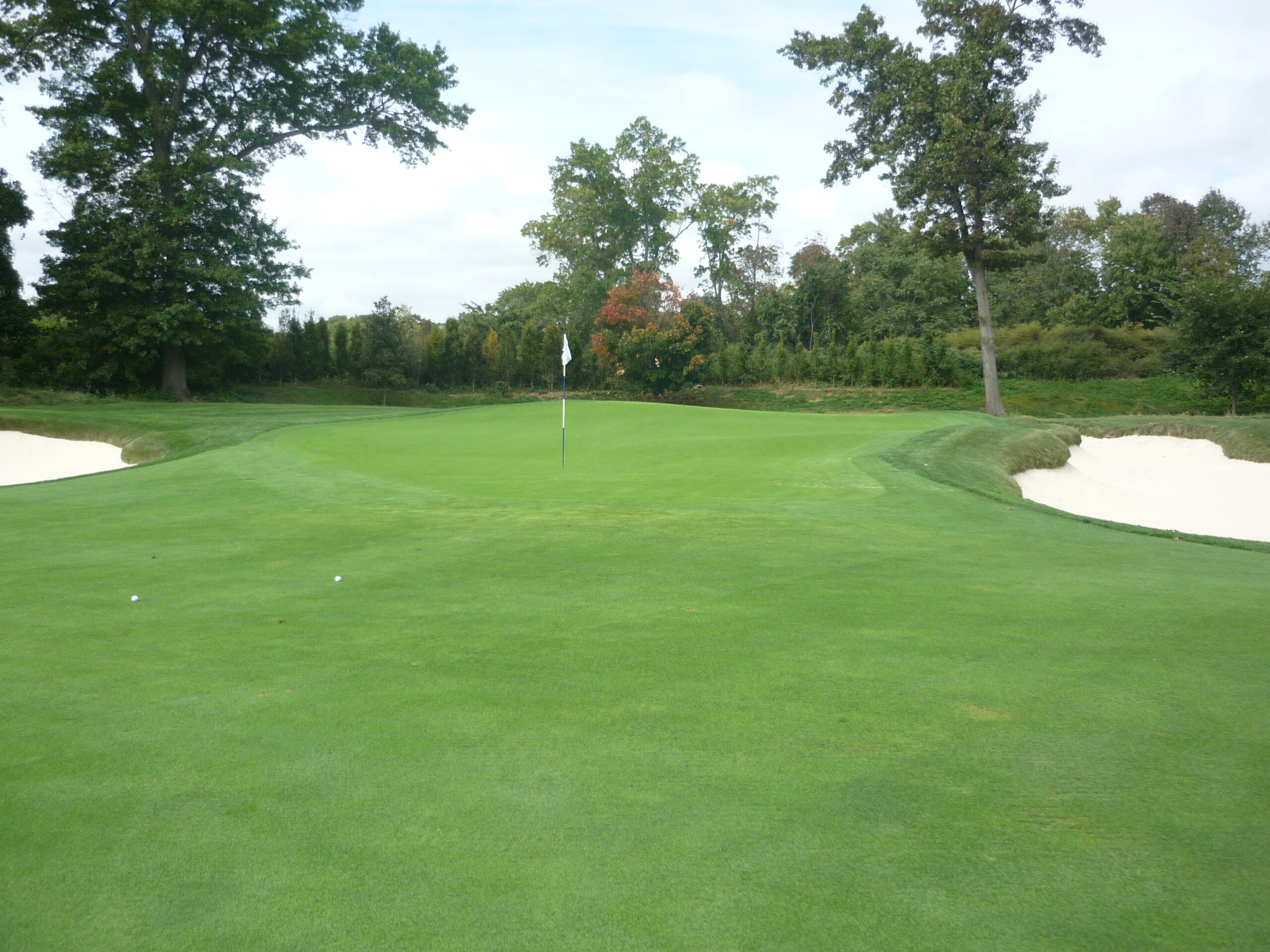
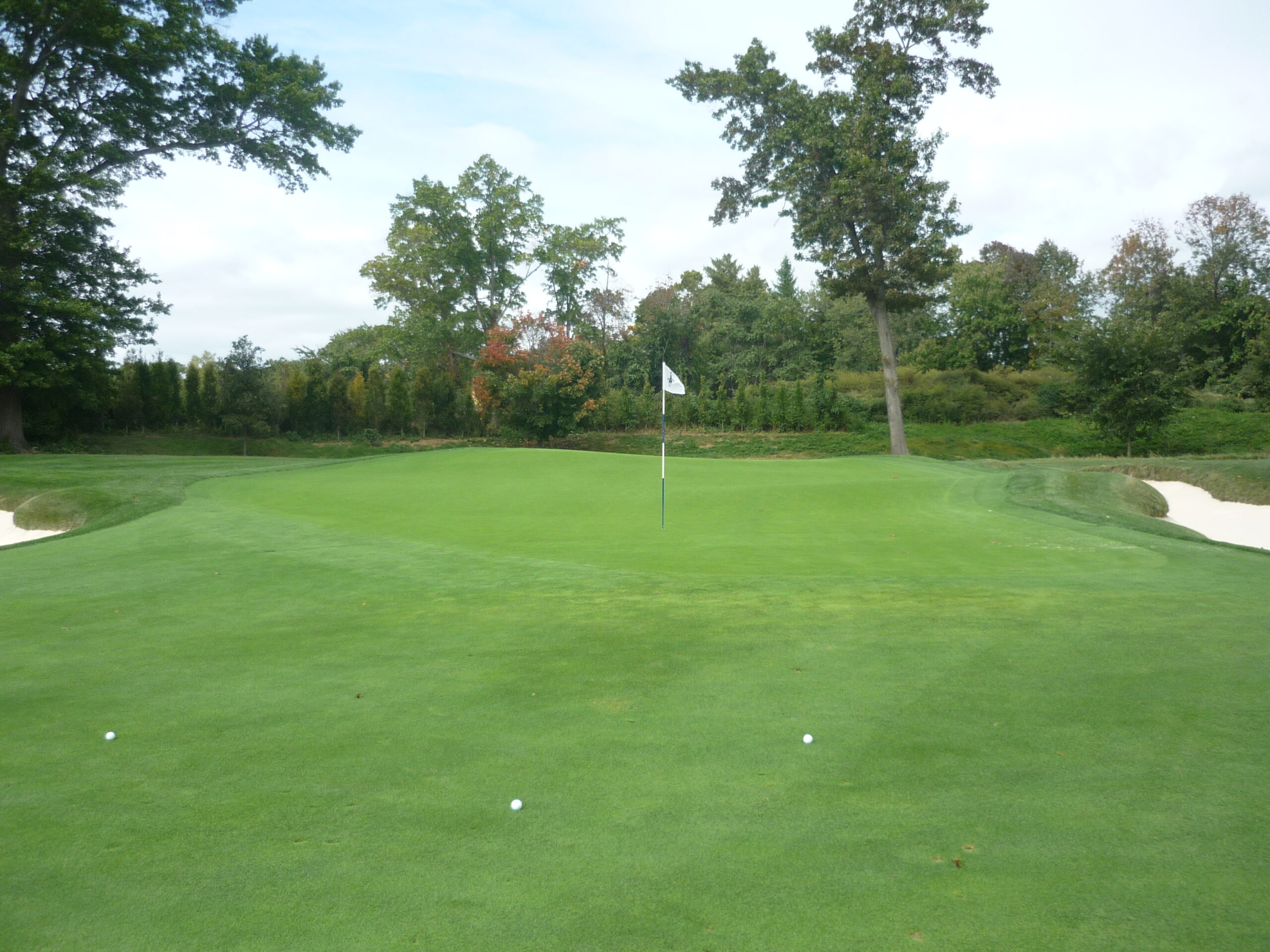
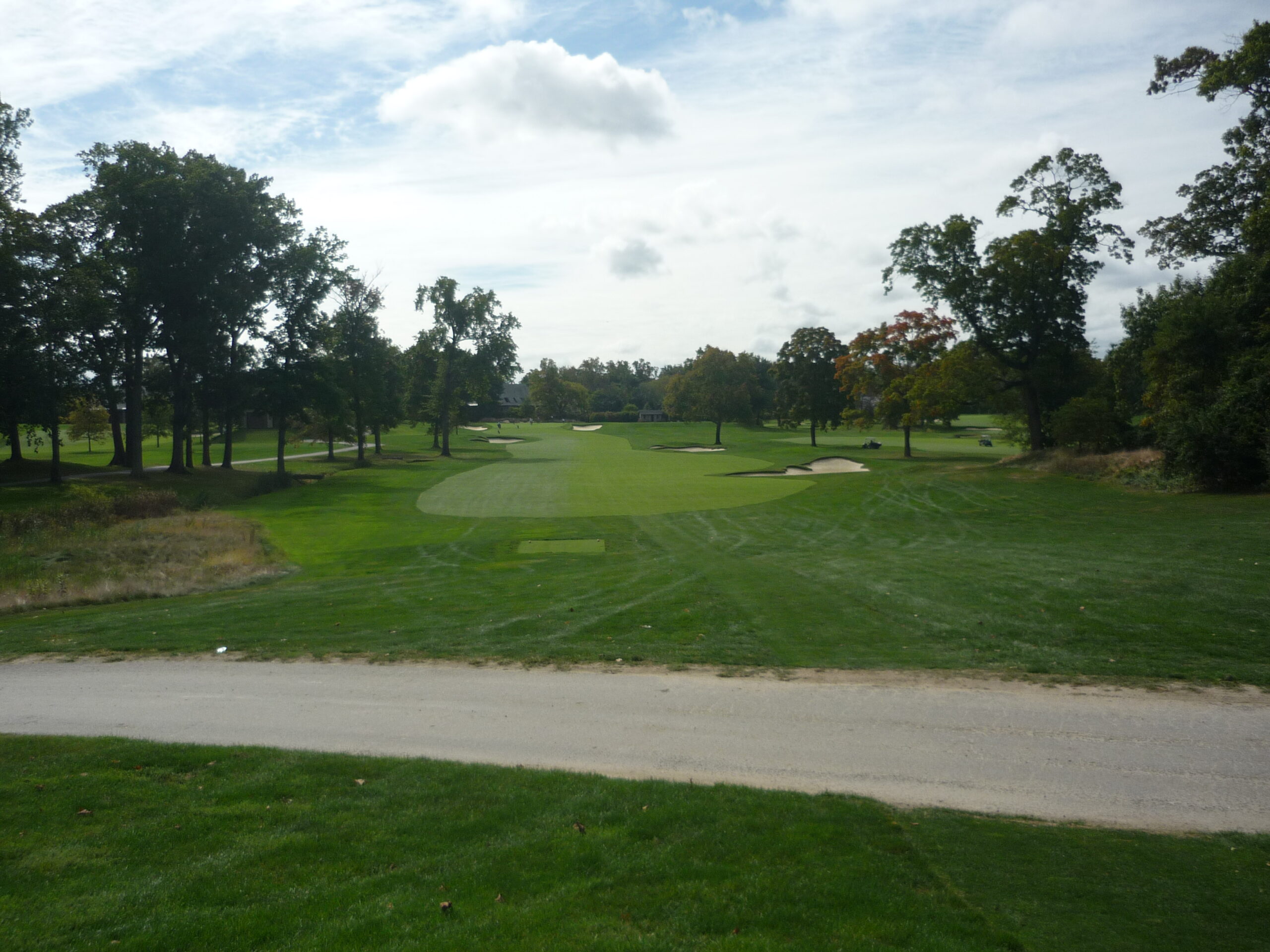
Hole 16 – 414 yards – Par 4
Trees and a creek occupy the left side of this hole that features a generous fairway. This felt like one of the most free-wheeling tee shots at Quaker Ridge.
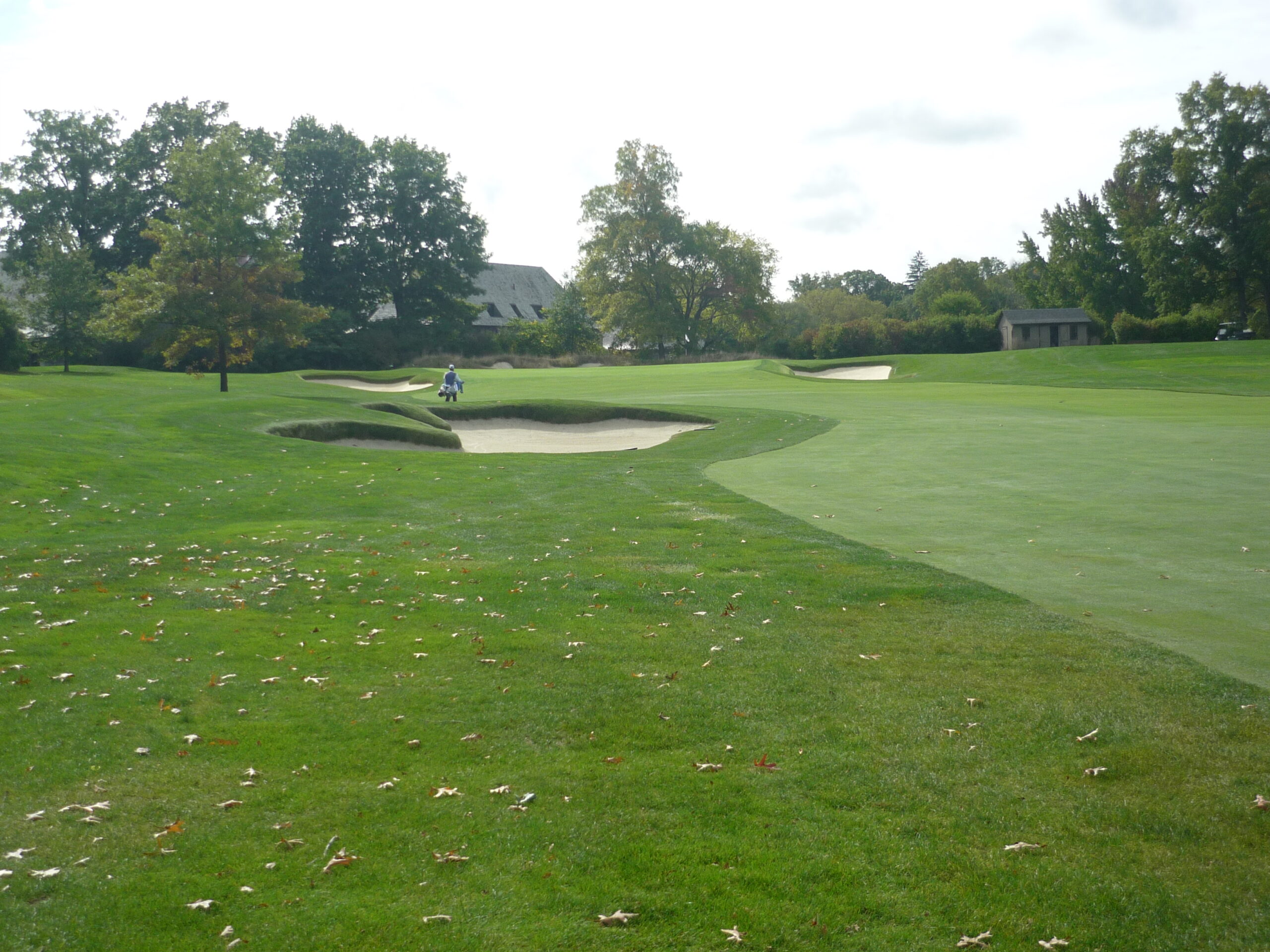
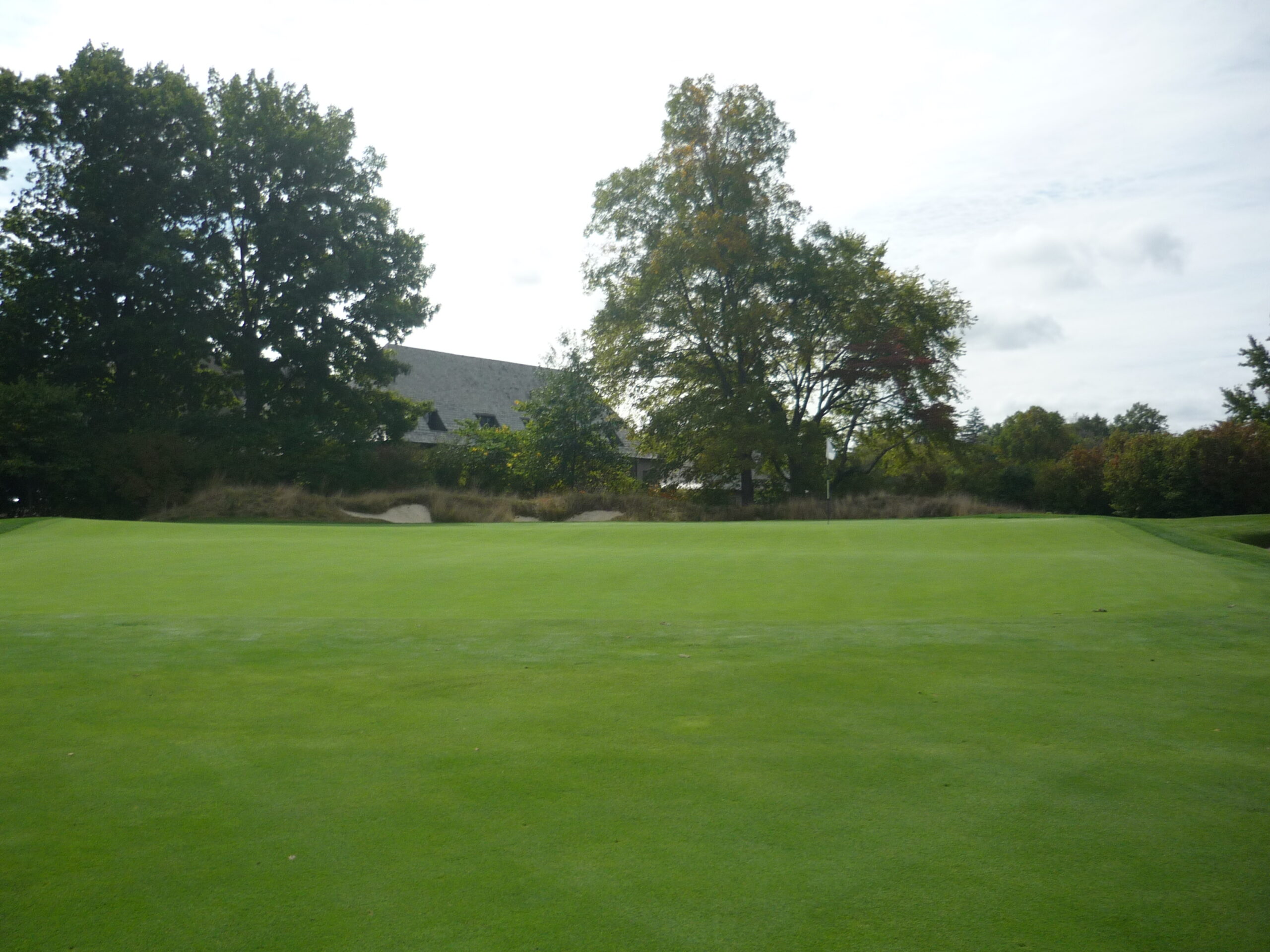
With the elevated green and pronounced slope in its front section, you have to control your spin, or you’ll be faced with a tough pitch from short of the putting surface.
Hole 17 – 344 yards – Par 4
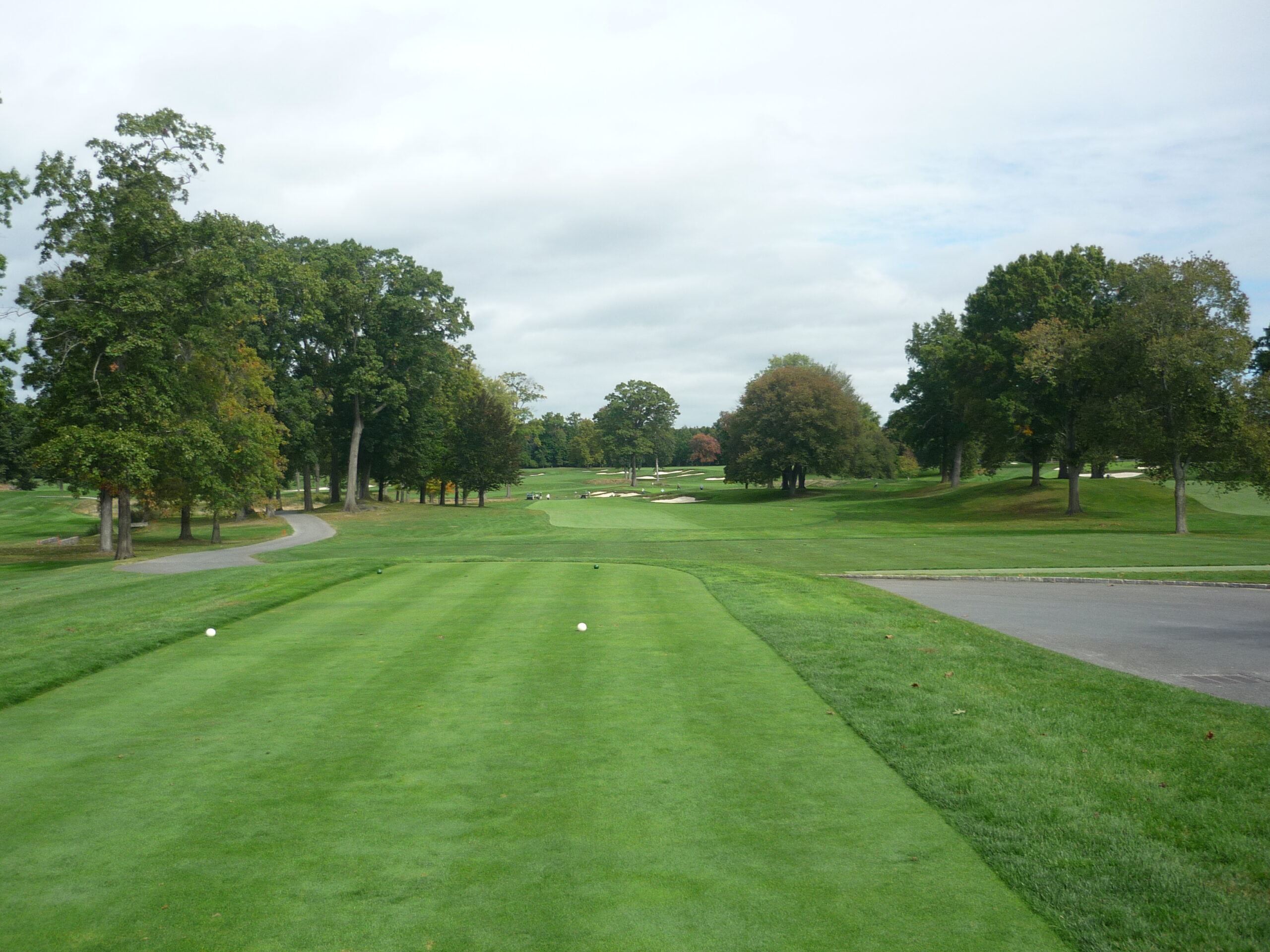
The fairway bunkers on the right pinch the landing area of this hole. Many players will reach for less than driver to find the fairway. Drives to the left side of the fairway result in the best look at the green.
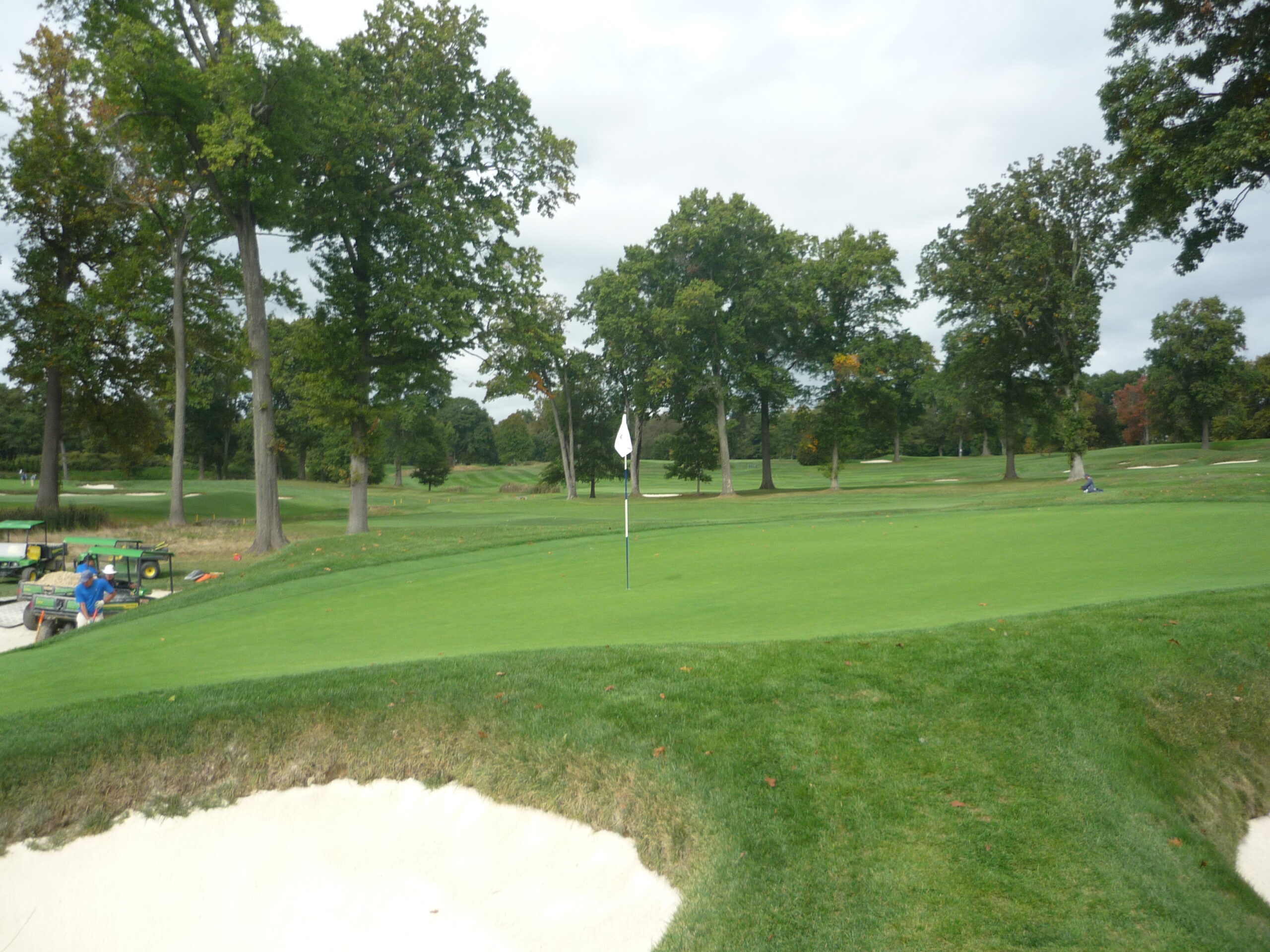
This green was recently reduced to its original dimensions. That makes the approach shot demanding with the bunkers guarding the green.
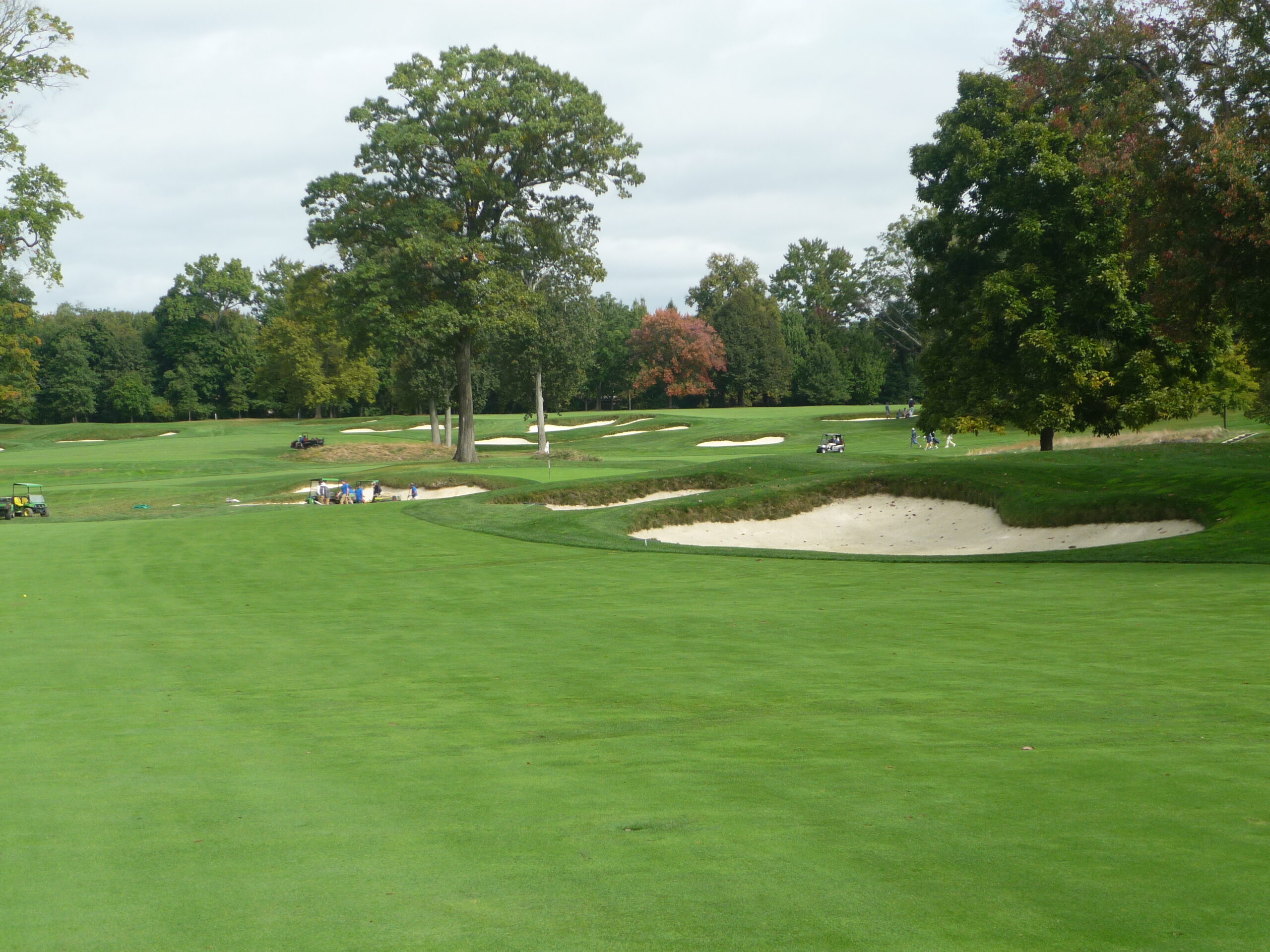
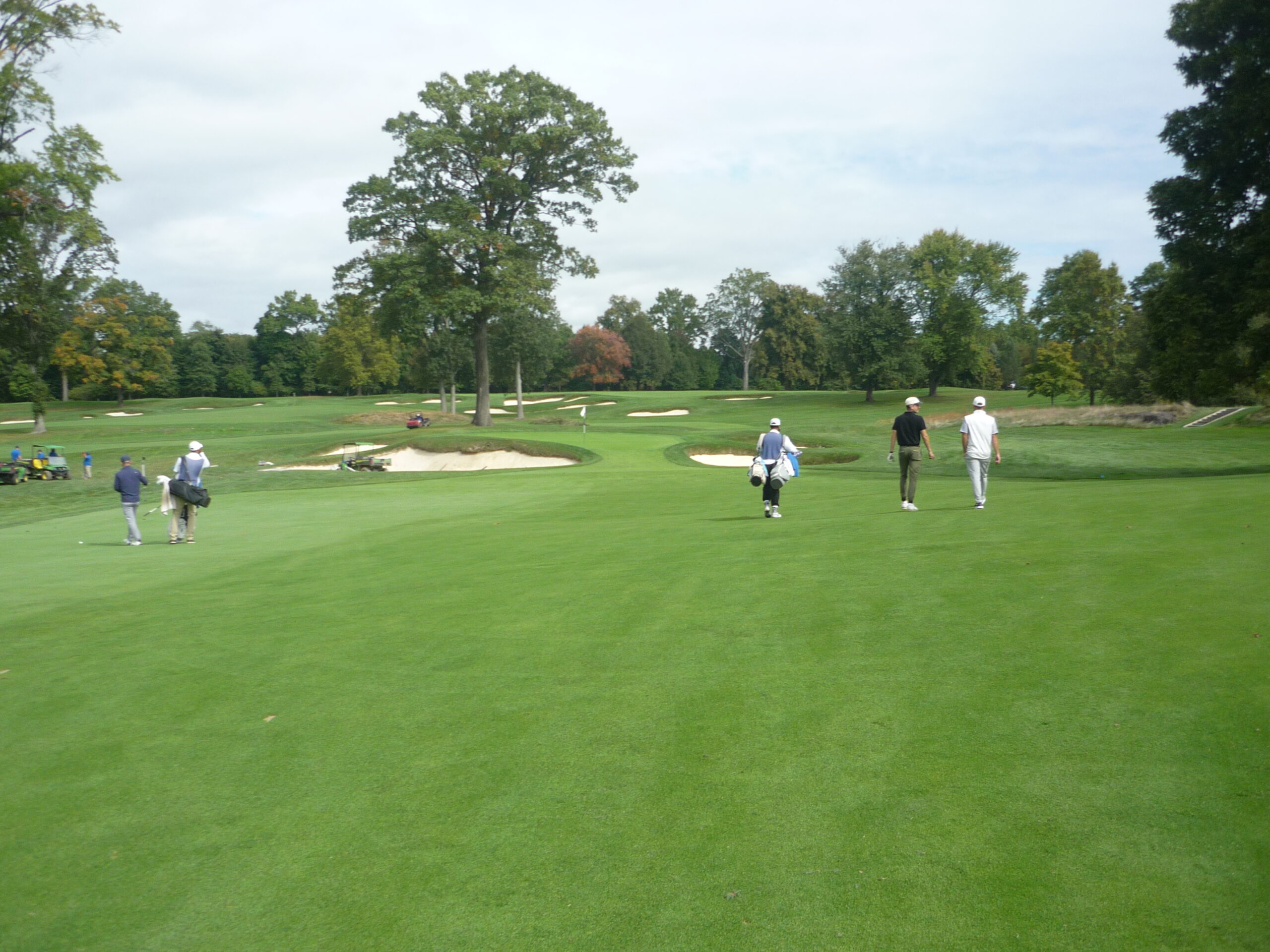
The slope is severe on this devilish little green!
Hole 18 – 410 yards – Par 4
Like many other holes here, you must navigate the trees with your drive. The left side of the fairway gives you the best angle to the green.
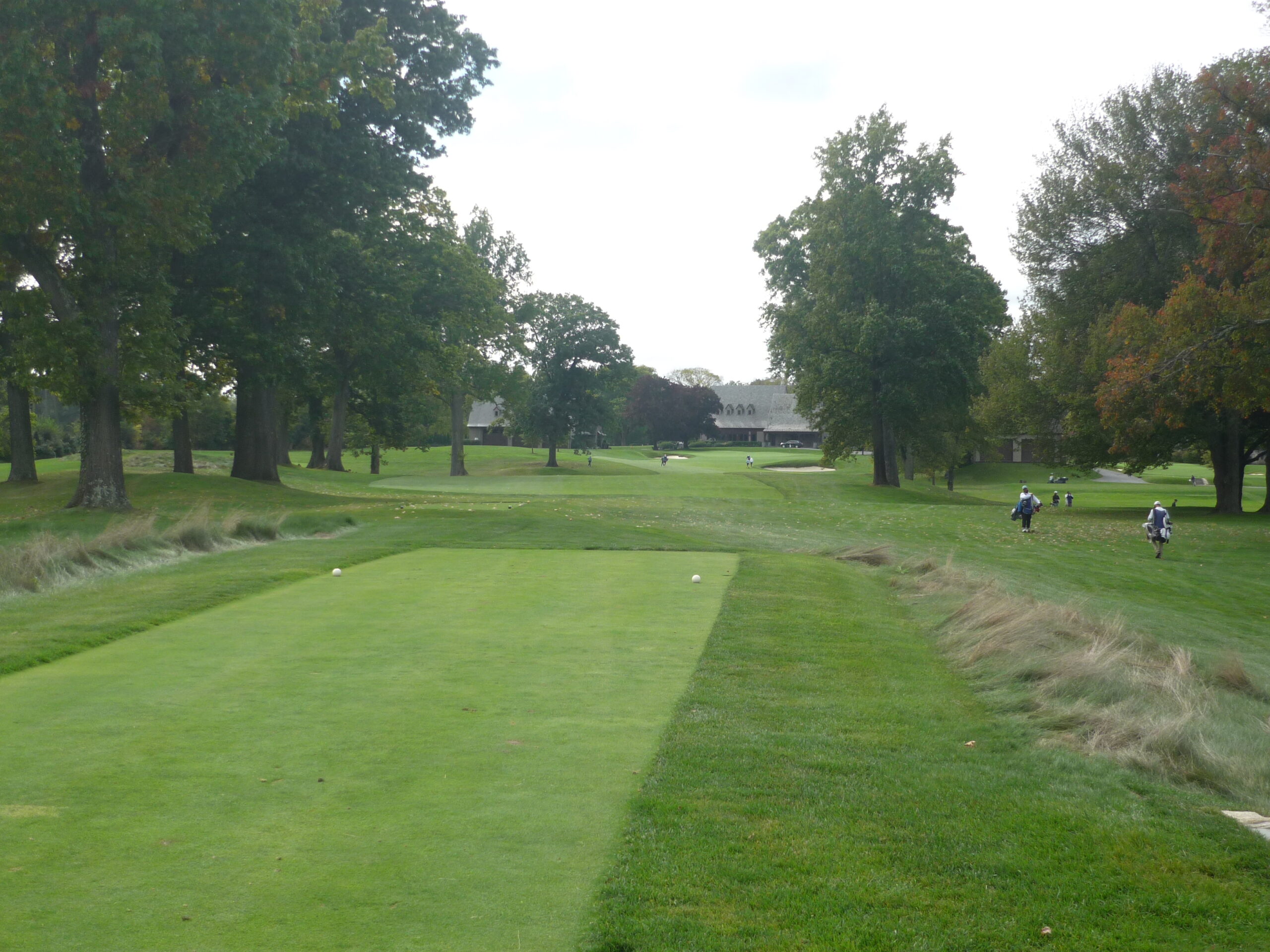
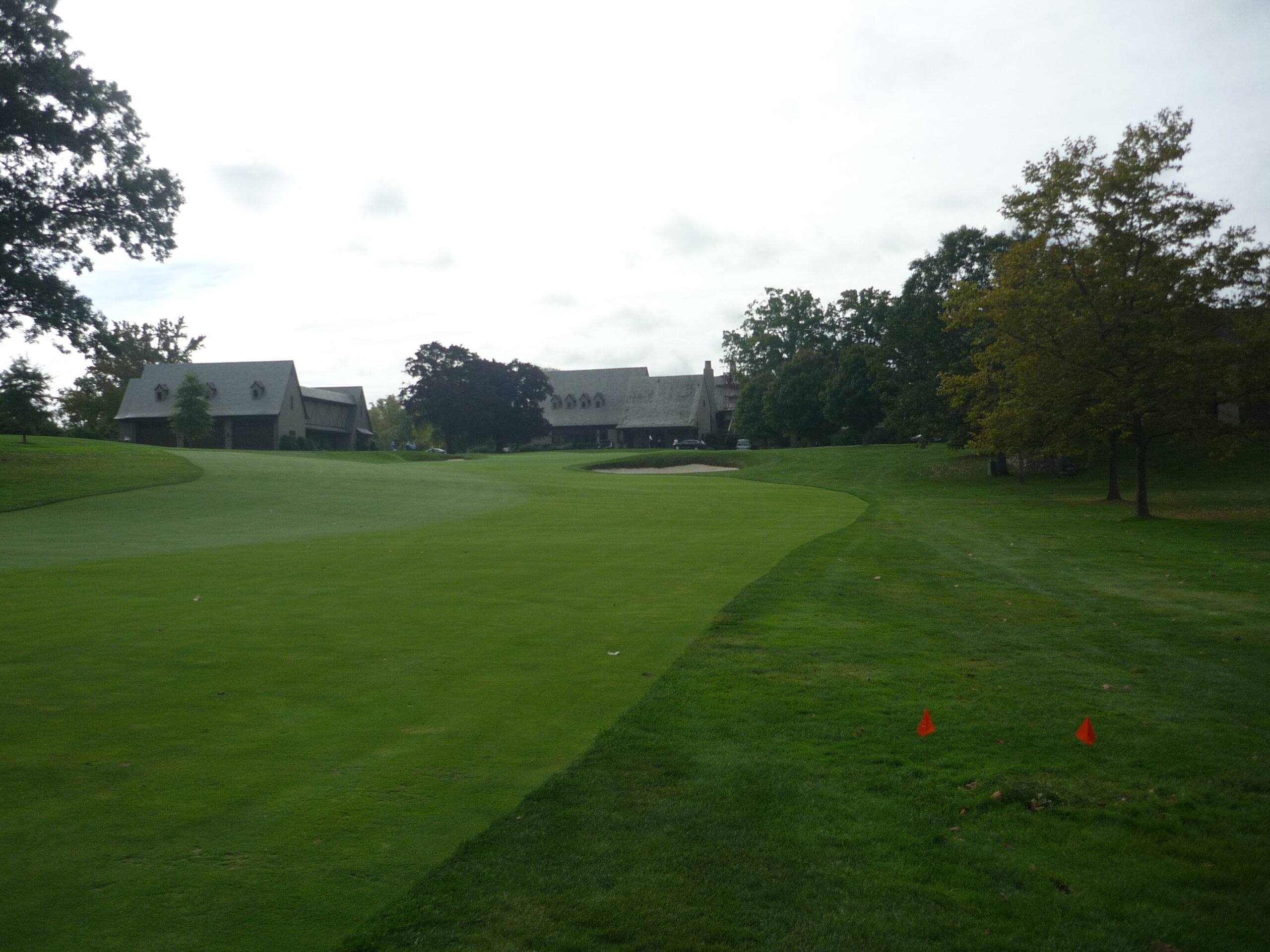
This green is a large target where misses short are preferable to long.
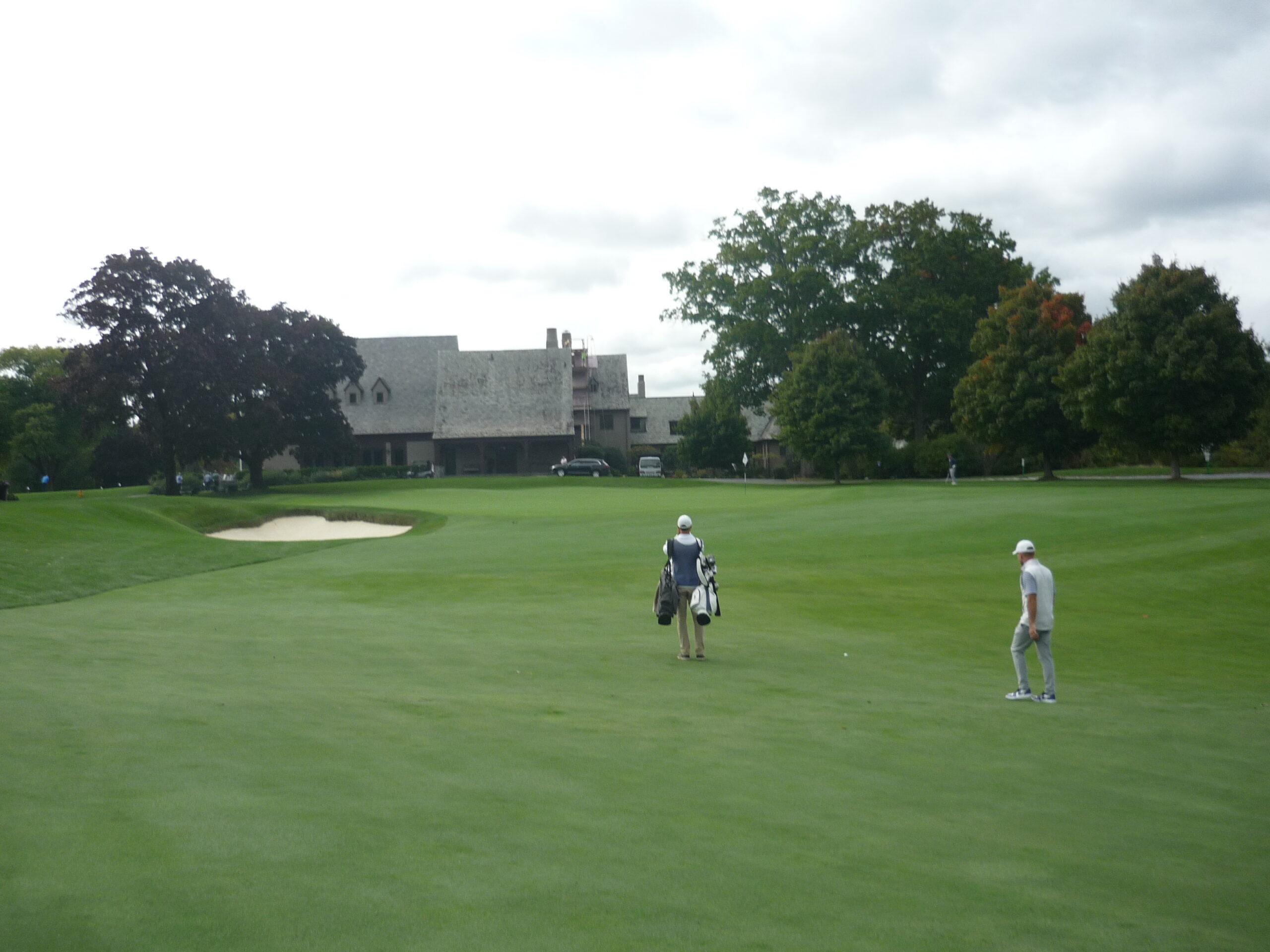
Quaker Ridge sits in a zip code of heavy hitters with Winged Foot across the street. I thought it more than held its own as a testing course. You need to be hitting the ball quite well to post a good score. If you’re round is like mine, you’ll also want the bunker game to be sharp. It became a joke in our group that the sand was my natural habitat! Despite all the bunker practice, this was a delightful fall round of golf on a Tillinghast beauty.