

Plainfield Country Club – Played Fall 2024
- Rankings: Golf Digest #65, Golf Magazine #50
- Location: 1581 Woodland Avenue, Plainfield, New Jersey
- Year: 1916
- Original Architect: Donald Ross
- Additional Work By: Gil Hanse
- Course Access: Private
- Walking Rules: Carts & Caddies Available
Score Card Information:
- Championship: 7,110 yards, Par 72, 74.7 Rating/138 Slope
- Plainfield: 6,616 yards, Par 72, 72.6 Rating/136 Slope
- Ross: 6,356 yards, Par 72, 71.3 Rating/131 Slope
- Hillside: 6,069 yards, Par 72, 70.2 Rating/127 Slope
- Calkins: 5,452 yards, Par 72, 67.5 Rating/121 Slope (Men’s), 72.9 Rating/135 Slope (Women’s)
- Club: 4,719 yards, Par 72, 64.4 Rating/114 Slope (Men’s), 69.1 Rating/123 Slope (Women’s)
Plainfield Country Club in New Jersey is a course you’ve probably heard about if you are into golf course architecture at all. It dates back to 1890 when it was founded as a tennis club. The golf course was designed by Donald Ross years later (1916 or 1921, depending on the source) and was recently restored by Gil Hanse.
The restoration included tree removal as almost all of these projects do. In addition, lost bunkers were recovered, greens were expanded, and holes were lengthened.
Prior to the course work, Plainfield hosted the 1978 US Amateur and the 1987 US Women’s Open, which were won by John Cook and Laura Davies, respectively. After work was done, they hosted the PGA Tour’s Barclays event in 2011 and 2015 with Dustin Johnson and Jason Day winning. Aside from Dame Laure, there must be a thing about “J” names here.
Alright, now that we’ve had a brief history lesson, let’s get into the course tour!
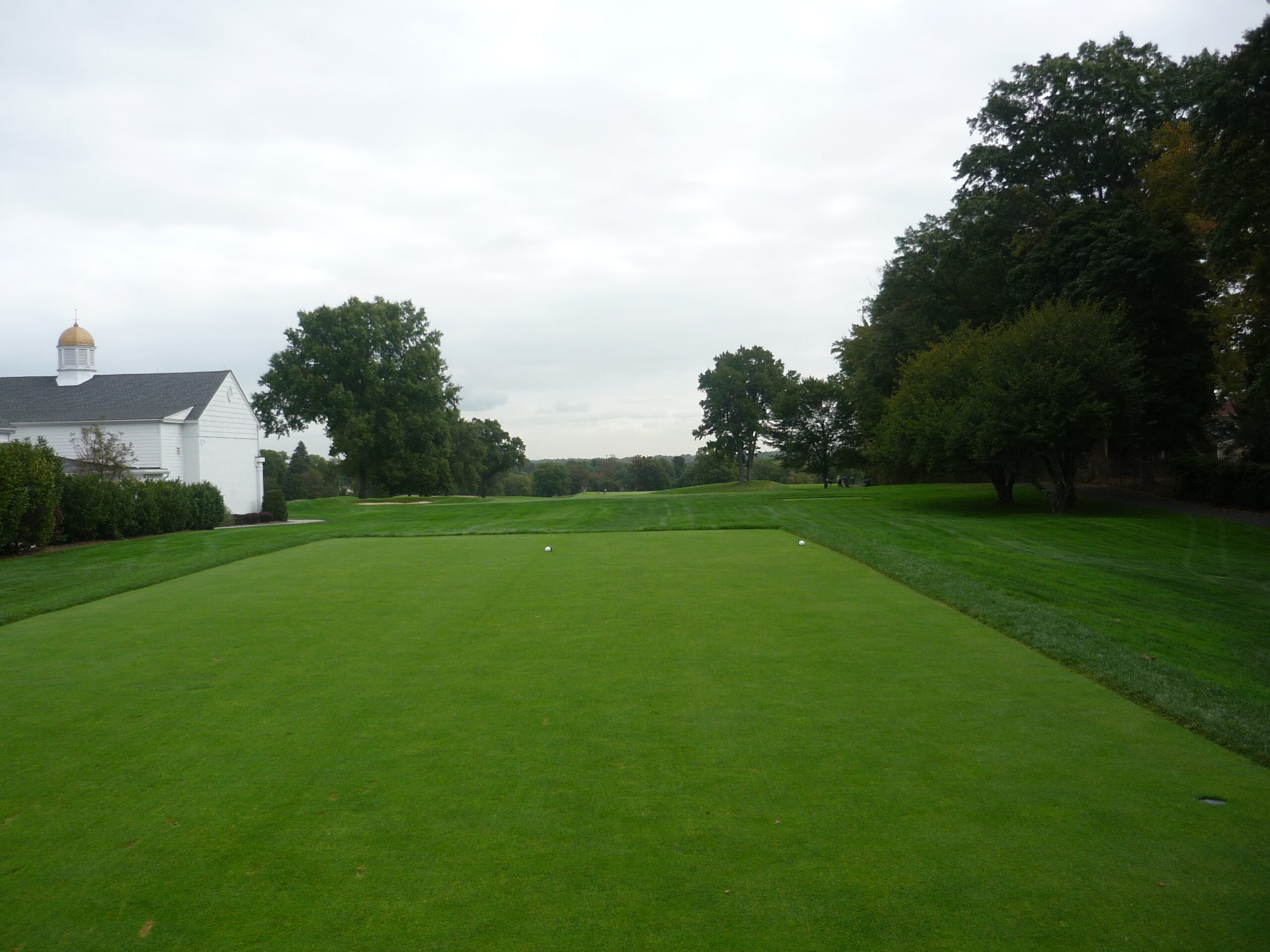
Hole 1 – 421 yards – Par 4
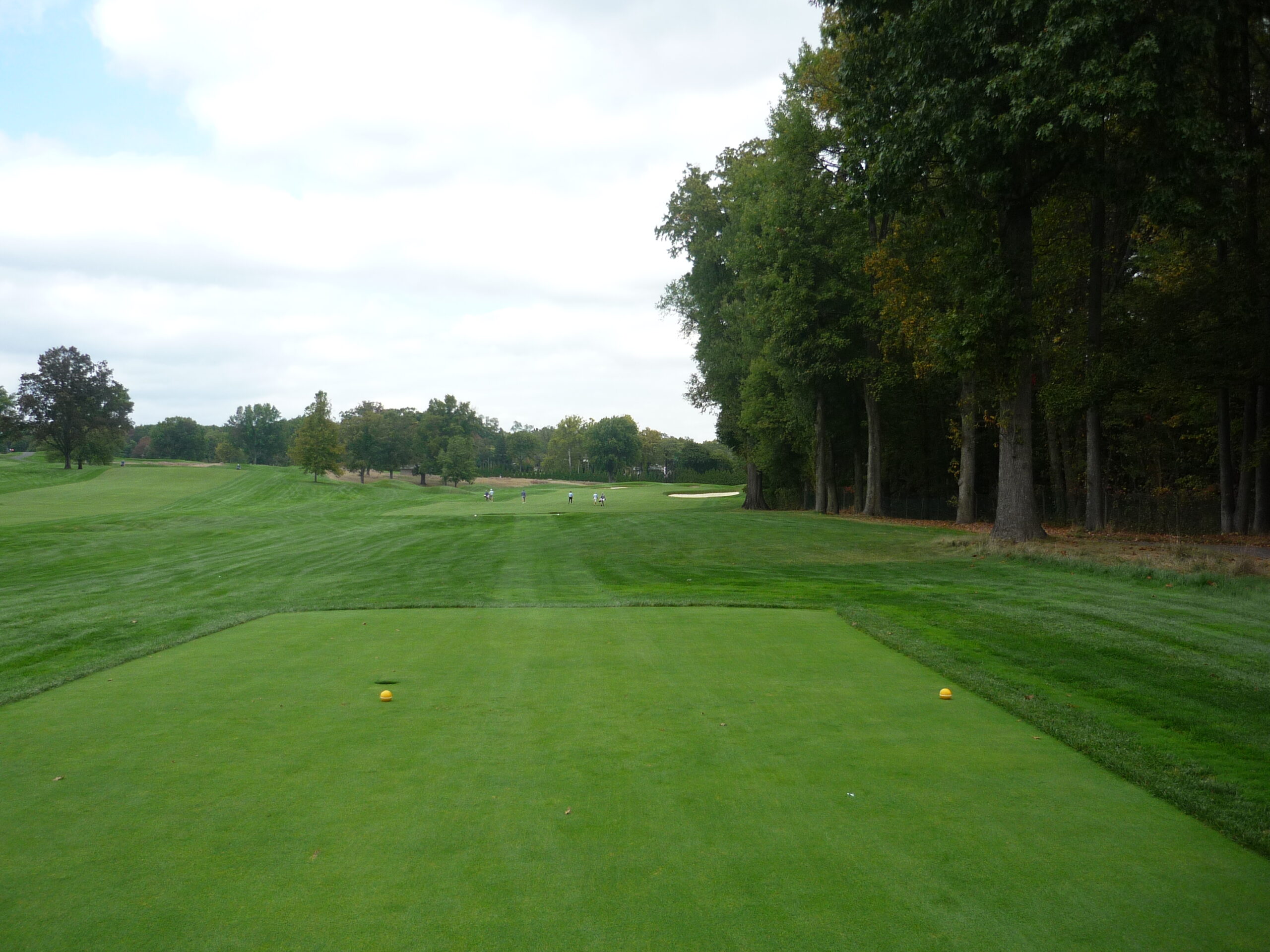
The sixth tee is in range just to the right of the trees along the right side. However, don’t let that distract you from the generous fairway that is just out of your field of vision. A good drive will set you up to attack right out of the gate.
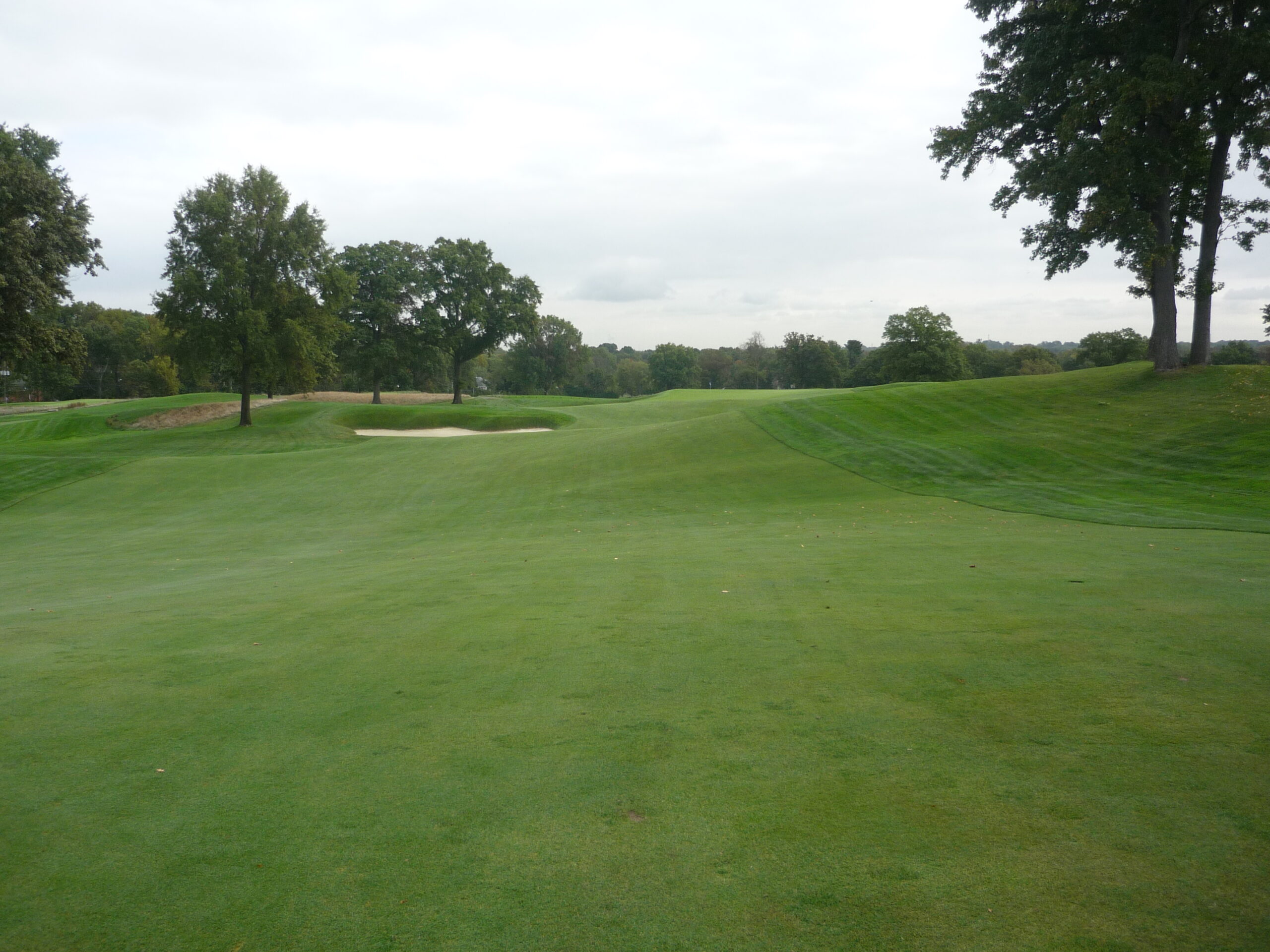
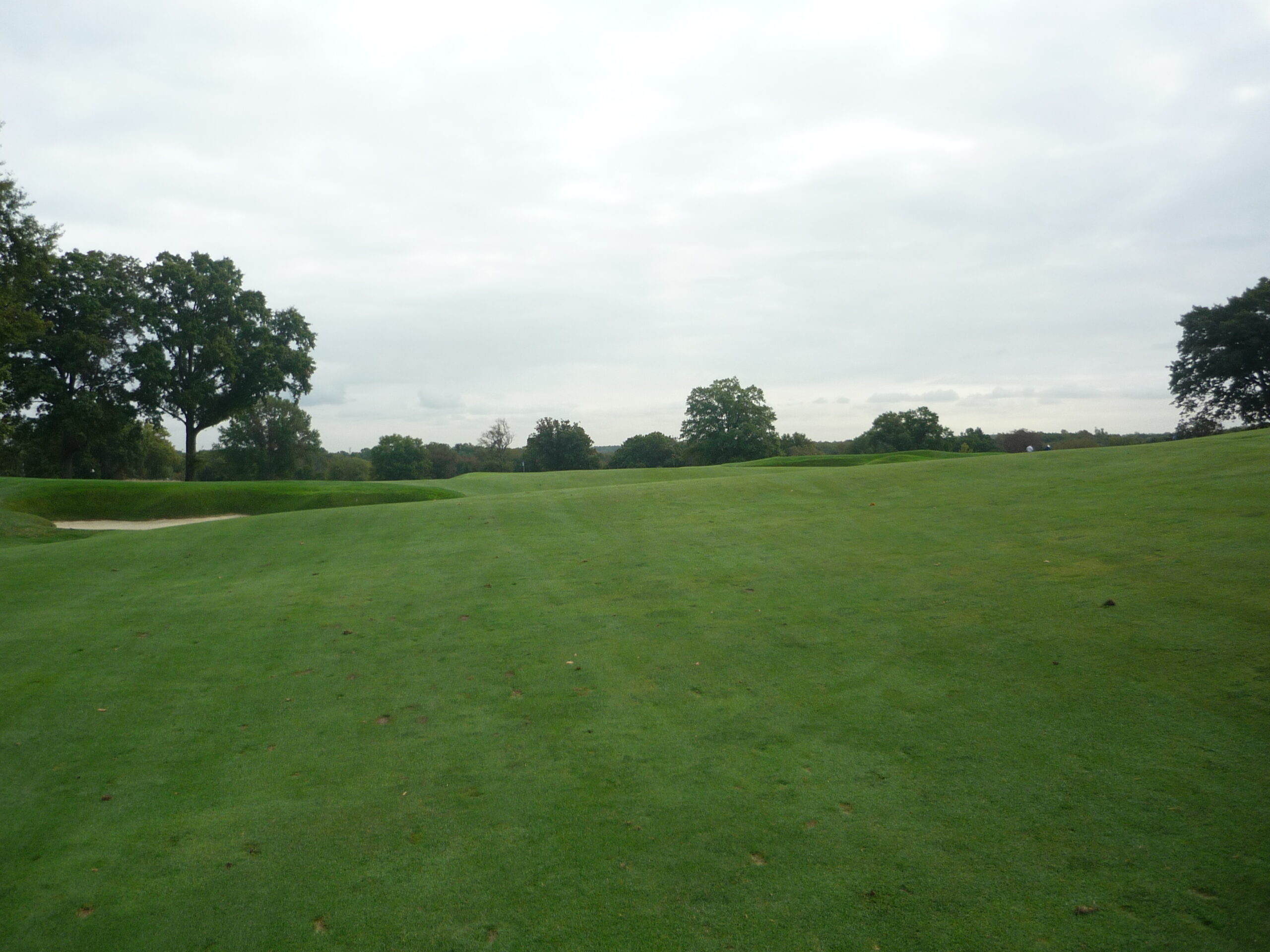
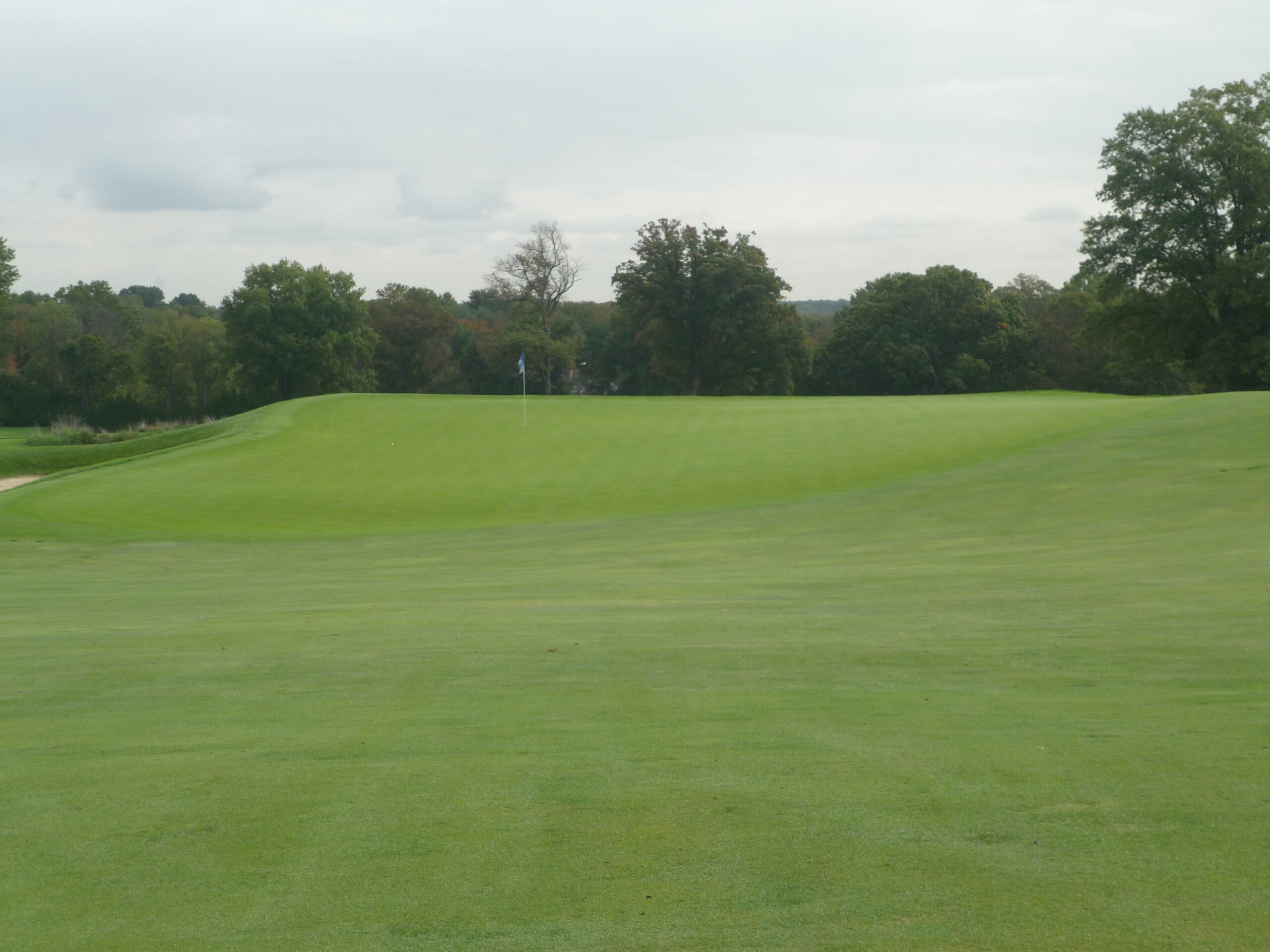
As you walk along this hole, the fairway emerges to show the land movement seen below. You can carry your approach shot all the way into the green if you like, but you also have the option of using the contouring short and right of the green.
Hole 2 – 425 yards – Par 4
Good drives can get over the ridge in the fairway and get extra distance. There is nothing bad about that since it will make your second shot a bit easier to this turtle-backed green with a false front.
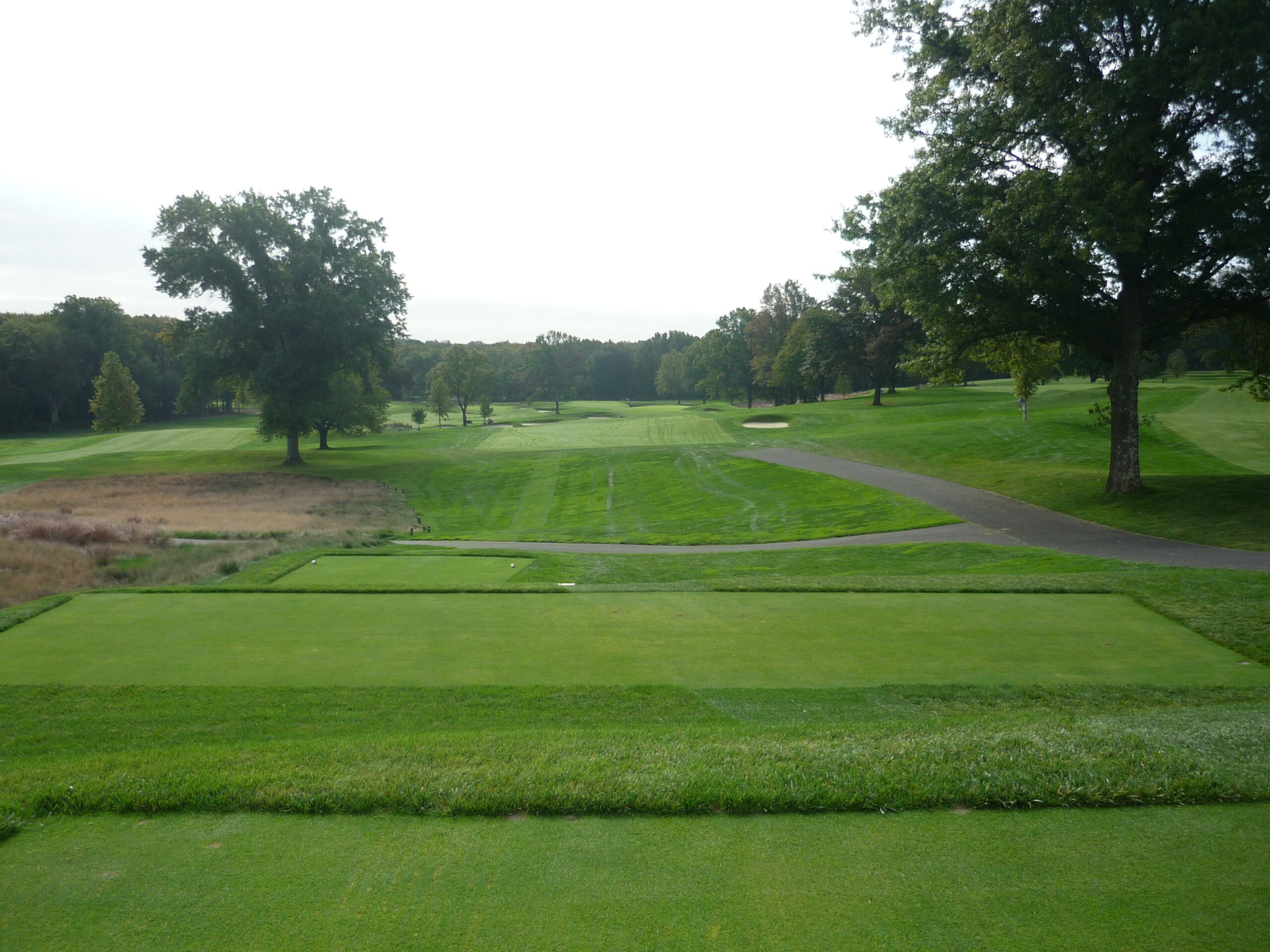
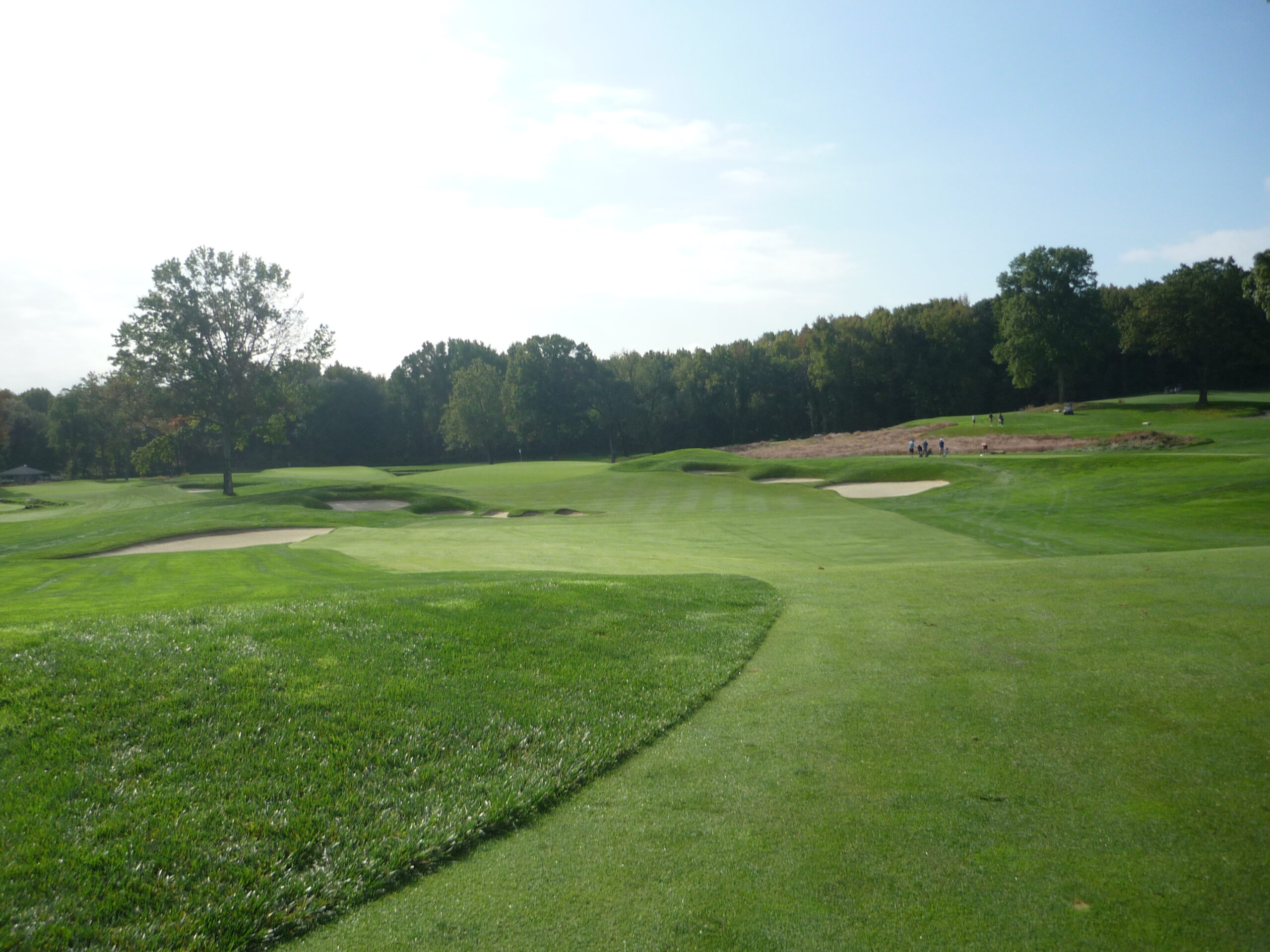
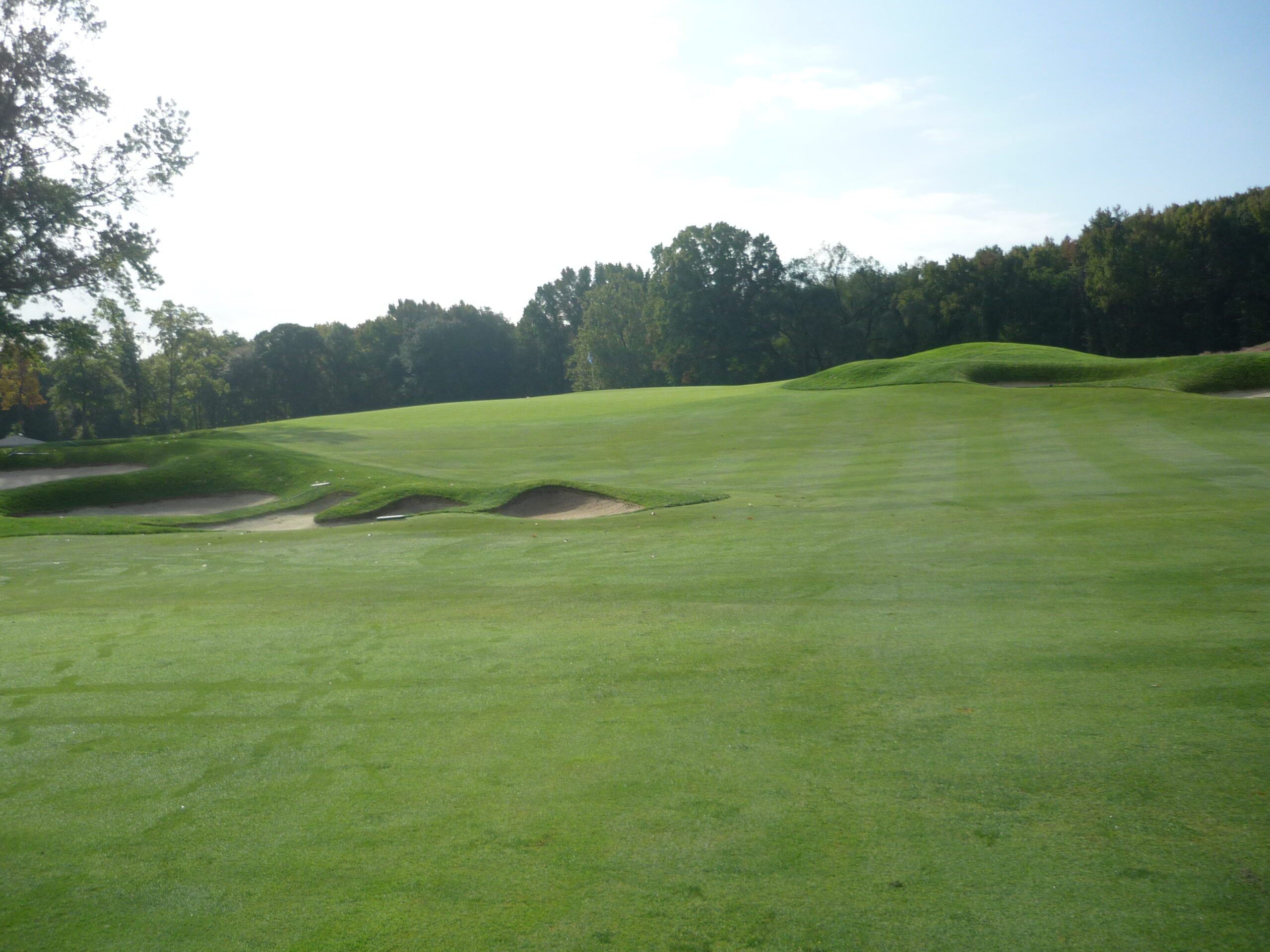
The photo below really illustrates the false front and overall green shape.
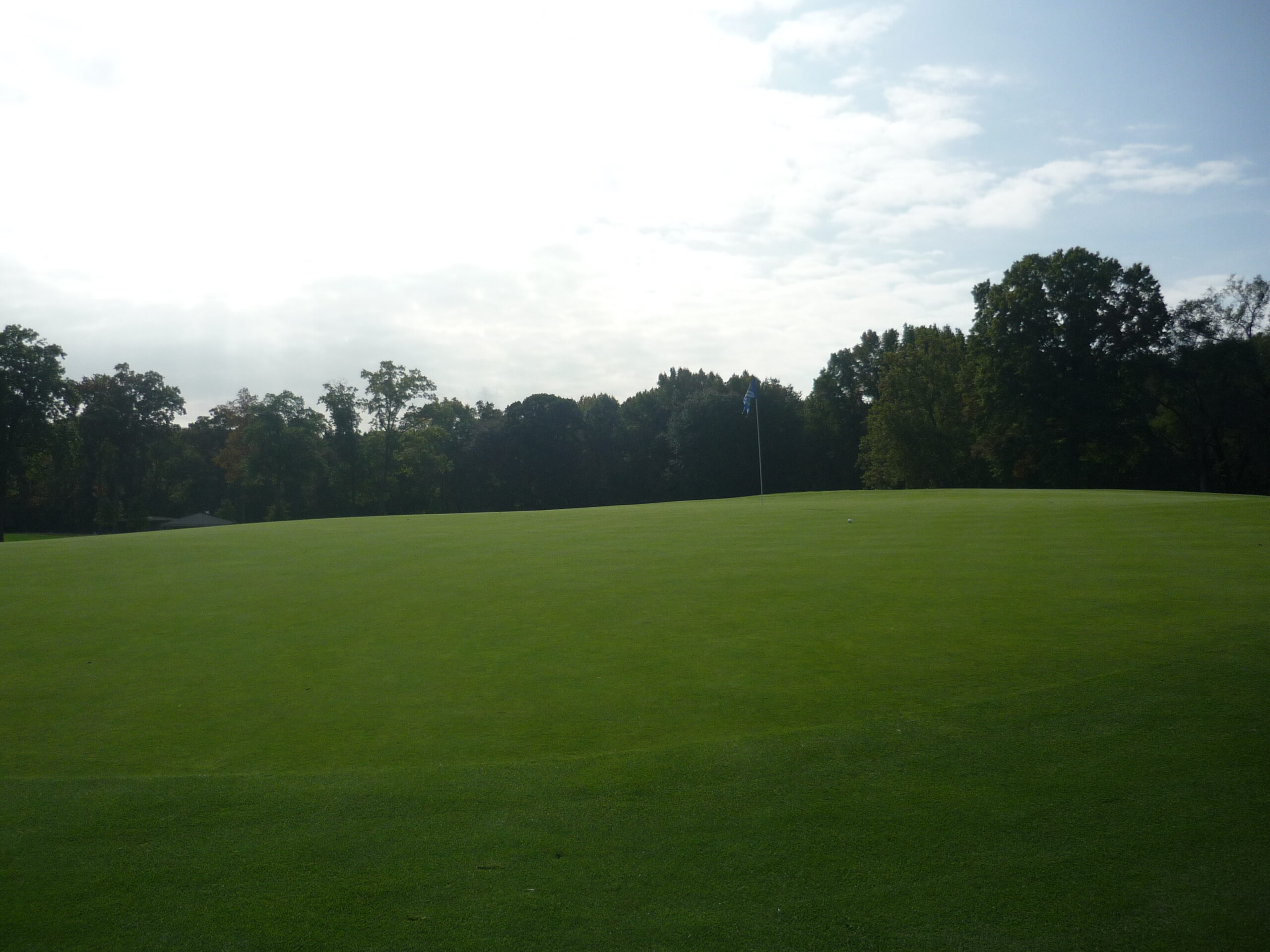
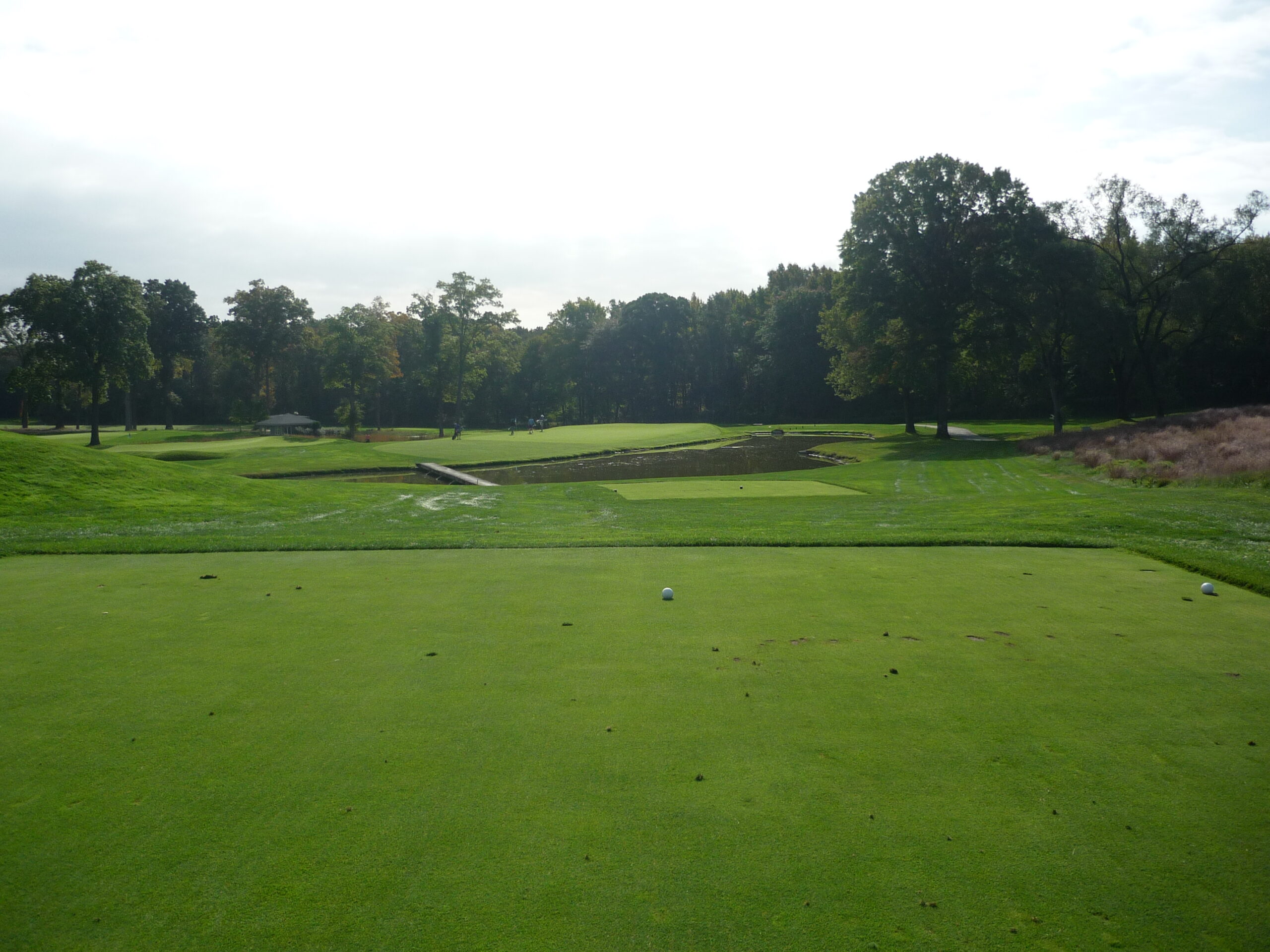
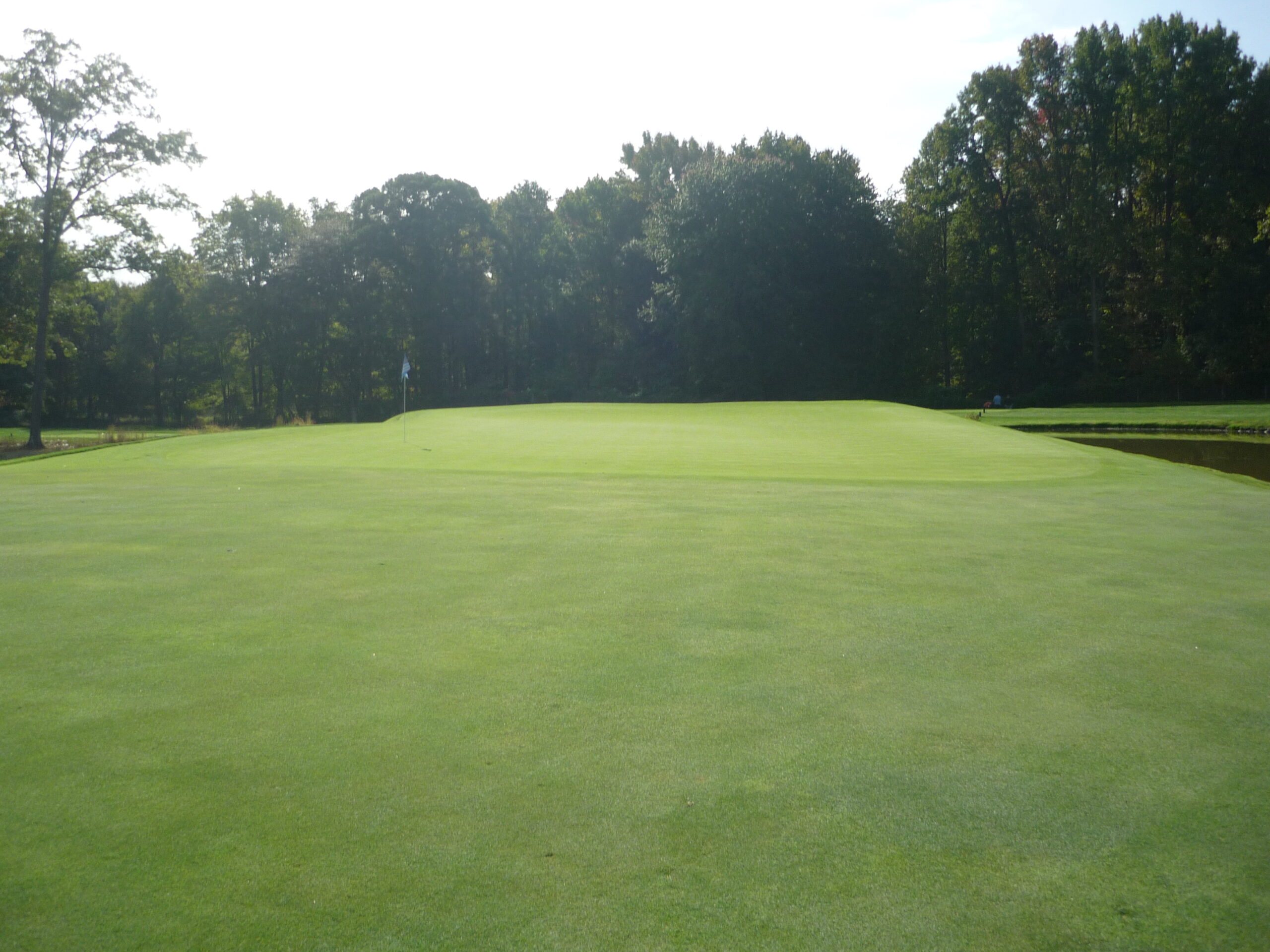
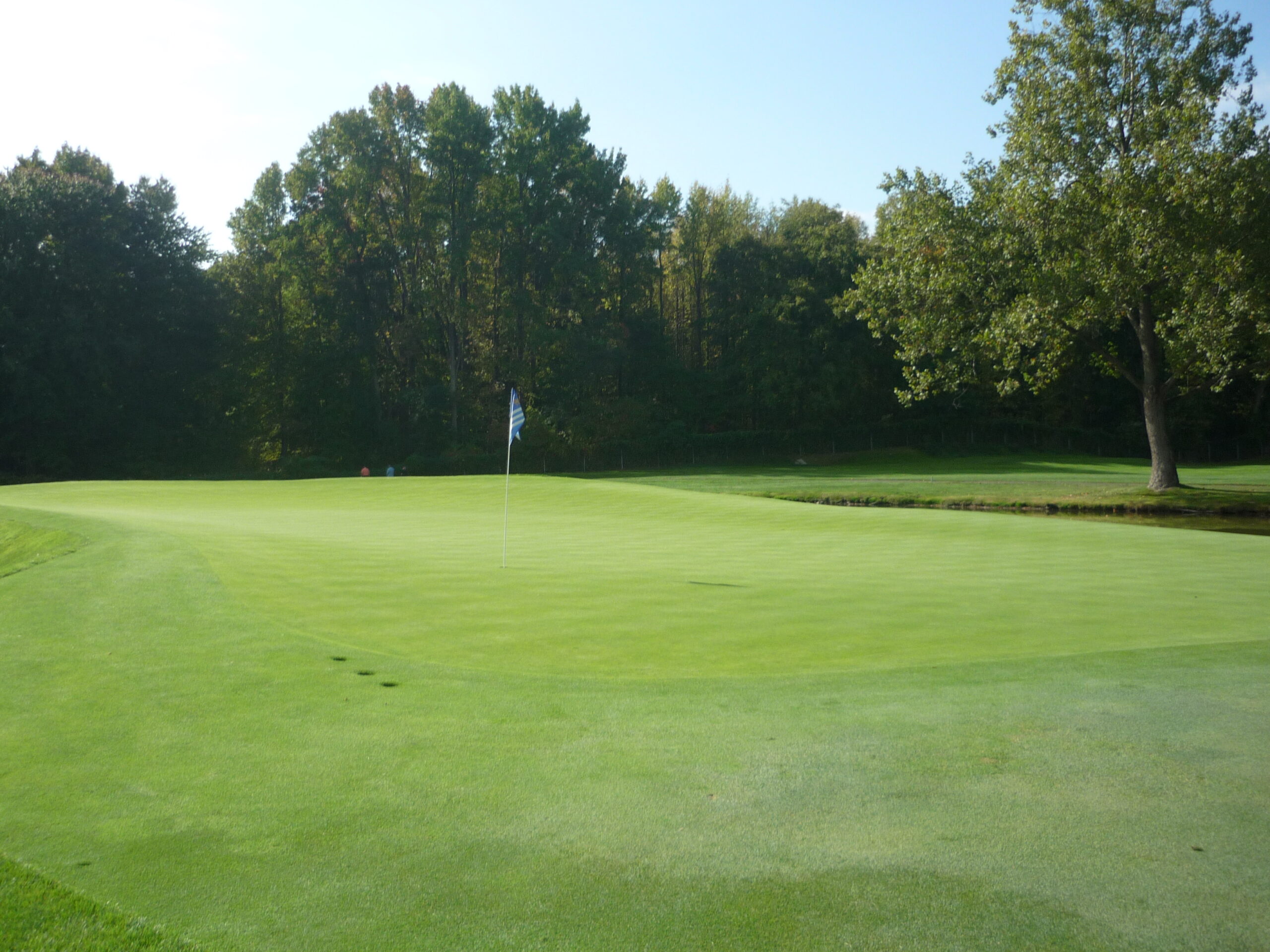
Hole 3 – 164 yards – Par 3
Precision is key on this hole. Shots missed short or right can roll back into the water due to the closely mown grass. Chipping from behind the green is no picnic either. The short grass area to the left offers a chance to save par and gives you options for how to play a recovery shot.
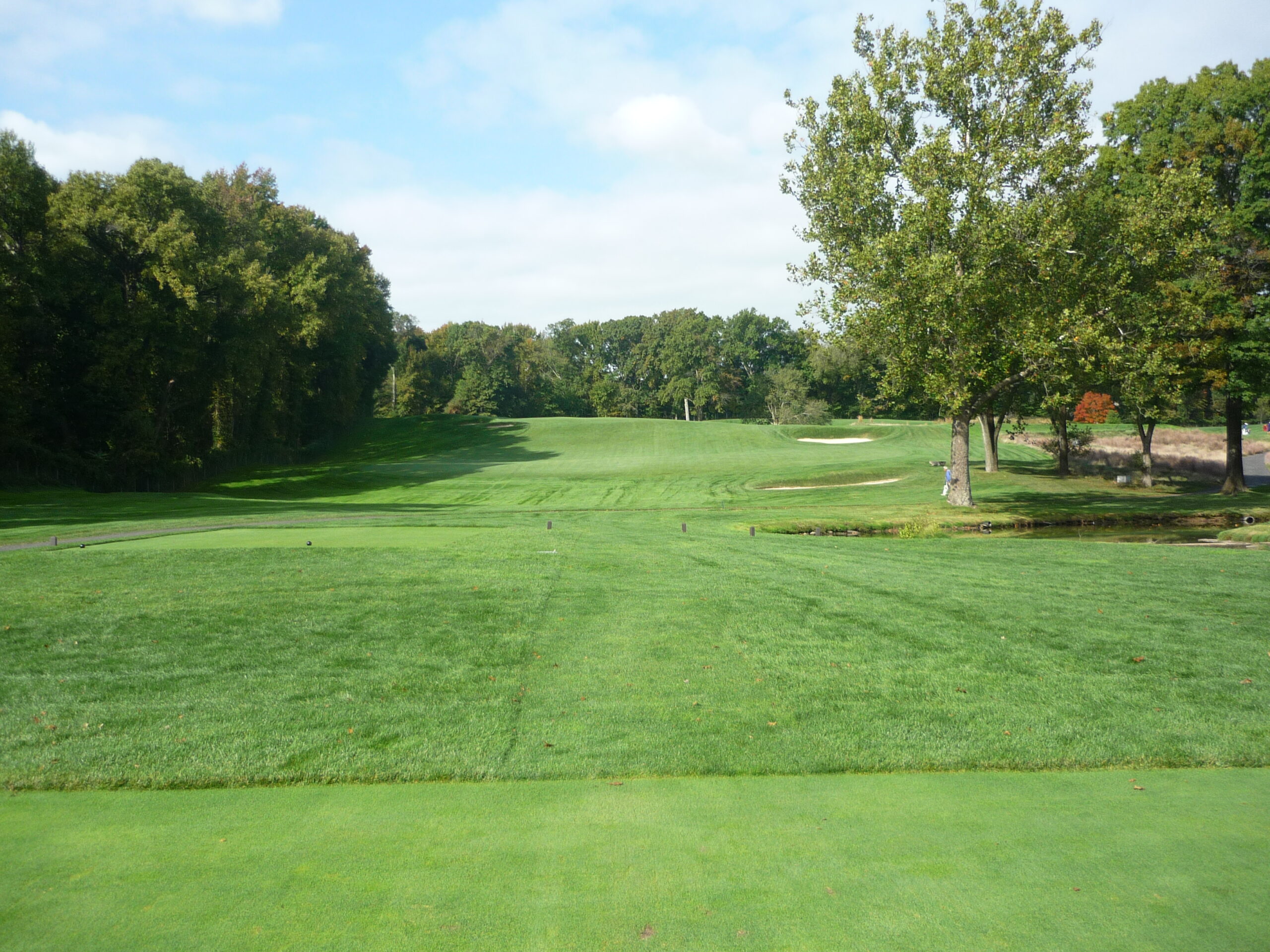
Hole 4 – 268 yards – Par 4
During the restoration, trees were removed along the left side and the pot bunkers on the left were reintroduced. The best angle is up the left side but that brings the bunkers and OB into play. You really have to make a decision off the tee about whether to attack the green or to lay back and approach with a short iron.
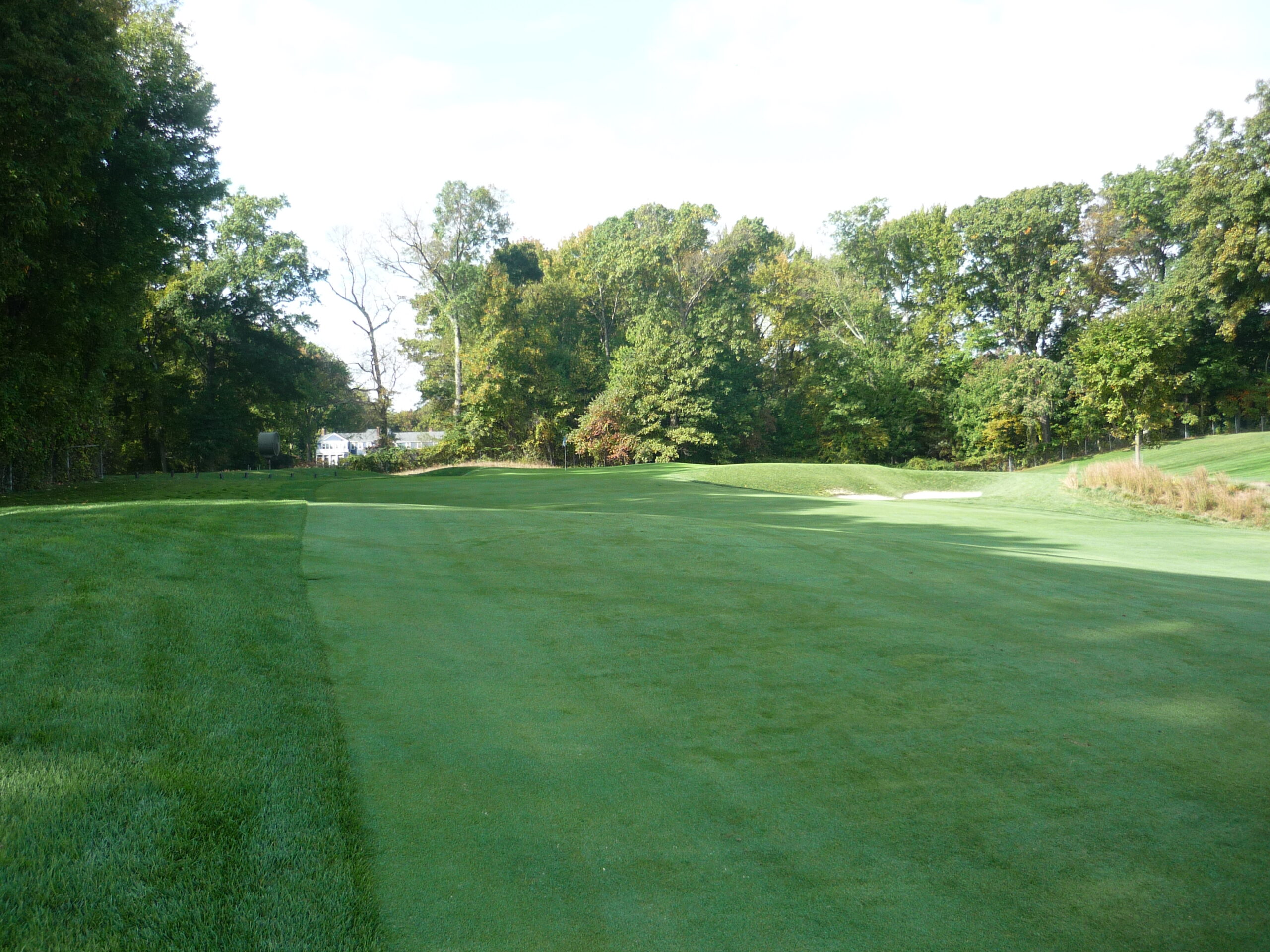
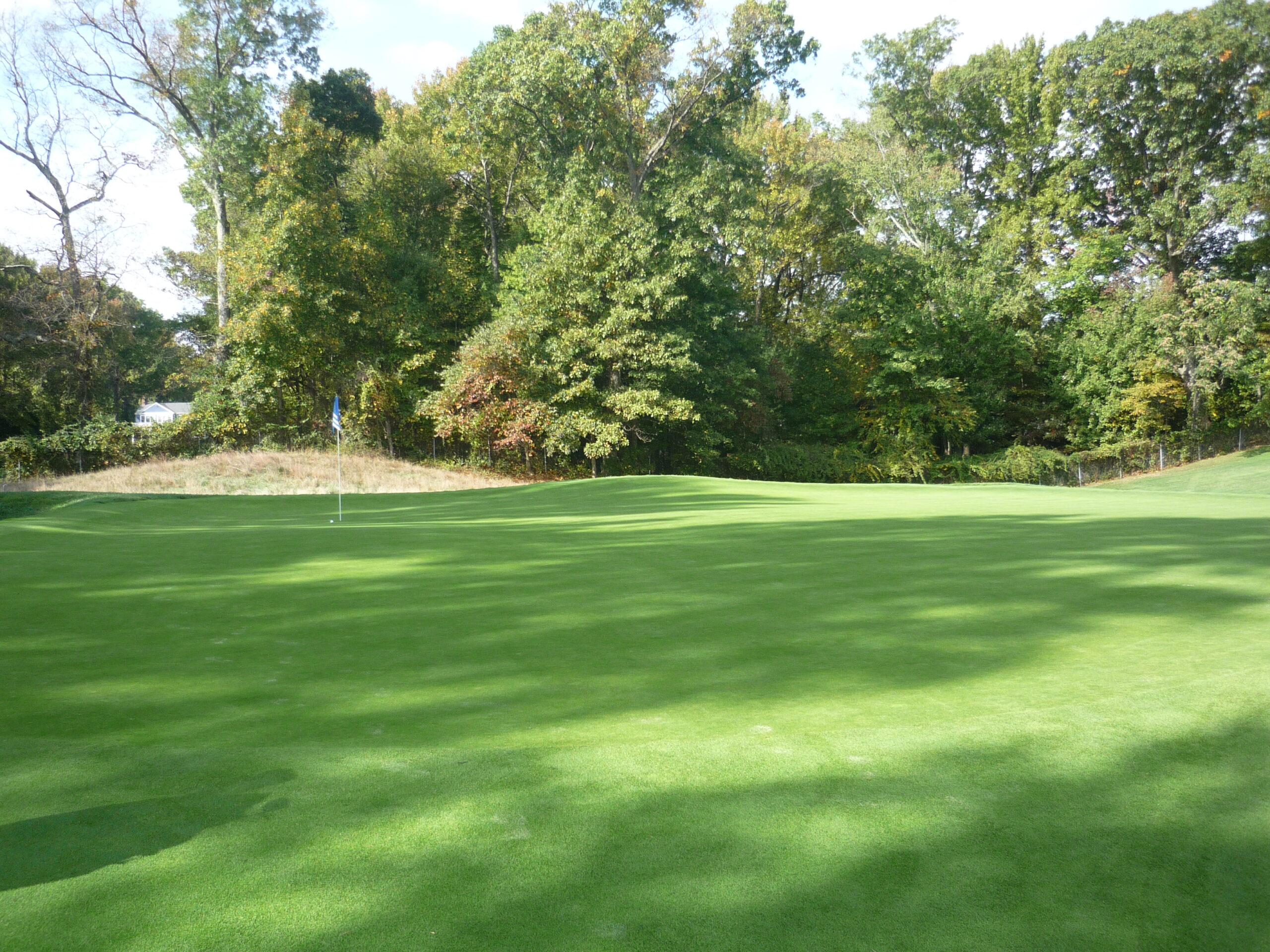
The green has plenty of internal contouring, but not so much that it will repel those attempting to drive the green.
Hole 5 – 509 yards – Par 5
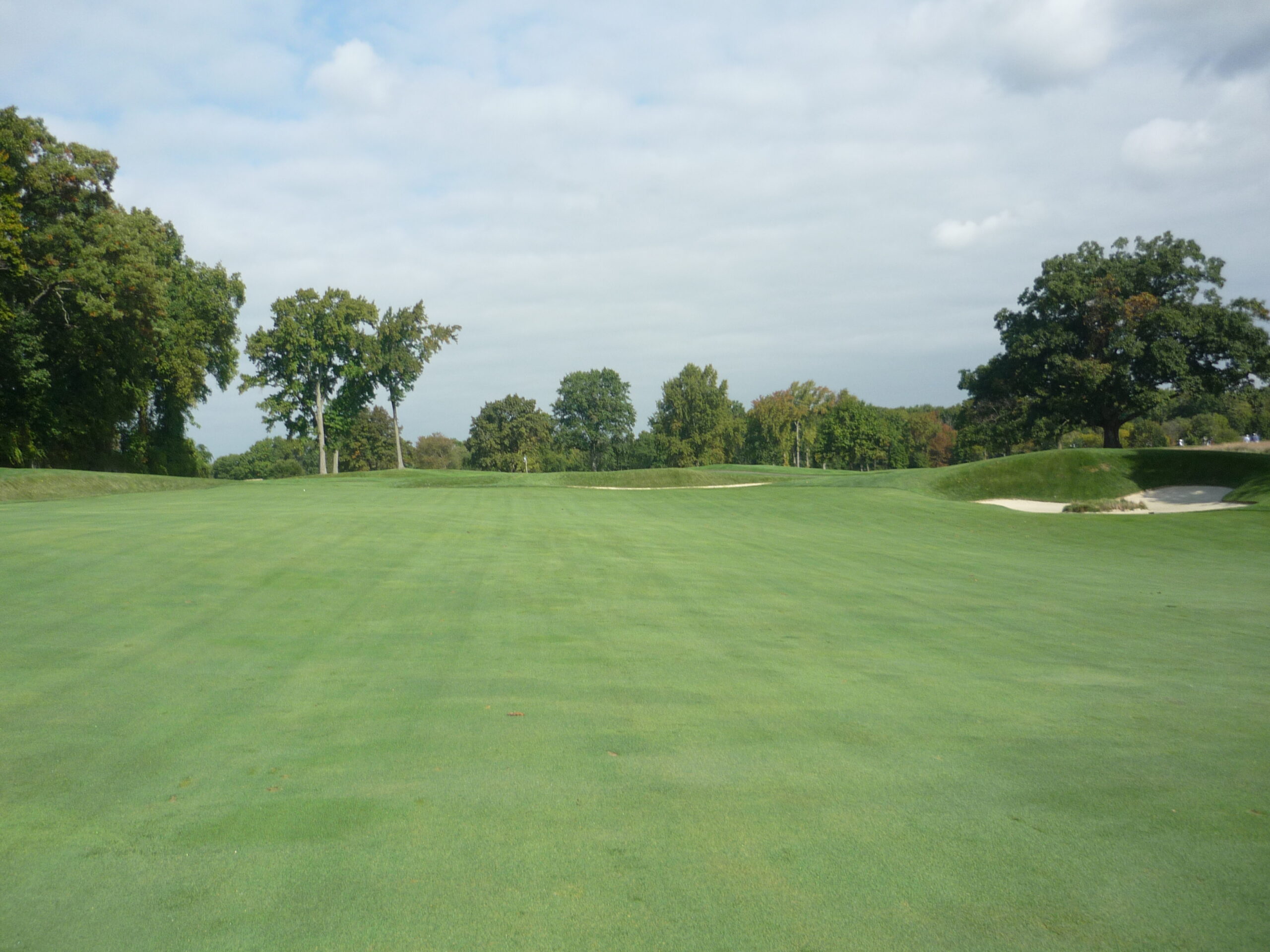
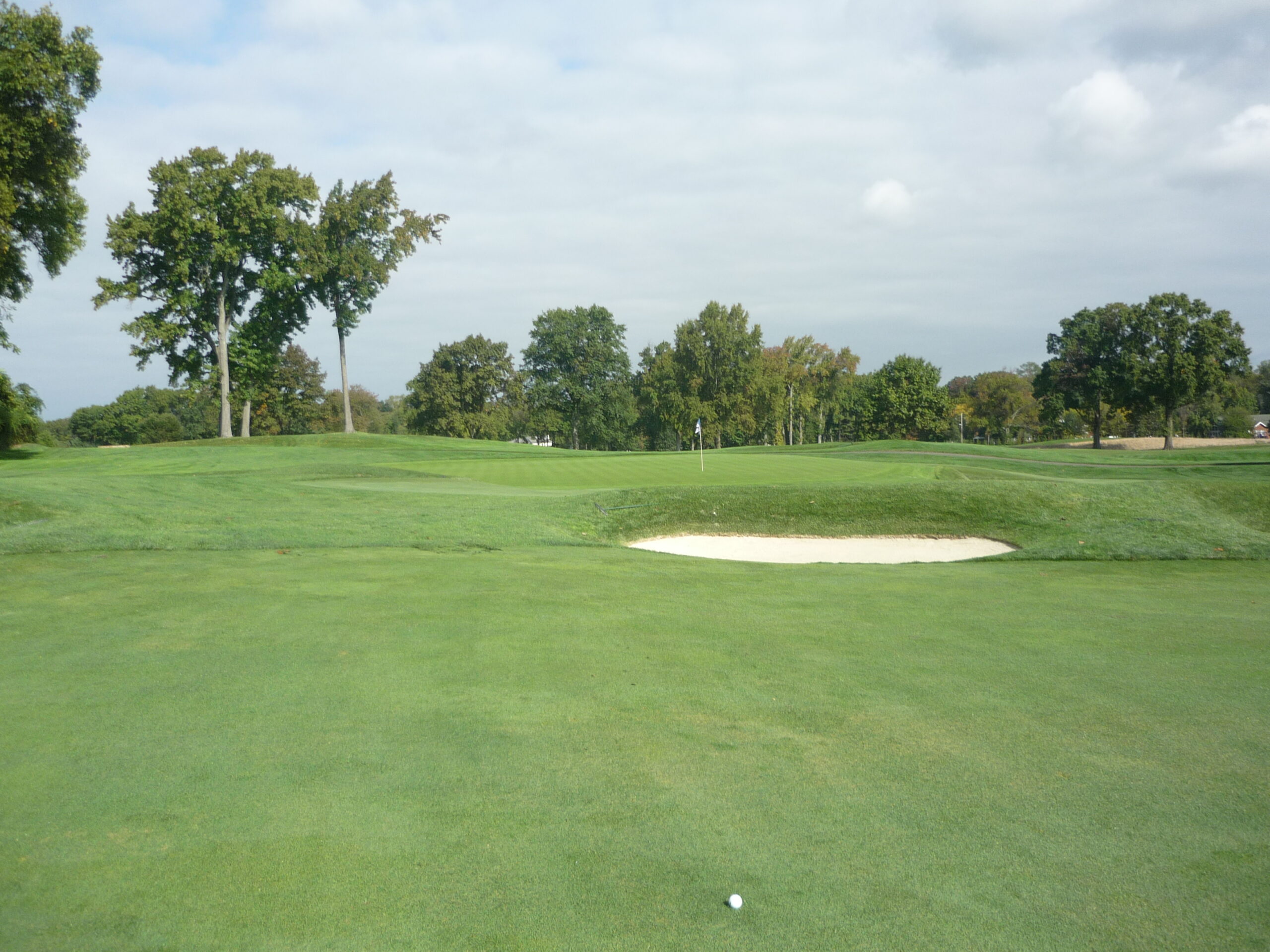
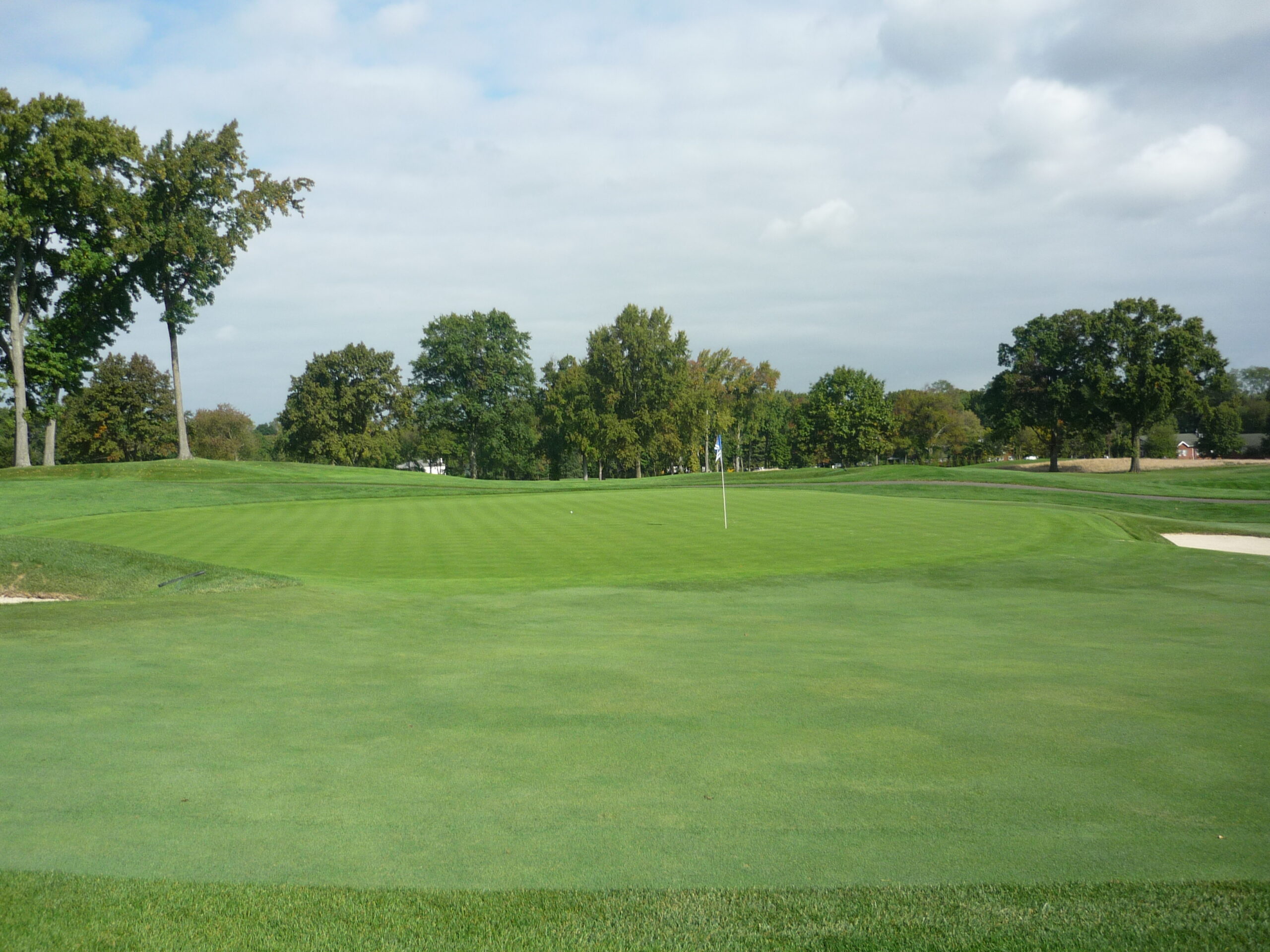
This blind tee shot fives way to a steadily rising fairway once you get over the hill. Cross bunkers will occupy your mind when you are deciding what to do on your second shot.
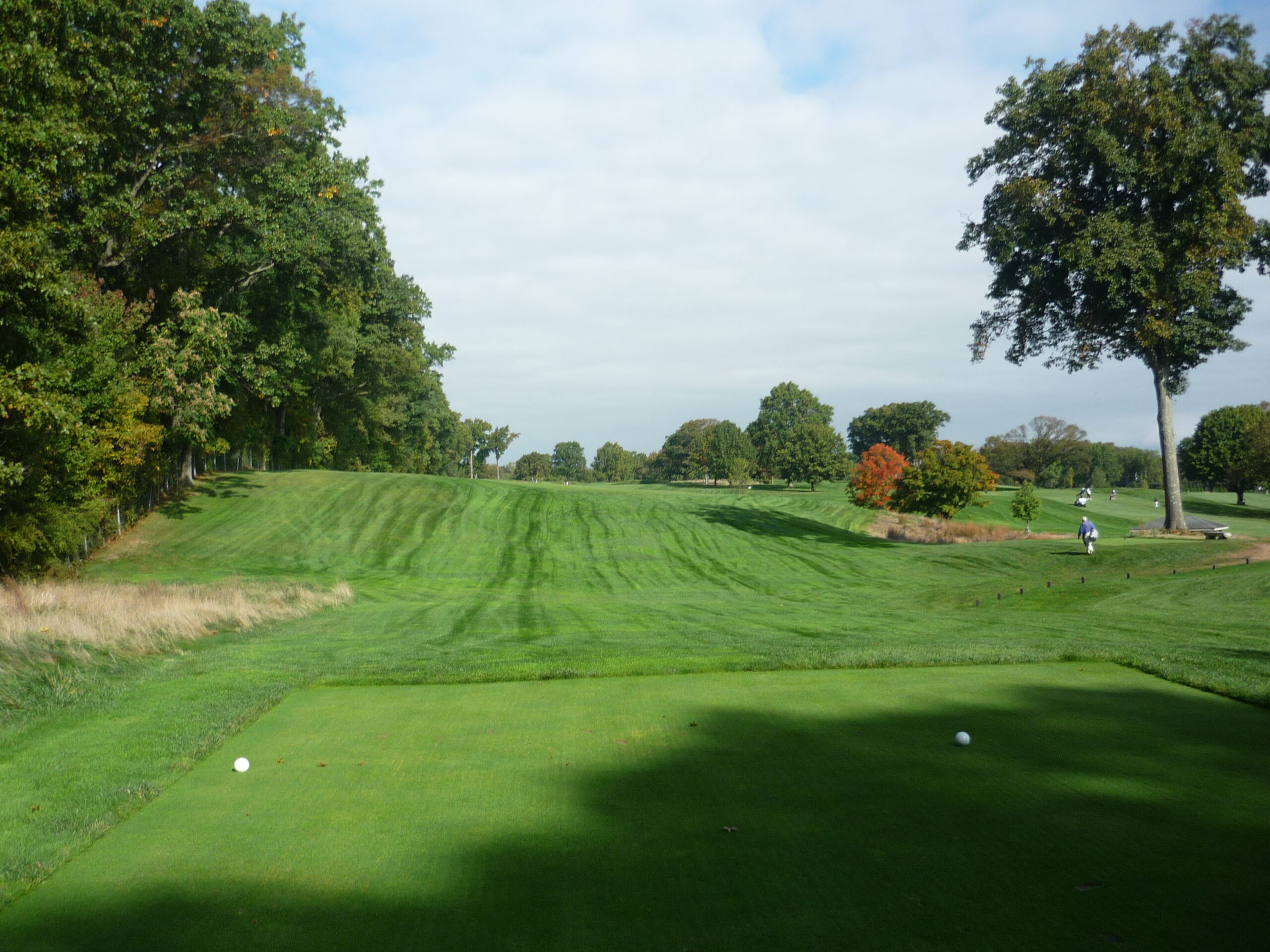
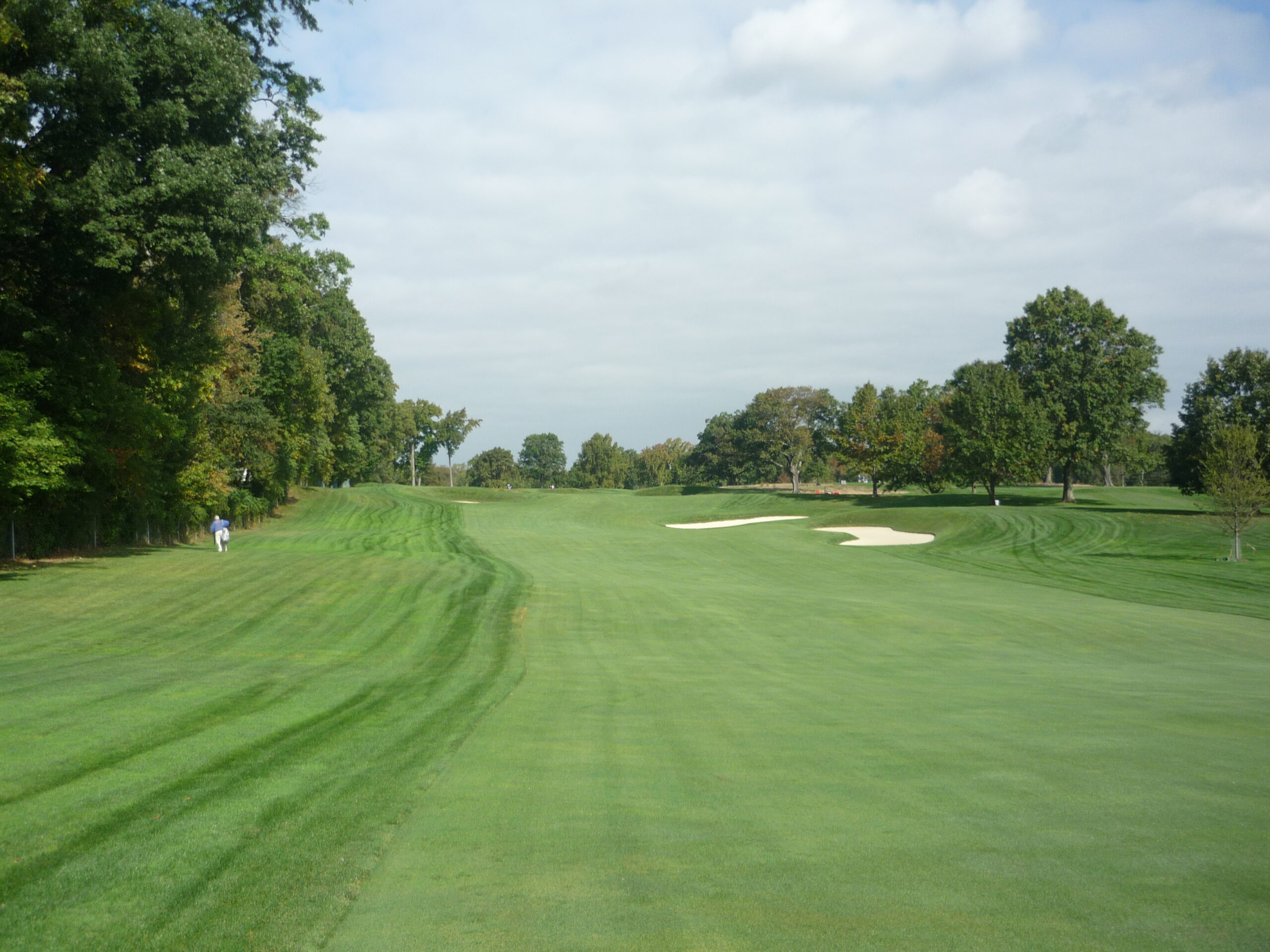
You can see the cross bunkers I mentioned below. Third shots are best played from the left side of the fairway so you can get an open look at the green.
Hole 6 – 141 yards – Par 3
This is the tee that is in range of your drive on number one. Two deception bunkers dot the middle section of the hole to trick your eyes. The green is surrounded by the bunkers that should really concern you. This part of the property makes for difficult aiming since the green looks like it is suspended.
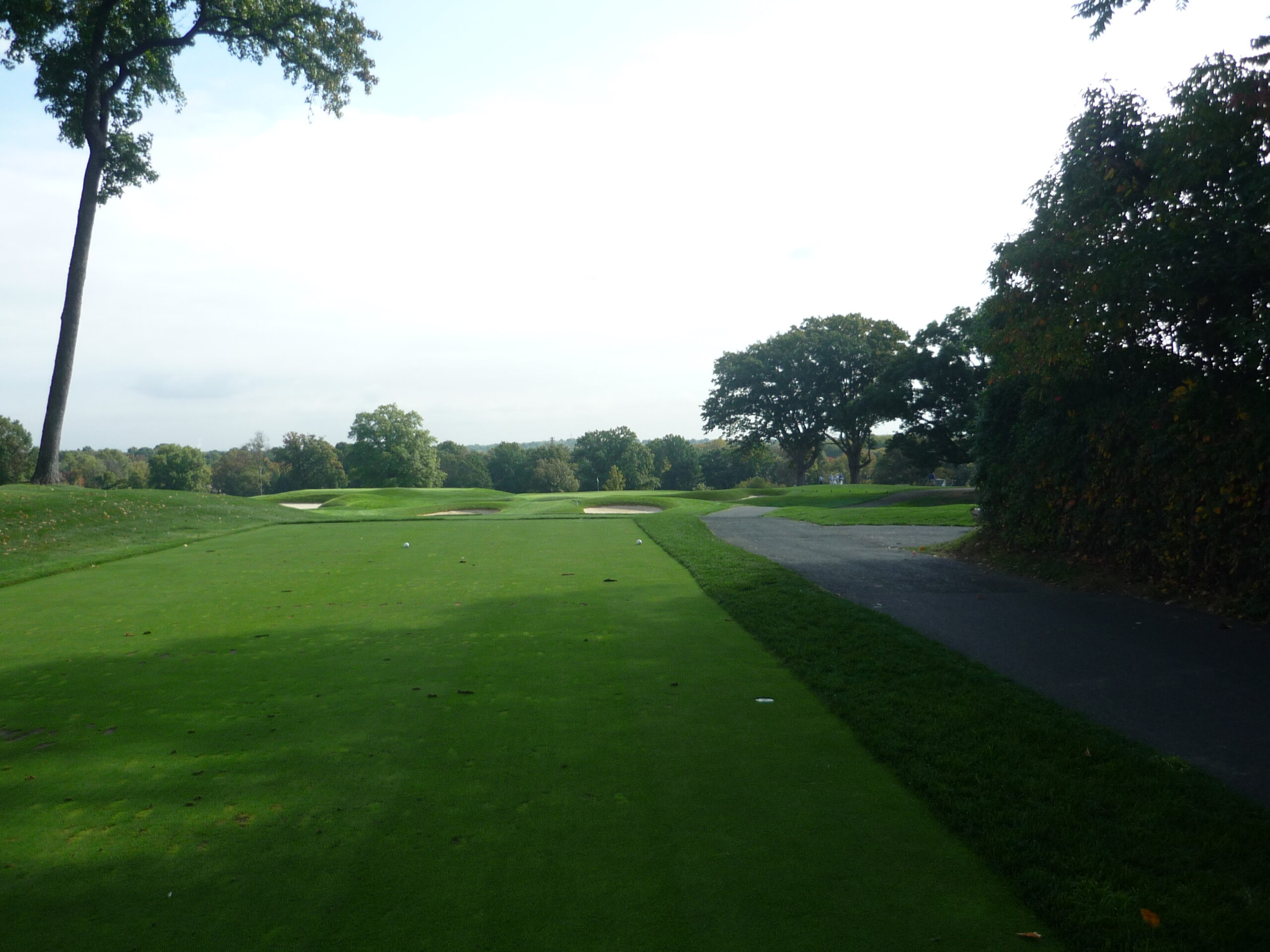
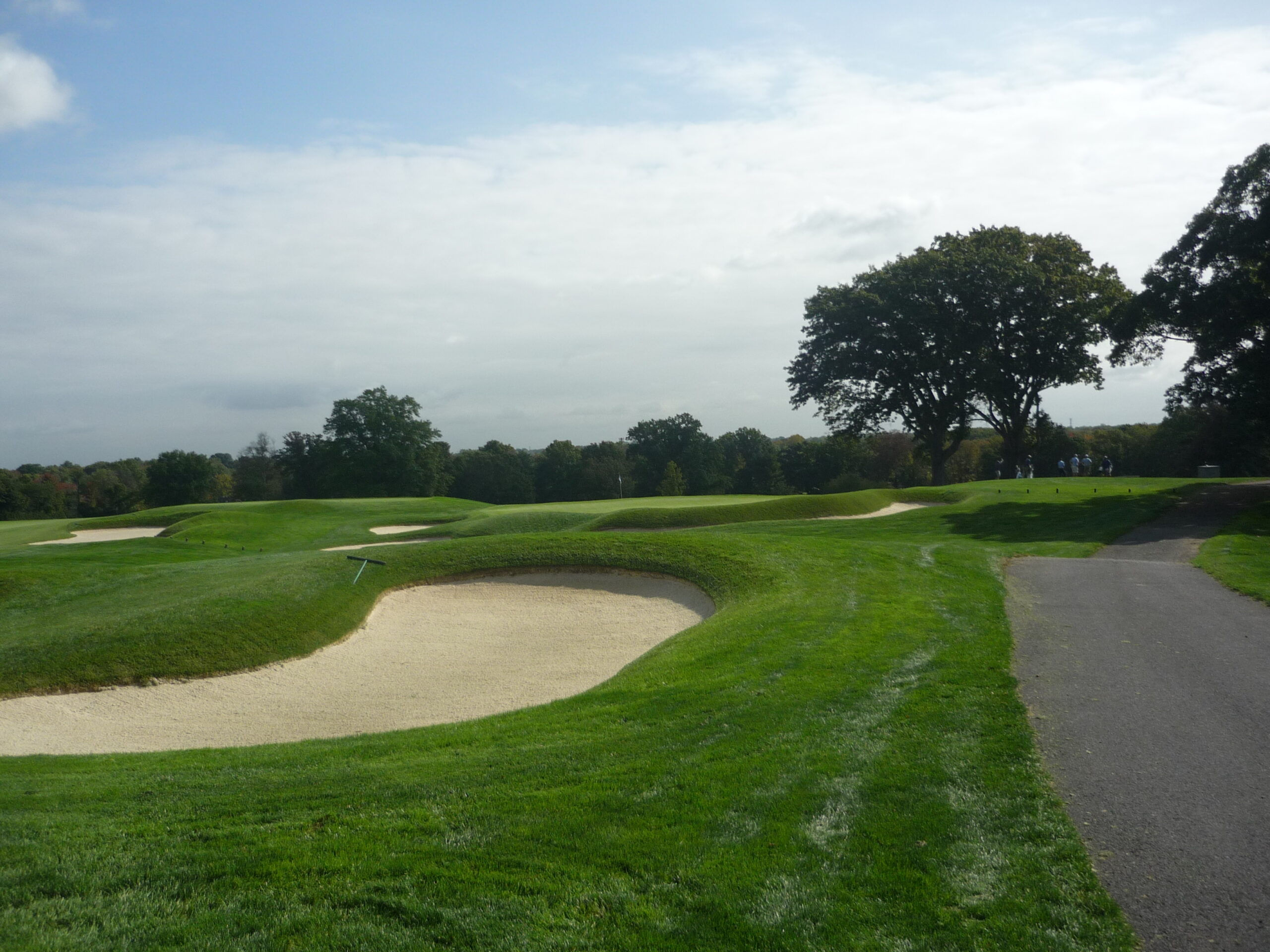
The putting surface features a great deal of slope that can make for some awkward putts.
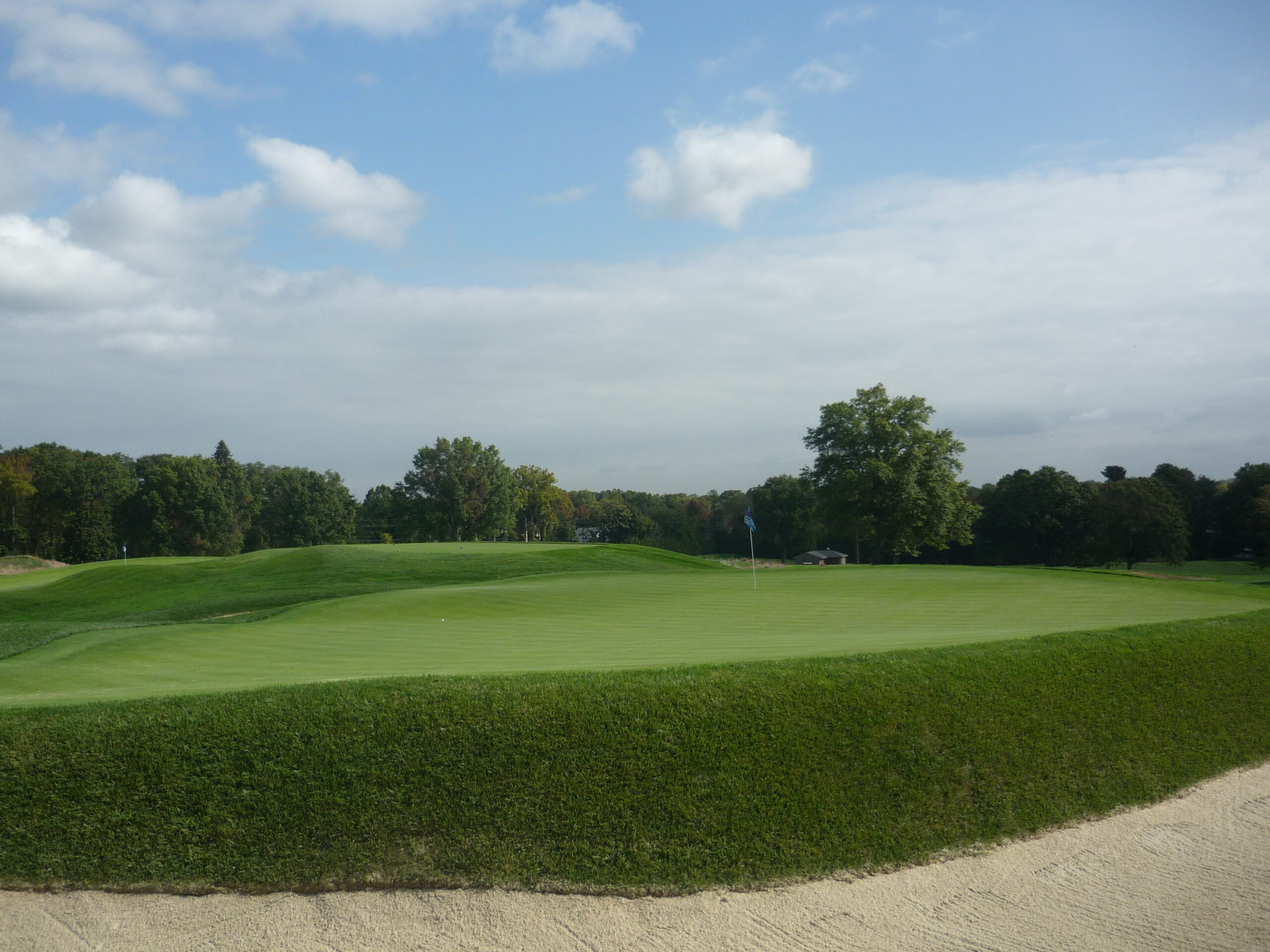
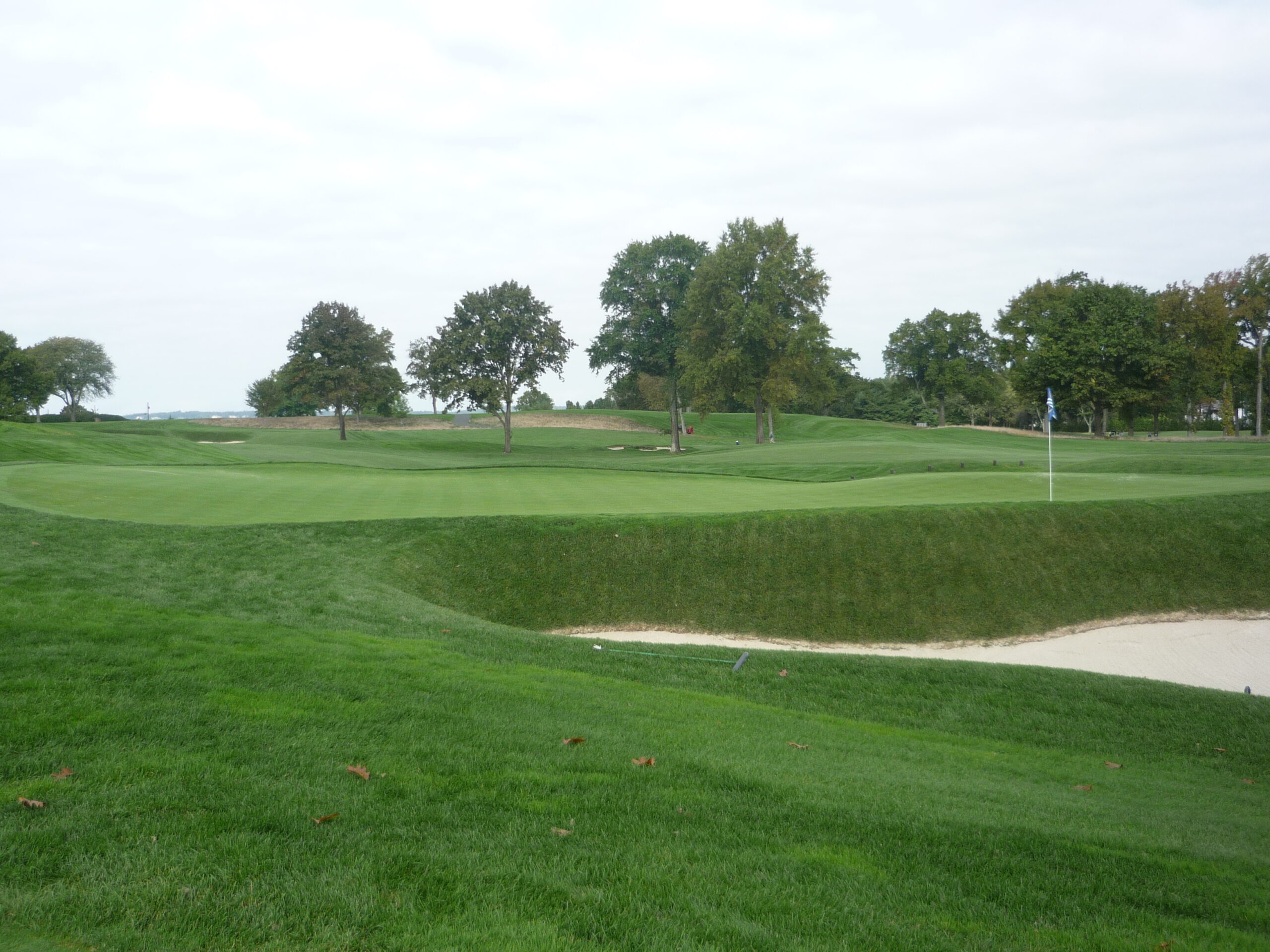
Hole 7 – 390 yards – Par 4
This tee shot plays to a blind landing area that is fronted by mostly decorative bunkers. The bunkers to worry about sit in a formation along the left side of the hole.
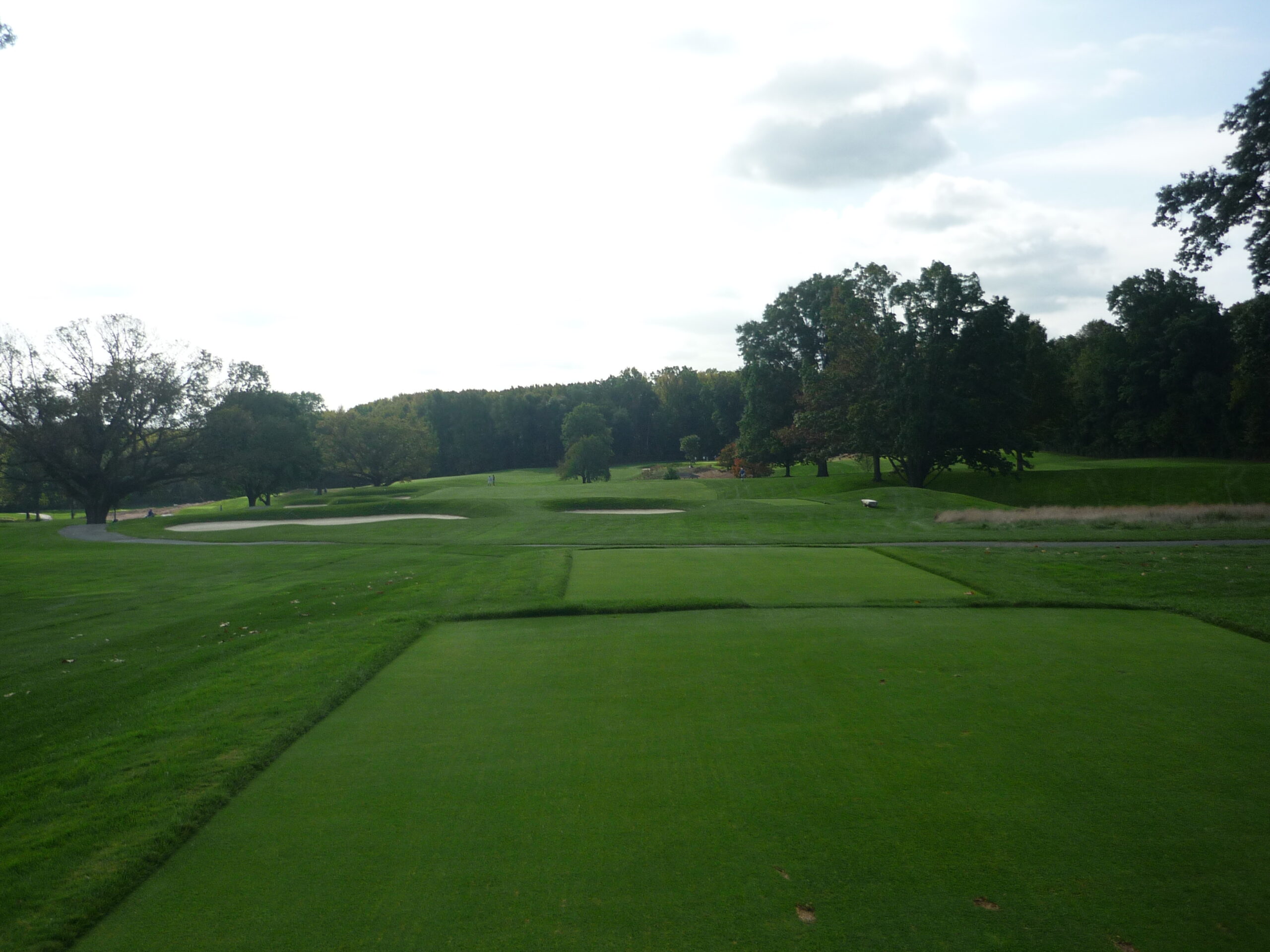
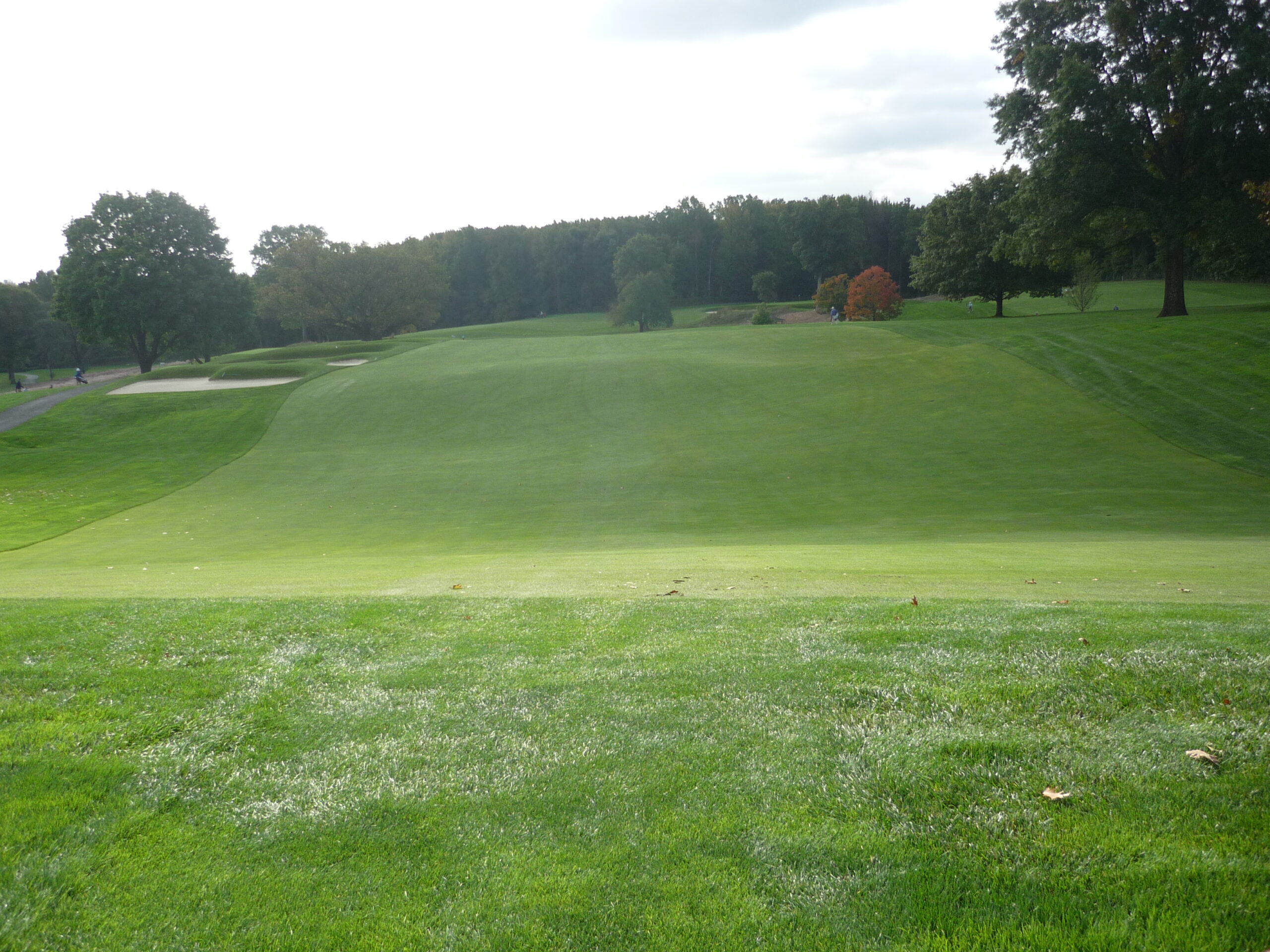
Good drives will take the slope and get some extra run out.
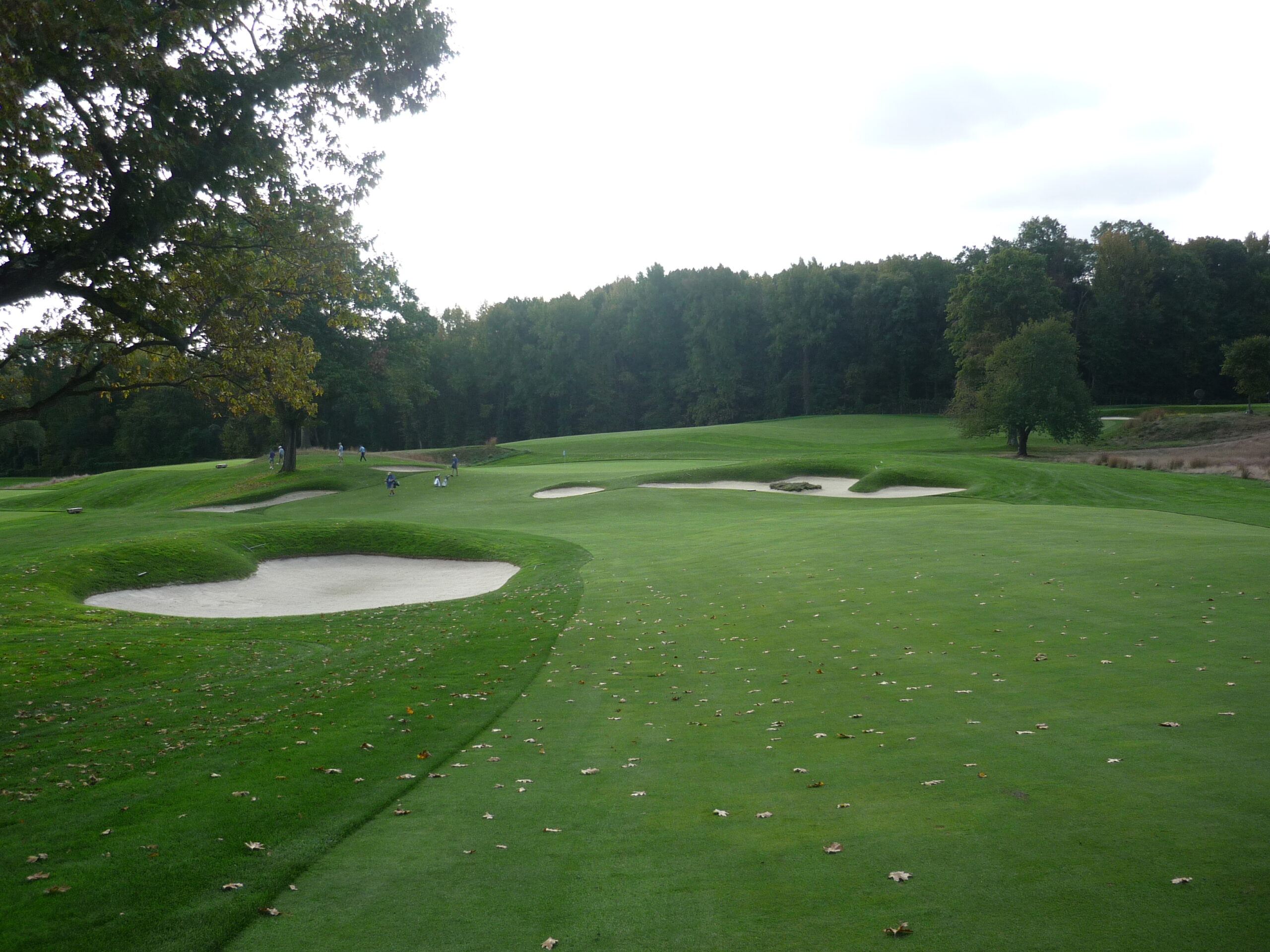
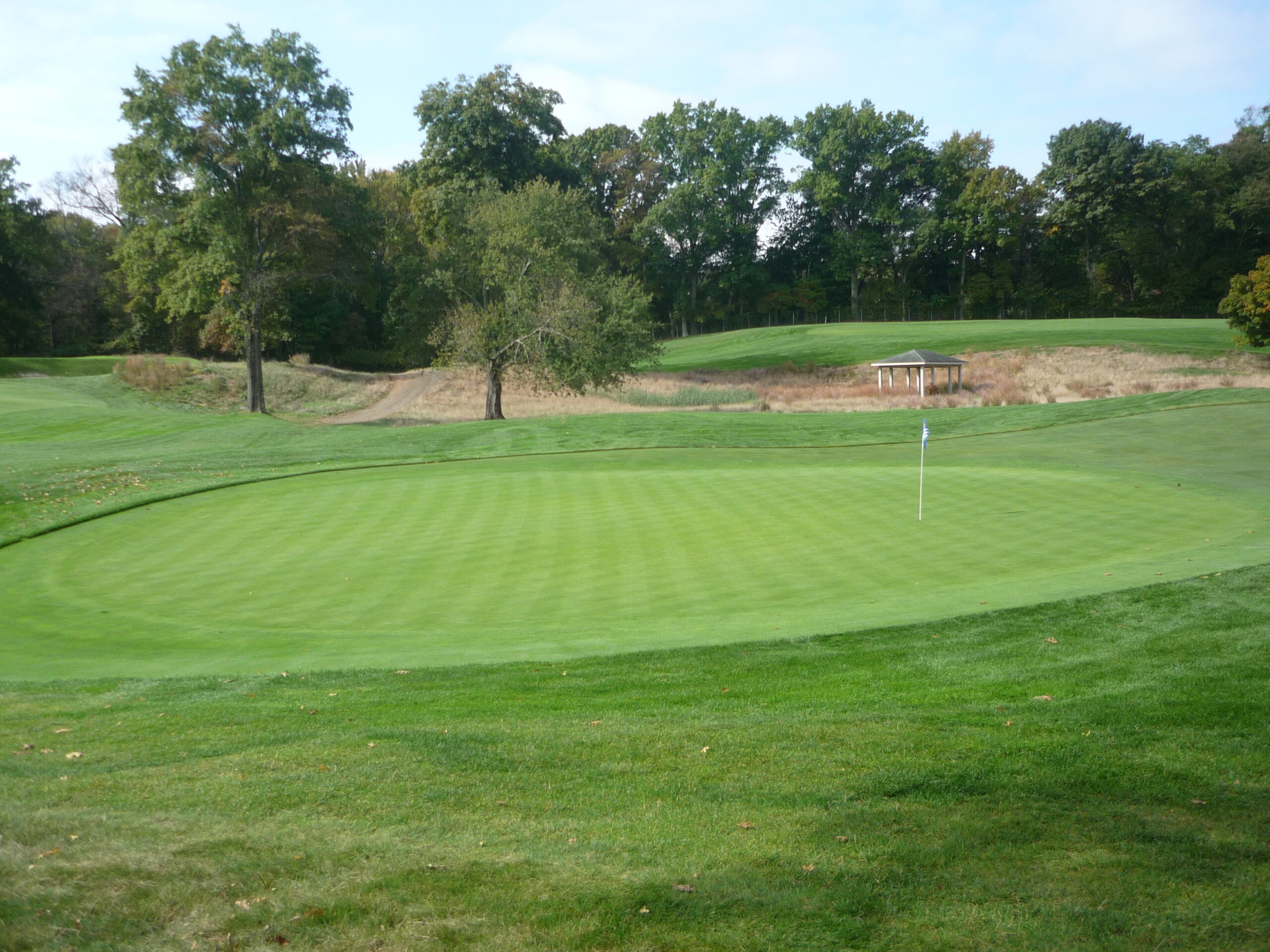
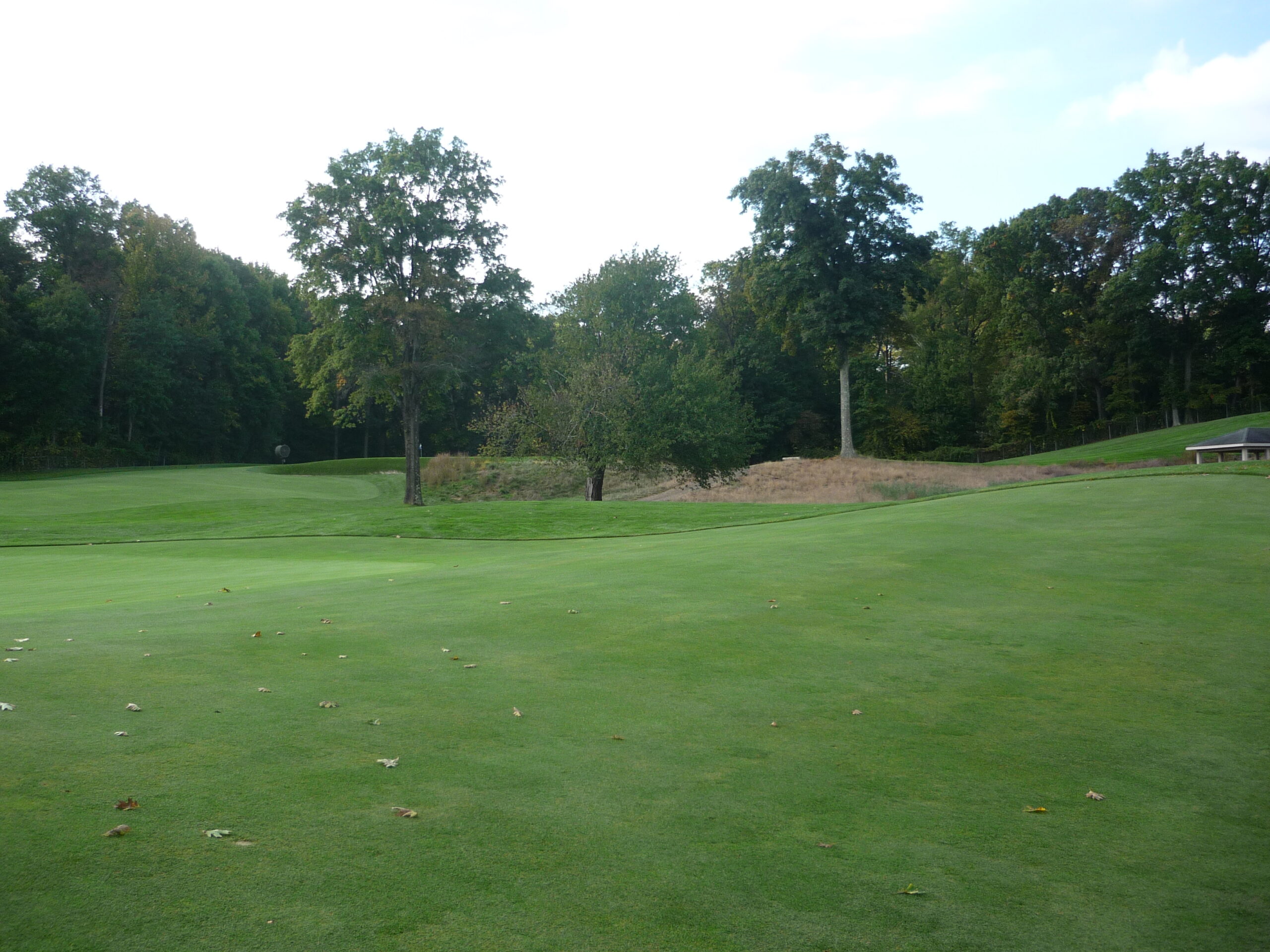
The green runs away from the front right to the back left. There is a pronounced chipping area with short grass in the front that you can use to bounce the ball into the green (see below).
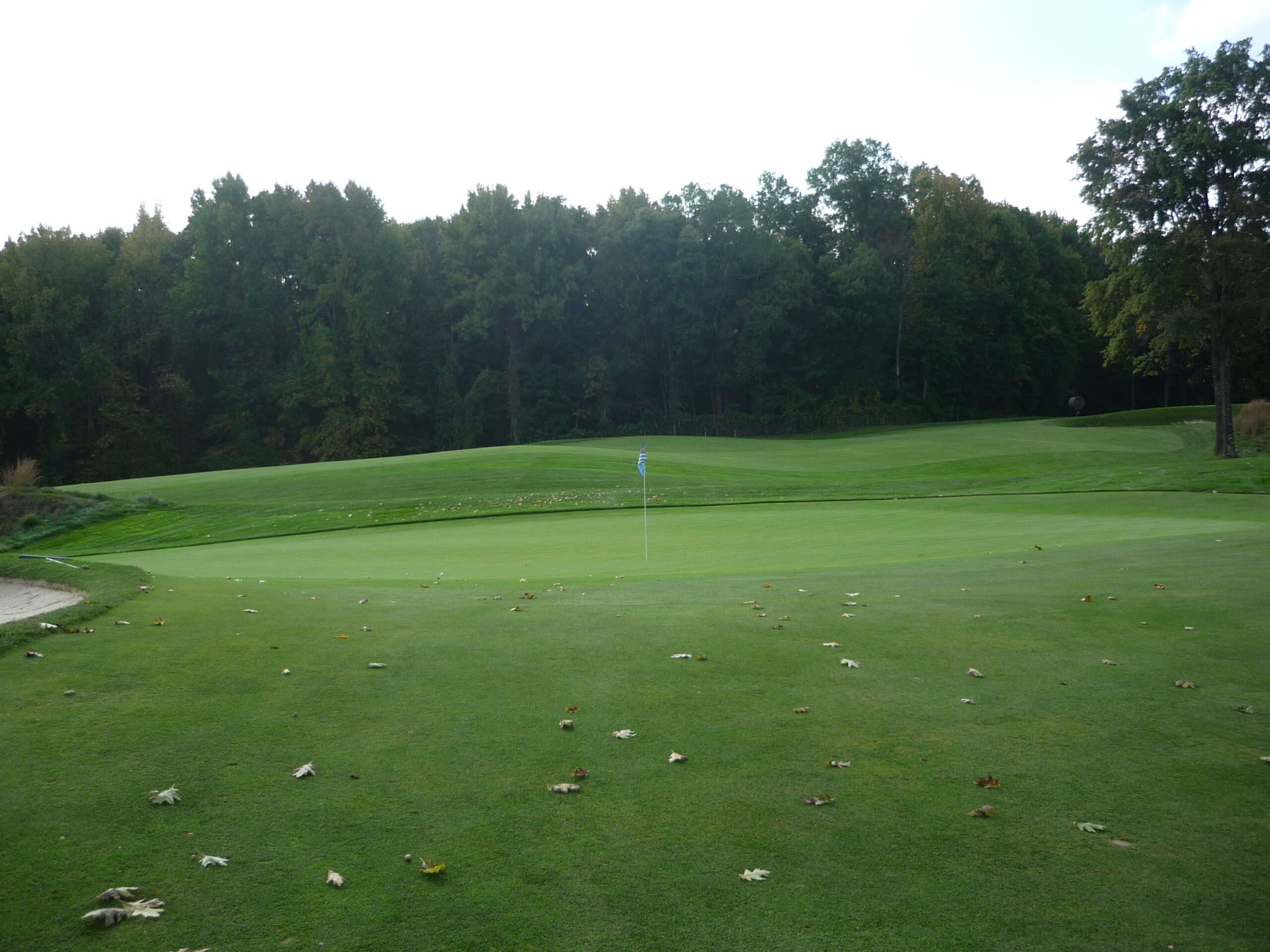
Hole 8 – 456 yards – Par 5
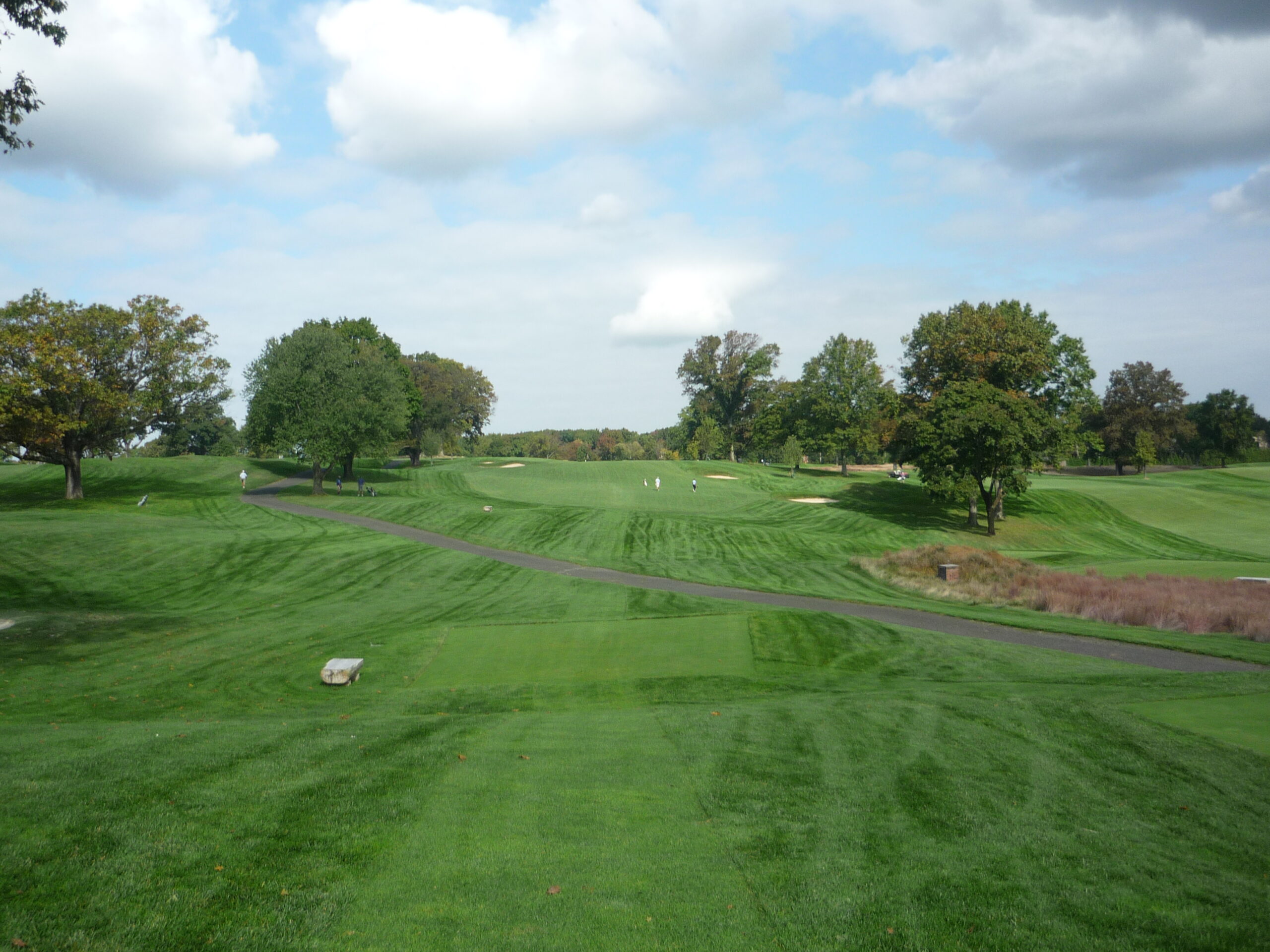
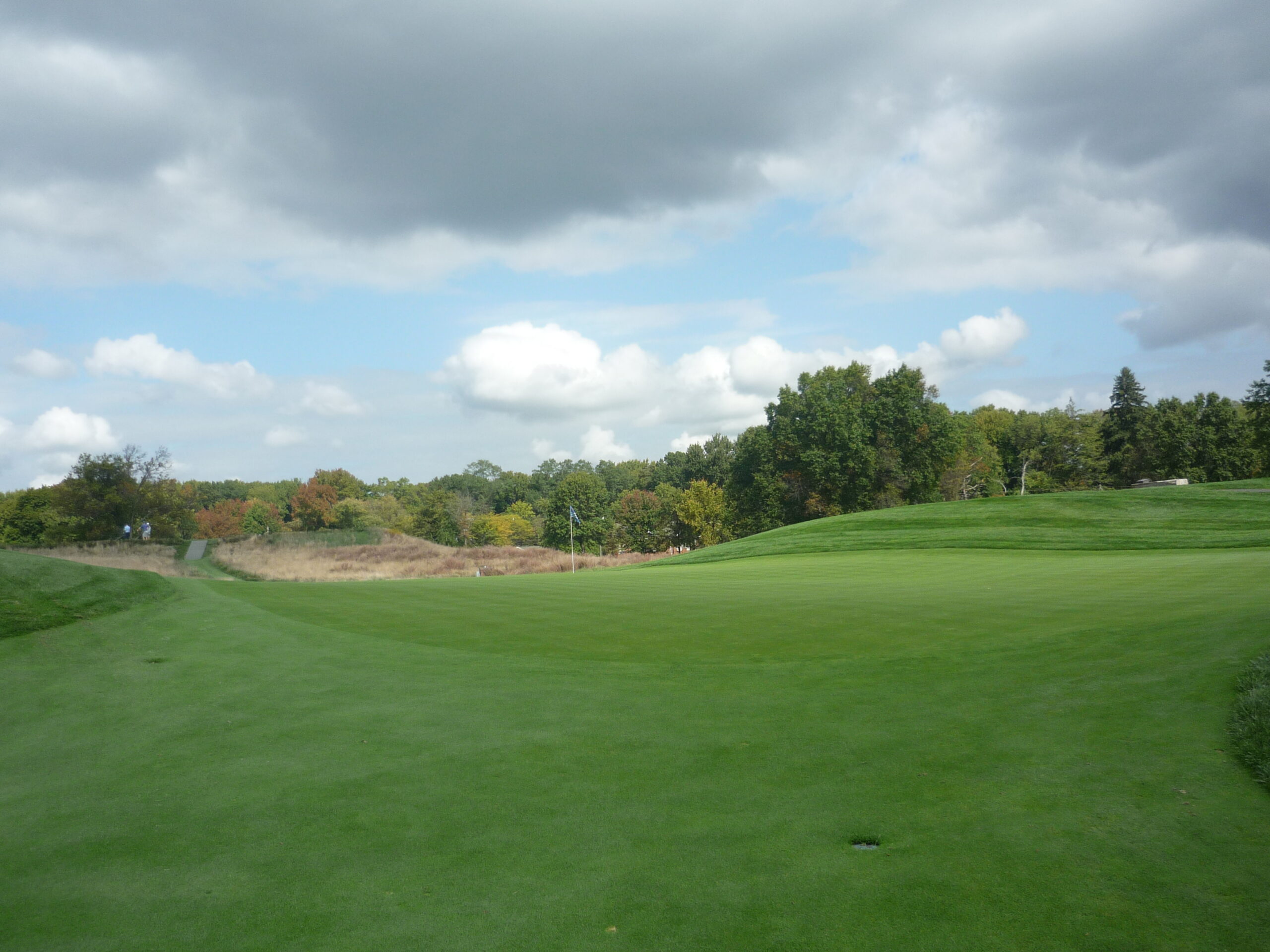
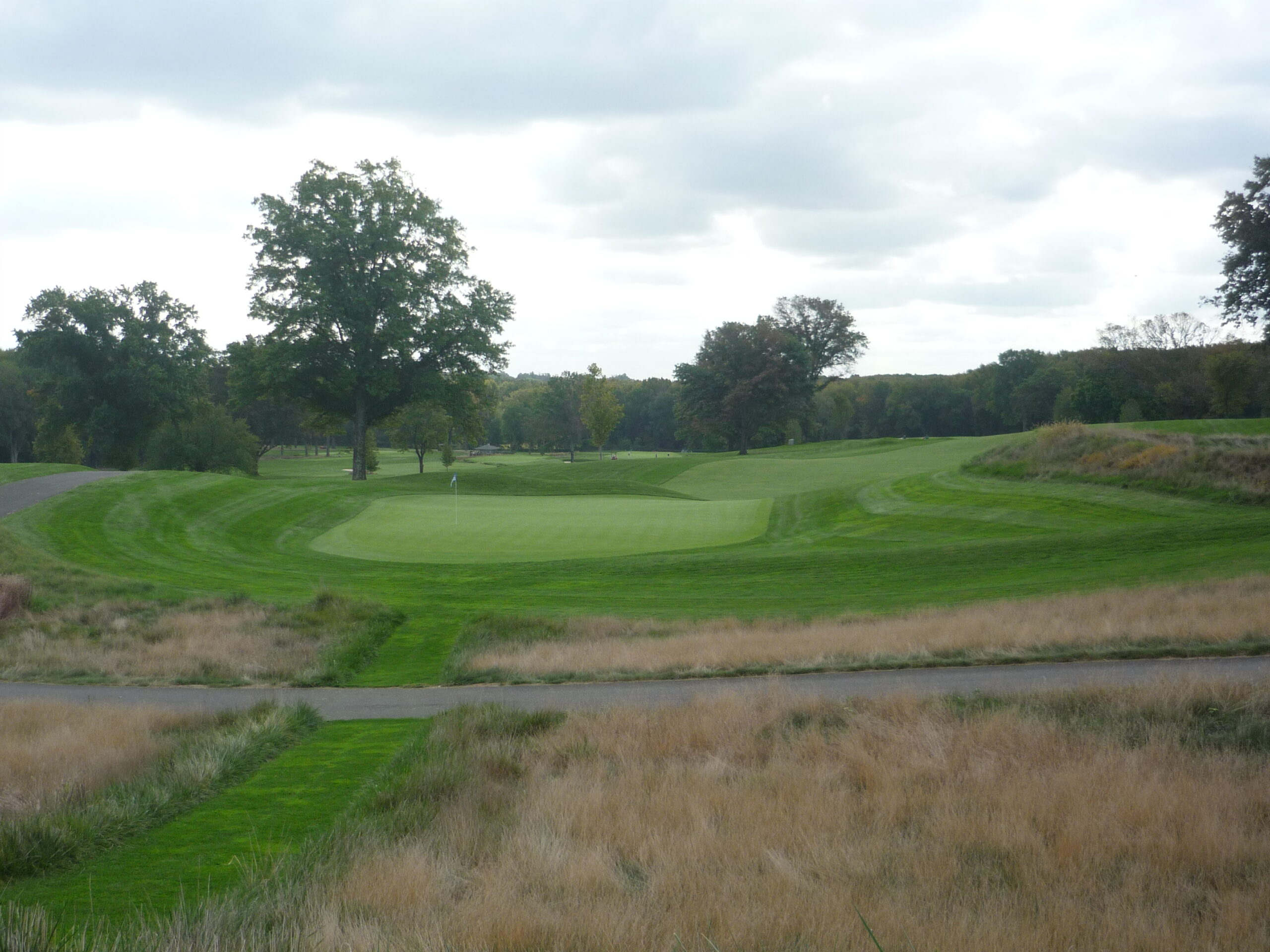
The members get this hole as a par five, while the pros played it as a par four. Bunkers sit on both sides for the uphill tee shot. Depending on where your drive ends up, the second shot could be blind.
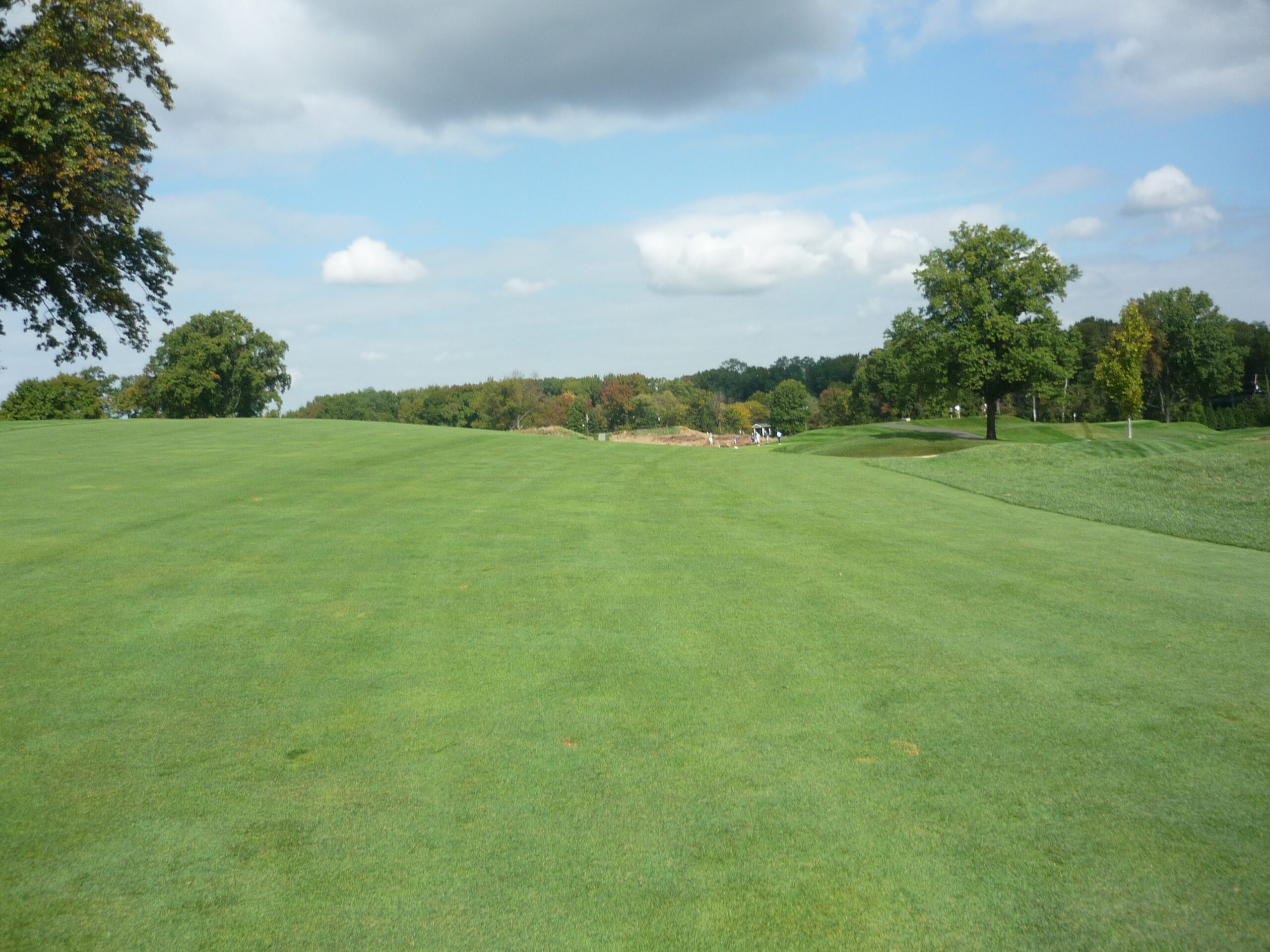
This is a bit of a two-factored green. What I mean by that is that it has aspects that repel shots and others that draw in shots. You’ll see that in the following photos.
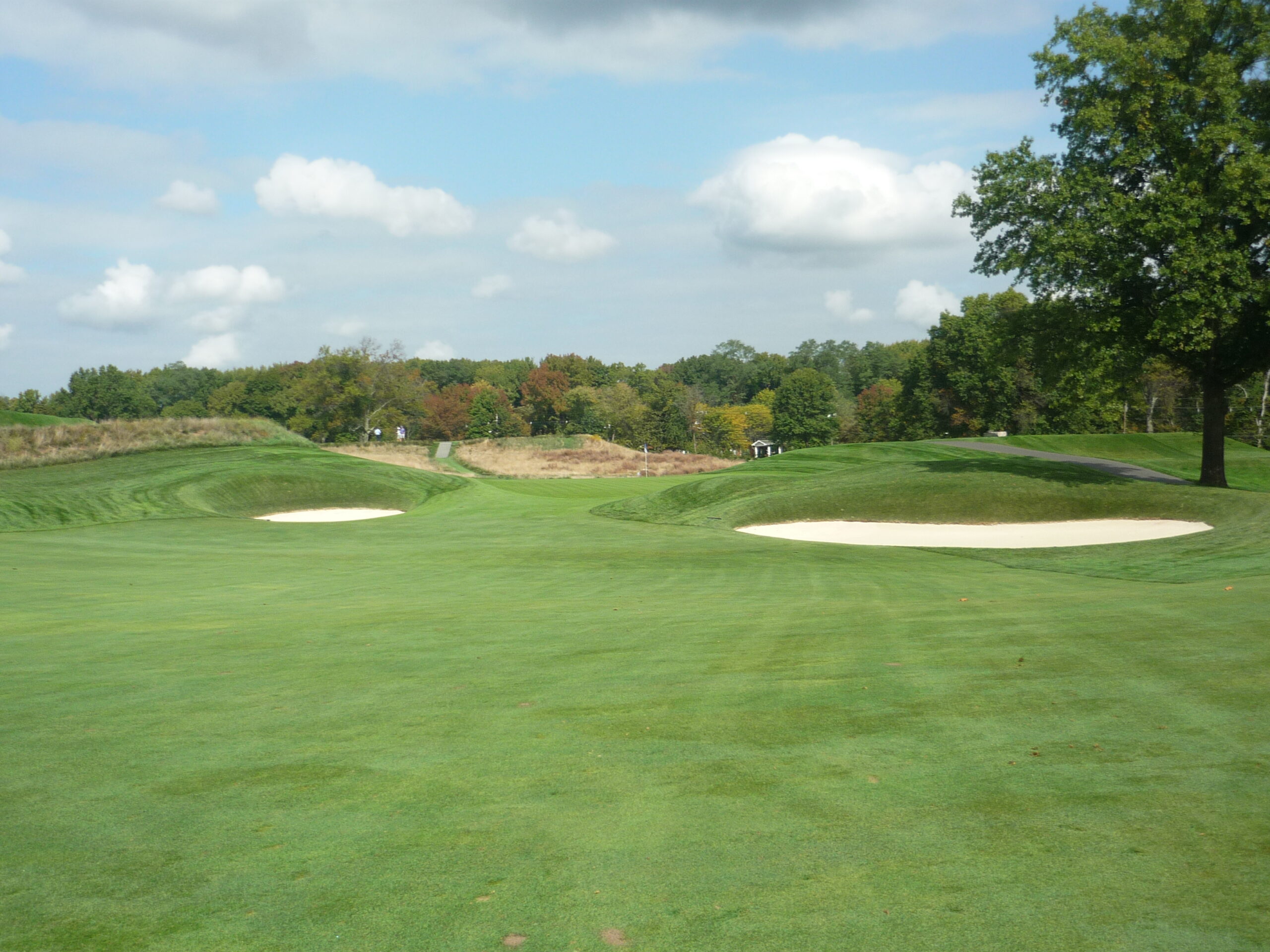
Hole 9 – 356 yards – Par 4
The angled fairway here is difficult to hit. As an added challenge, there are some difficult bunkers on the left side that will grab wayward drives.
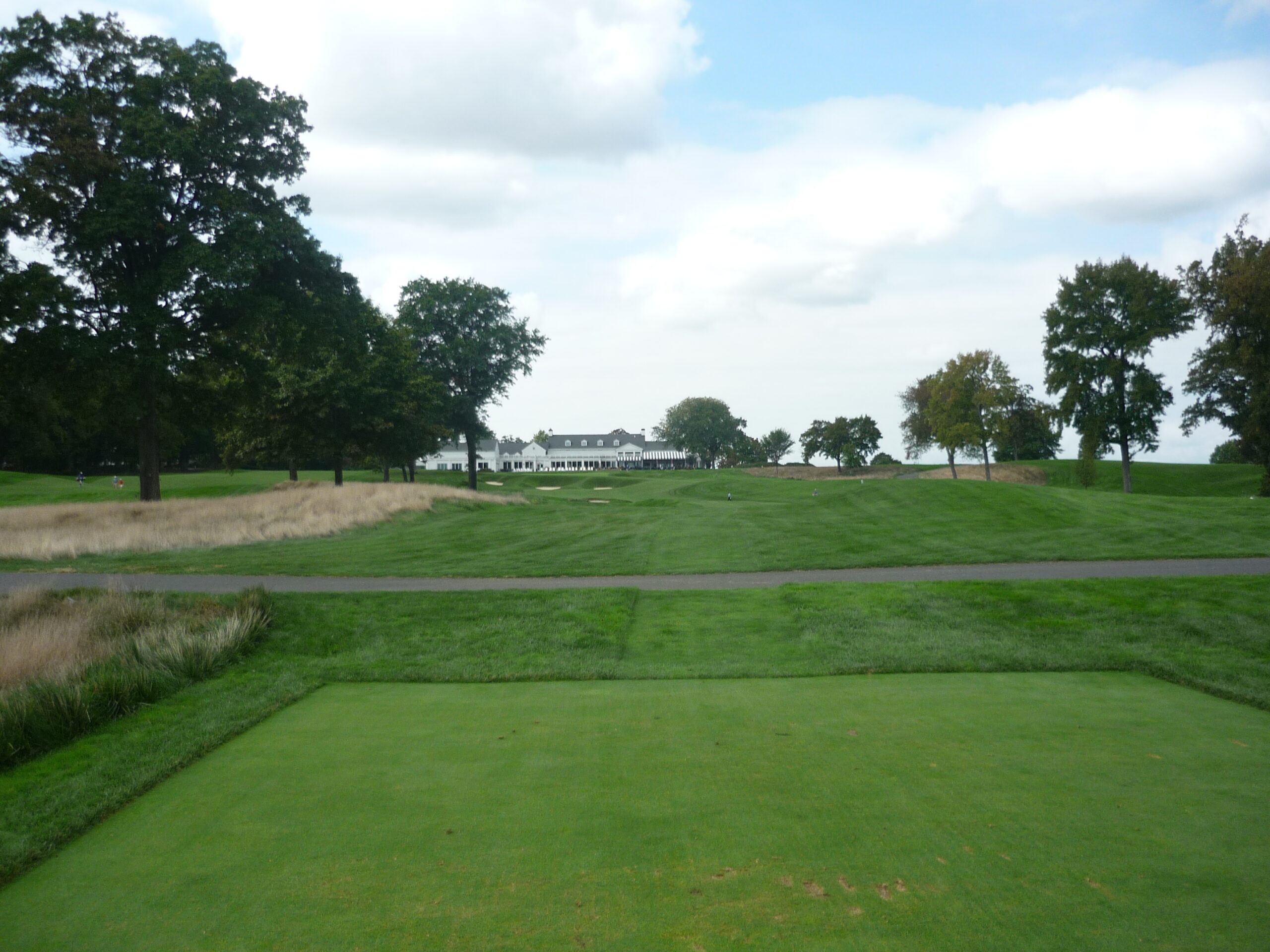
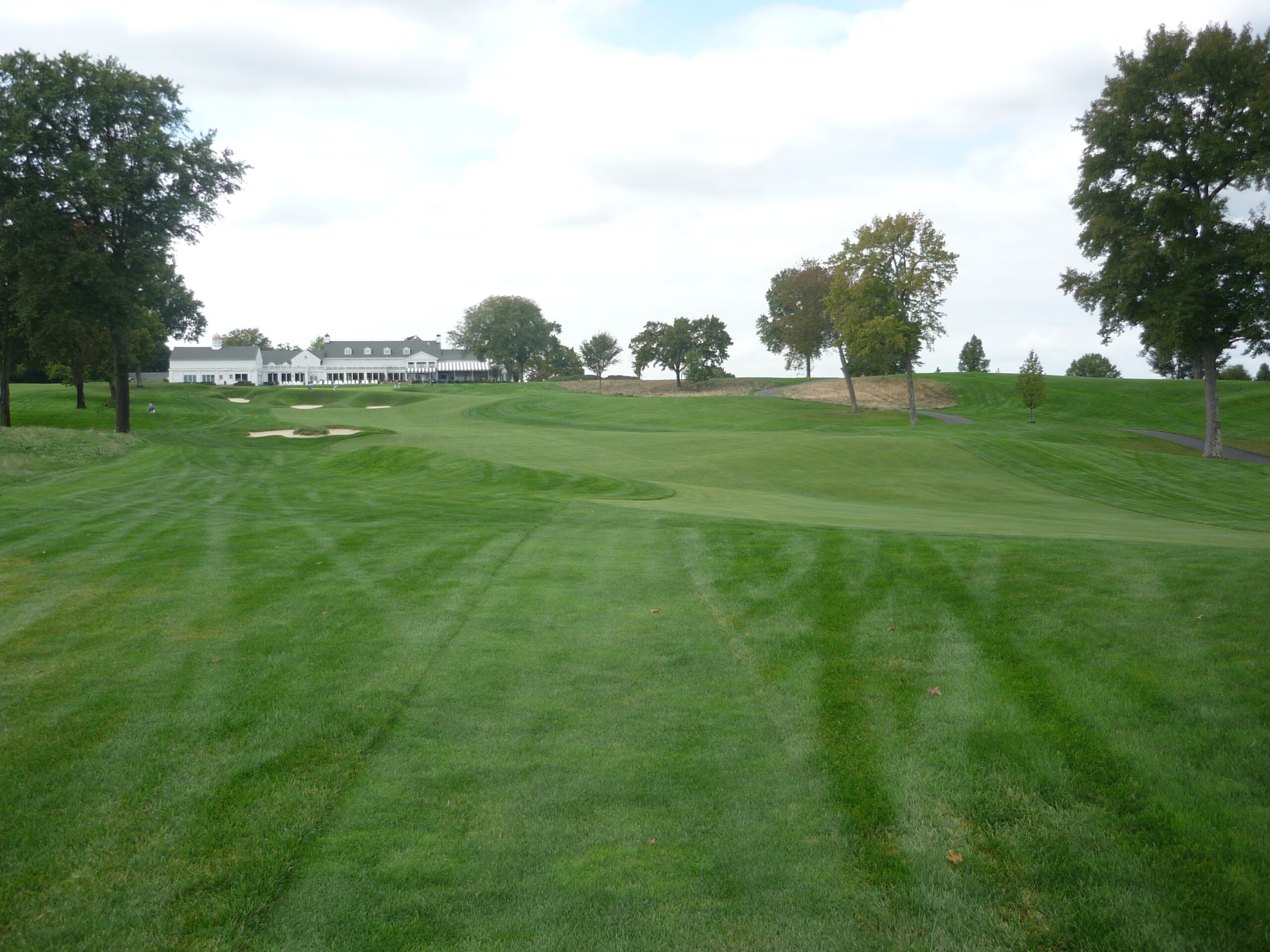
Shots from the left side have a difficult route to the green.
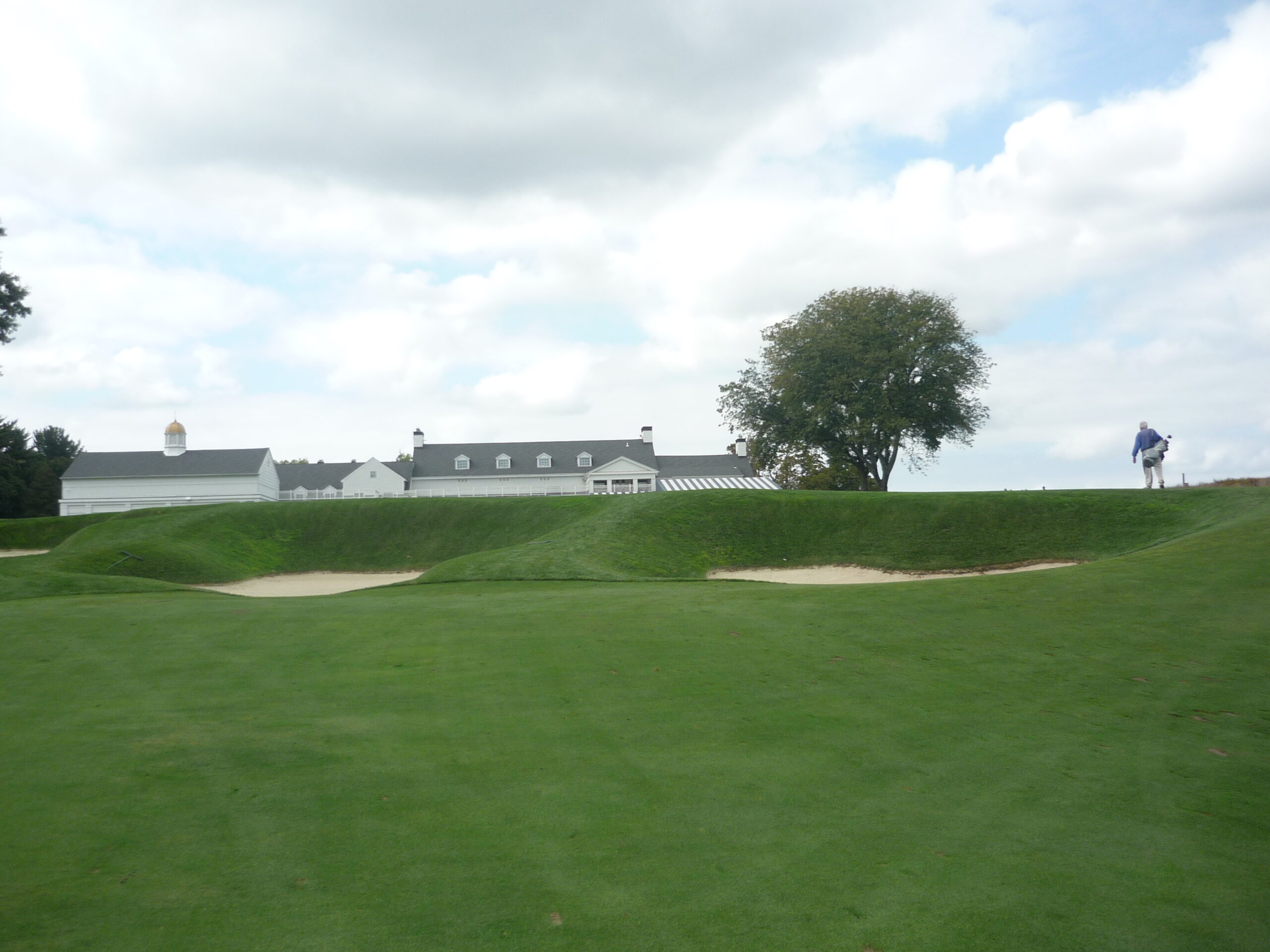
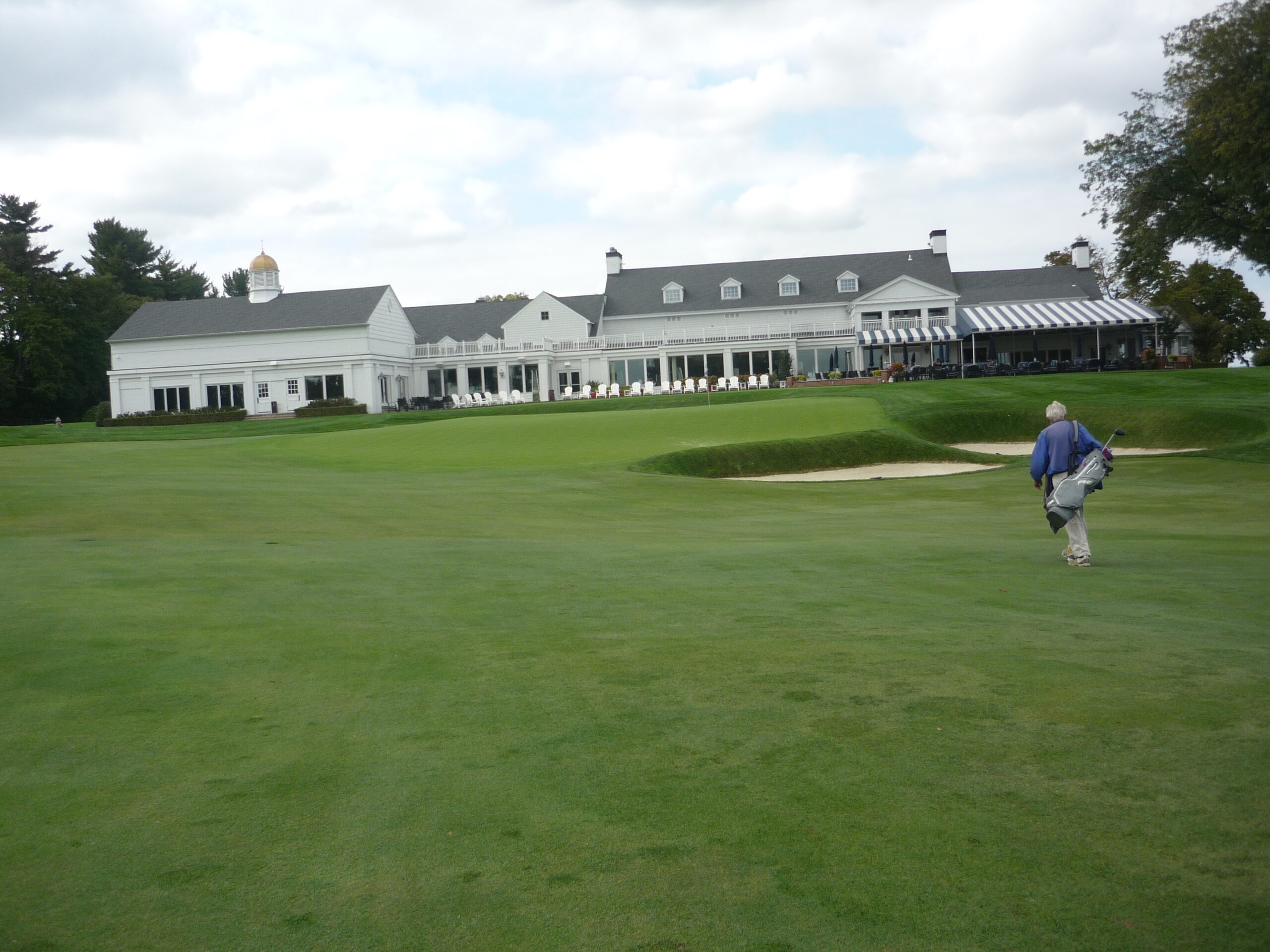
The ninth has a large green but you must control your spin with the slope in the front section of the putting surface.
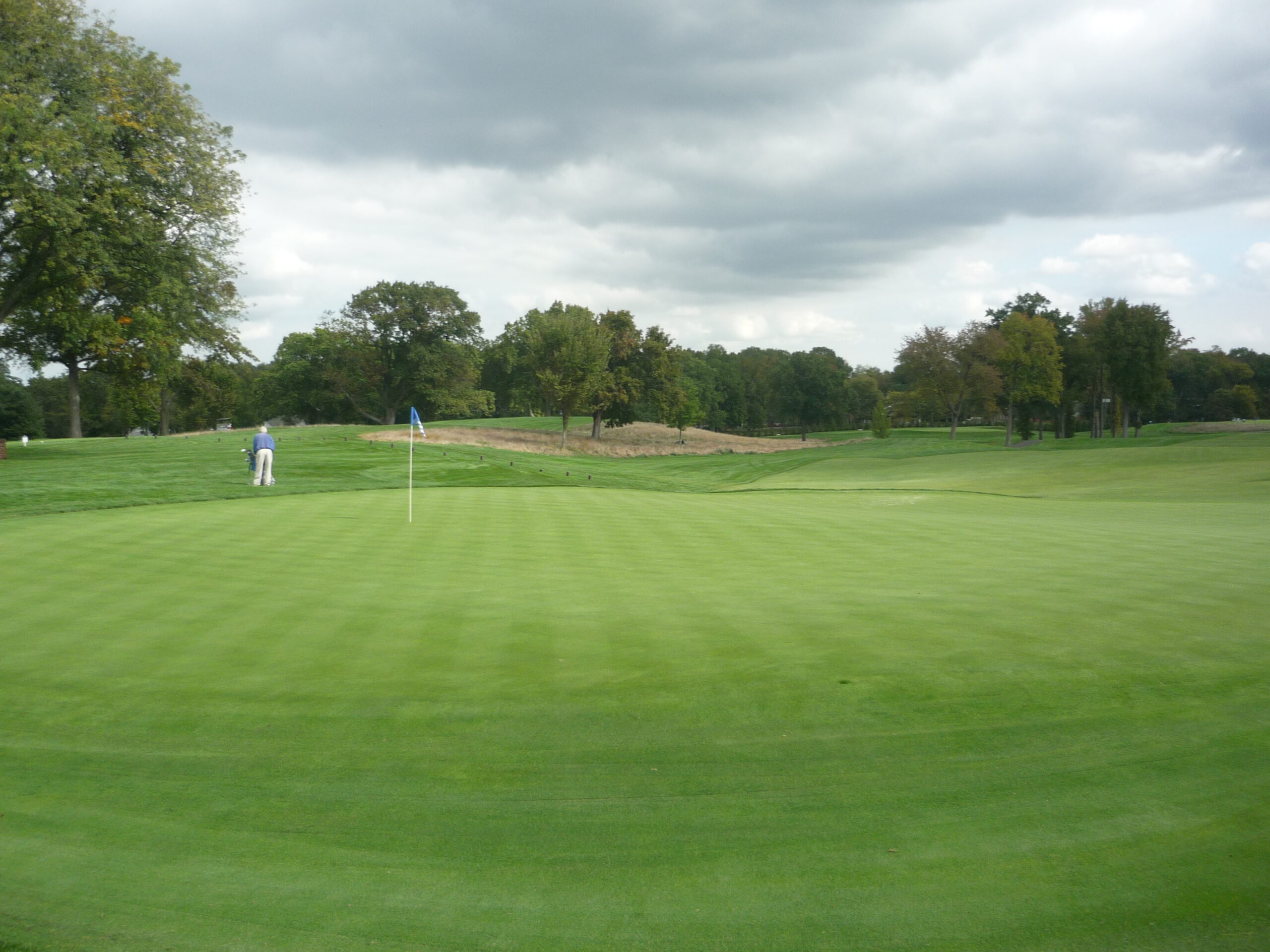
Hole 10 – 353 yards – Par 4
Lean on your yardage book or caddie for this blind tee shot. You’ll just have to trust the information and confidently hit a drive up the left side of this dogleg right.
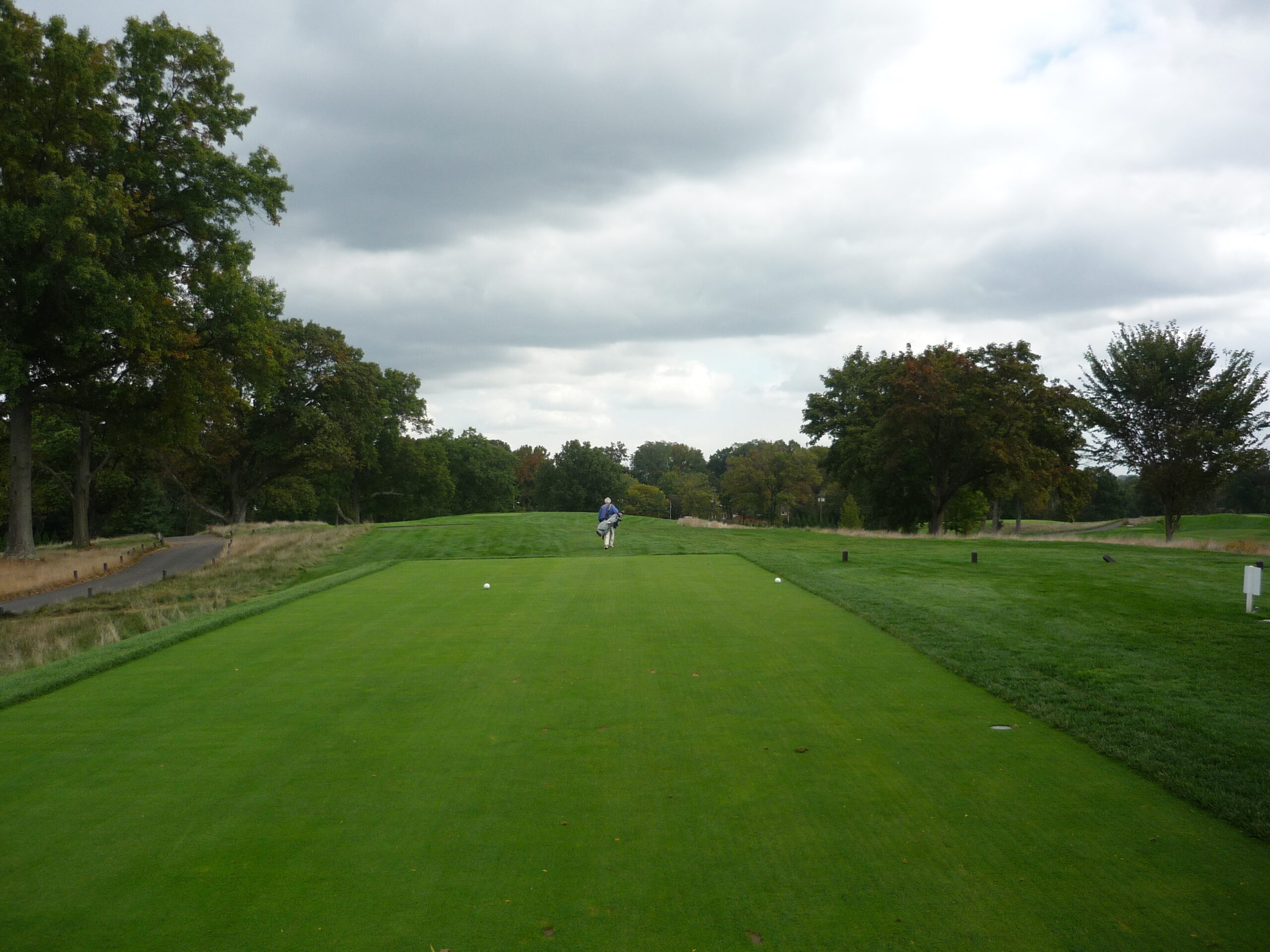
If you end up here it’s two blind shots in a row for you.
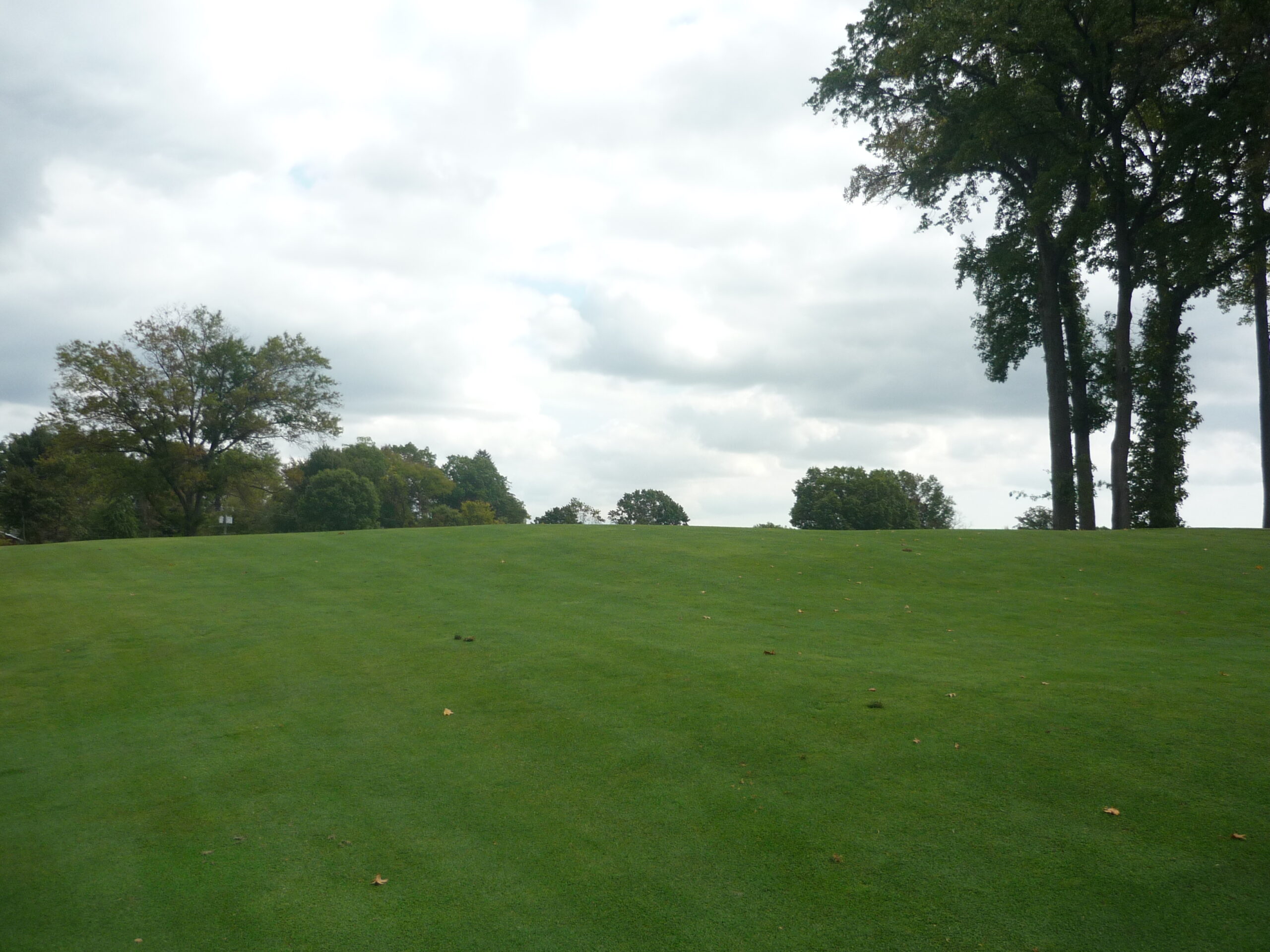
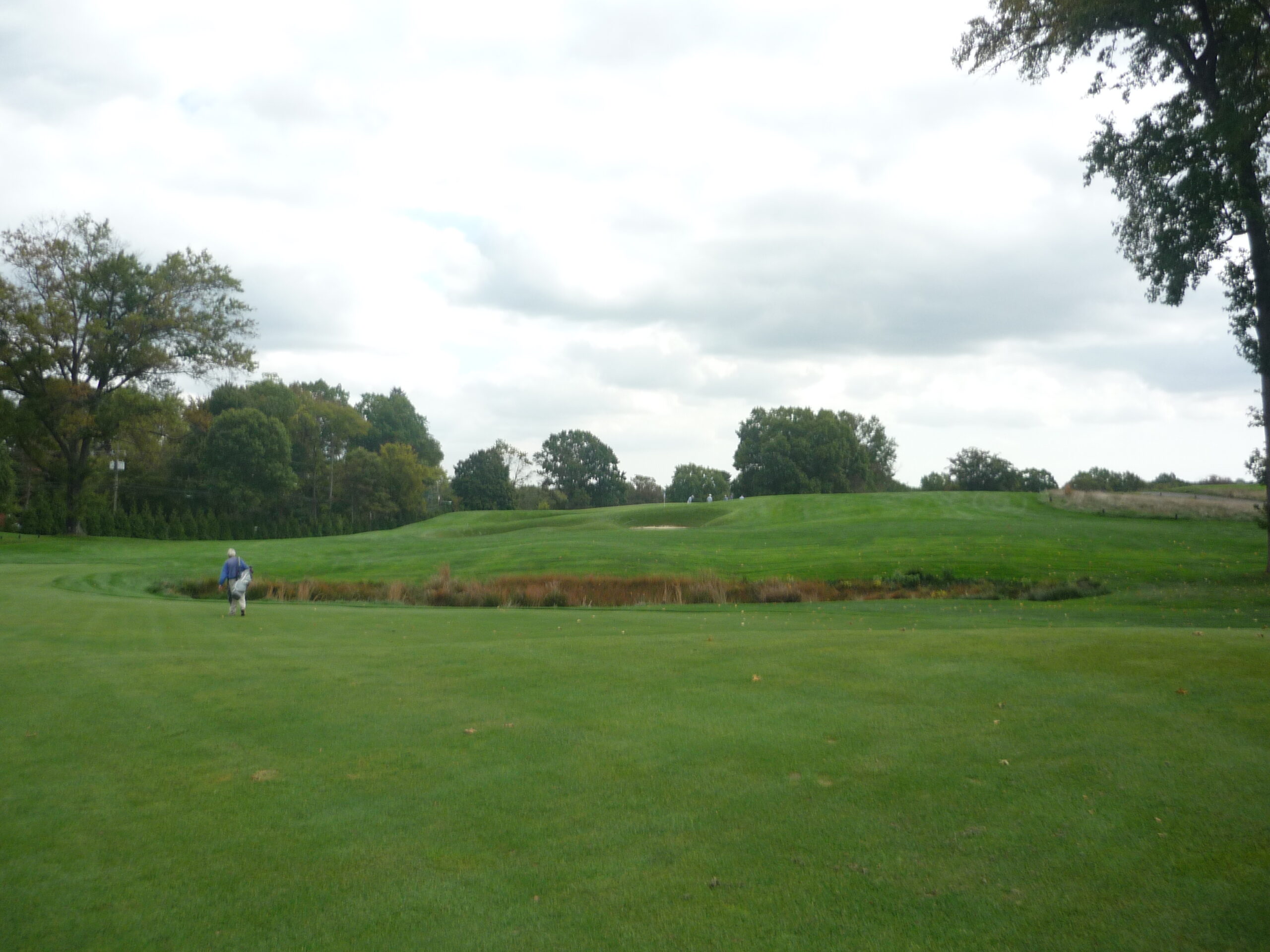
From the top of the hill, however, the hole really opens up. You can see the creek that was restored from a pond as well as the elevated green guarded by bunkers.
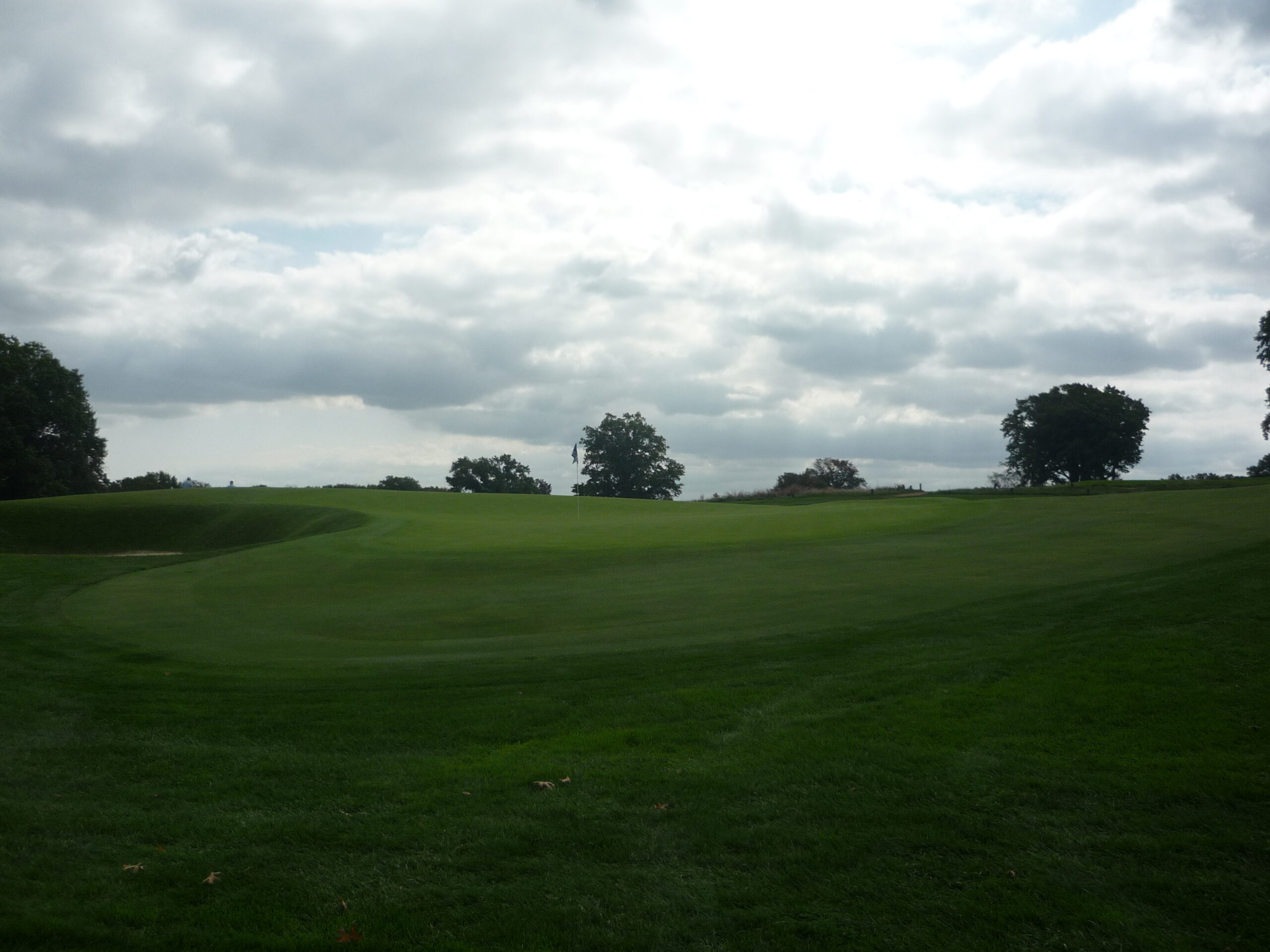
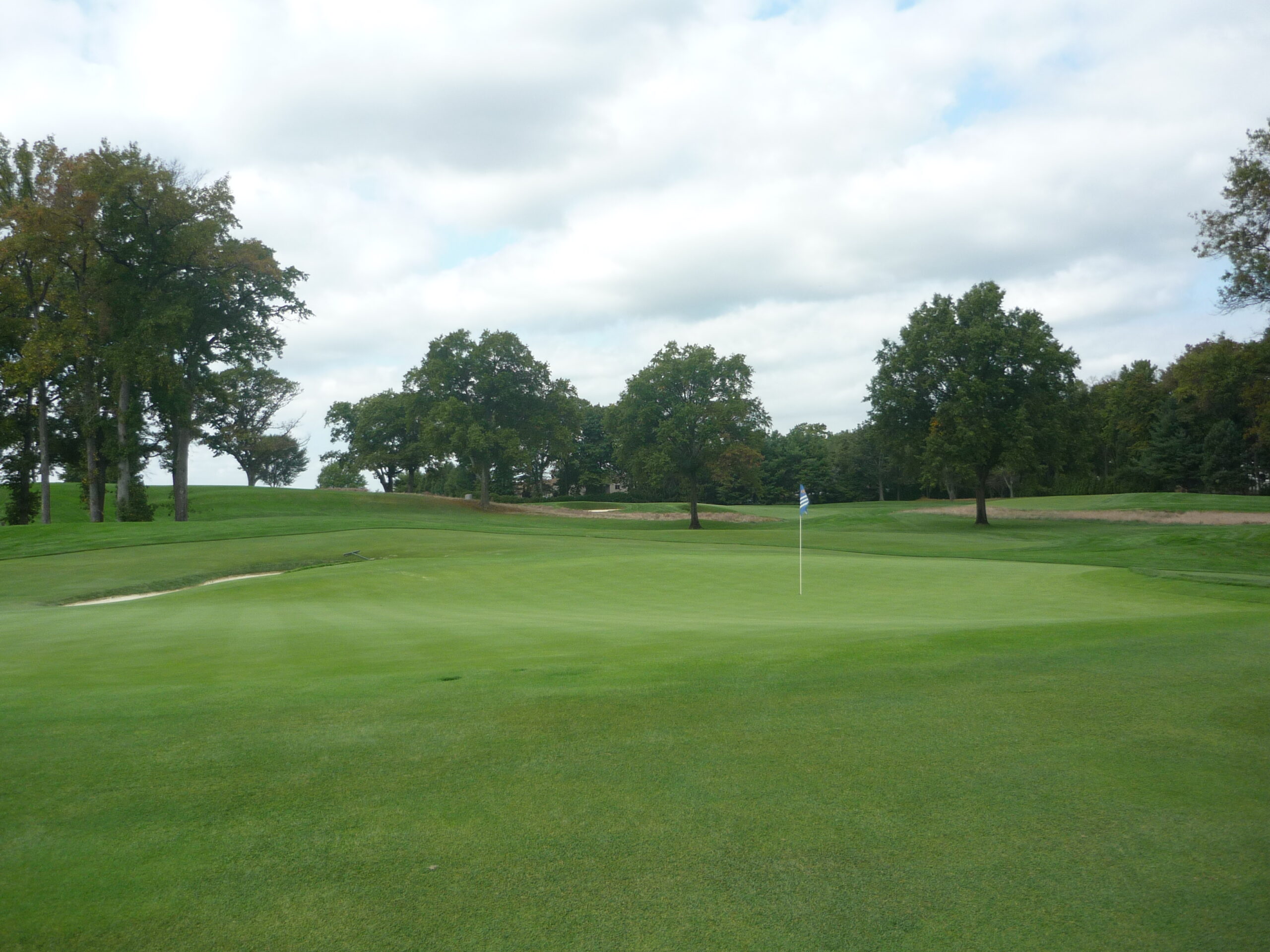
The green itself is small and heavily sloped.
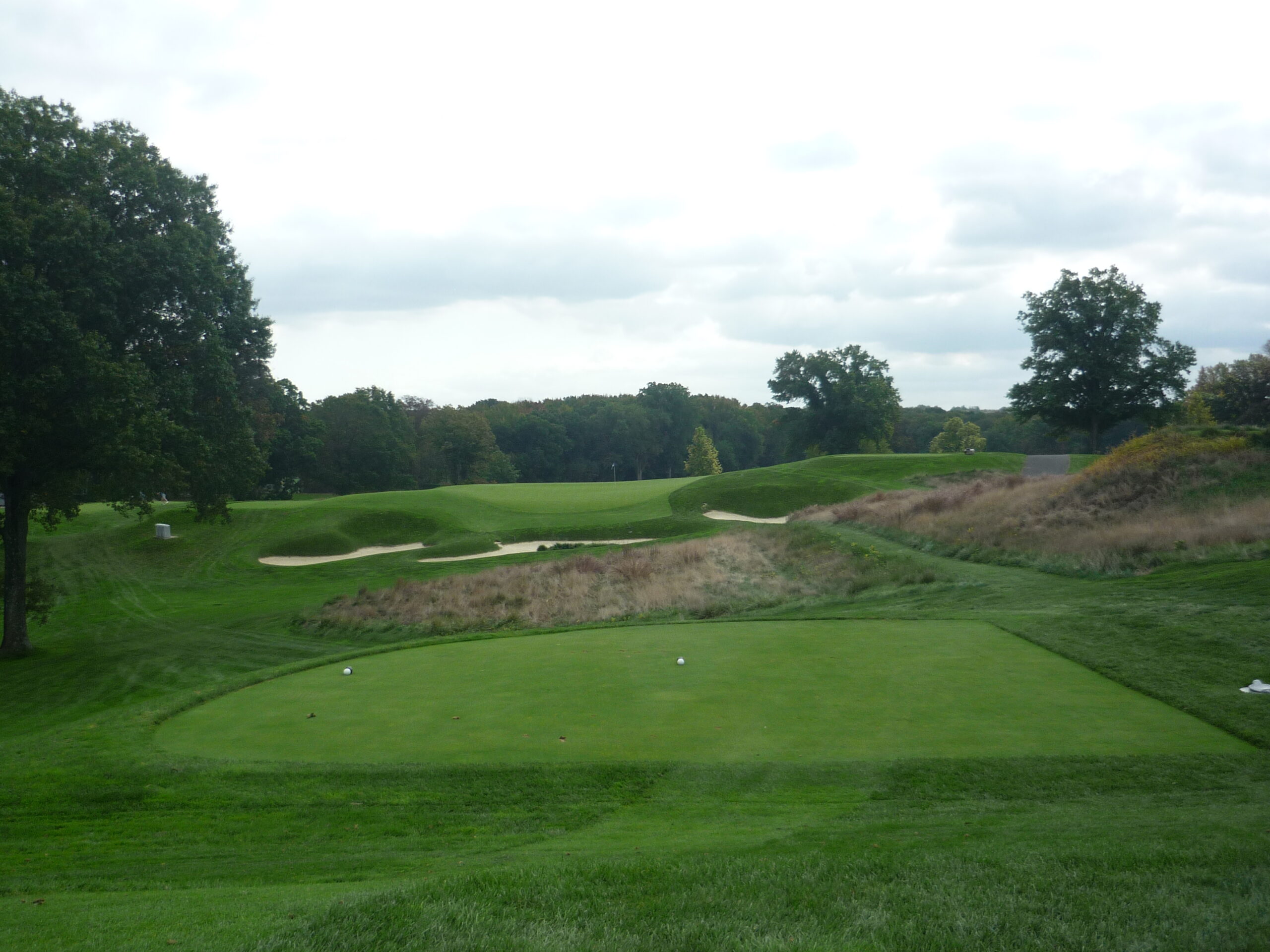
Hole 11 – 136 yards – Par 3
The shortest of the one-shot holes at Plainfield Country Club does not lack challenge. You can see the severity of the false front from the tee. Misses long and left are also quite penalizing.
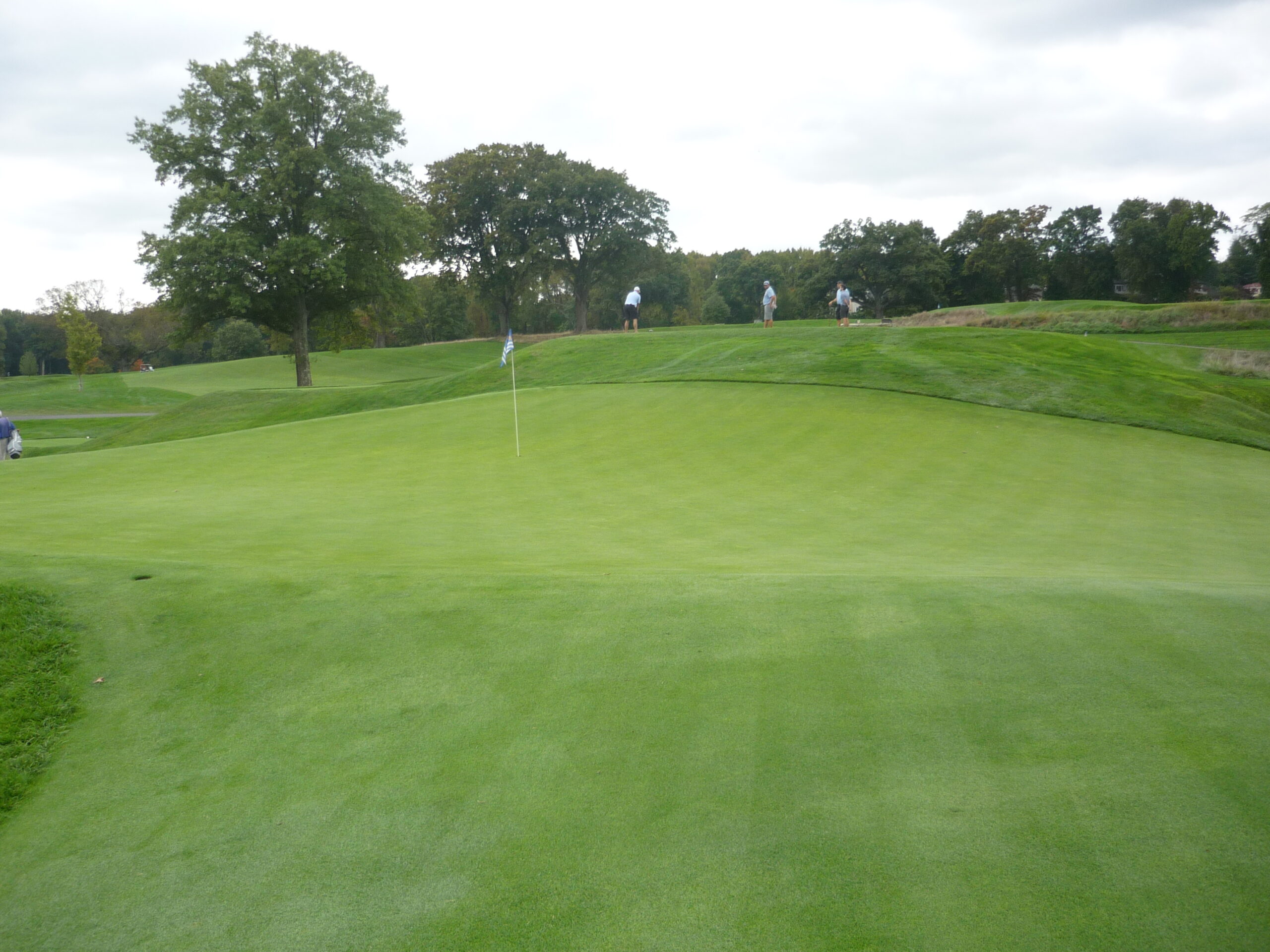
A closer look at the green highlights the severe contours.
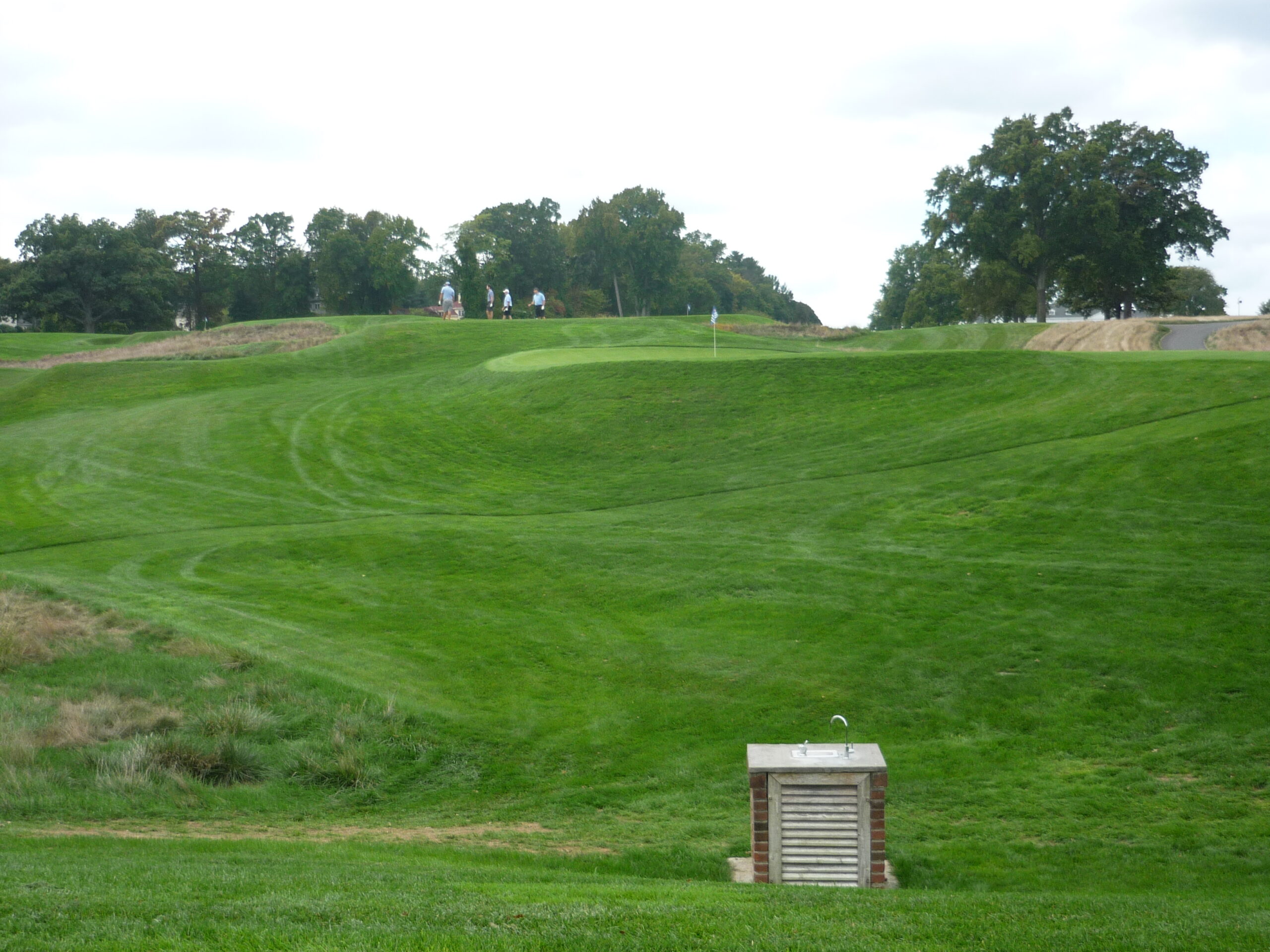
Below is a zoomed out look to show the slope from the left side of the green.
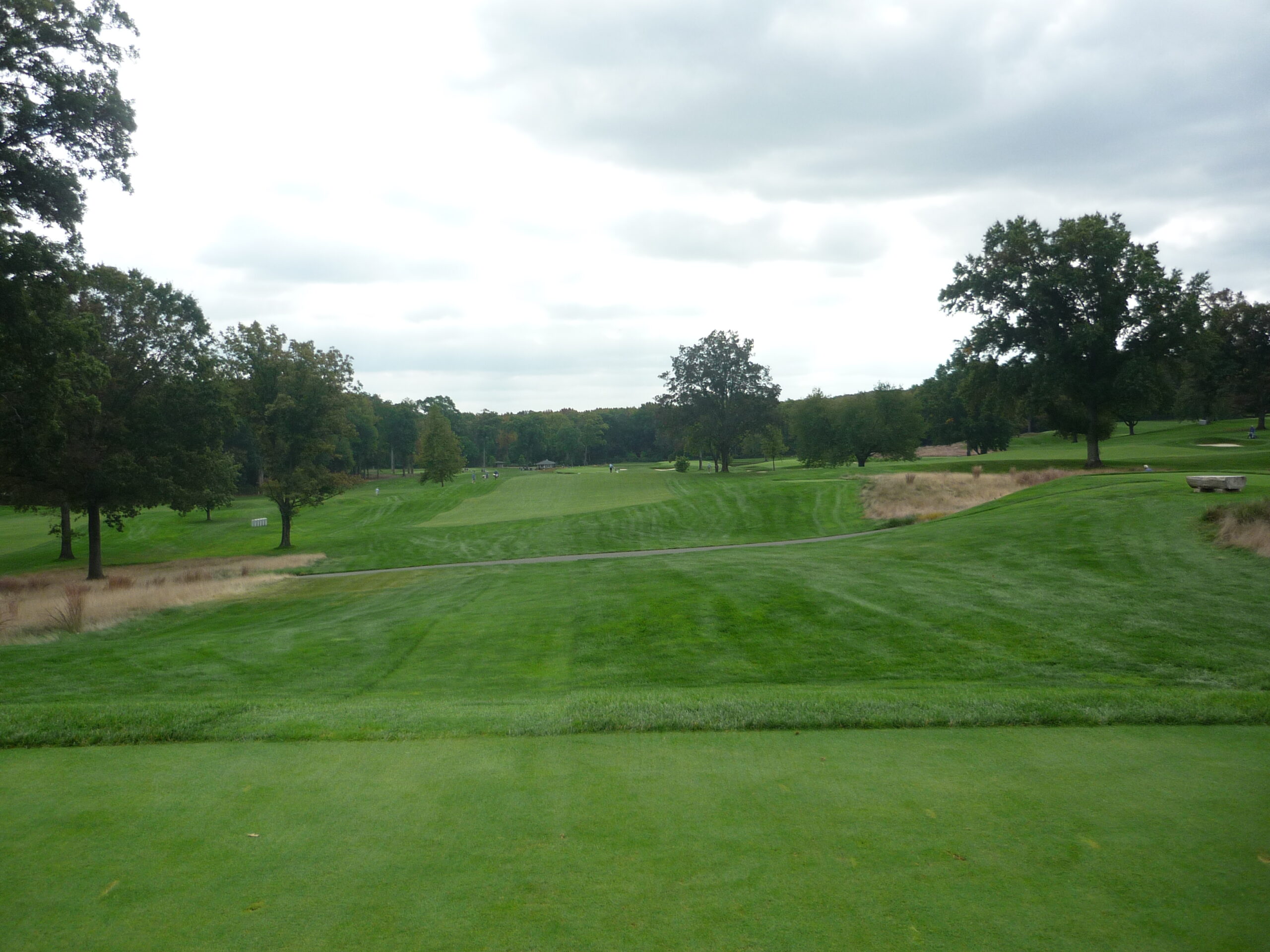
Hole 12 – 555 yards – Par 5
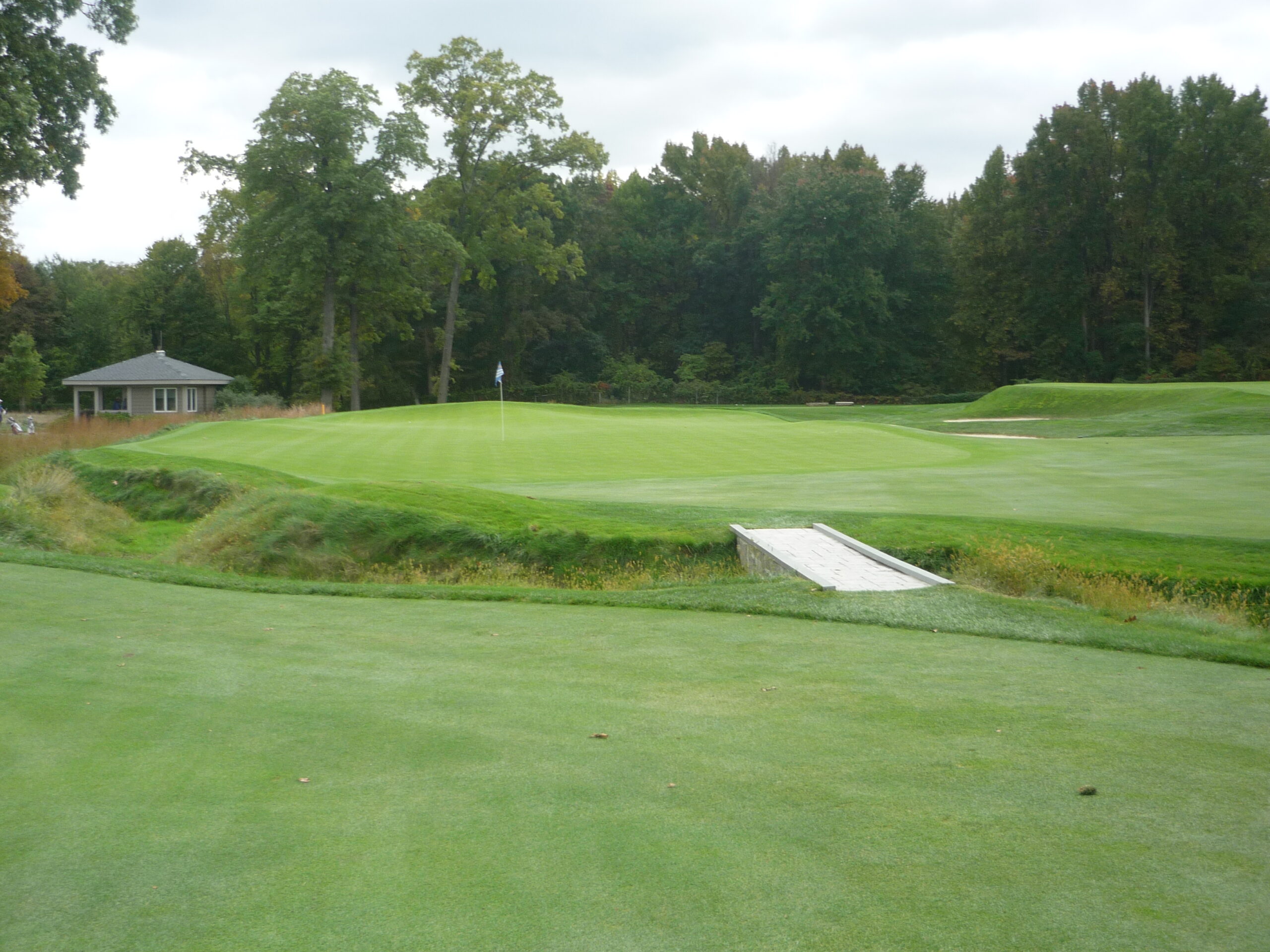
Twelve is widely believed to be one of the best holes at Plainfield. Good drives can take advantage of the downslope to get extra yardage. Really long hitters need to factor in the rough covered mound on the right side of the fairway seen in the second photo below.
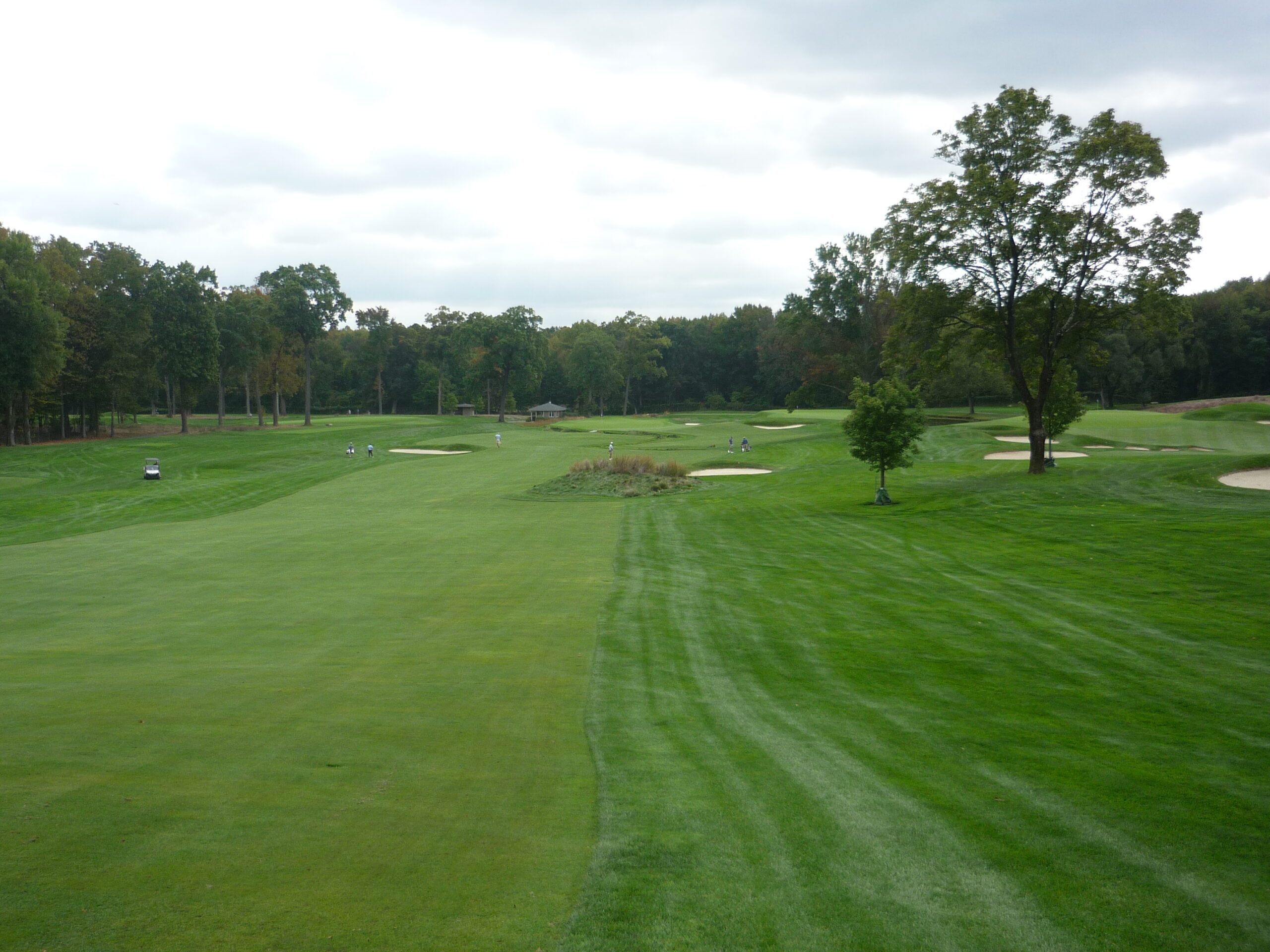
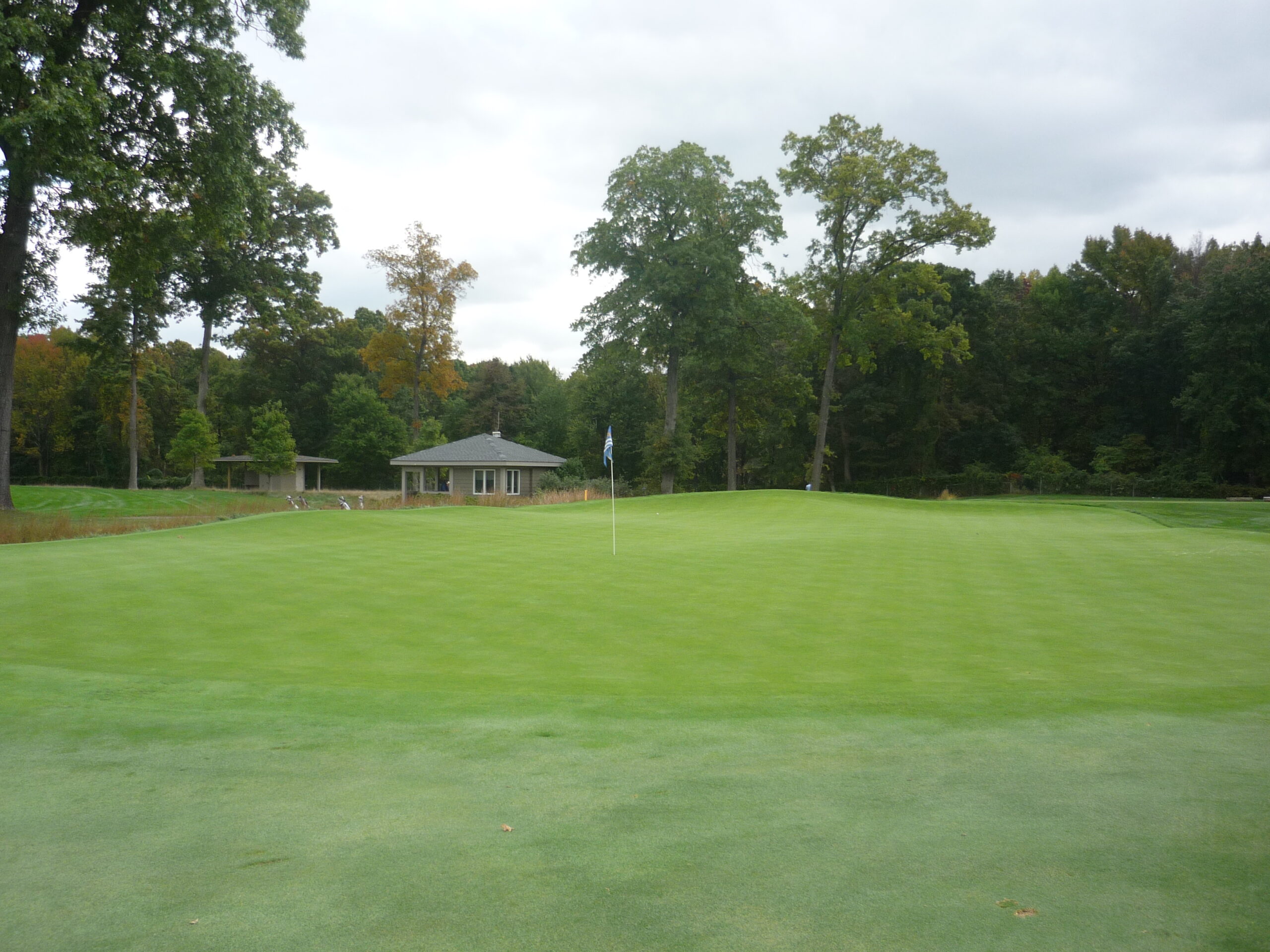
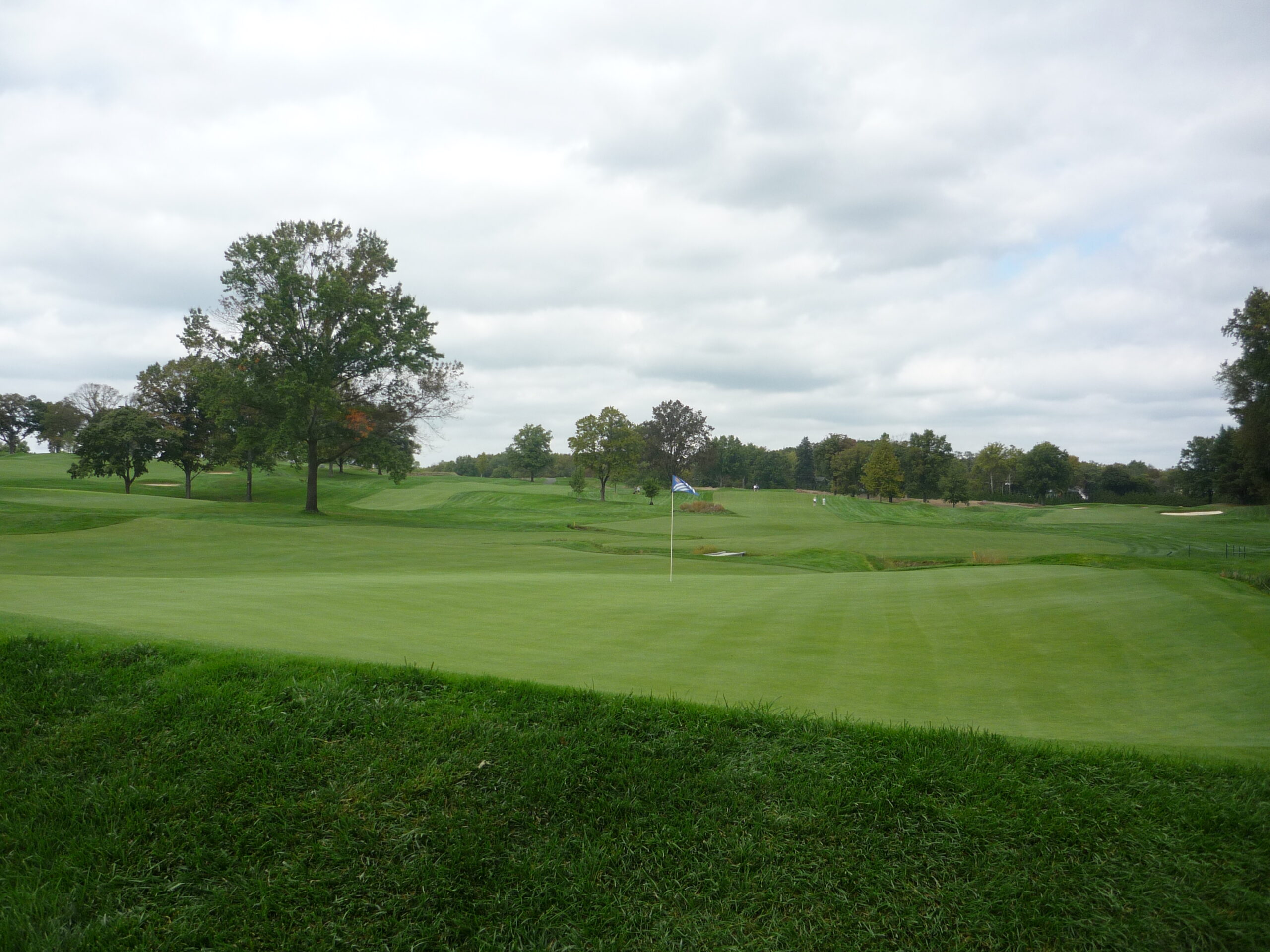
Going for the green is a dangerous proposition with the creek surrounding the green. The putting surface itself has plenty of slope in the back half and forces you to be precise with your approach shot in order to have a reasonable putt.
Hole 13 – 380 yards – Par 4
This slight dogleg right is one of the flatter holes on the property. It’s not without its own challenges due to the trees on the right and a very subtle green that can be tricky to read.
Hole 14 – 163 yards – Par 3
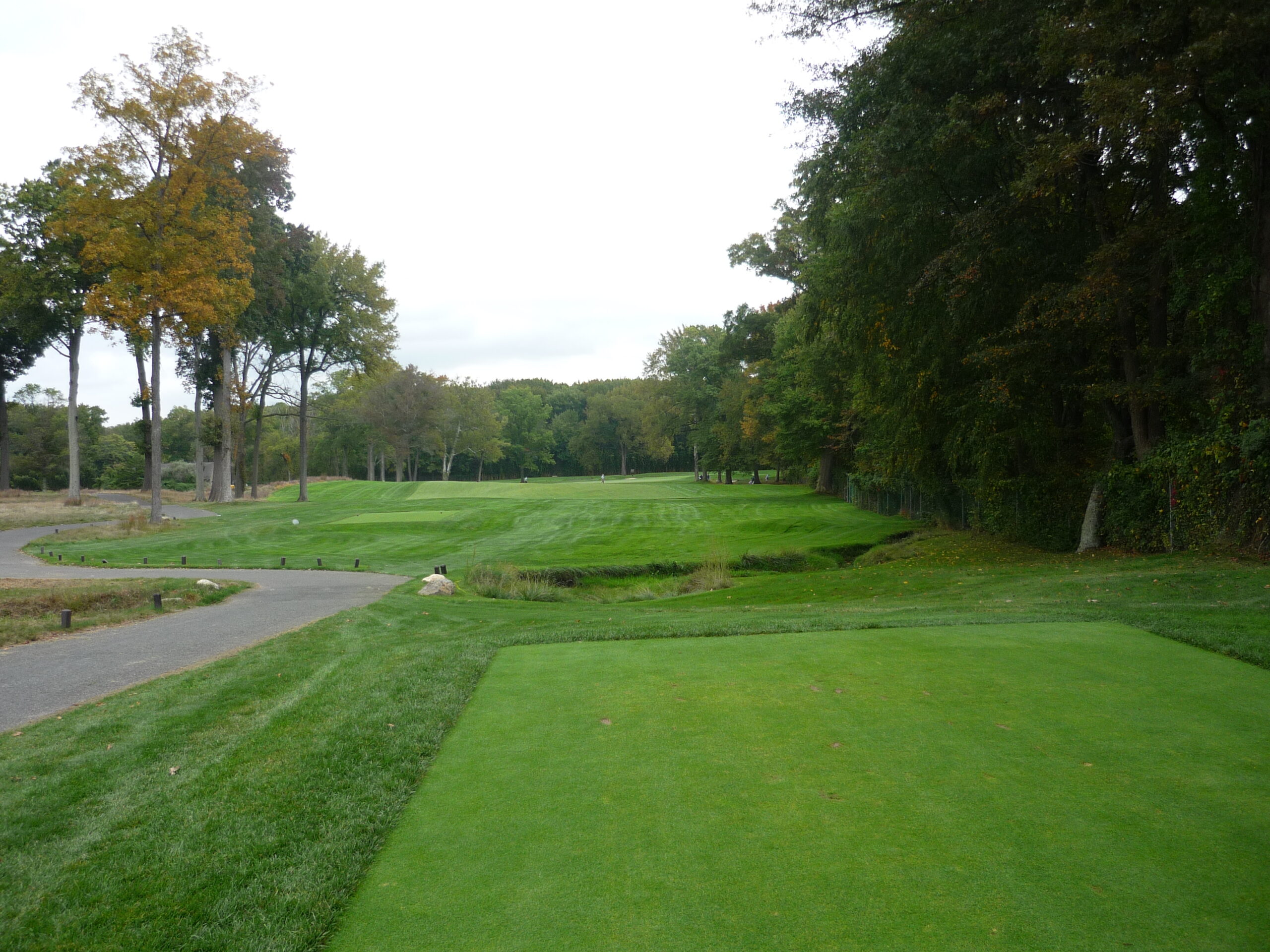
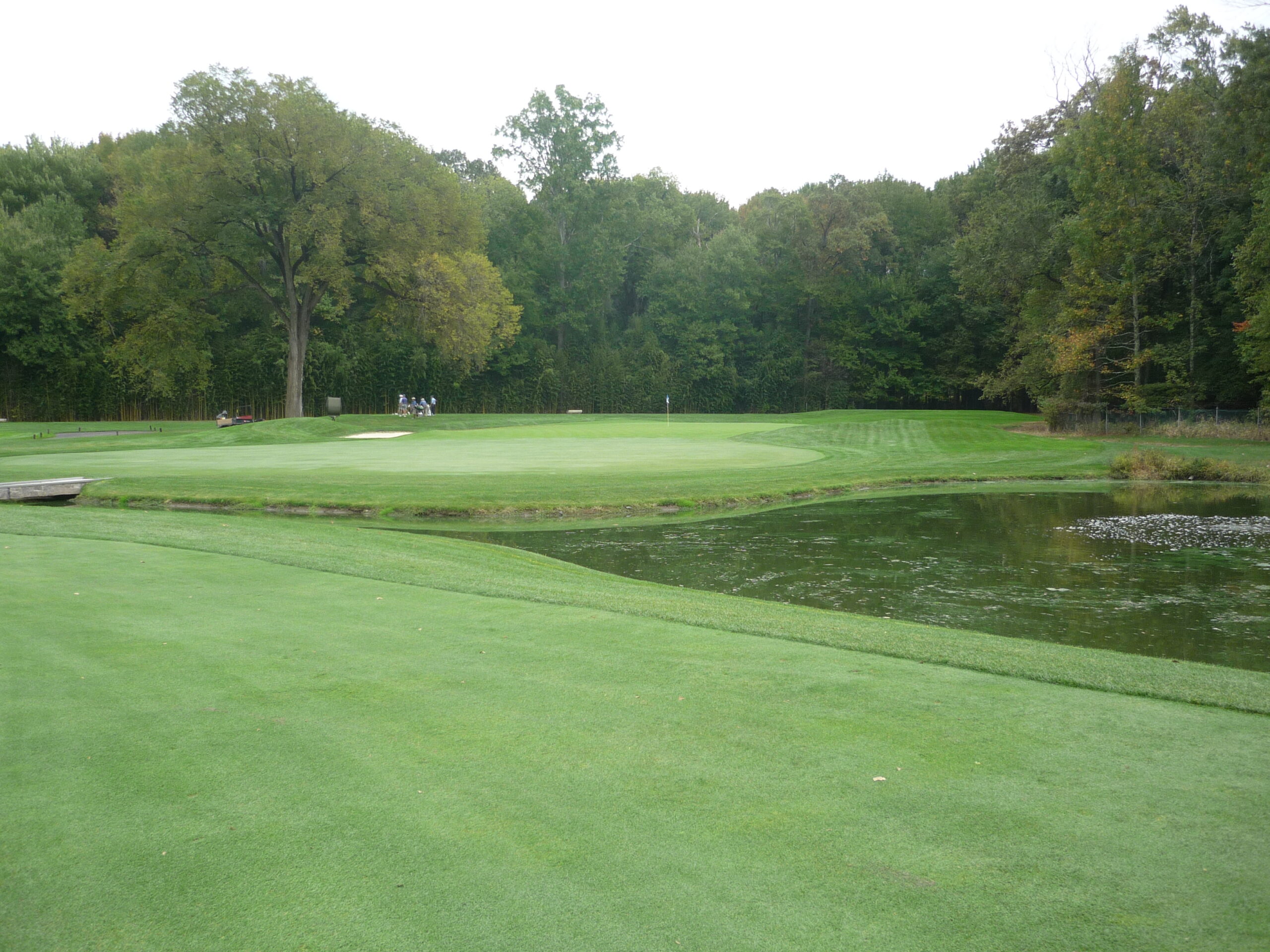
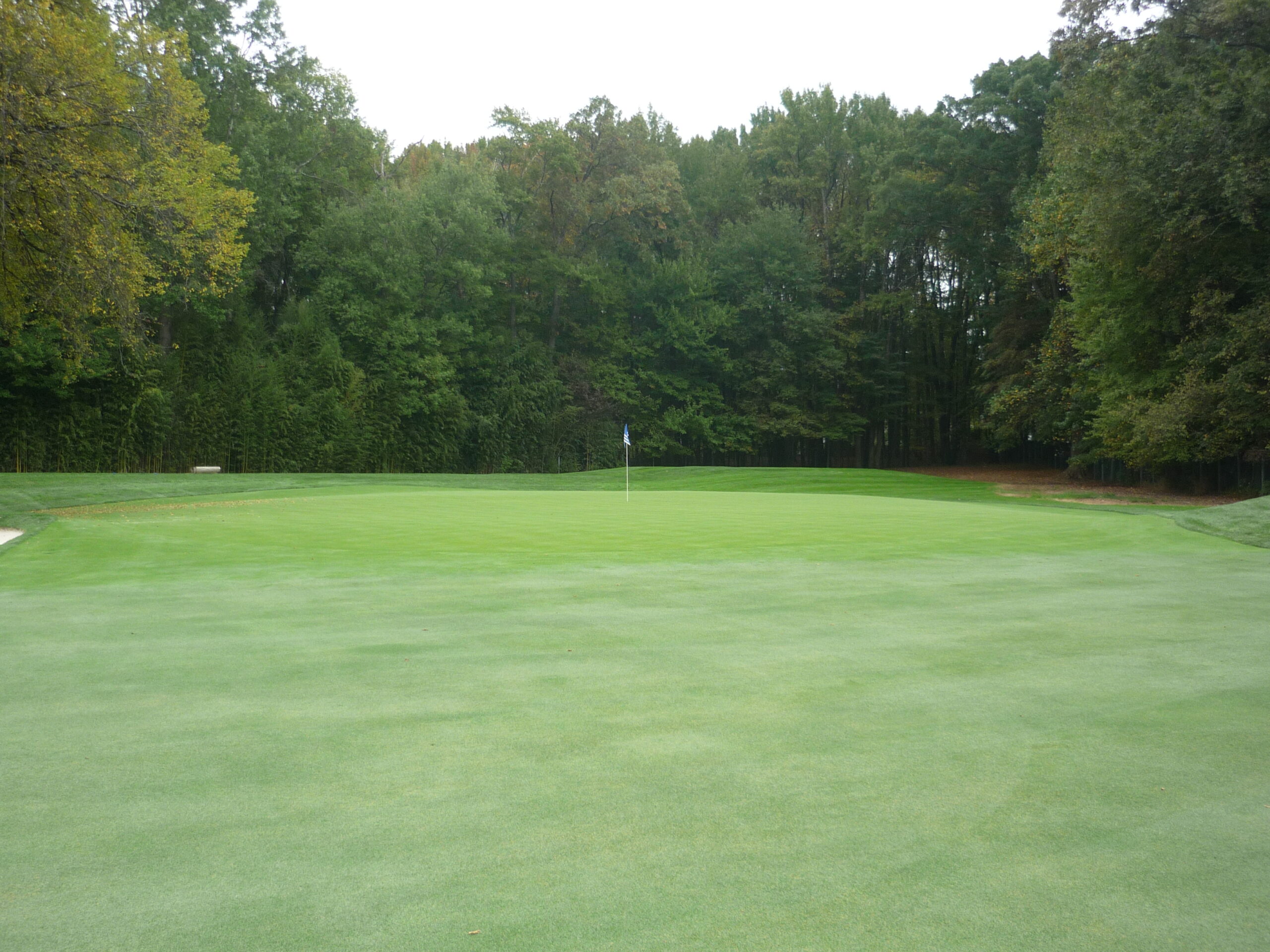
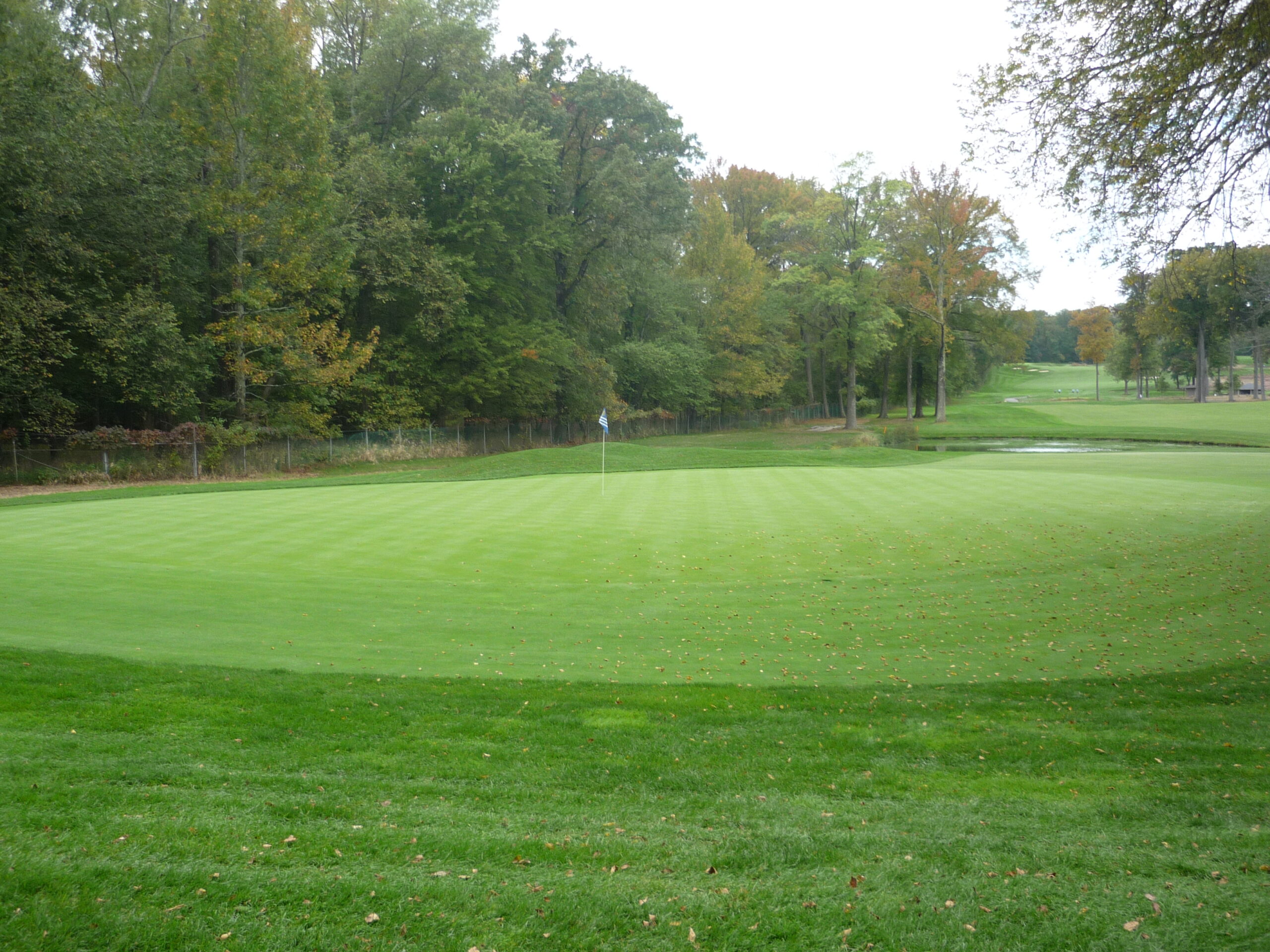
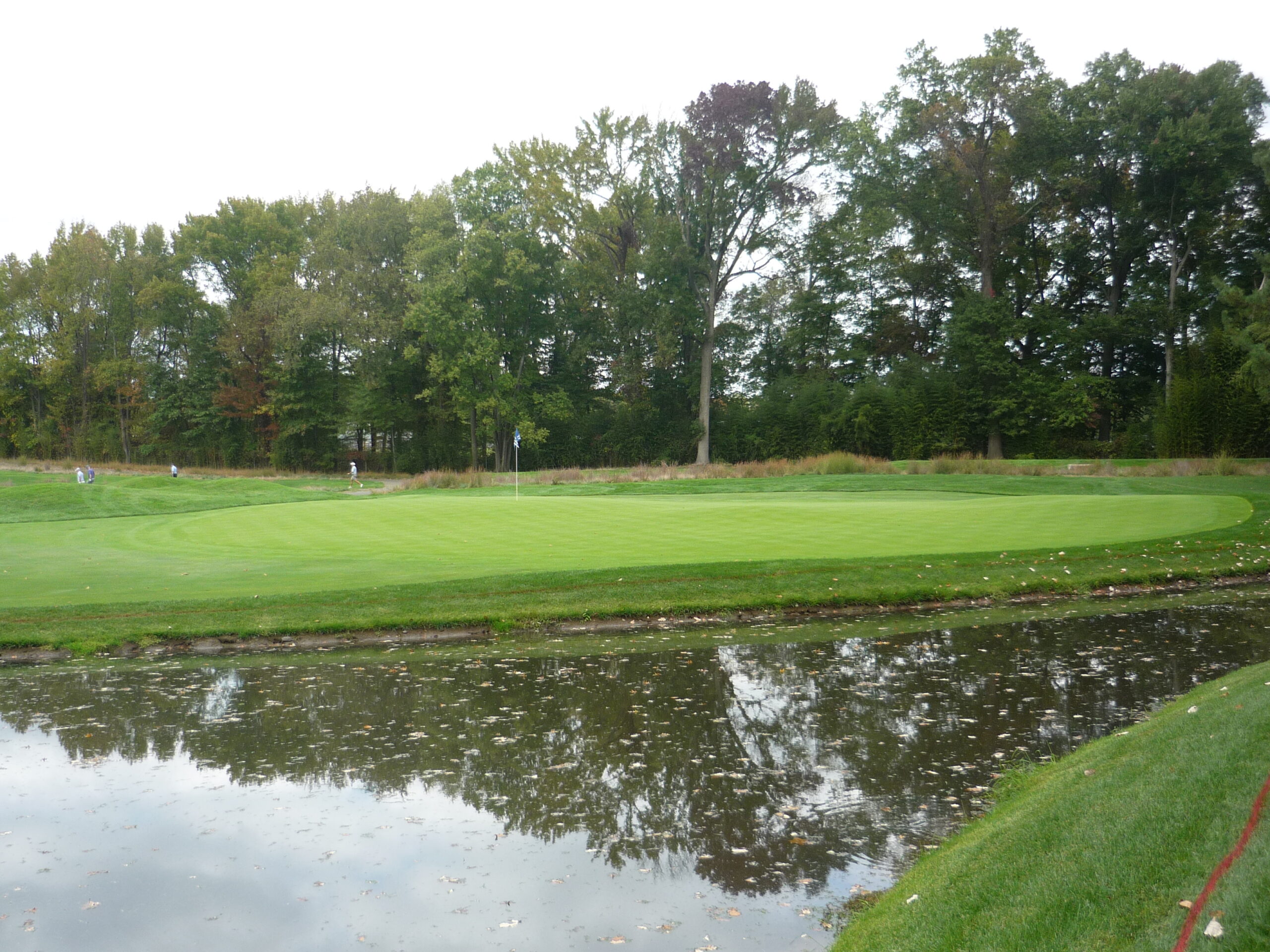
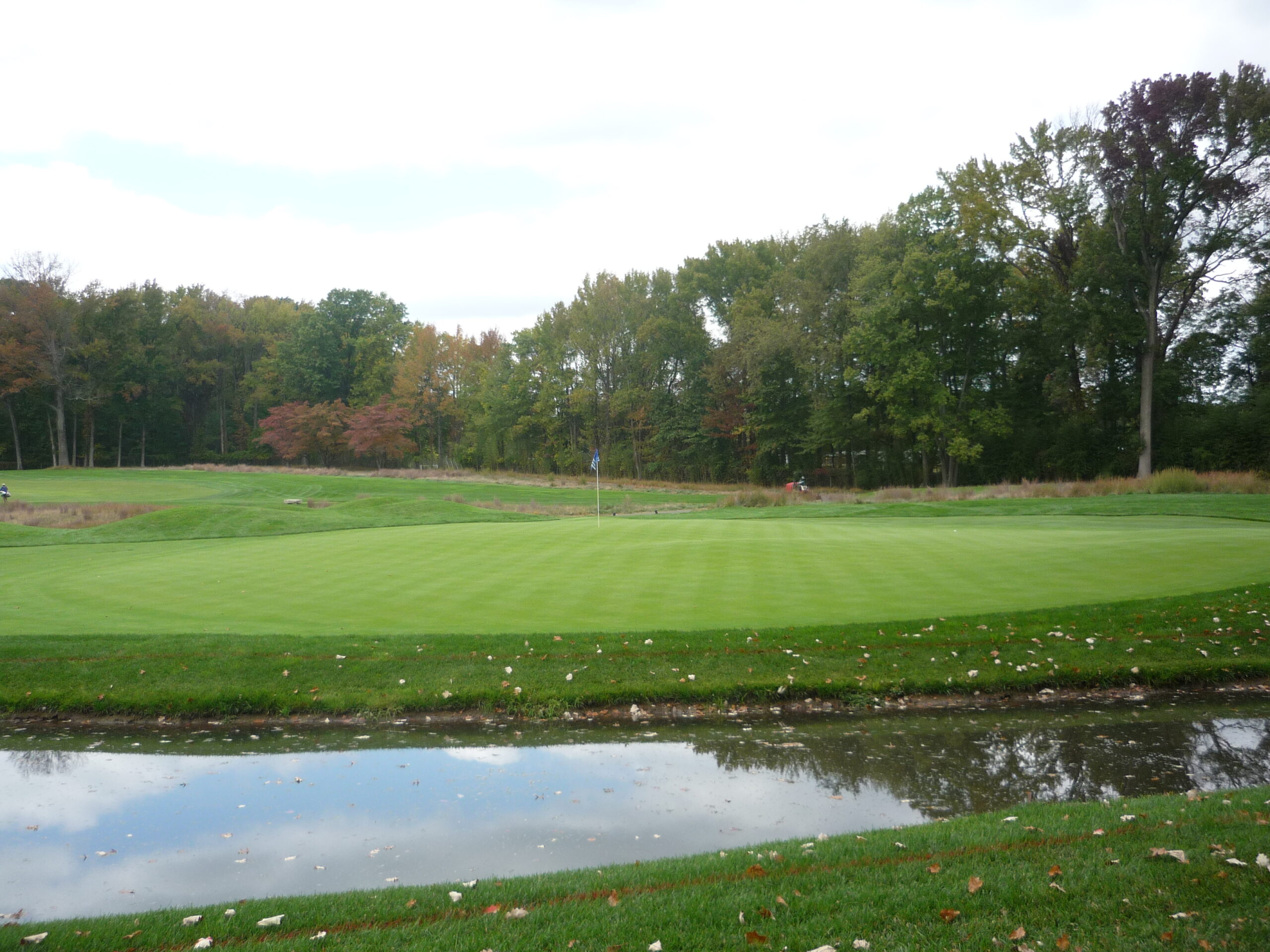
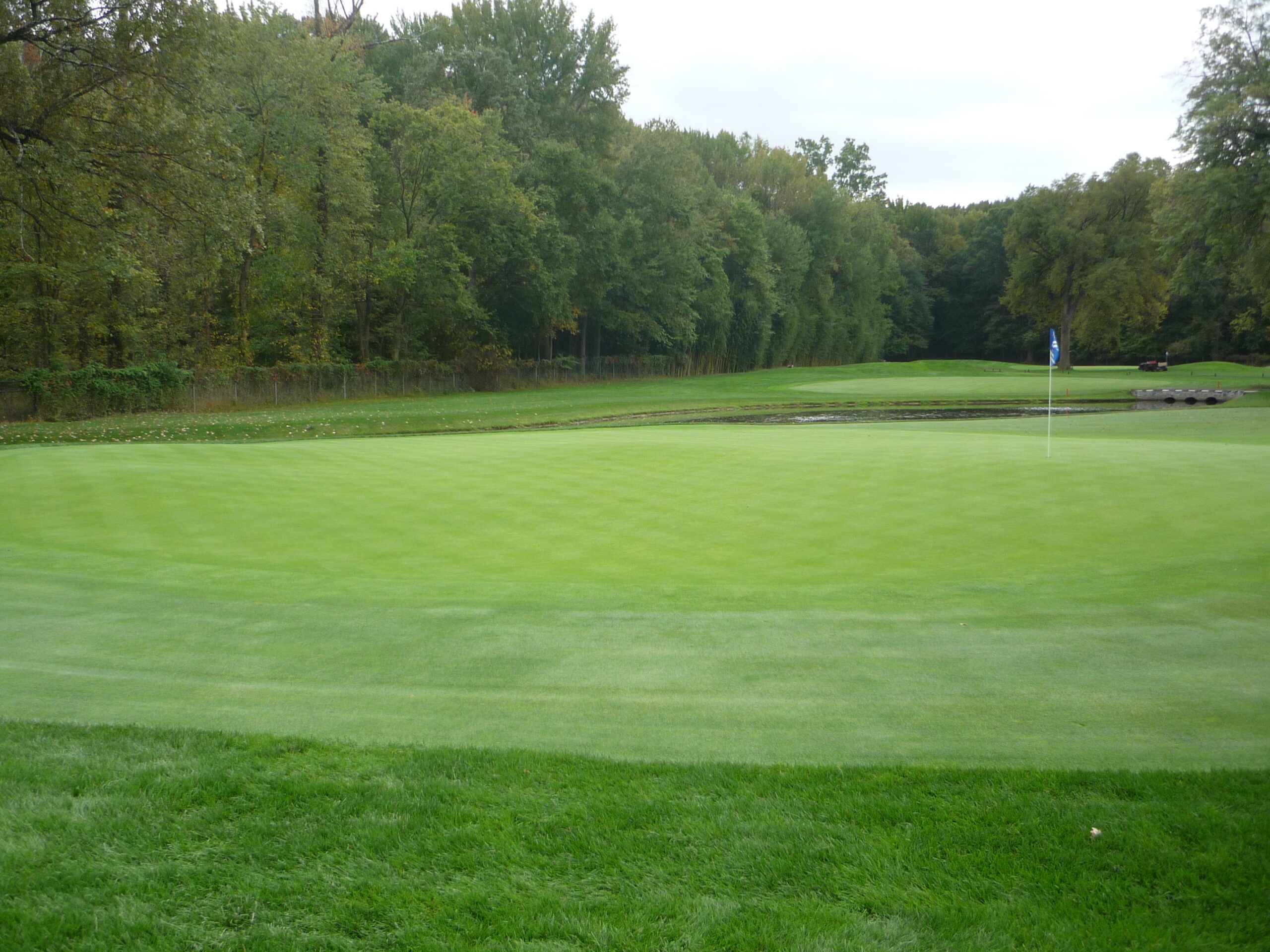
This might look like a flat hole but the green contains more slope that you can see from the tee. There is a bailout area short left that offers safe haven but the green is a large target.
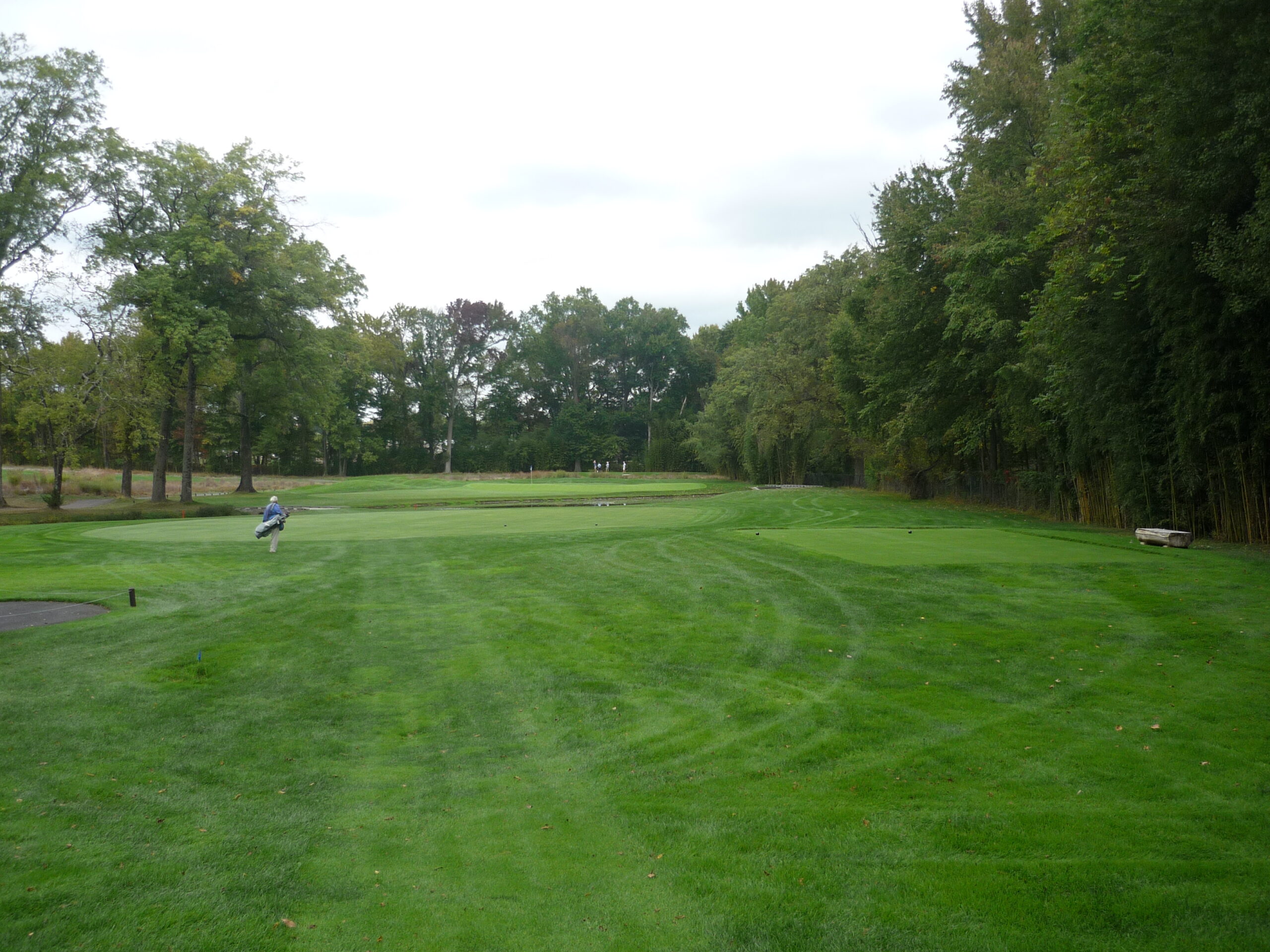
I’ve taken a number of photos of the green to illustrate the humps and bumps from different angles.
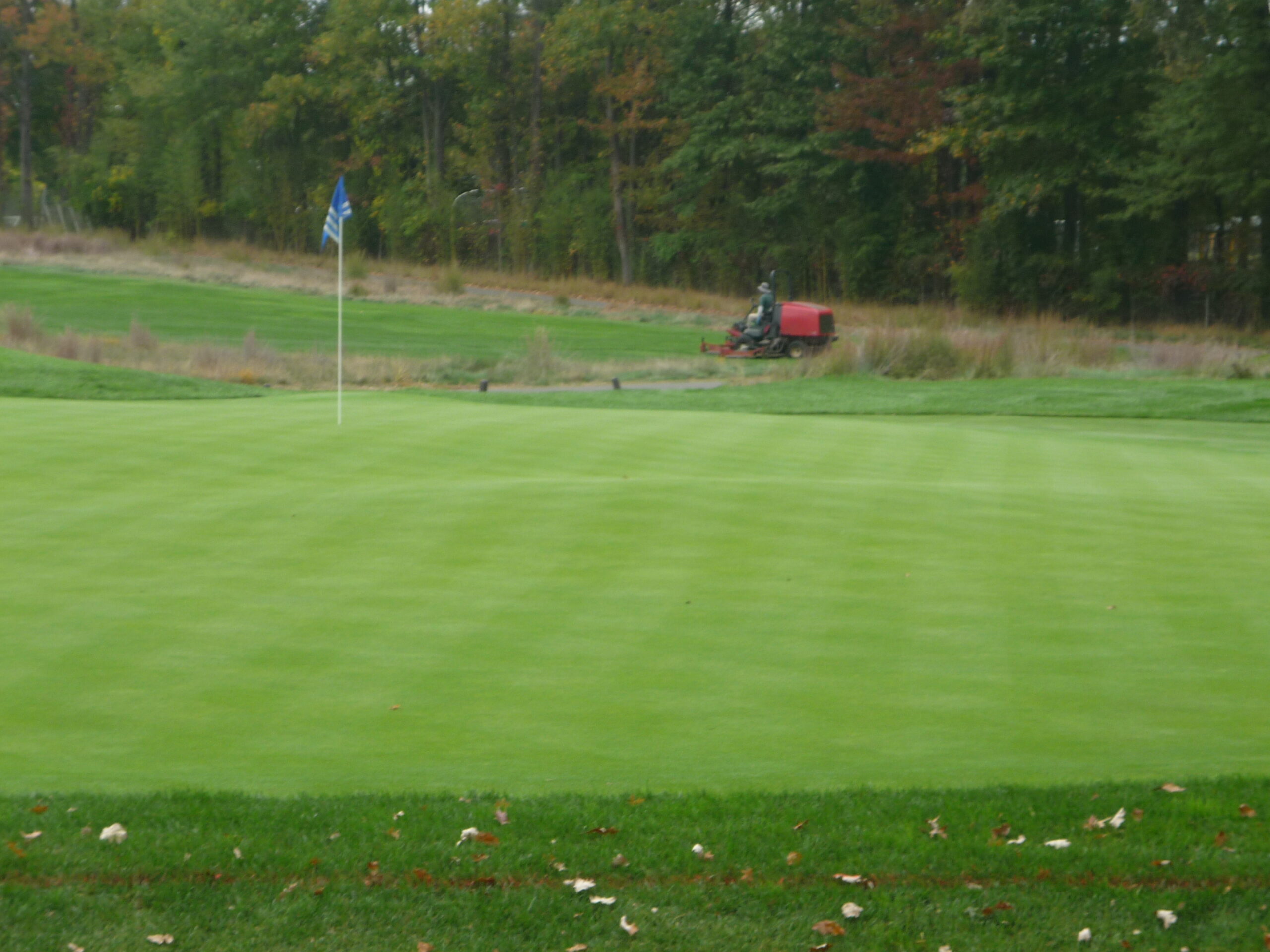
Hole 15 – 357 yards – Par 4
A bunker complex dots the right side of this hole and provides the primary obstacle for the tee shot. If you can carry those or play just left of them, you’ll have a good angle to the green.
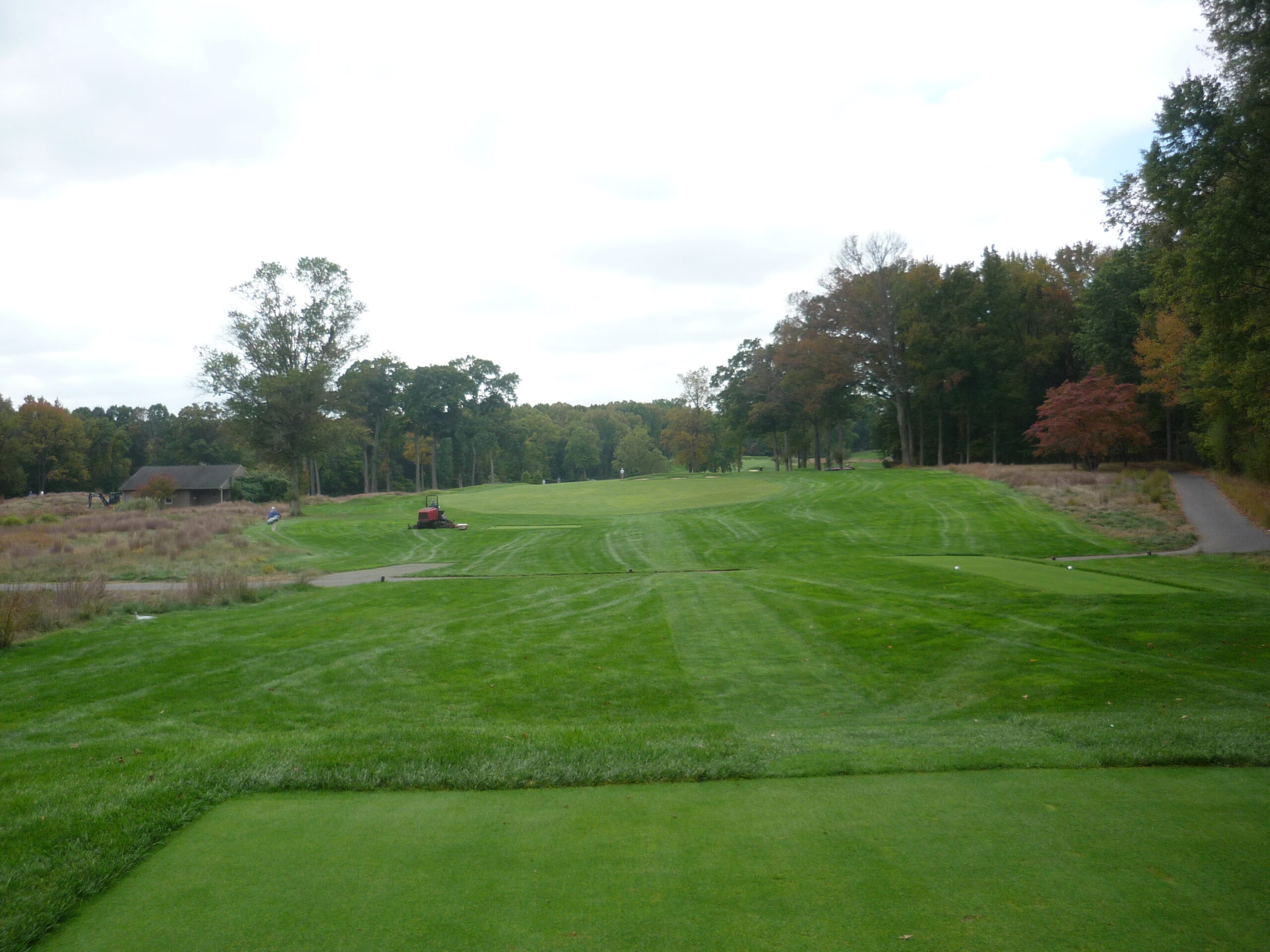
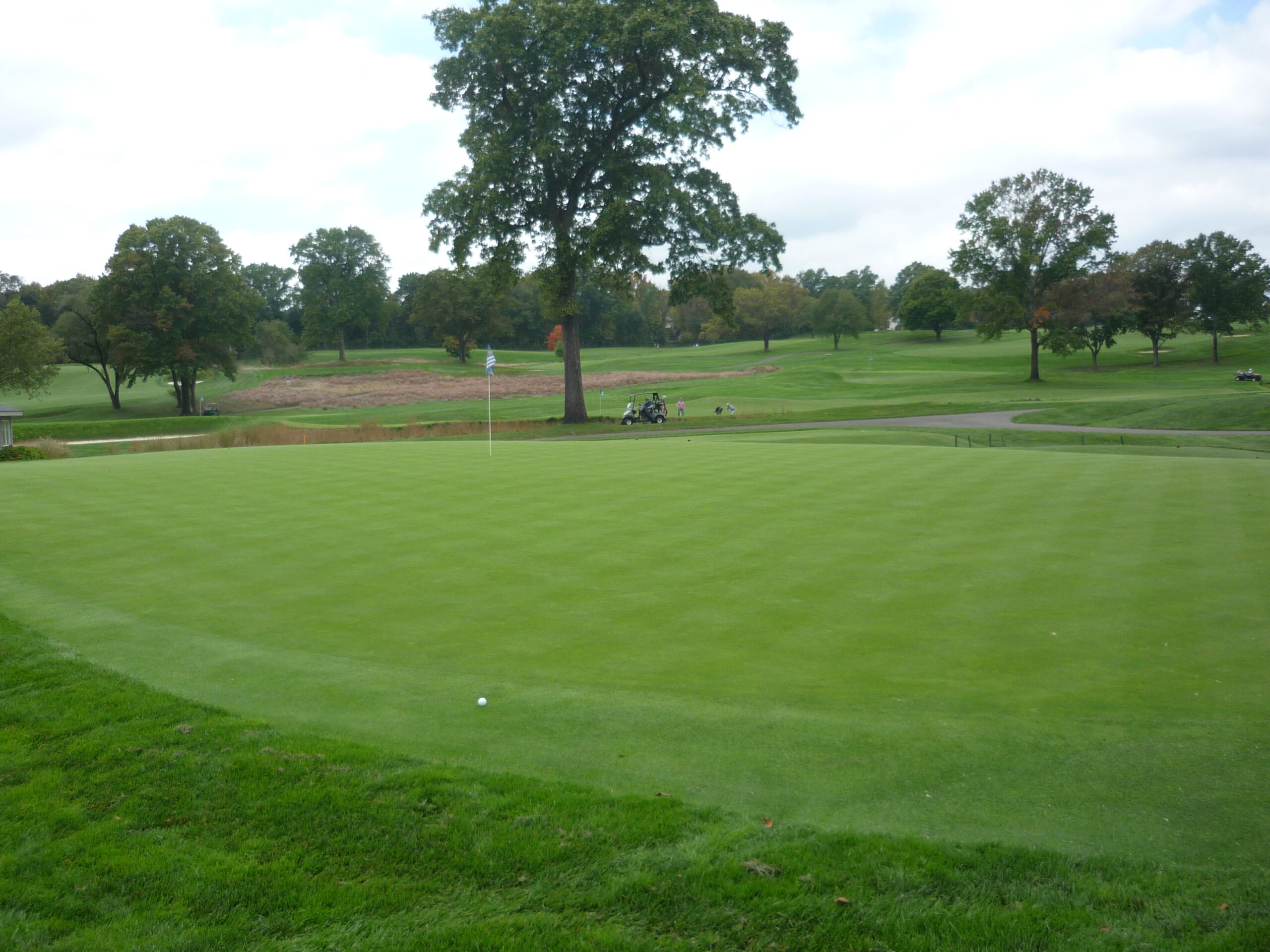
This view can trick you into thinking that the green is unguarded. In reality, there are multiple bunkers fronting the green and a chipping area off to the right.
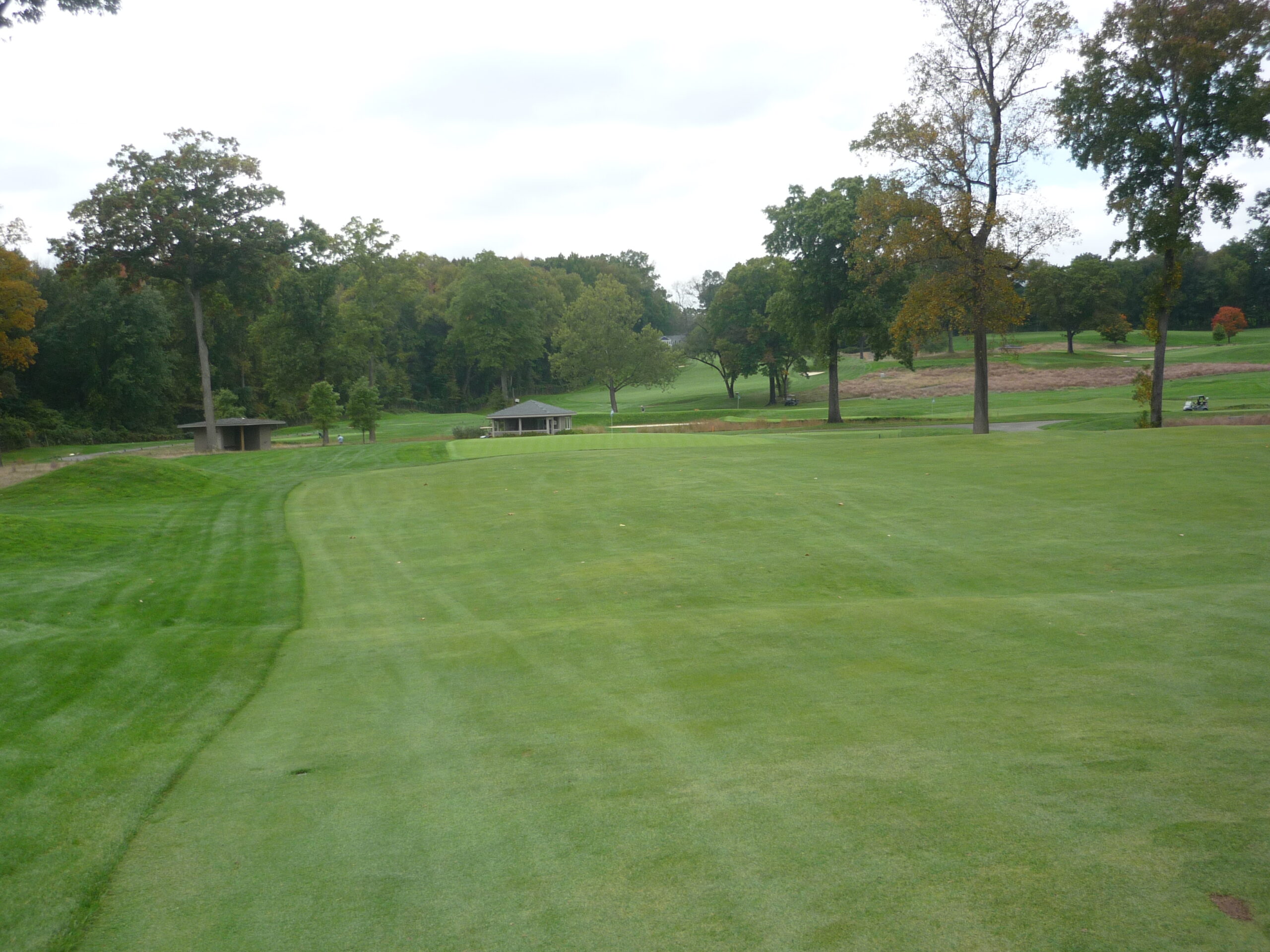
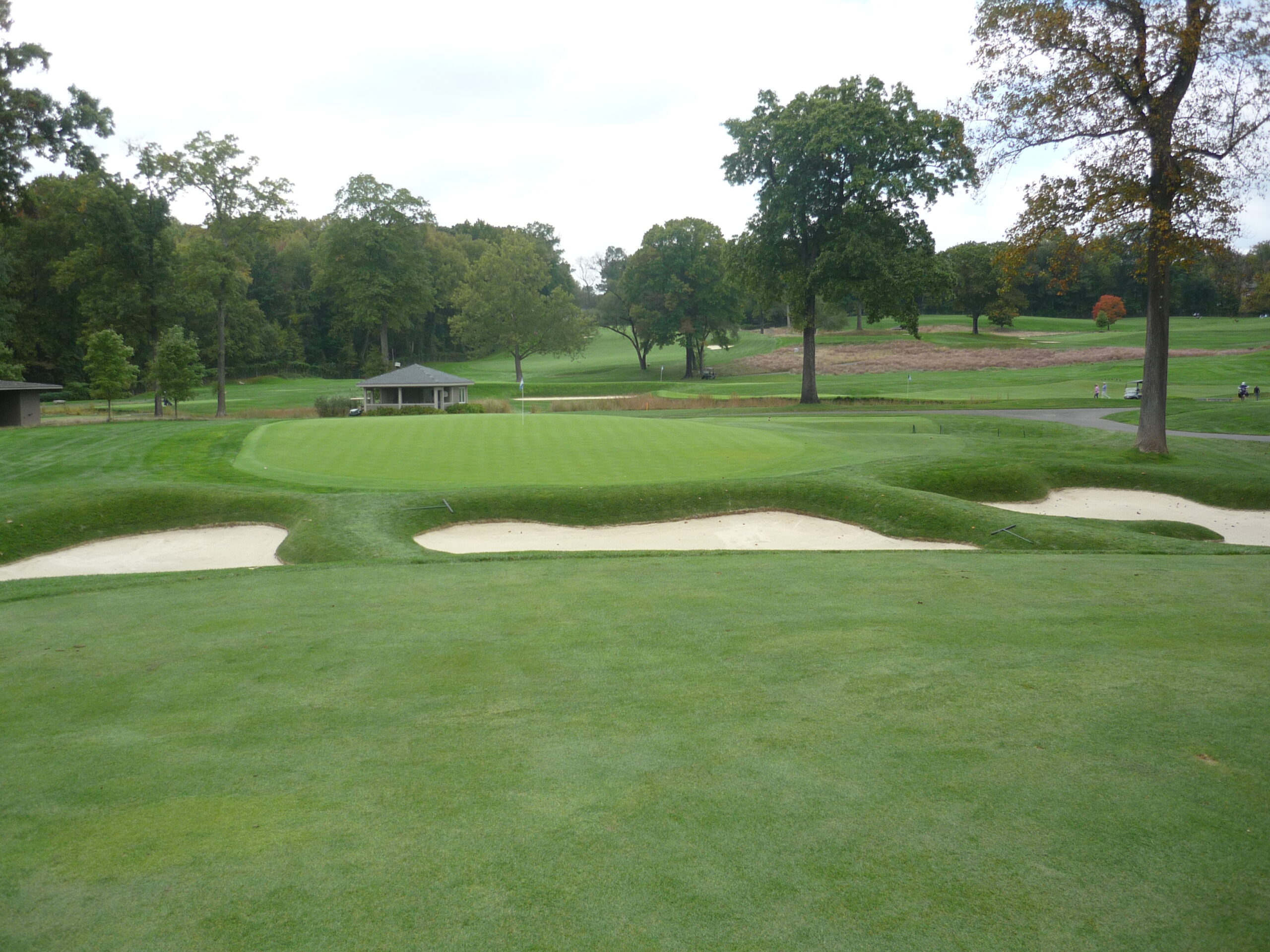
Hole 16 – 517 yards – Par 5
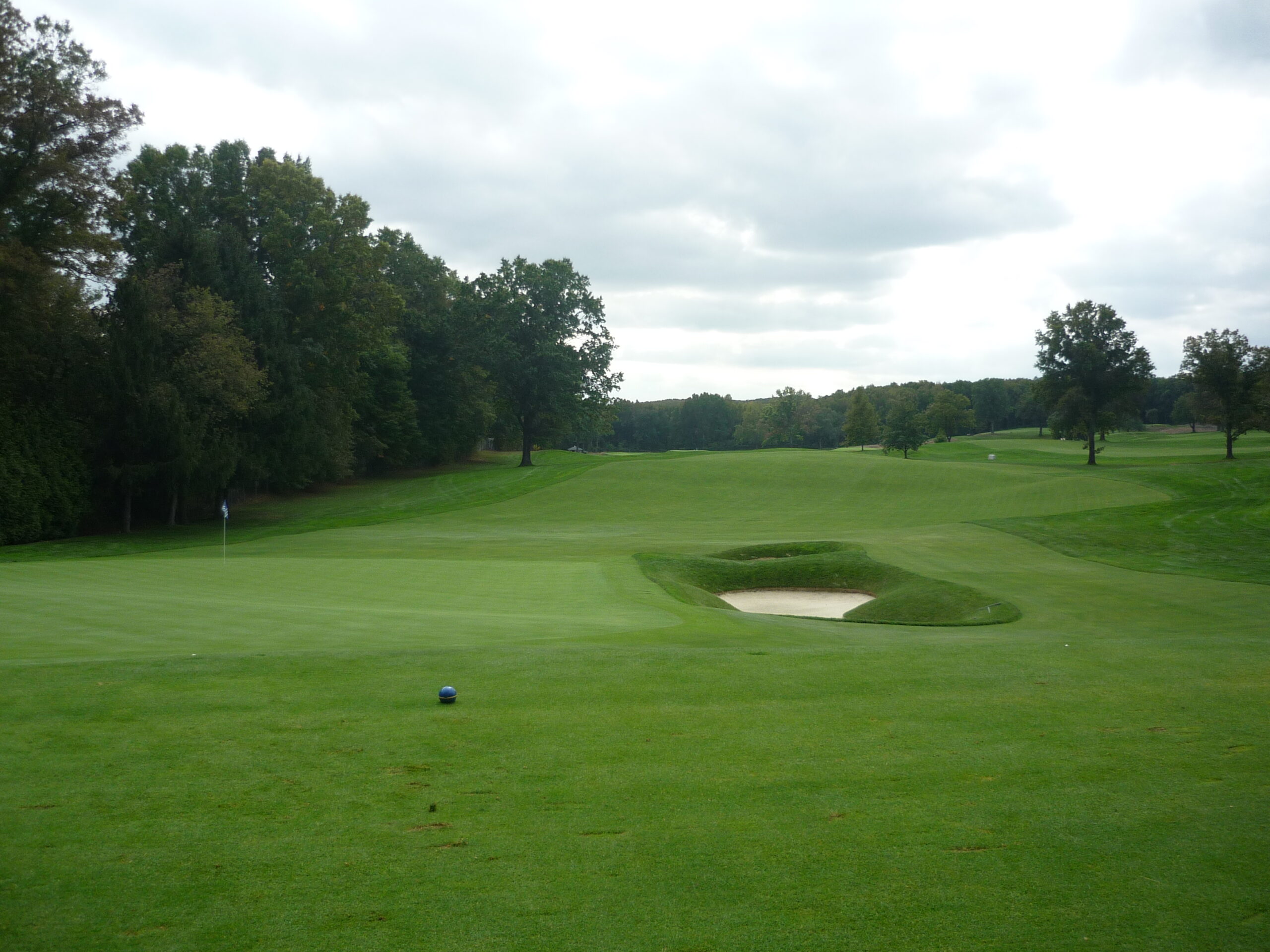
This par five has a large cross bunker formation that you cannot see from the tee. Good drives in the fairway should allow you to cover it easily on your second shot, but if you end up in the rough, the task becomes a bit more difficult.
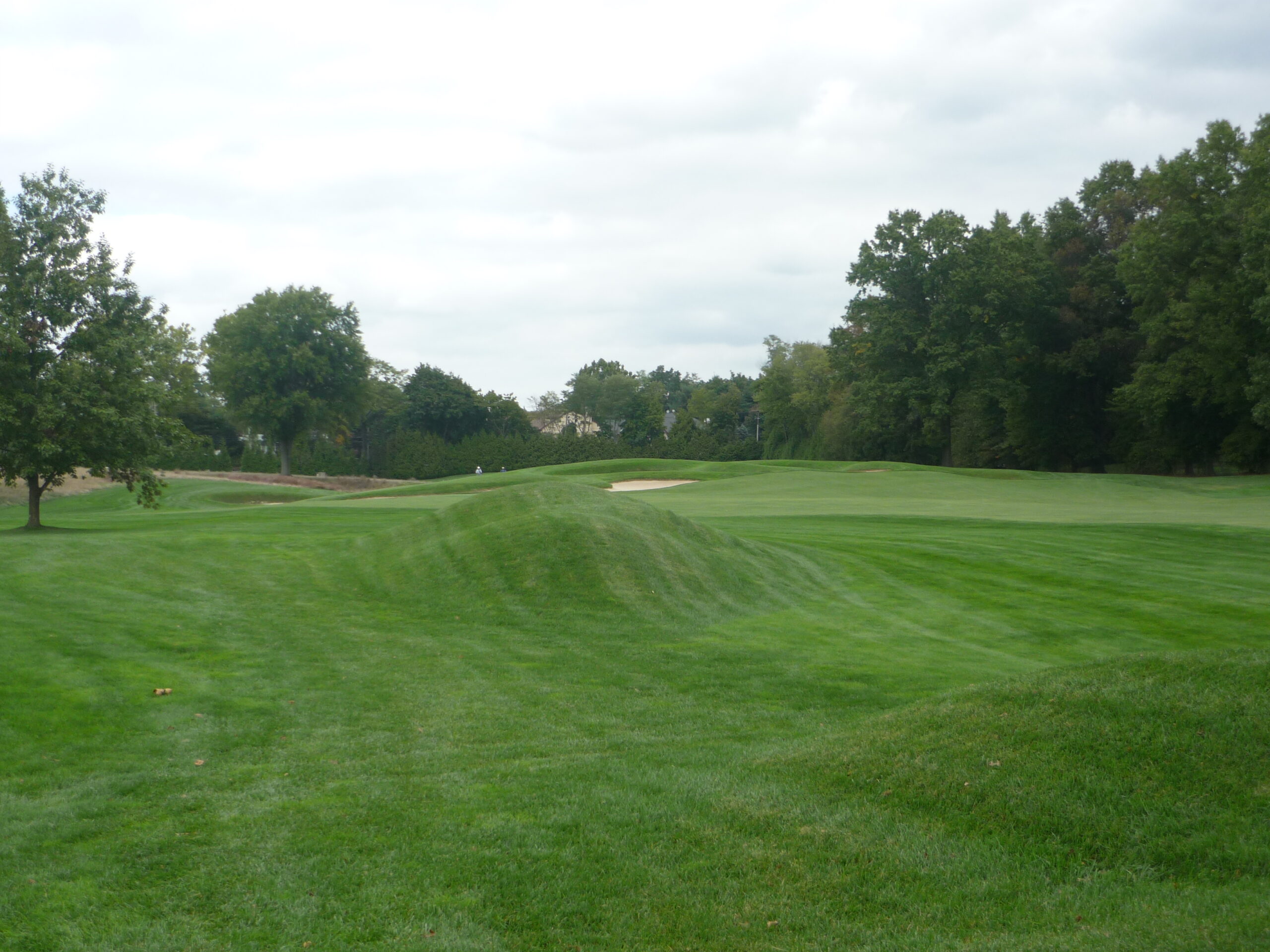
You can start to see the mounding and land movement below.
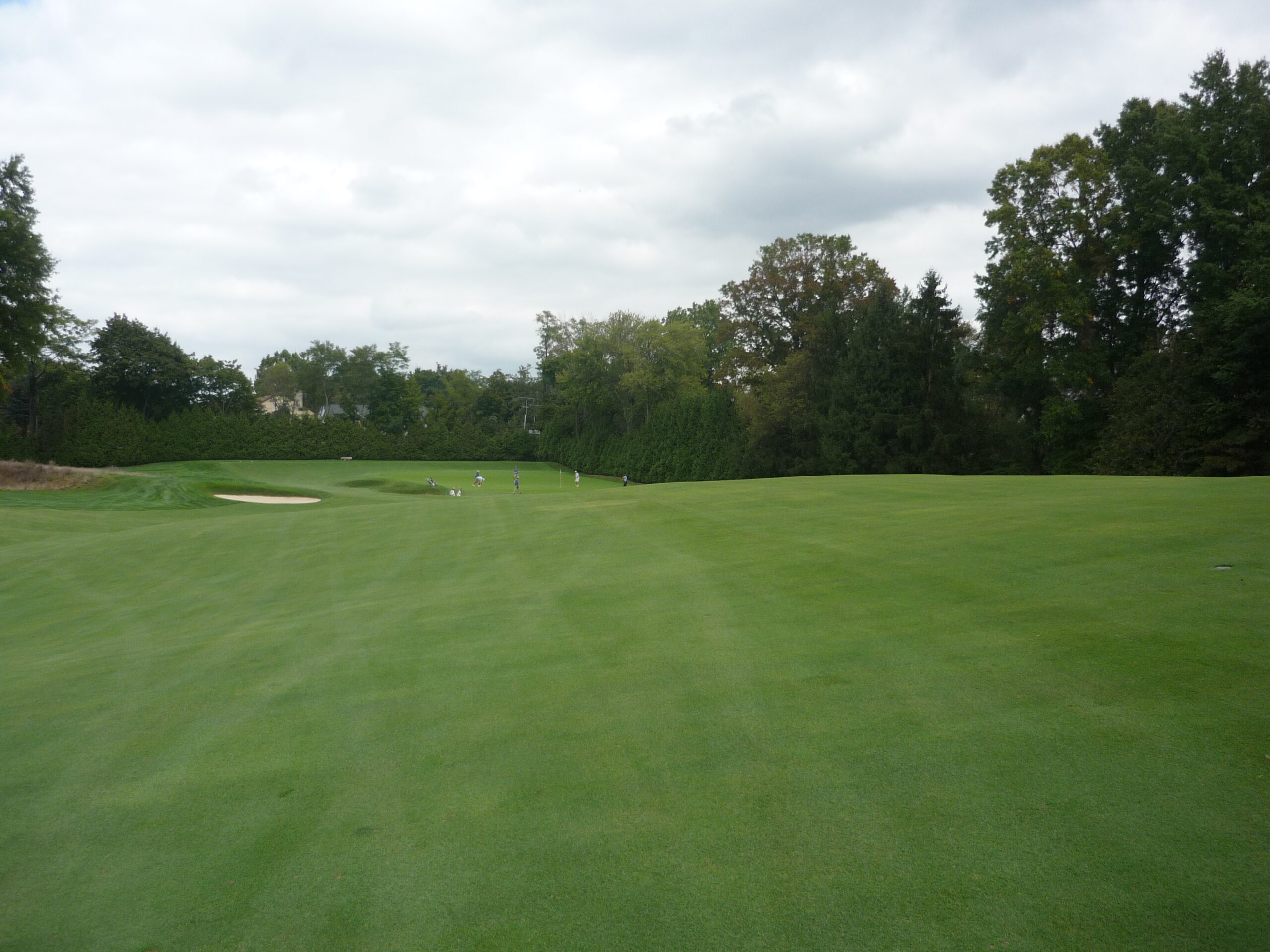
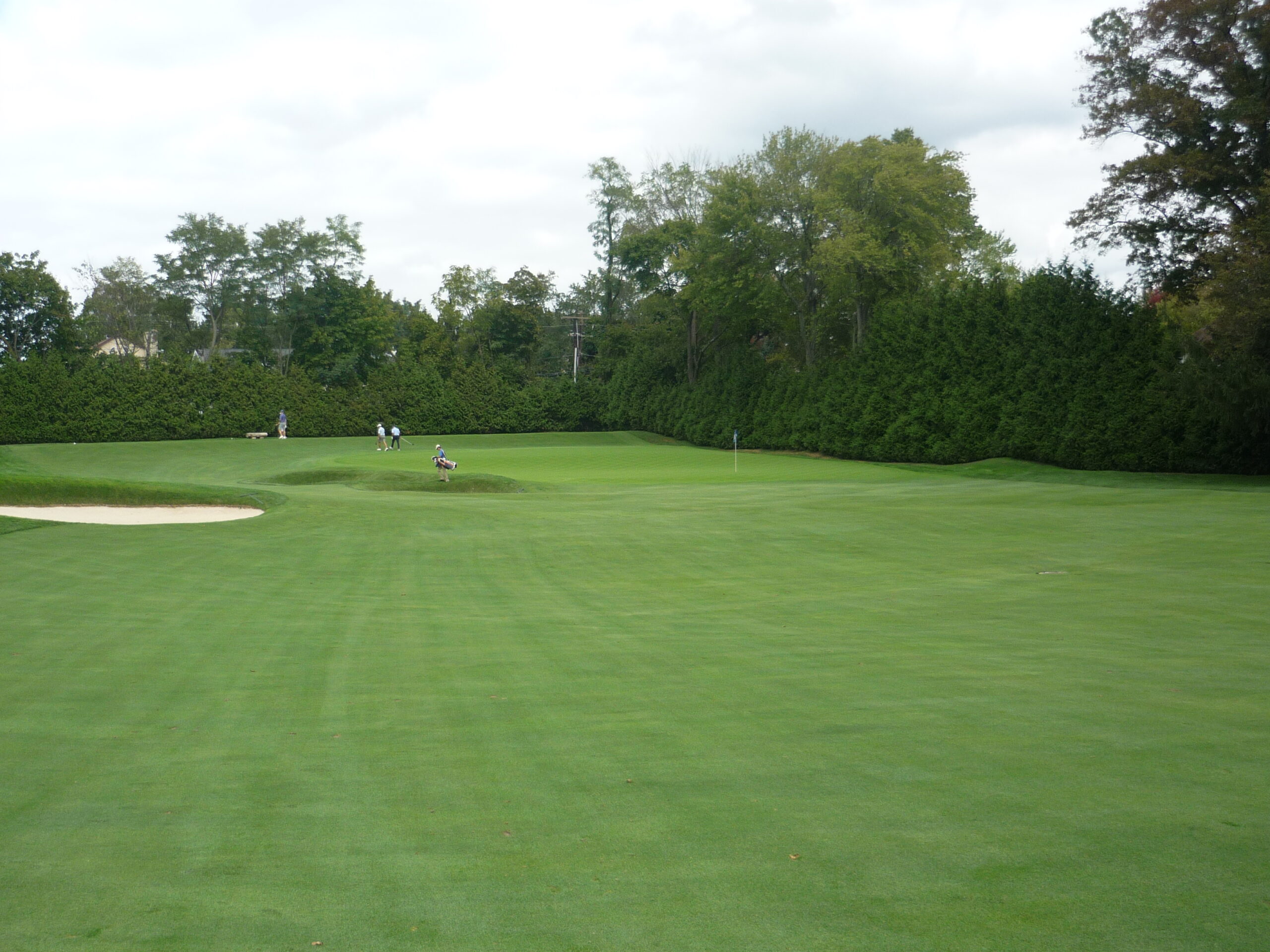
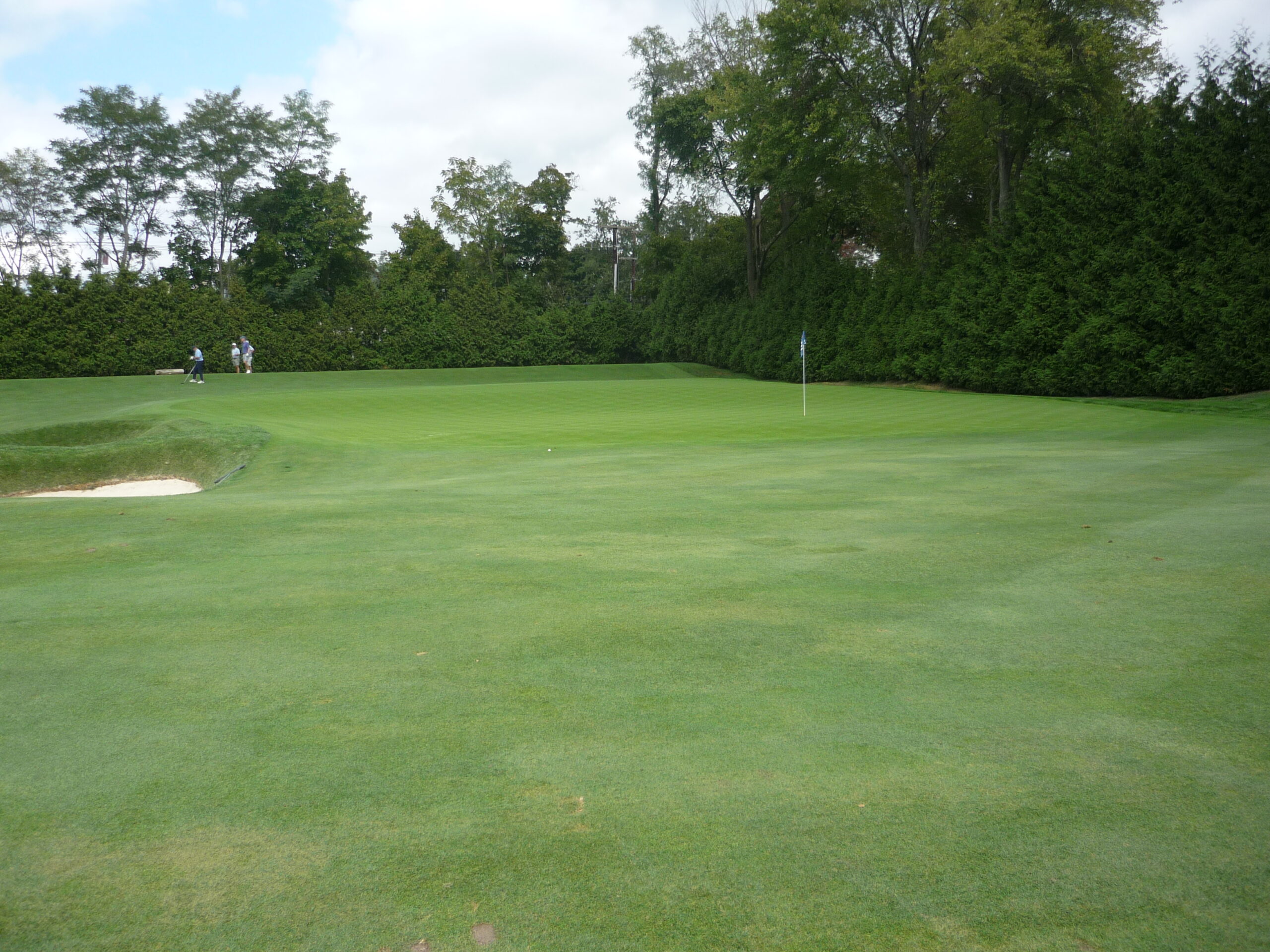
The green has massive back to front tilt and is split into two distinct tiers. Putting from one tier to the other will be tough on you.
Hole 17 – 409 yards – Par 4
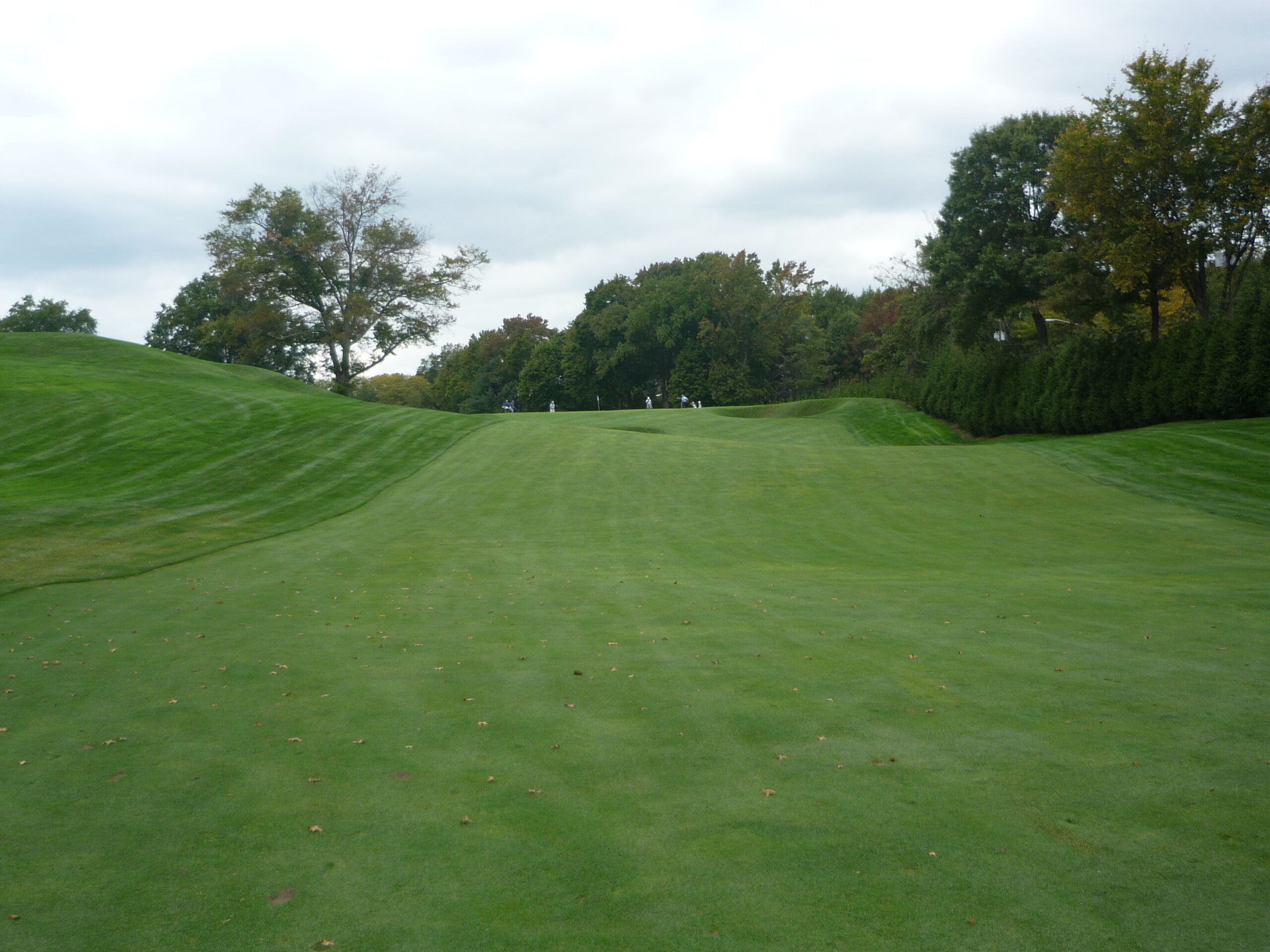
The hole doglegs right before playing to an elevated and partially blind green. Long hitters can carry the bunkers and get some extra roll into the flat portion of the fairway.
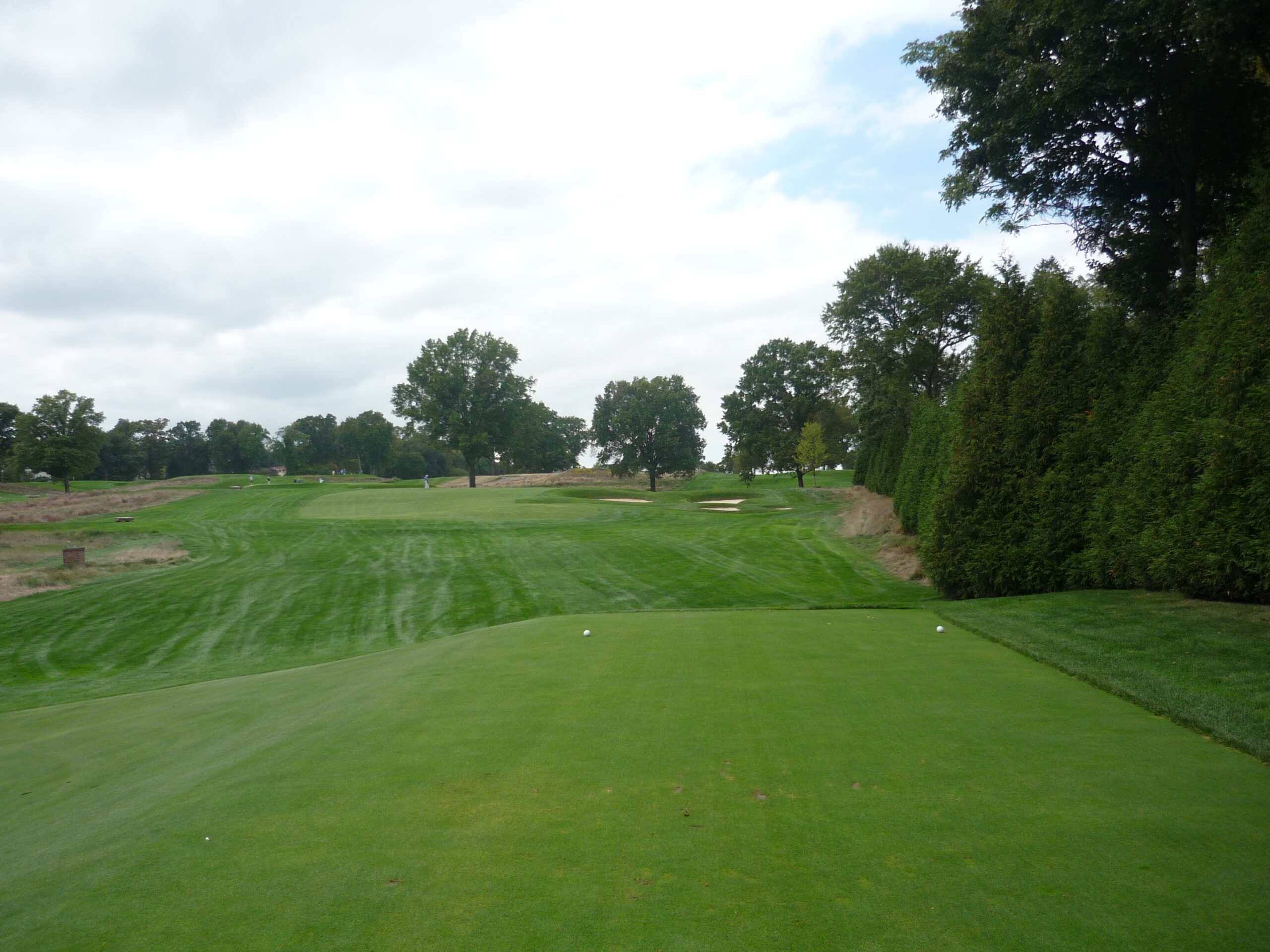
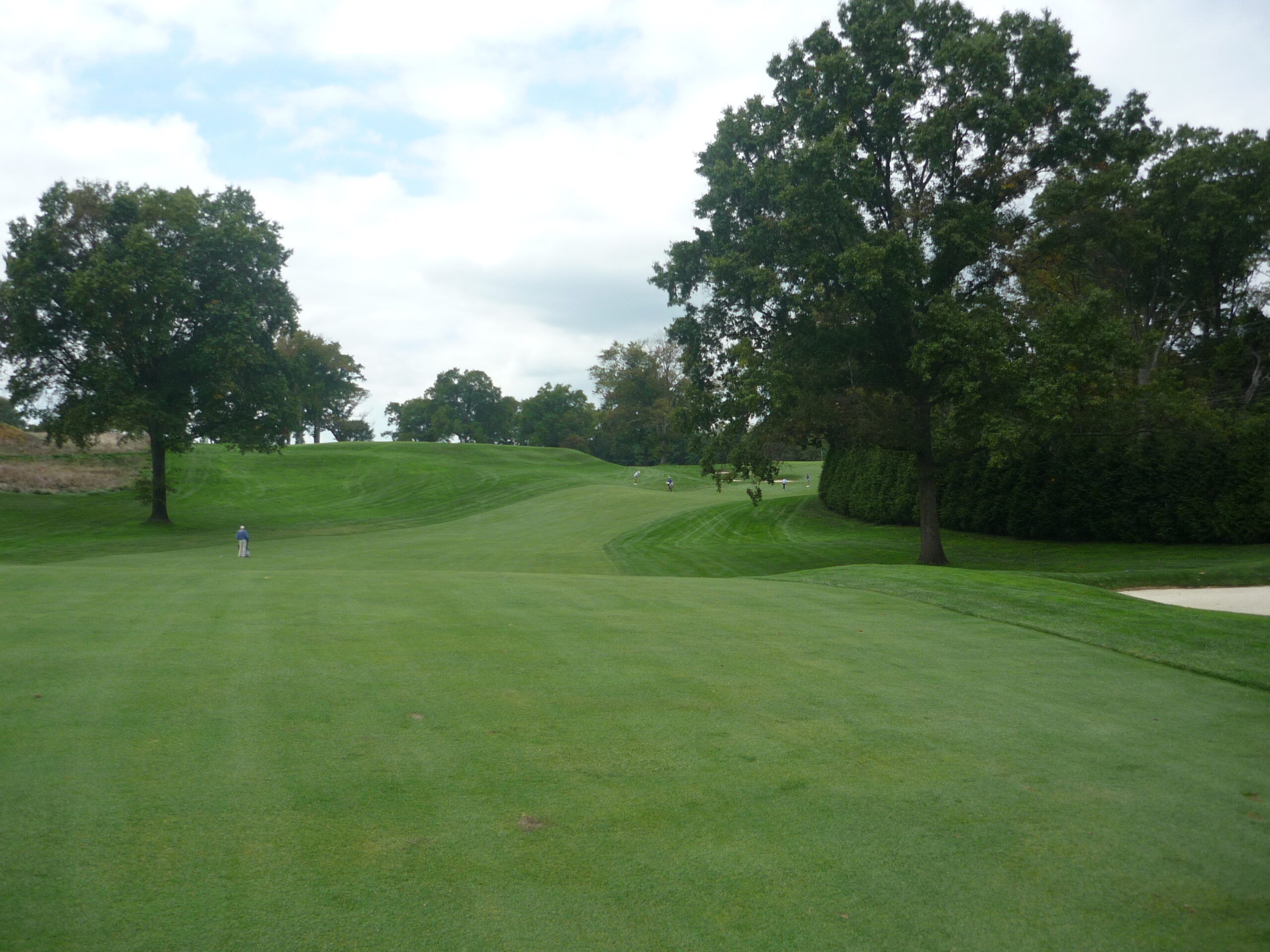
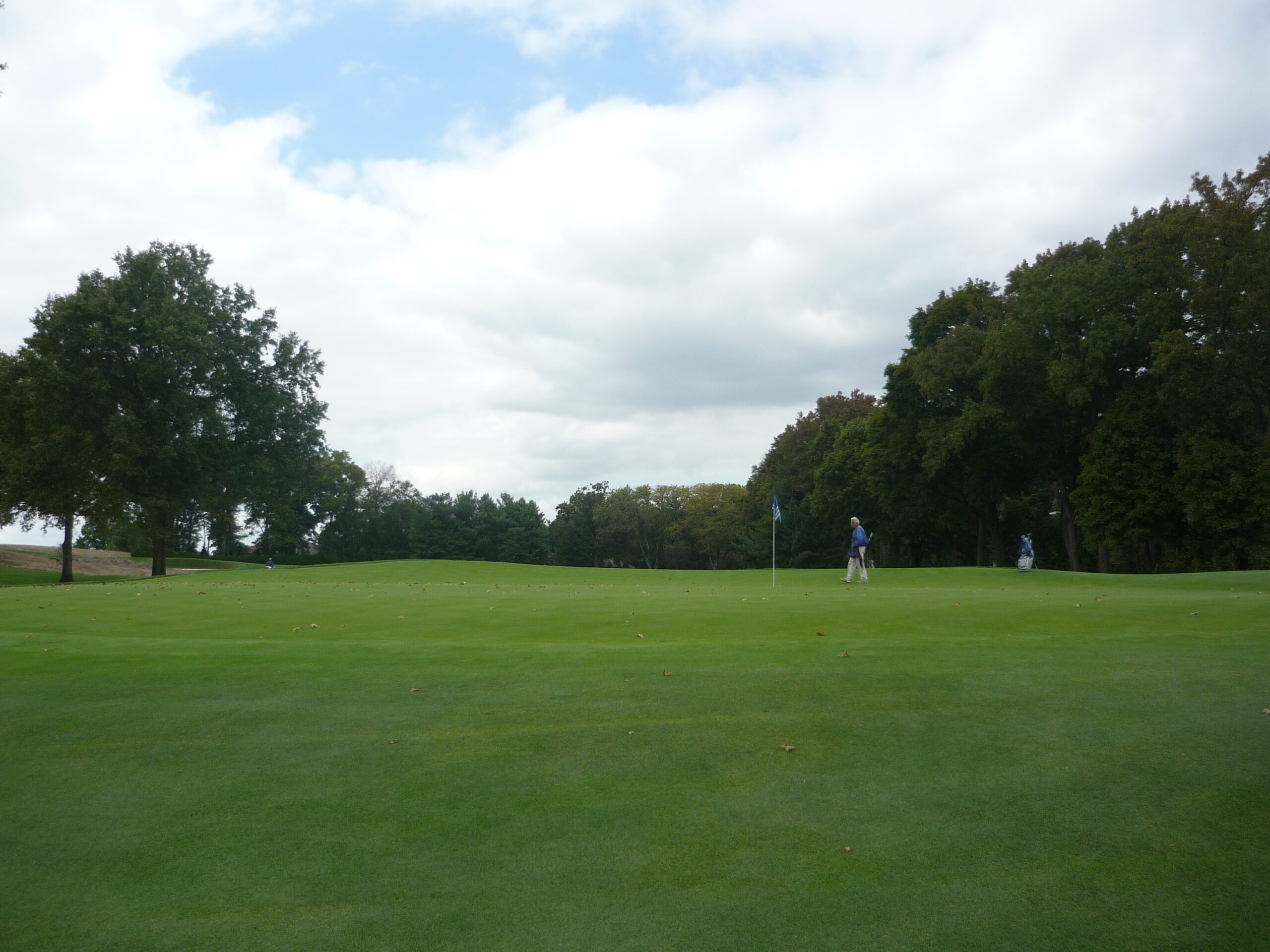
As I mentioned, the approach plays uphill. With the slope in front of the green coming up short is not good!
Hole 18 – 356 yards – Par 4
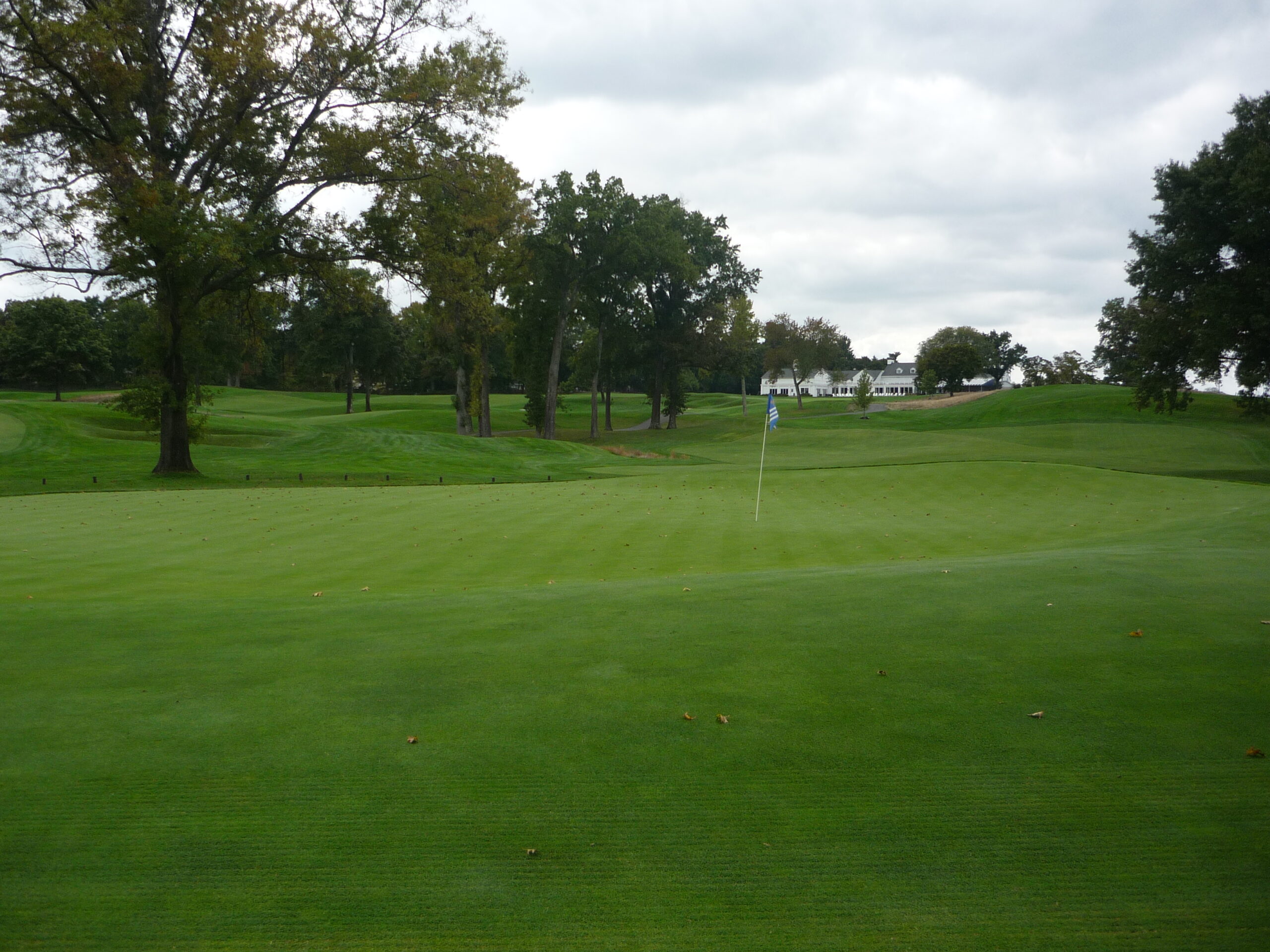
The bunkers and heather up the left side is not conducive to good approach shots. You better make sure you can carry all of that if you choose that line. Being in the fairway makes the uphill approach shot so much easier.
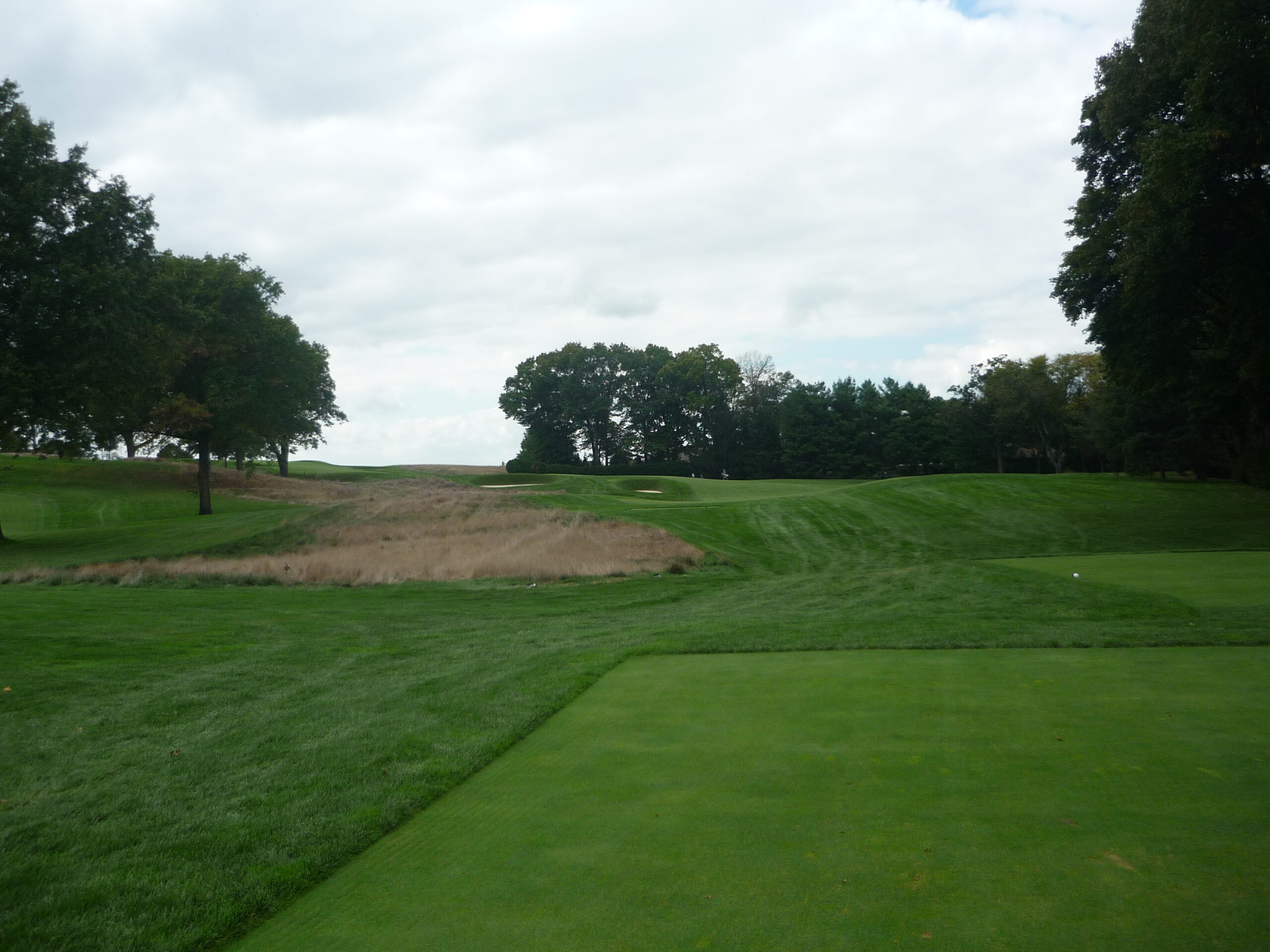
The putting surfaces sits up the hill and to the left of the tee. This green has another slope in front of it that will repel shots that come up short.
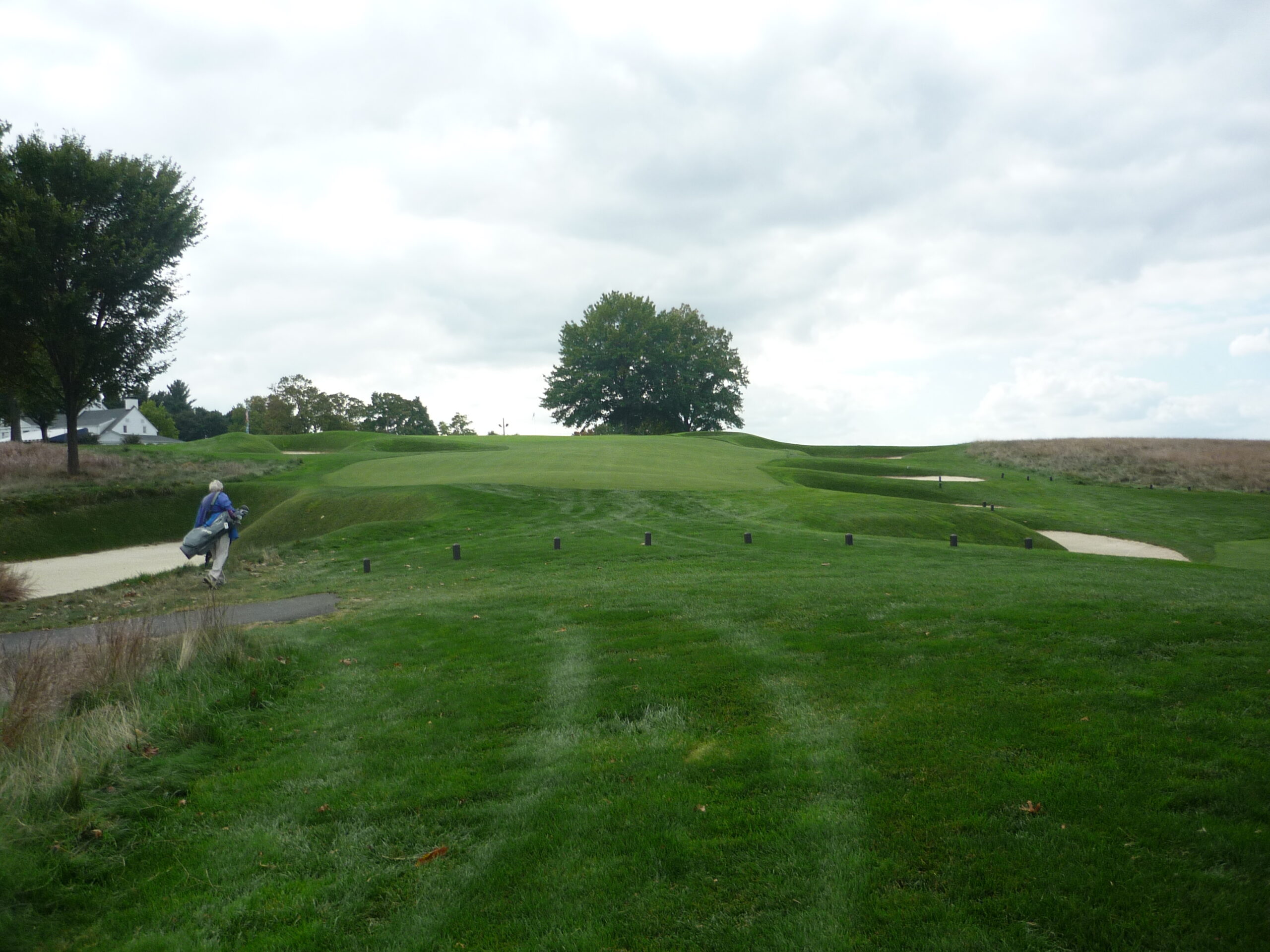
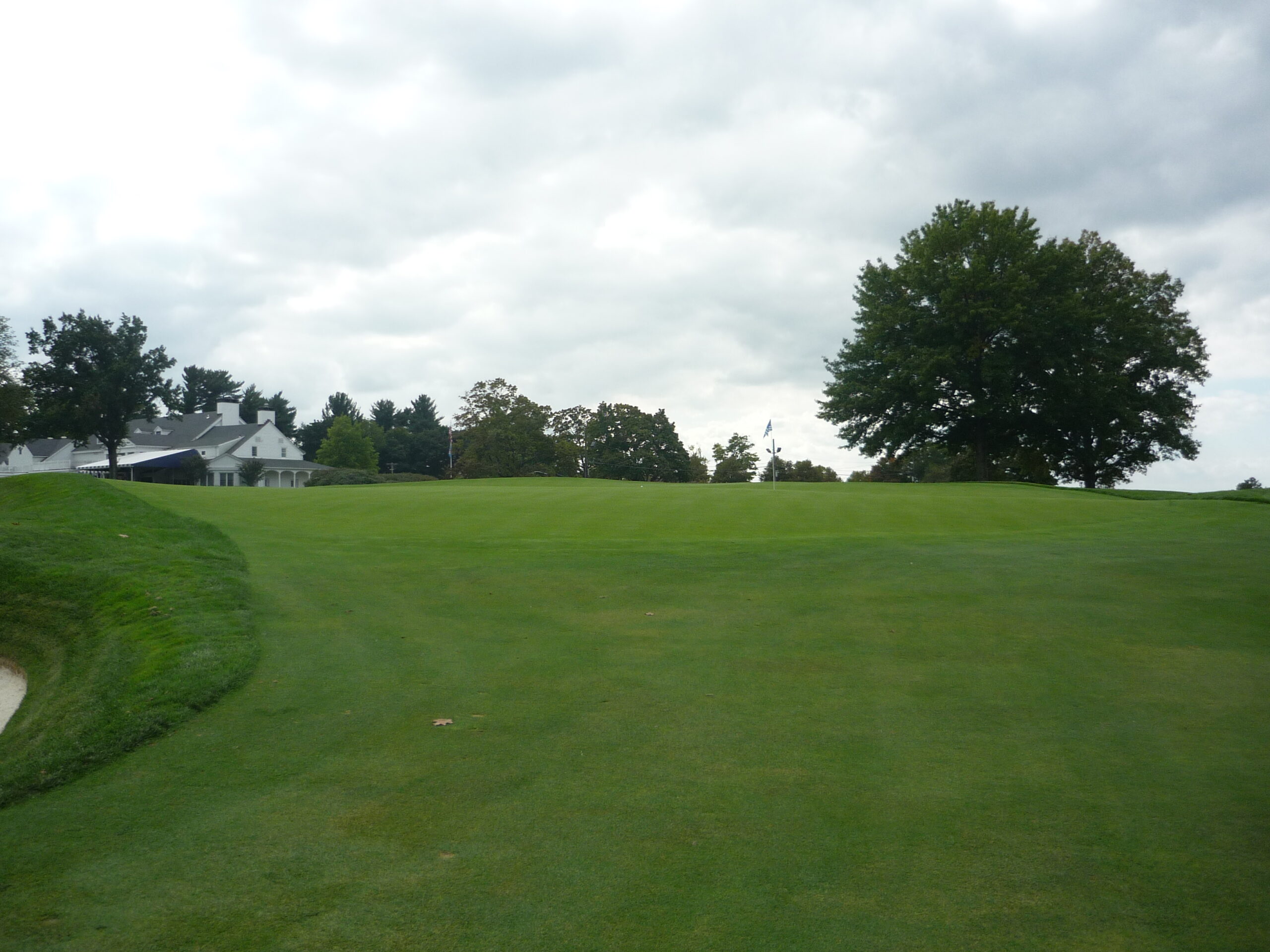
As you can see, Plainfield Country Club is a quintessential Donald Ross layout. You have his intriguing greens and challenging bunkering to keep you engaged for the entire round. I imagine it would take numerous loops around the course to feel comfortable with each hole. If you have a chance to see Plainfield, clear your schedule and take advantage.