Sahalee Country Club – Played Summer 2025
- Rankings: Golf Digest #82
- Location: 21200 NE Sahalee Country Club Drive, Sammamish, Washington
- Year: 1969
- Original Architects: Ted Robinson, Sr
- Additional Work By: Rees Jones, Keith Evans, & Steve Weisser
- Course Access: Private
- Walking Rules: Carts & Caddies Available
Score Card Information:
- Black: 7,007 yards, Par 72, 74.6 Rating/138 Slope
- Blue: 6,699 yards, Par 72, 73.2 Rating/136 Slope
- White: 6,284 yards, Par 72, 71.4 Rating/133 Slope (Men’s), 74.6 Rating/140 Slope (Women’s)
- Gold: 5,815 yards, Par 72, 69.0 Rating/129 Slope (Men’s), 74.0 Rating/132 Slope (Women’s)
- Green: 5,392 yards, Par 72, 66.6 Rating/125 Slope (Men’s), 72.0 Rating/127 Slope (Women’s)
Late last summer I had a trip out to the Pacific Northwest for a golf event with a bunch of friends (more on that later). The best way to warm up for a round is to play somewhere else, right? With that in mind, I got a round set up at Sahalee Country Club in the greater Seattle area.
The word Sahalee means “high heavenly ground” in the Chinook language. With a course set among the trees, you can certainly understand the name. The club was set in motion by members of two local clubs that wanted to establish a new course. They got Ted Robinson on board to design the course and selected Paul Runyan as their first head professional.
The club also has a rich history of tournament golf. It has hosted the 1998 PGA Championship, 2002 World Golf Championship, 2010 US Senior Open, and the 2016 and 2024 Women’s PGA Championships.
With the brief hsitory lesson now complete, let’s get into the course tour. Sahalee Country Club has 27 holes over the East, North, and South nines. Due to some club events, I played the East/South nines. The ranked layout is the South/North routing, but I am counting my round for my quest. One of the assistant professionals was kind enough to drive me around the North, so we have photos of most of the 27 holes. For our purposes, the tour will go East, South, North.
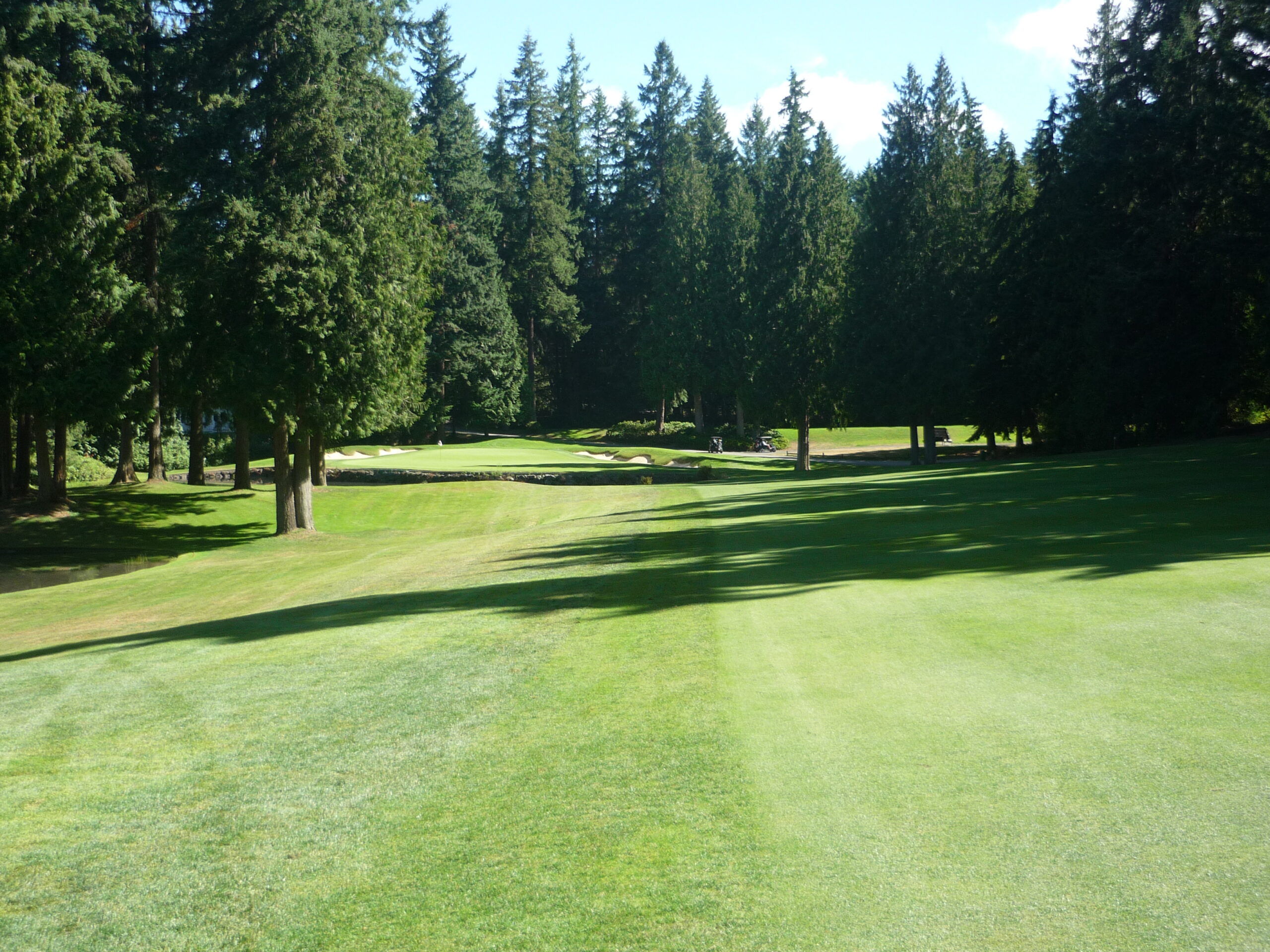
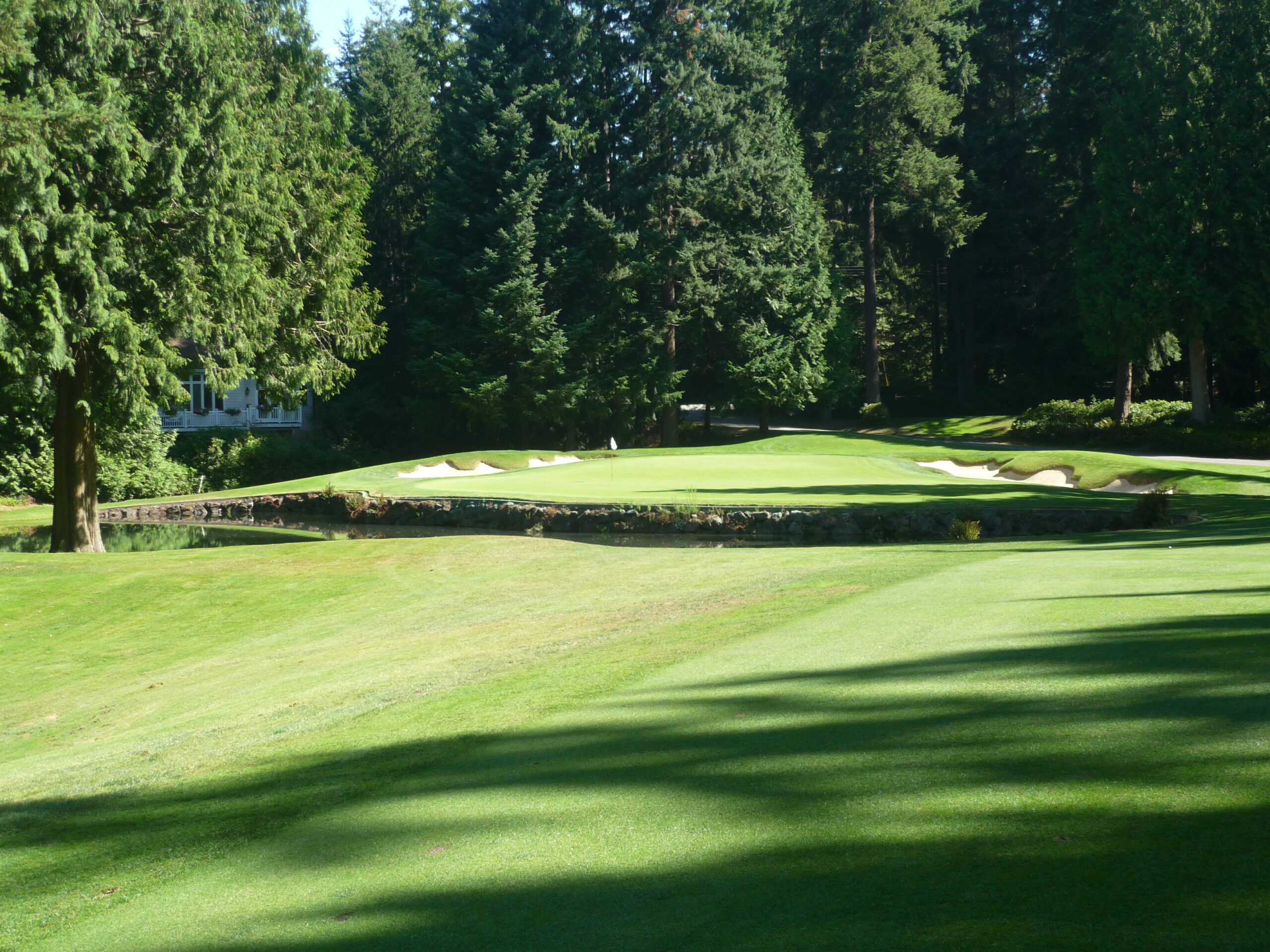
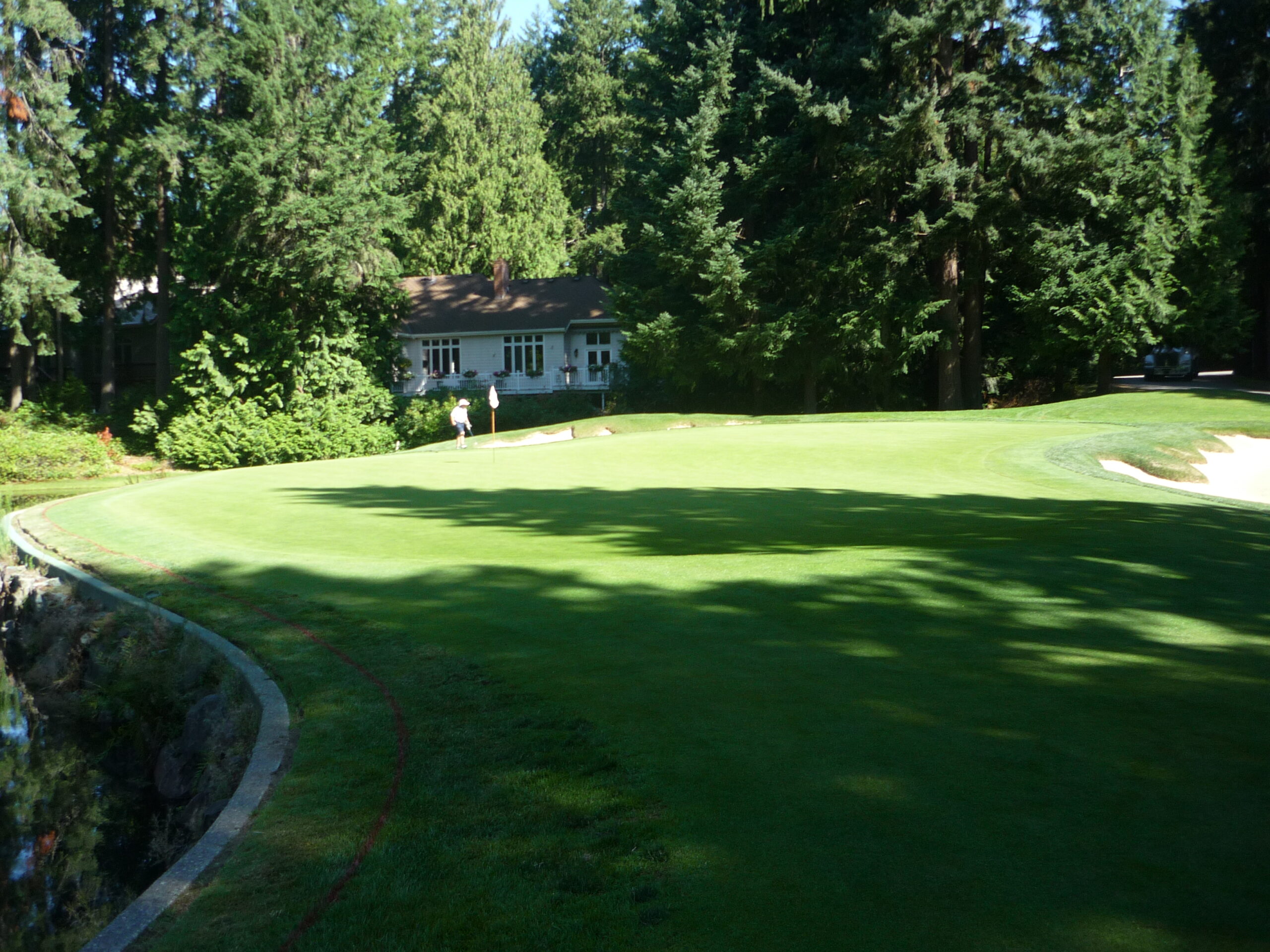
Hole 1 – 498 yards – Par 5
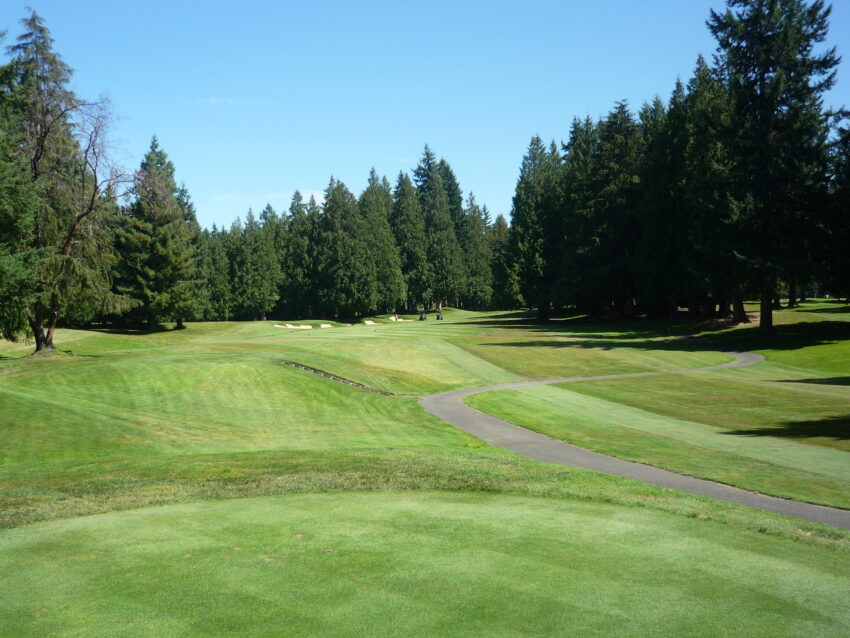
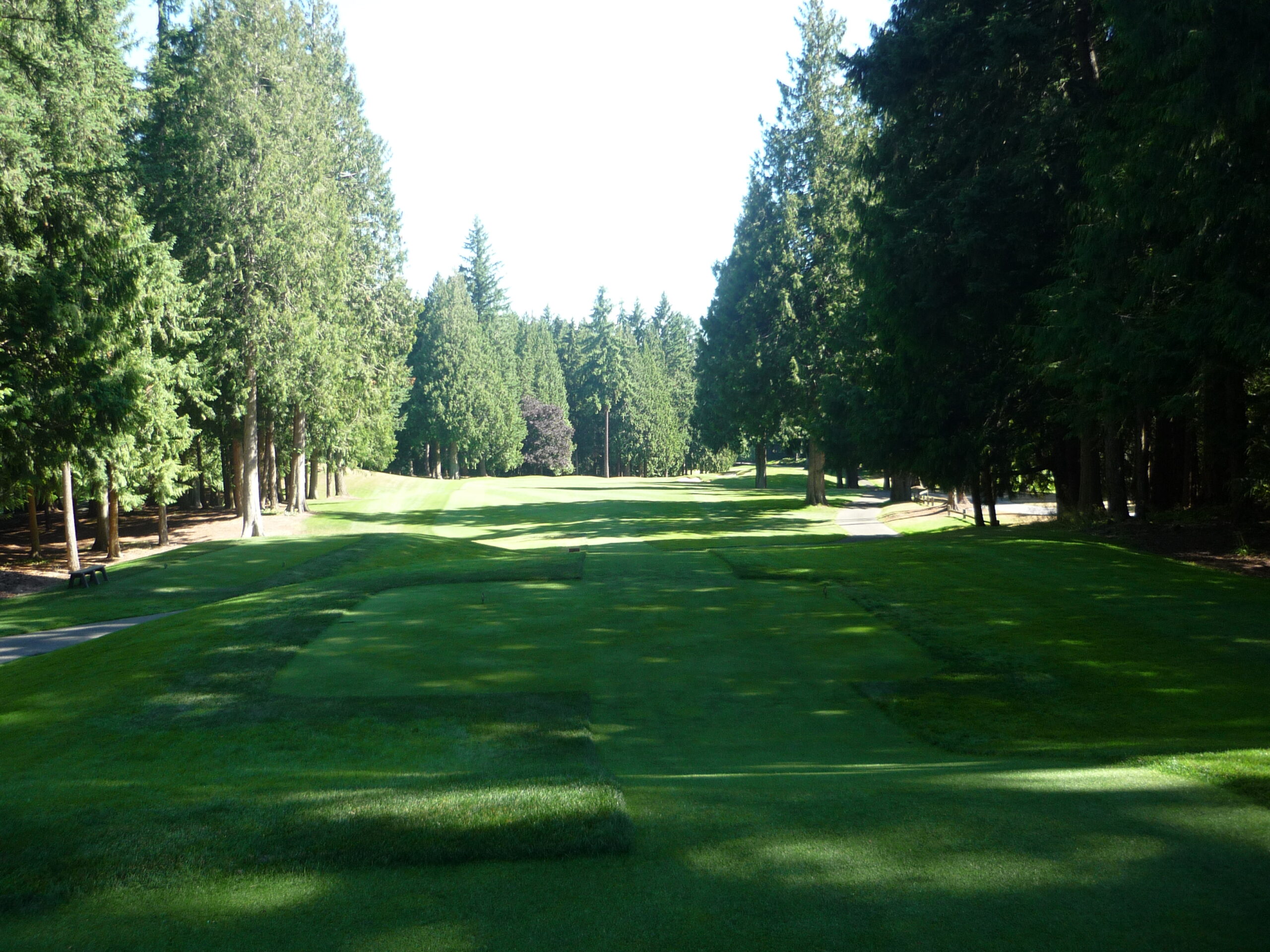
You are introduced to the tight corridors at Sahalee very early in your round. After a few trips around the course, I’m sure club choice and aiming becomes a bit more comfortable. This hole plays to the right before veering slightly back to the left near the green.
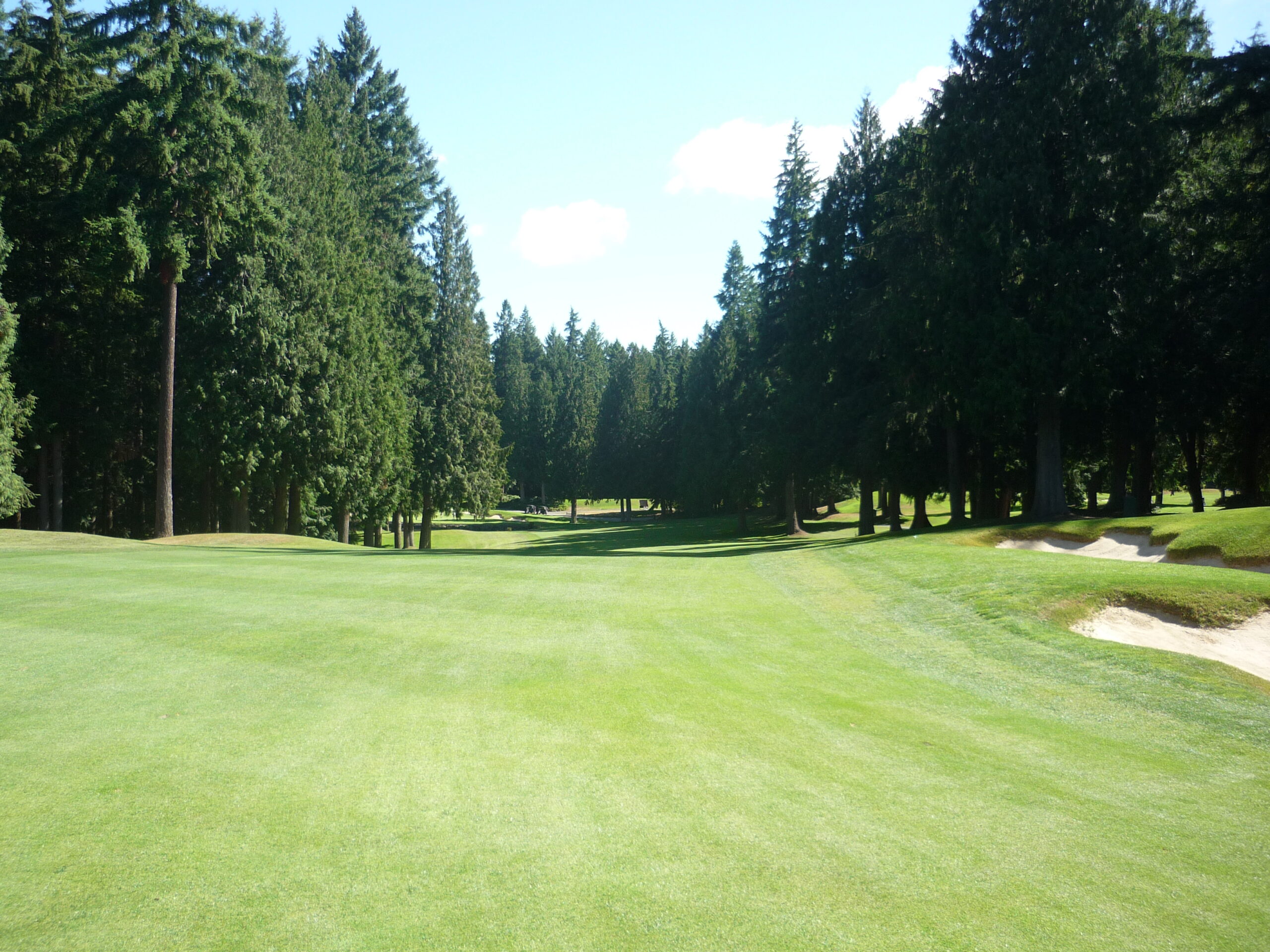
The water hazard in the front makes going for this green extra challenging. That is without even factoring in the trees.
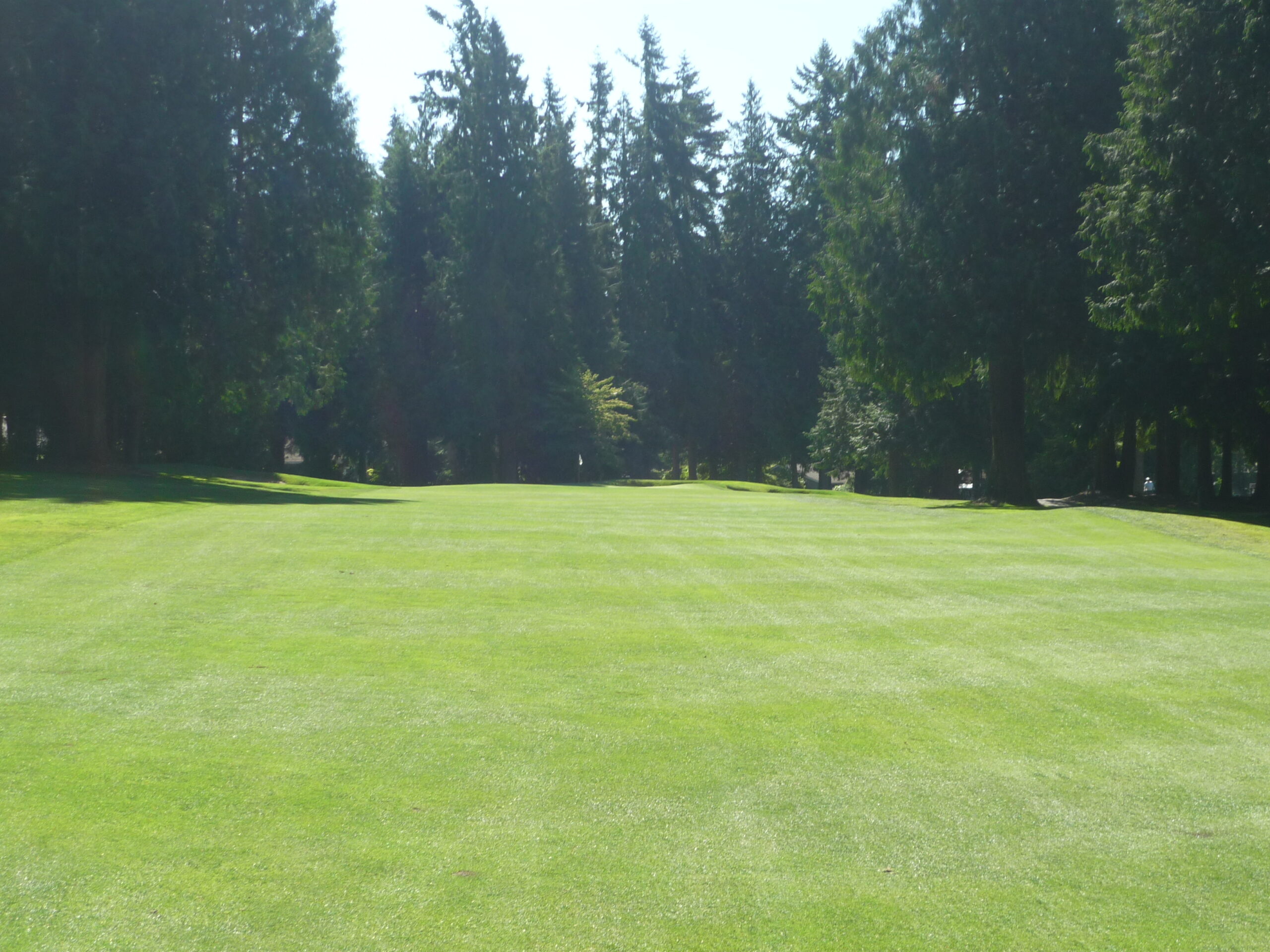
Hole 2 – 378 yards – Par 4
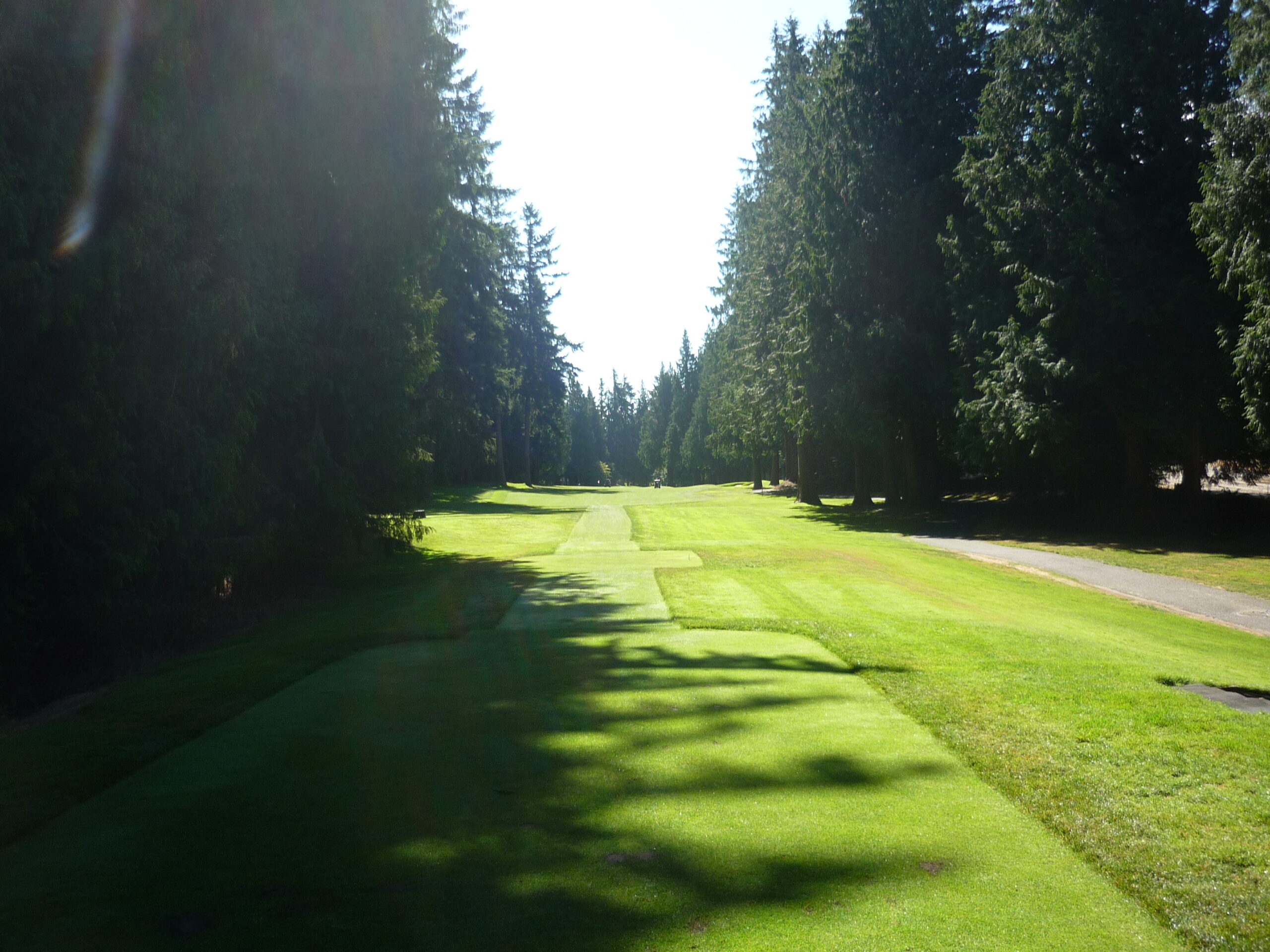
Right down the chute is the play on this slightly uphill hole. Longer players can club down a bit.
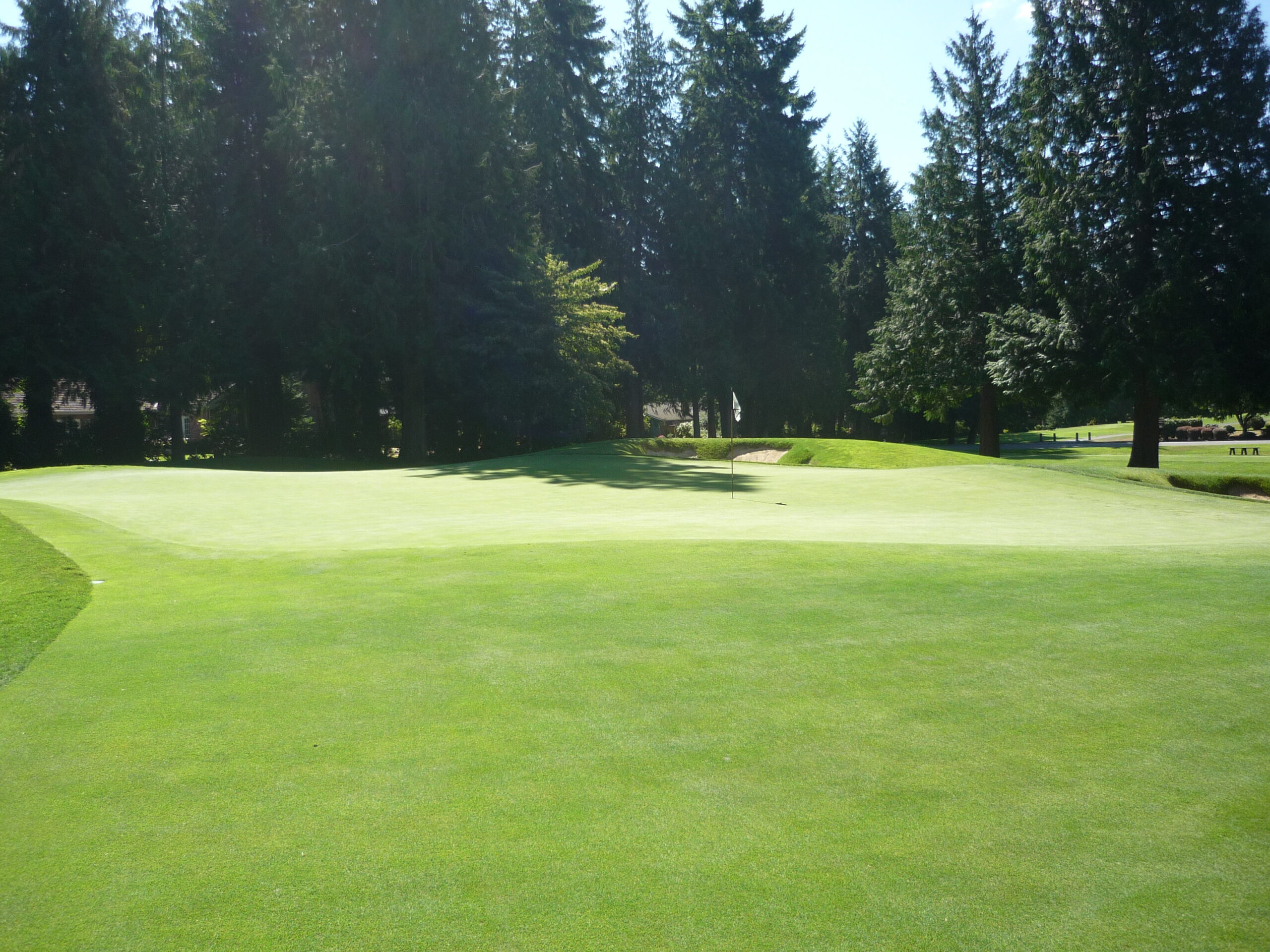
The green presents plenty of contour and is not easy to putt. Balls in the wrong section or short-sided will be difficult to play.
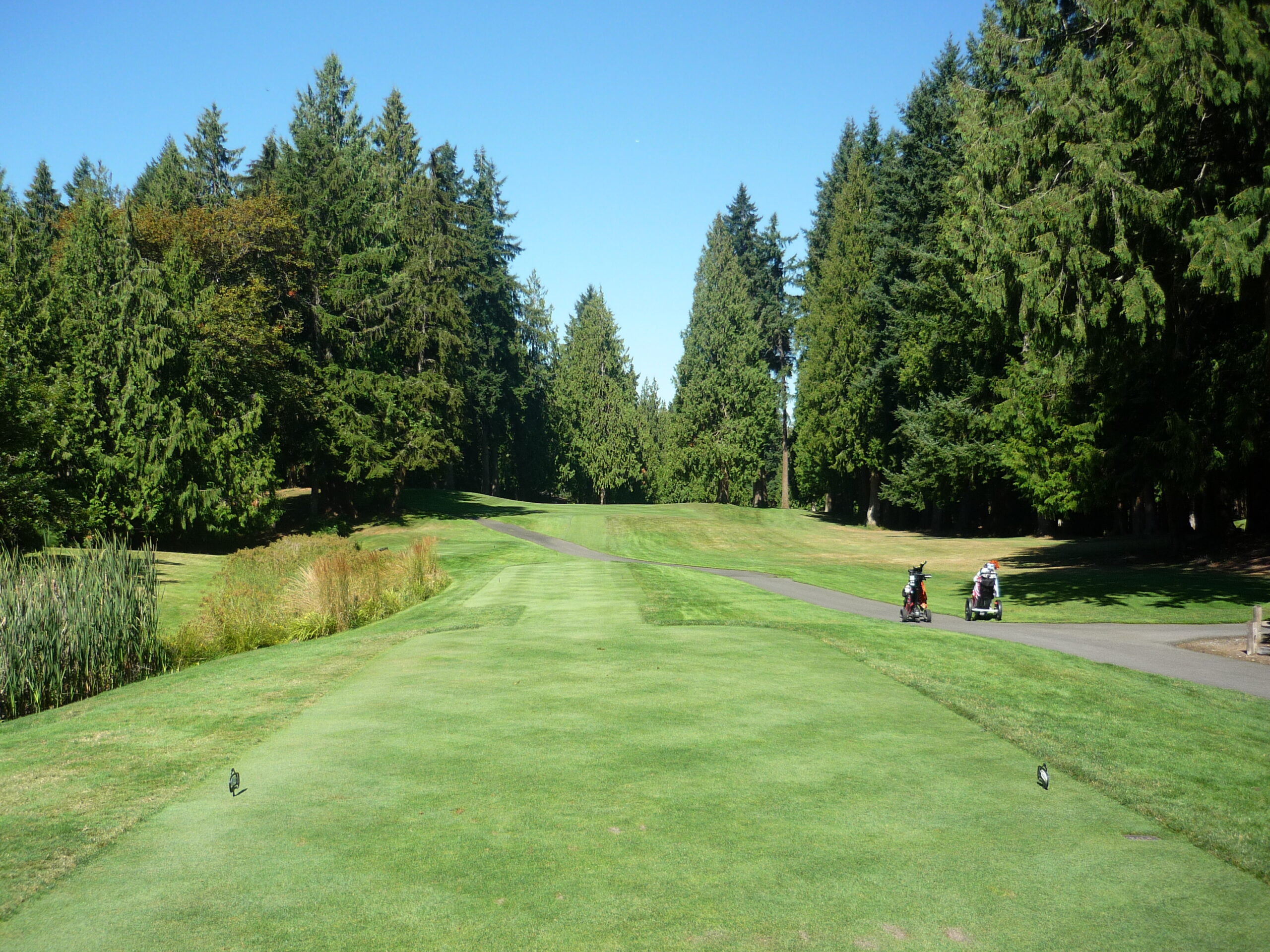
Hole 3 – 361 yards – Par 4
The shot shape and distance off the tee is important here. Make sure to check where the dogleg right bends from your tee. Good drives set up a tantalizing approach that plays slightly downhill.
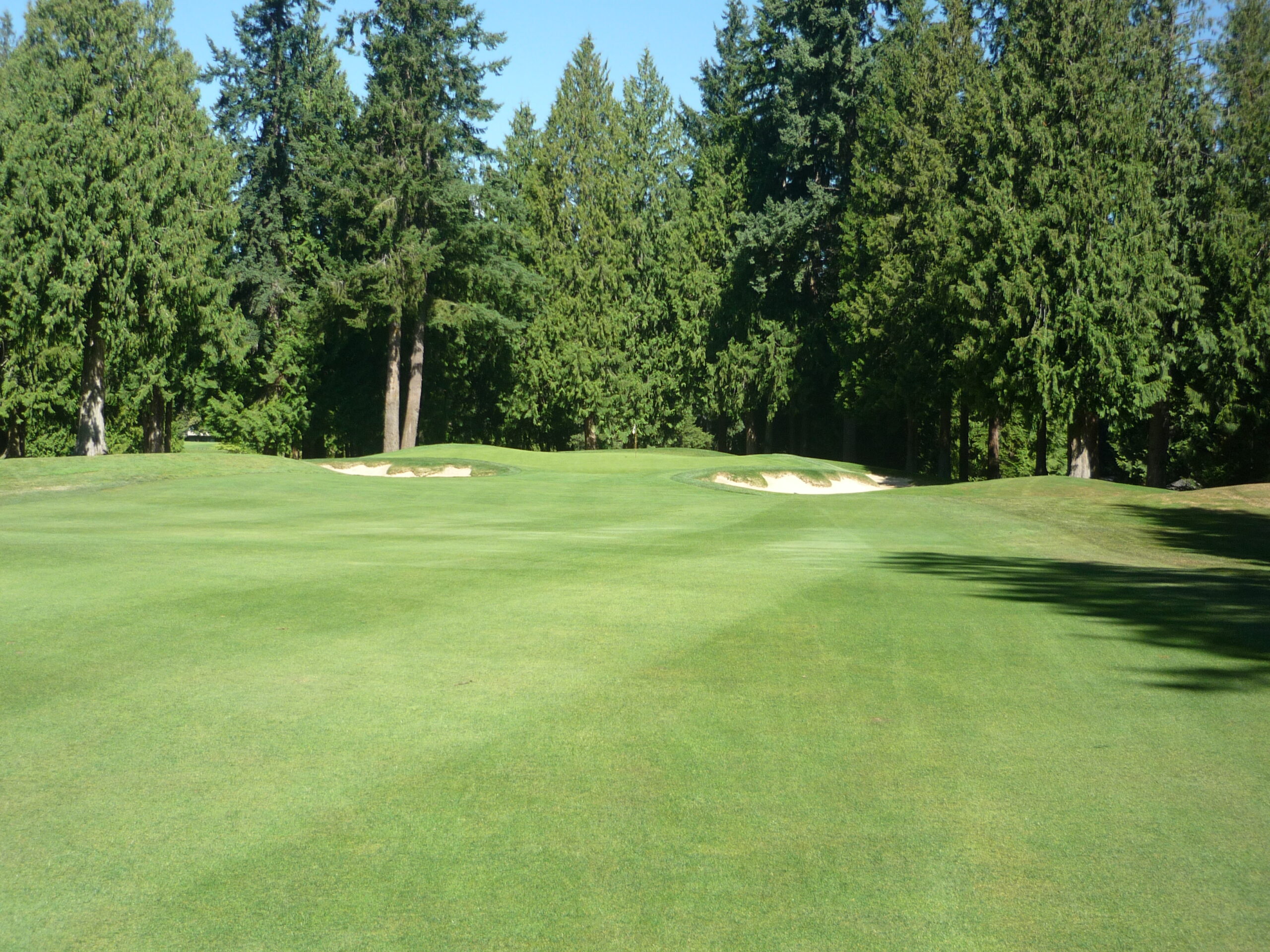
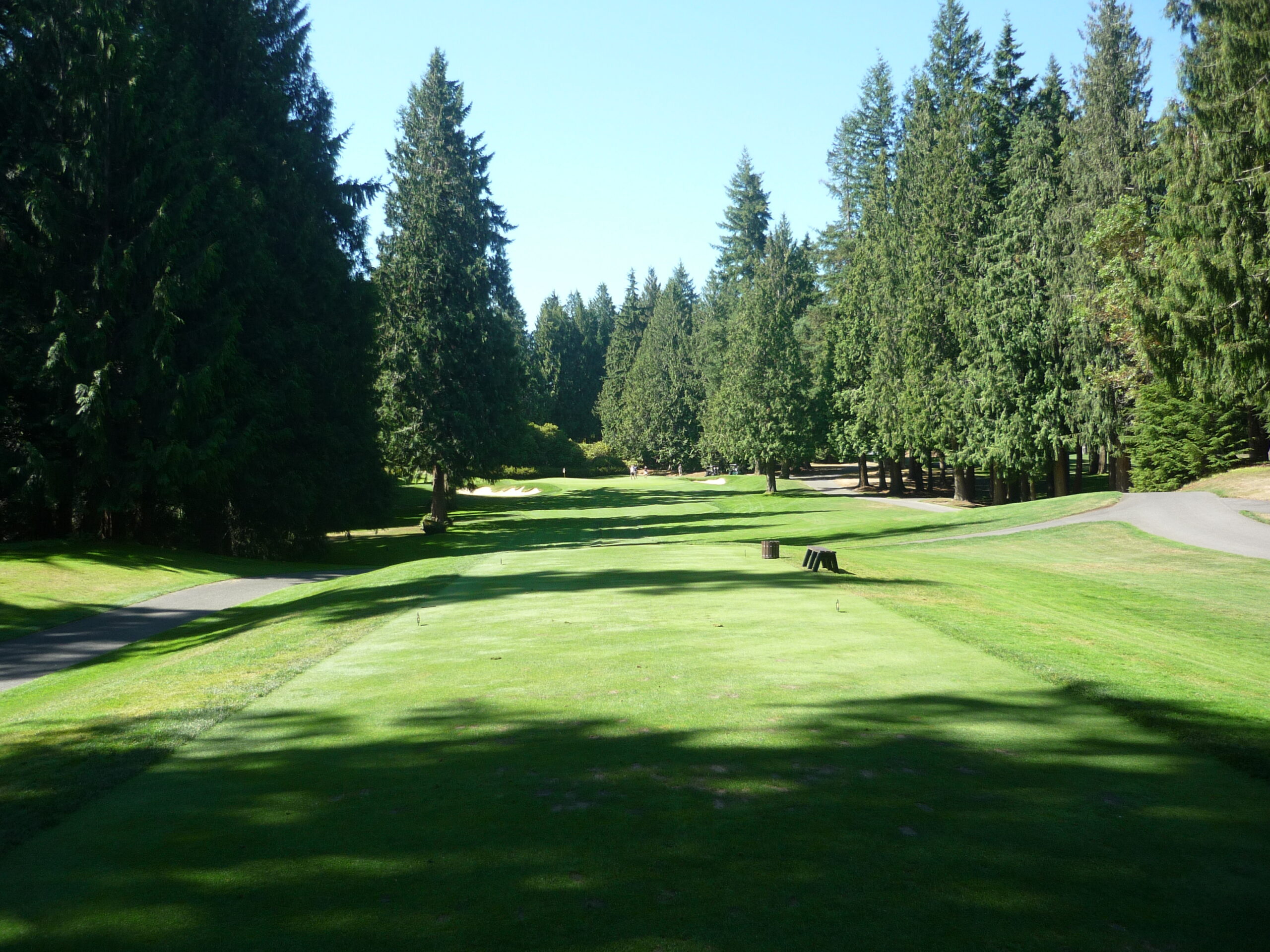
Hole 4 – 167 yards – Par 3
The closer tree really encourages a draw from this tee, as does the left bunker. Misses short and right are not too penal.
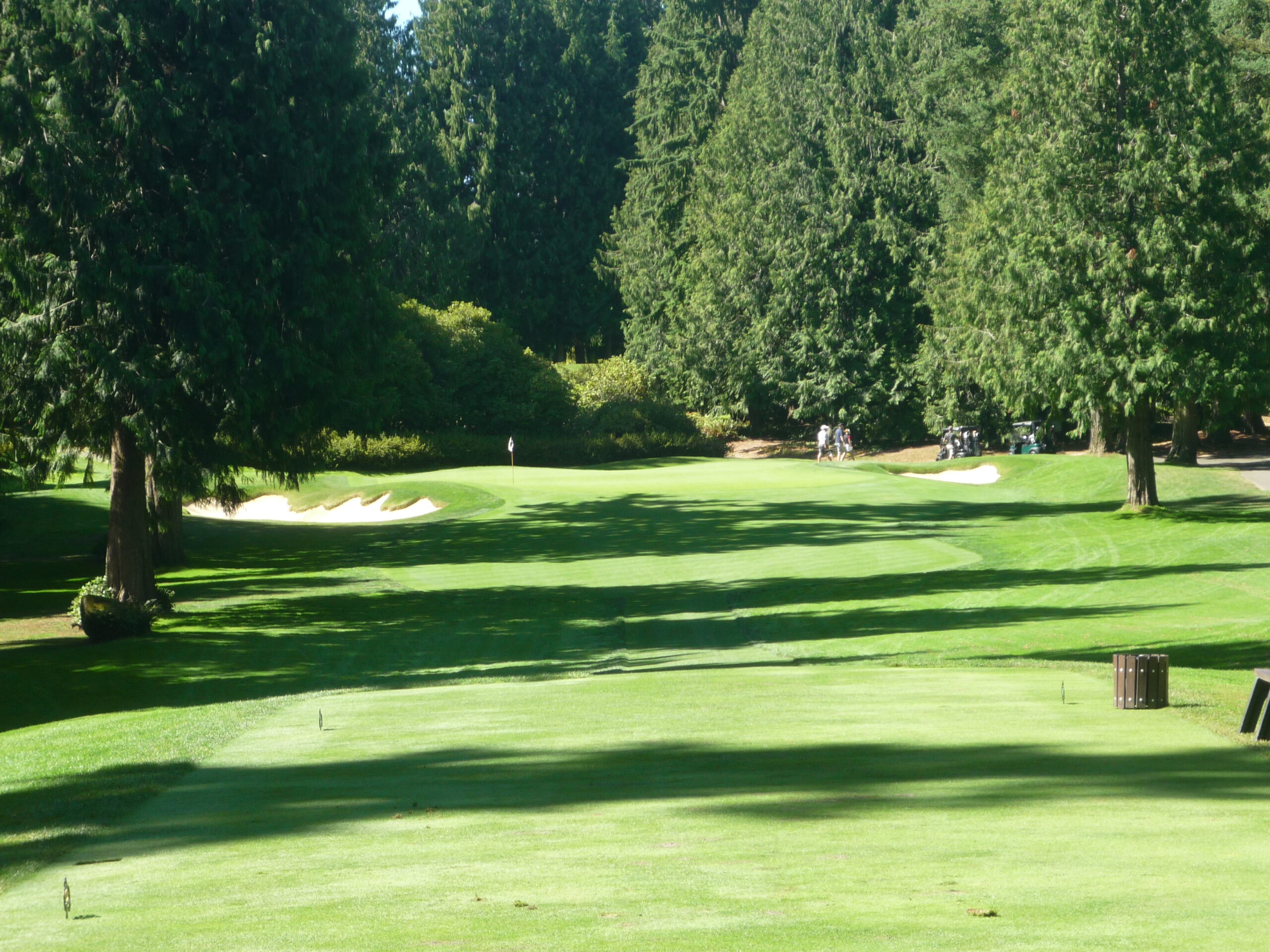
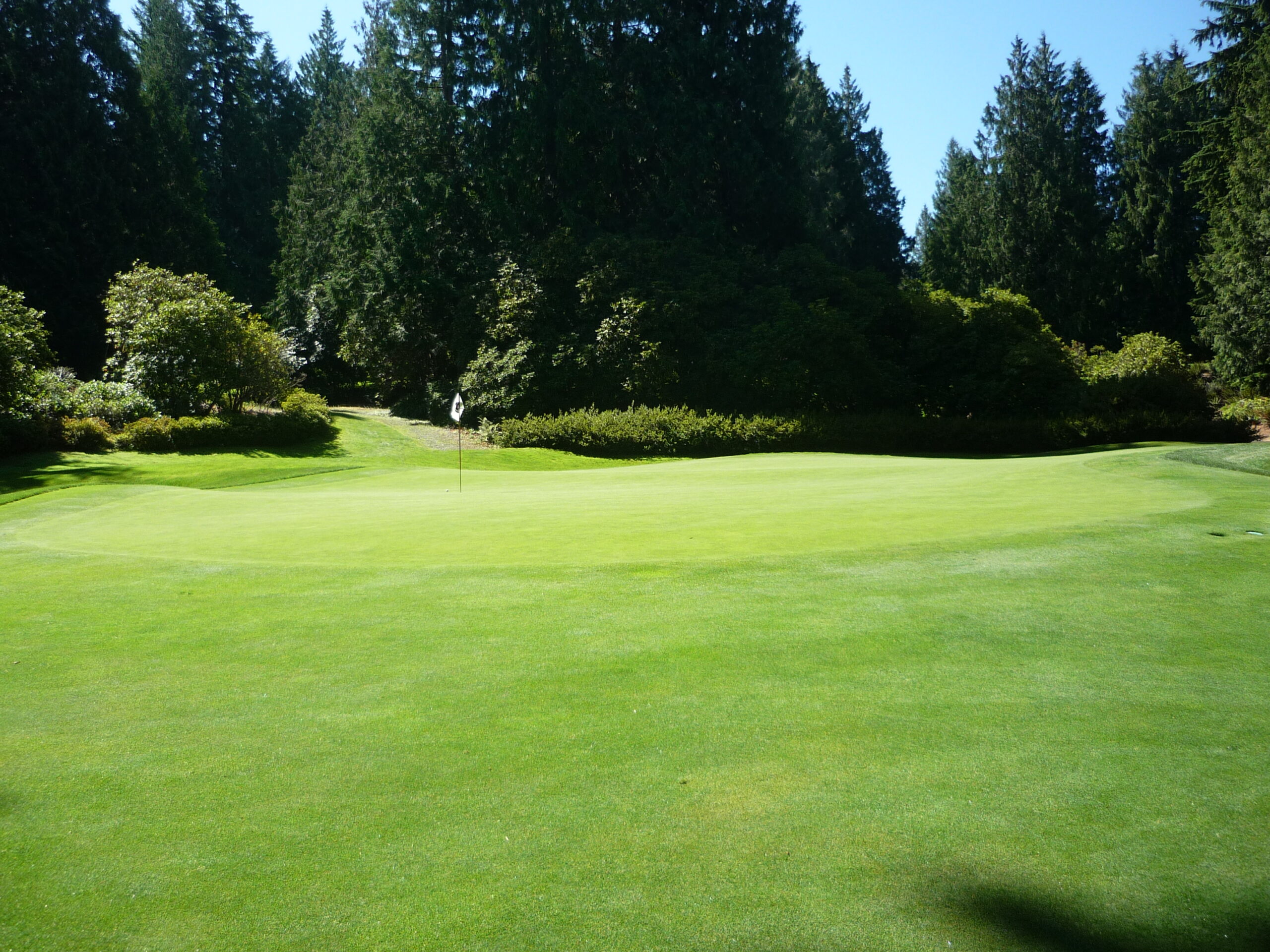
You’ll want to be on the correct tier for a manageable putt.
Hole 5 – 480 yards – Par 5
With a good tee shot, this dogleg left is very gettable. No water hazards guard this green, so if you are in the fairway with a clear shot, send it!
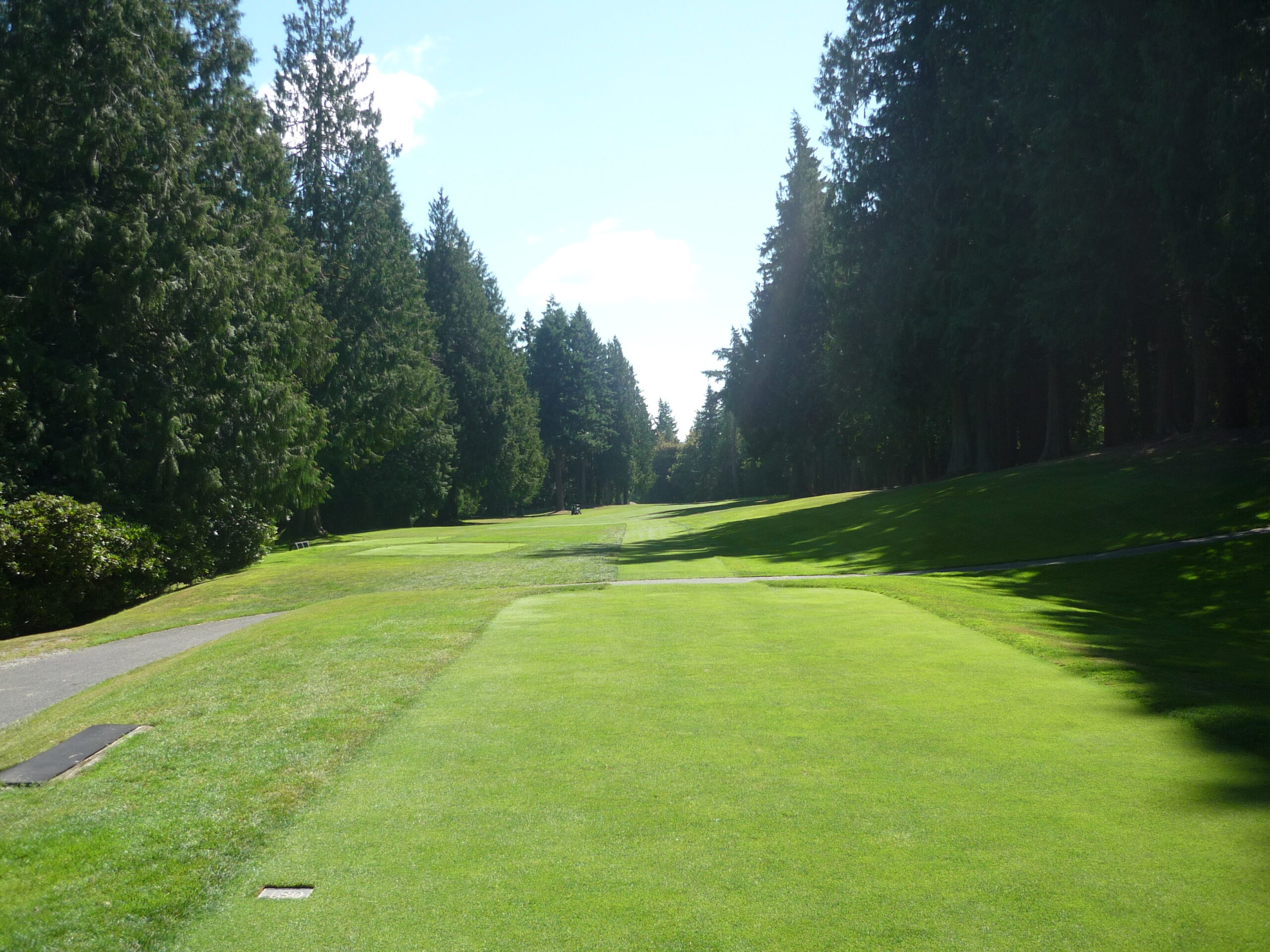
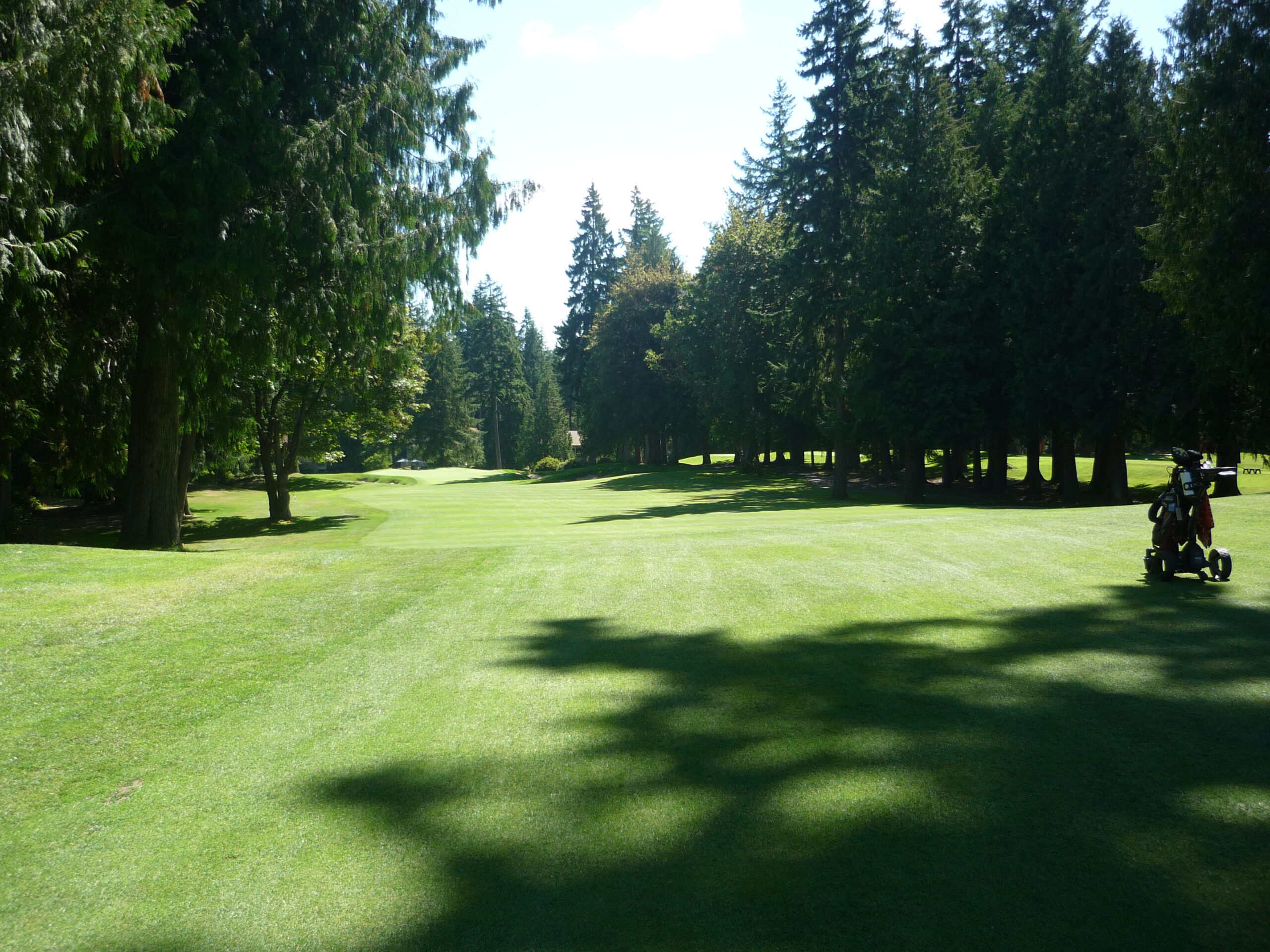
There is a noticeable dip in the fairway towards the green that makes the putting surface sit down a bit.
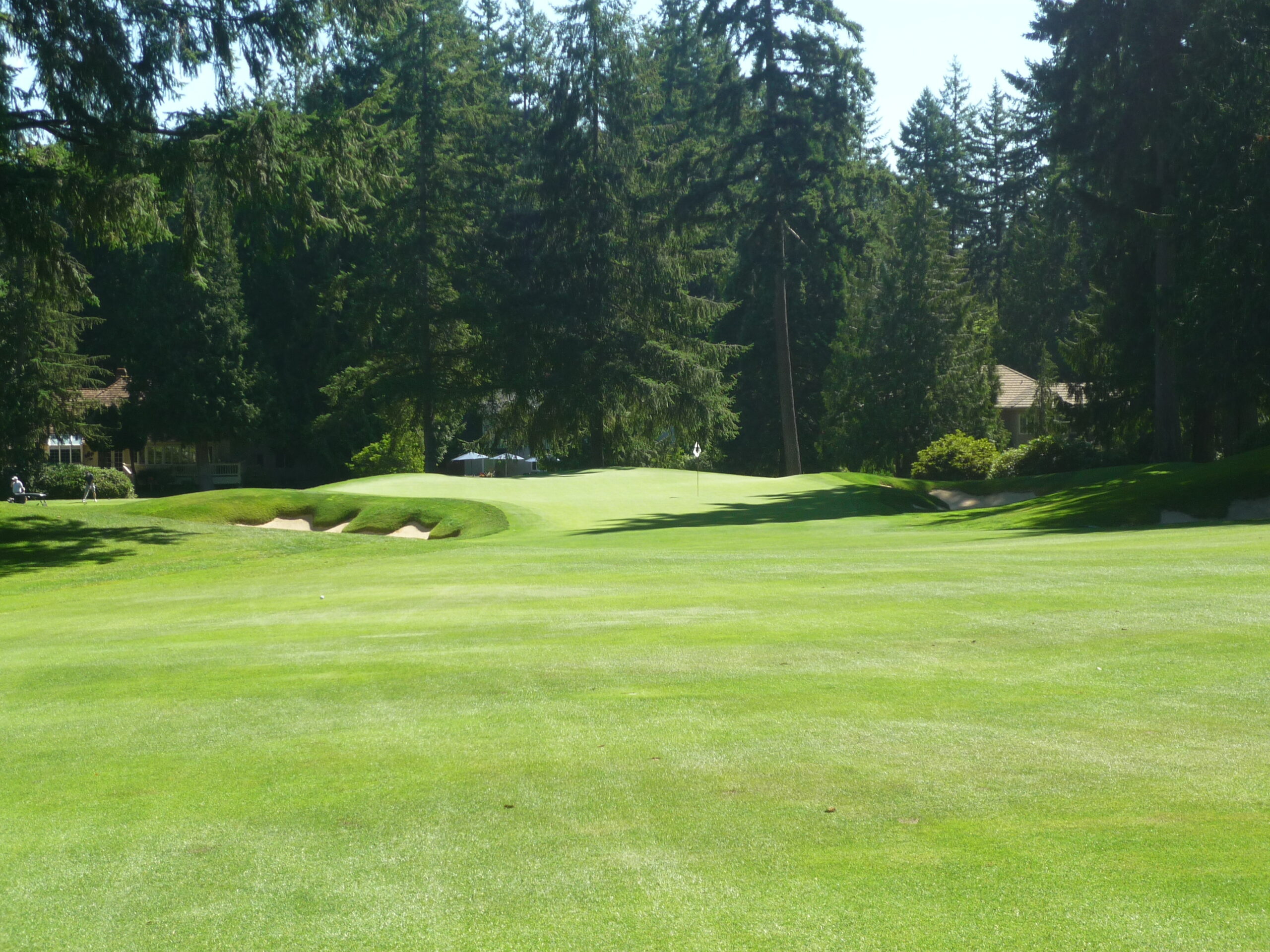
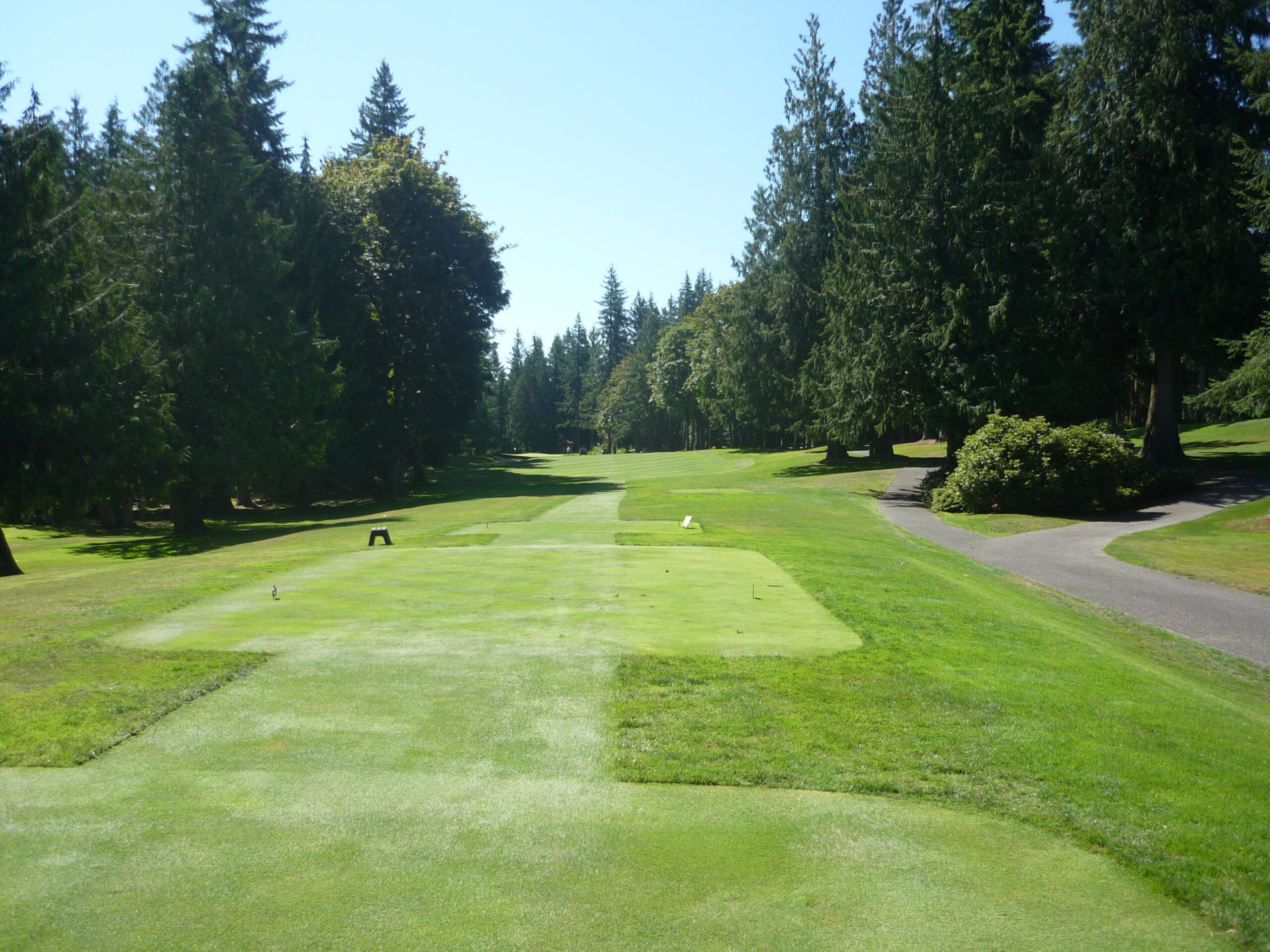
Hole 6 – 371 yards – Par 4
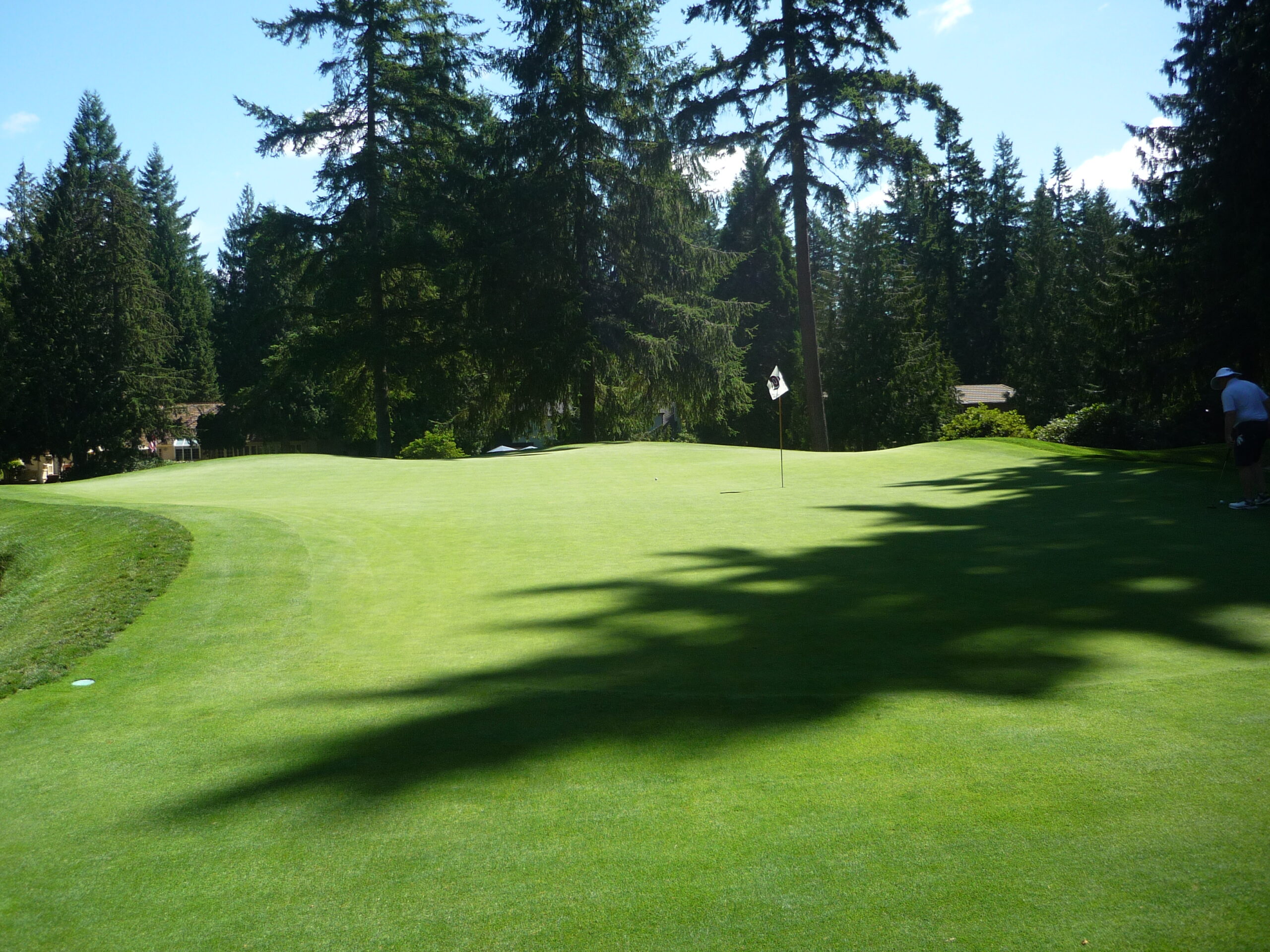
We dispense with the doglegs for a bit on this straight hole. A bunker on the left side makes the right portion of the fairway very appealing.
Approach shots are tricky to the small, contoured, and heavily guarded green.
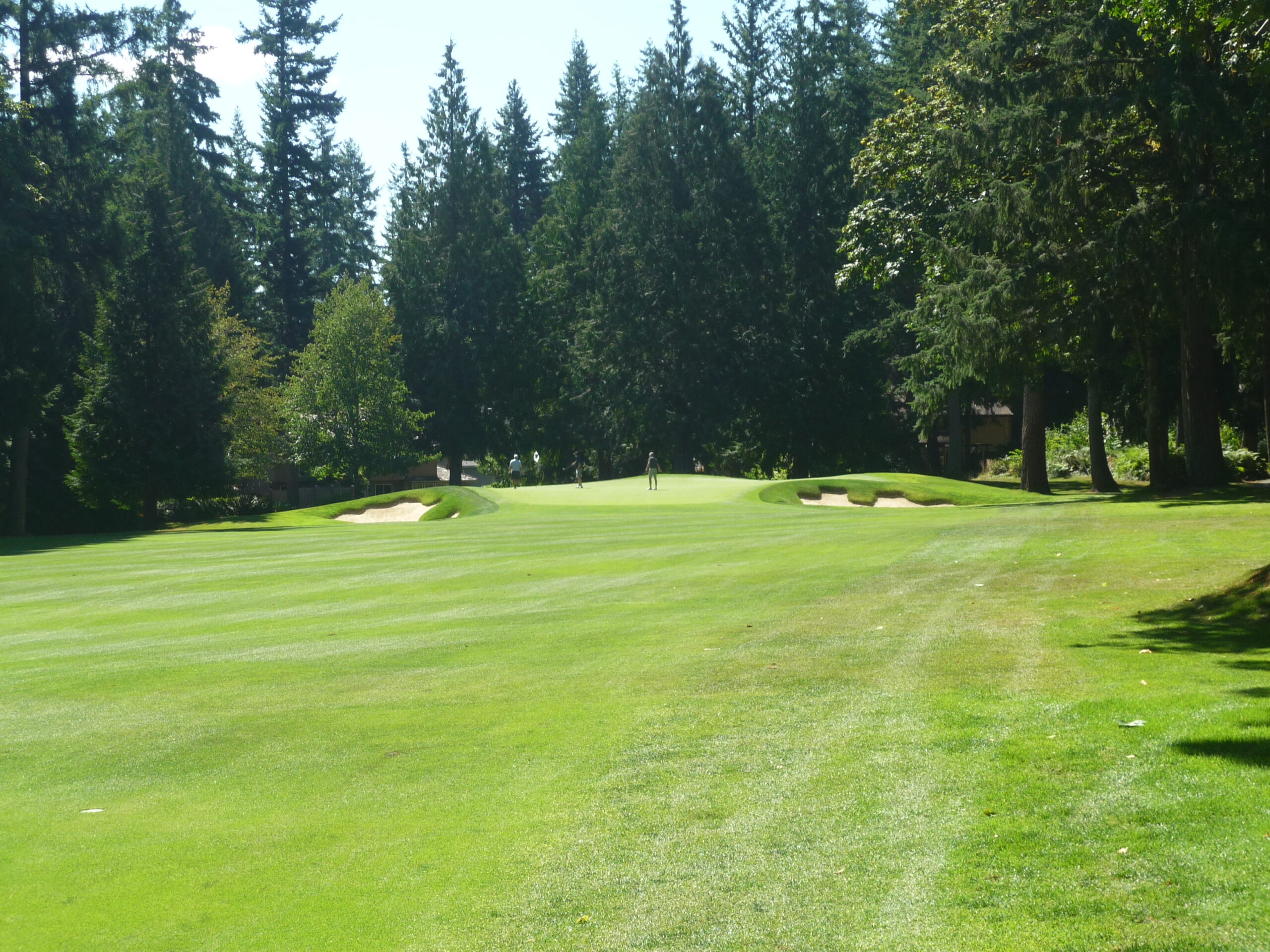
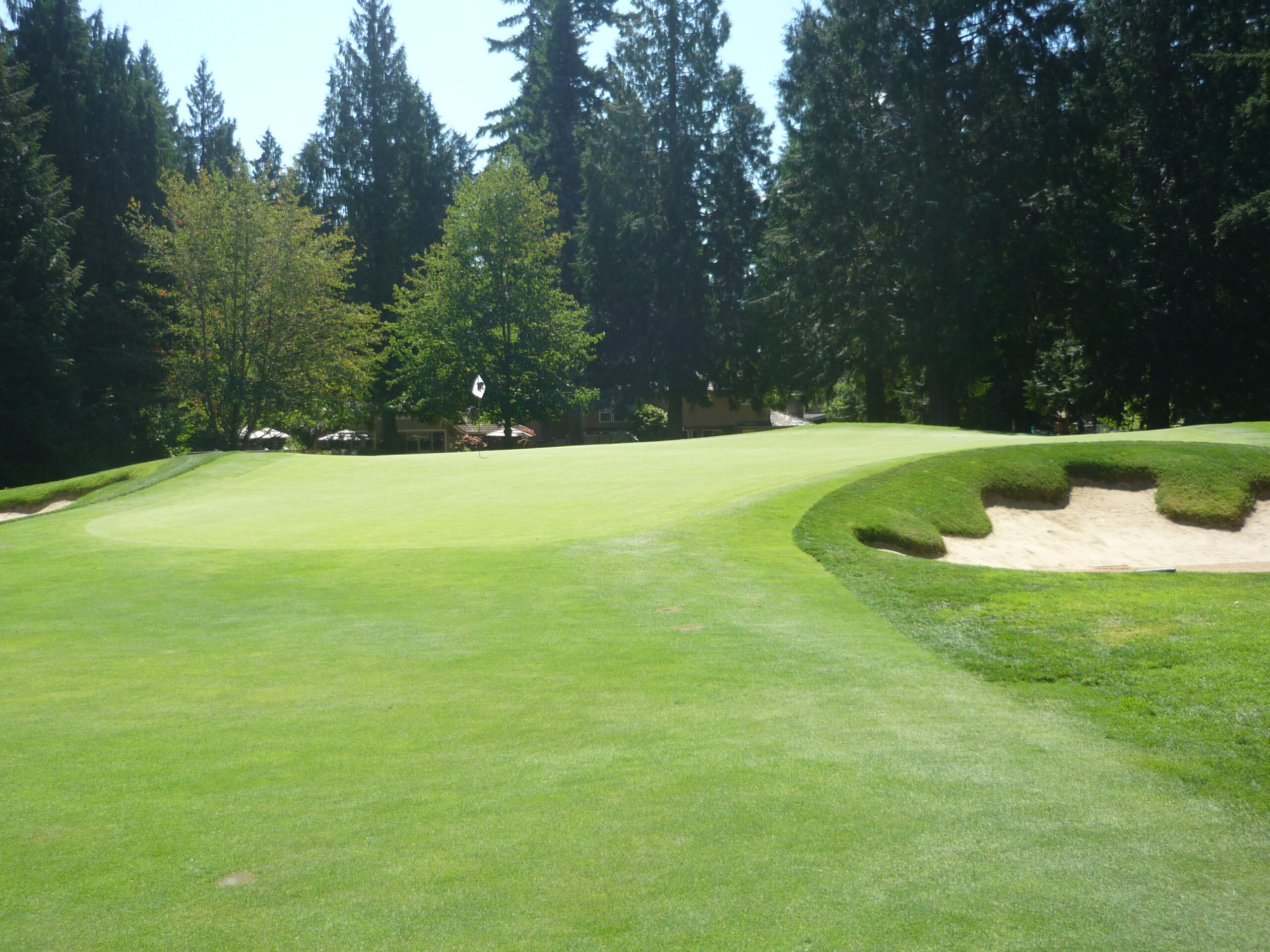
Hole 7 – 355 yards – Par 4
This hole is a hard dogleg right, so you want to be in the middle or left side of the fairway. Don’t get too greedy and end up in the sand guarding the corner of the dogleg.
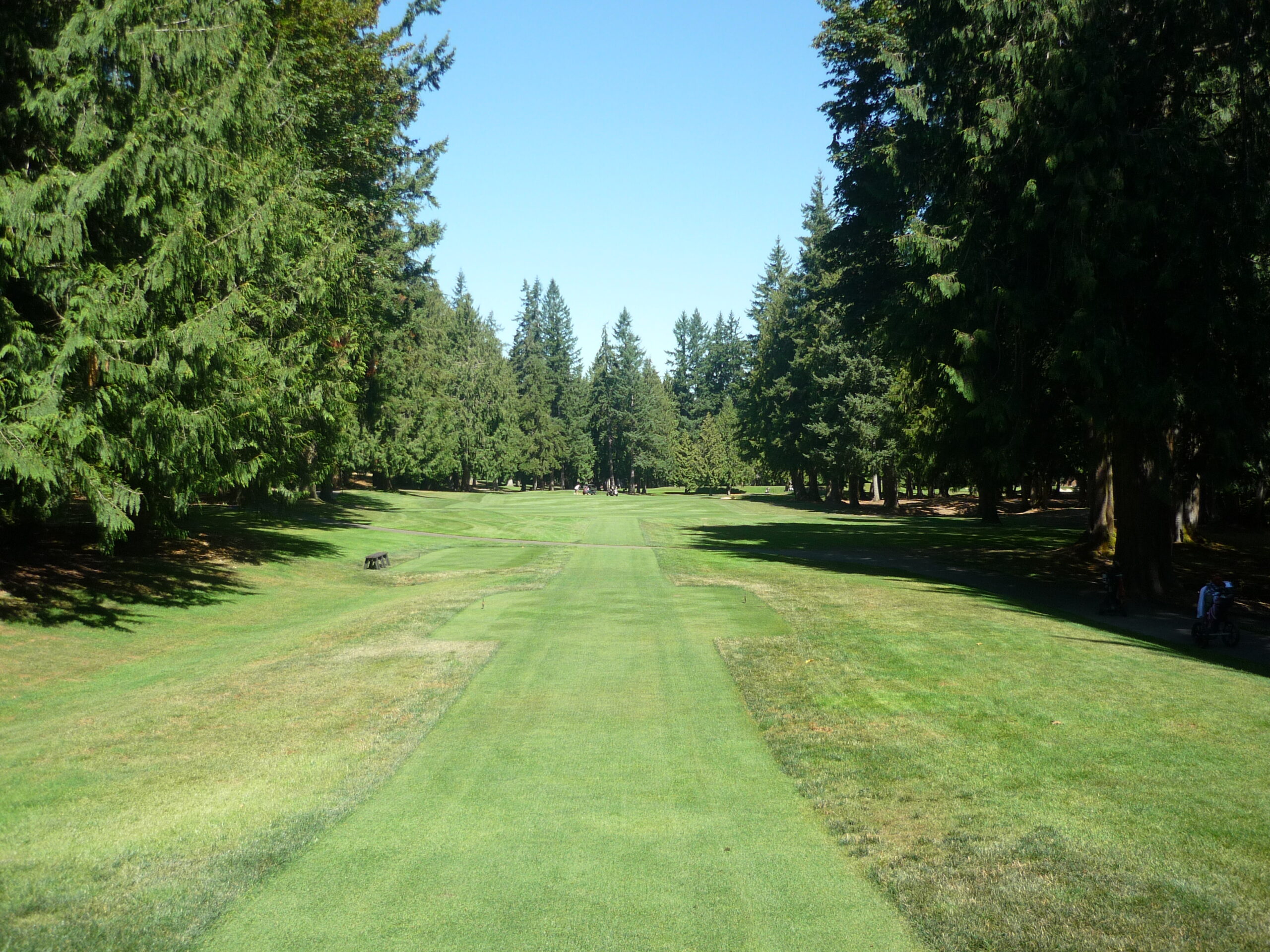
Long is not good on this approach shot.
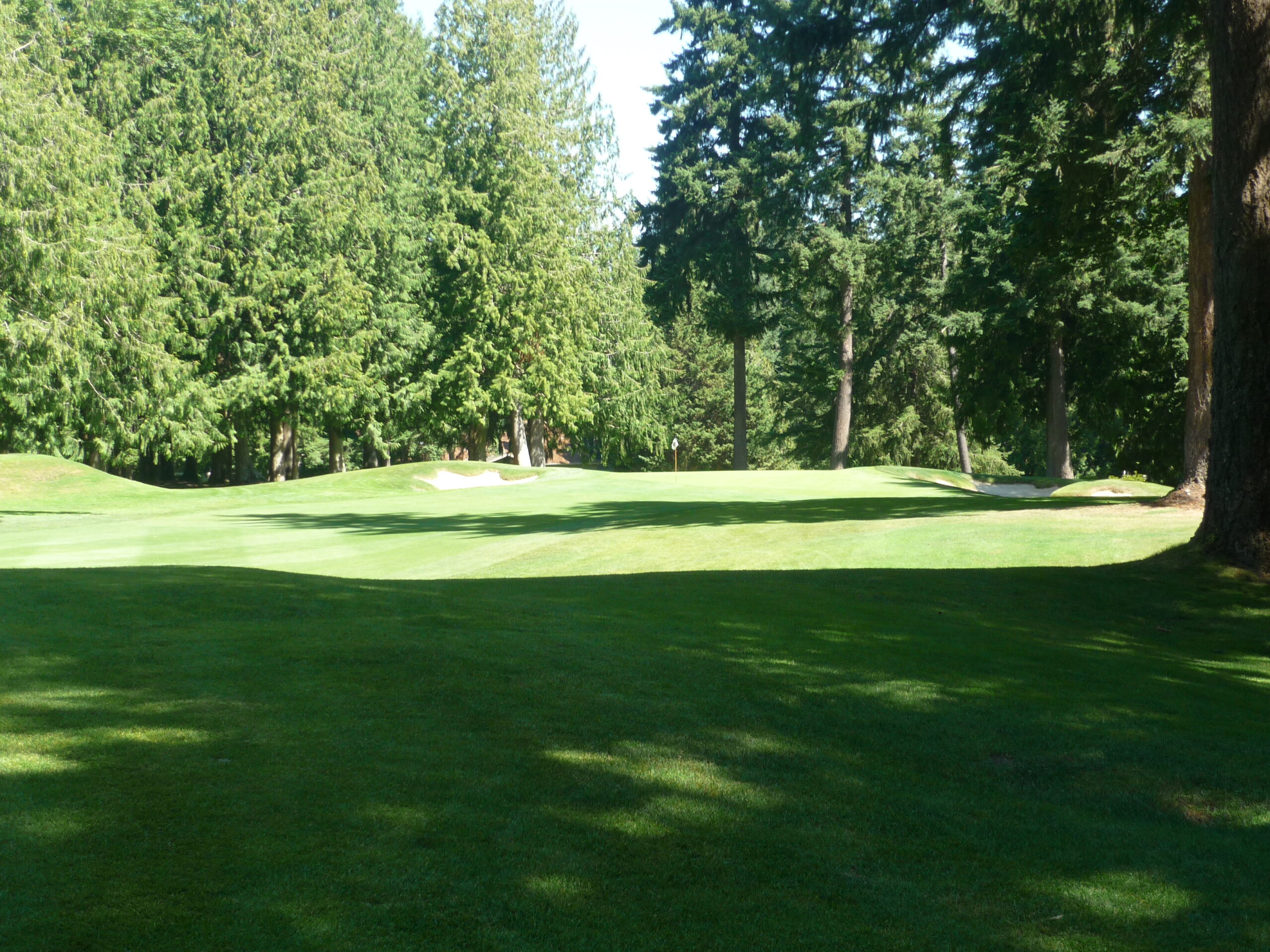
The mounding in front of this green can make for some very interesting chips and putts.
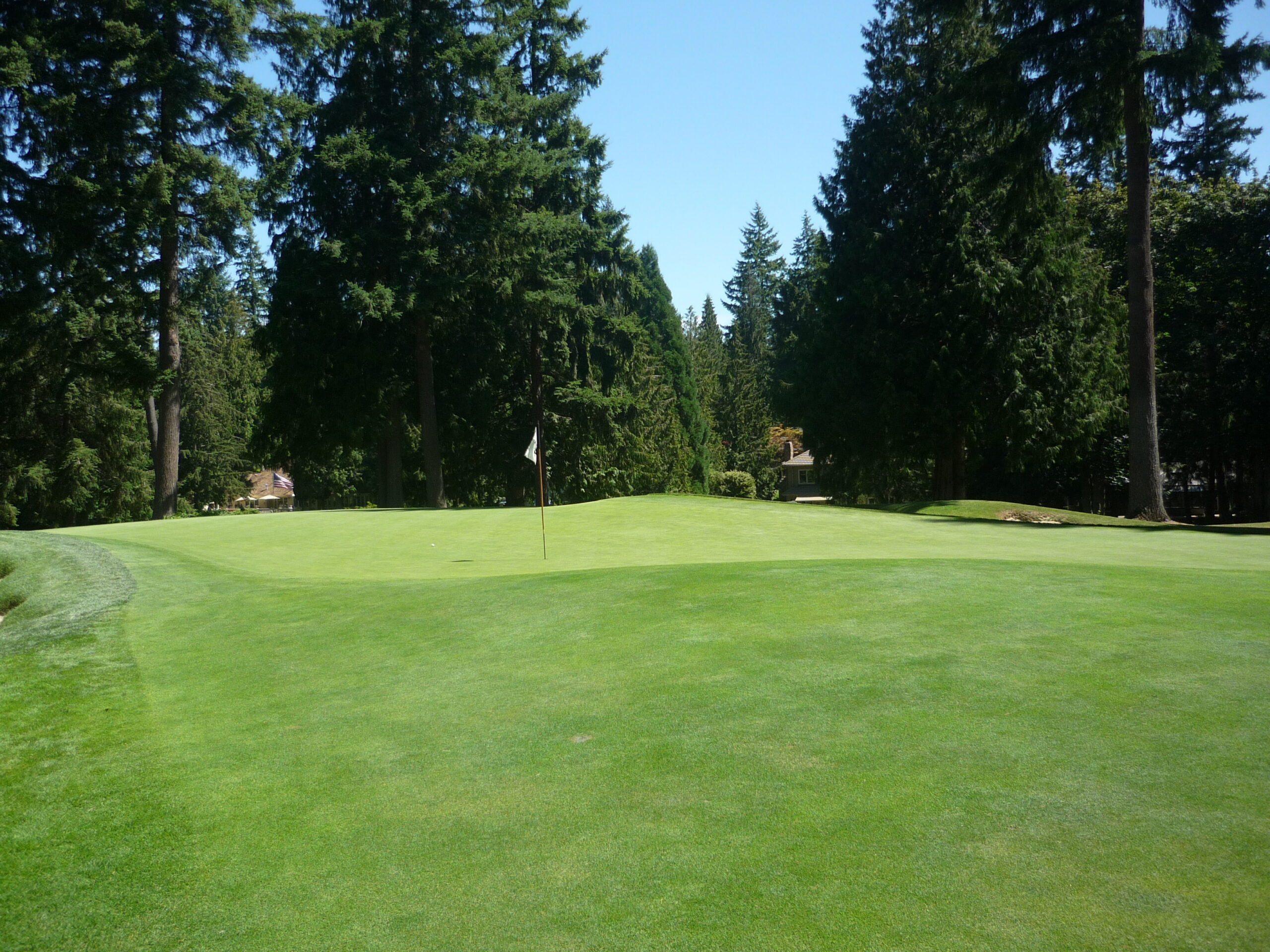
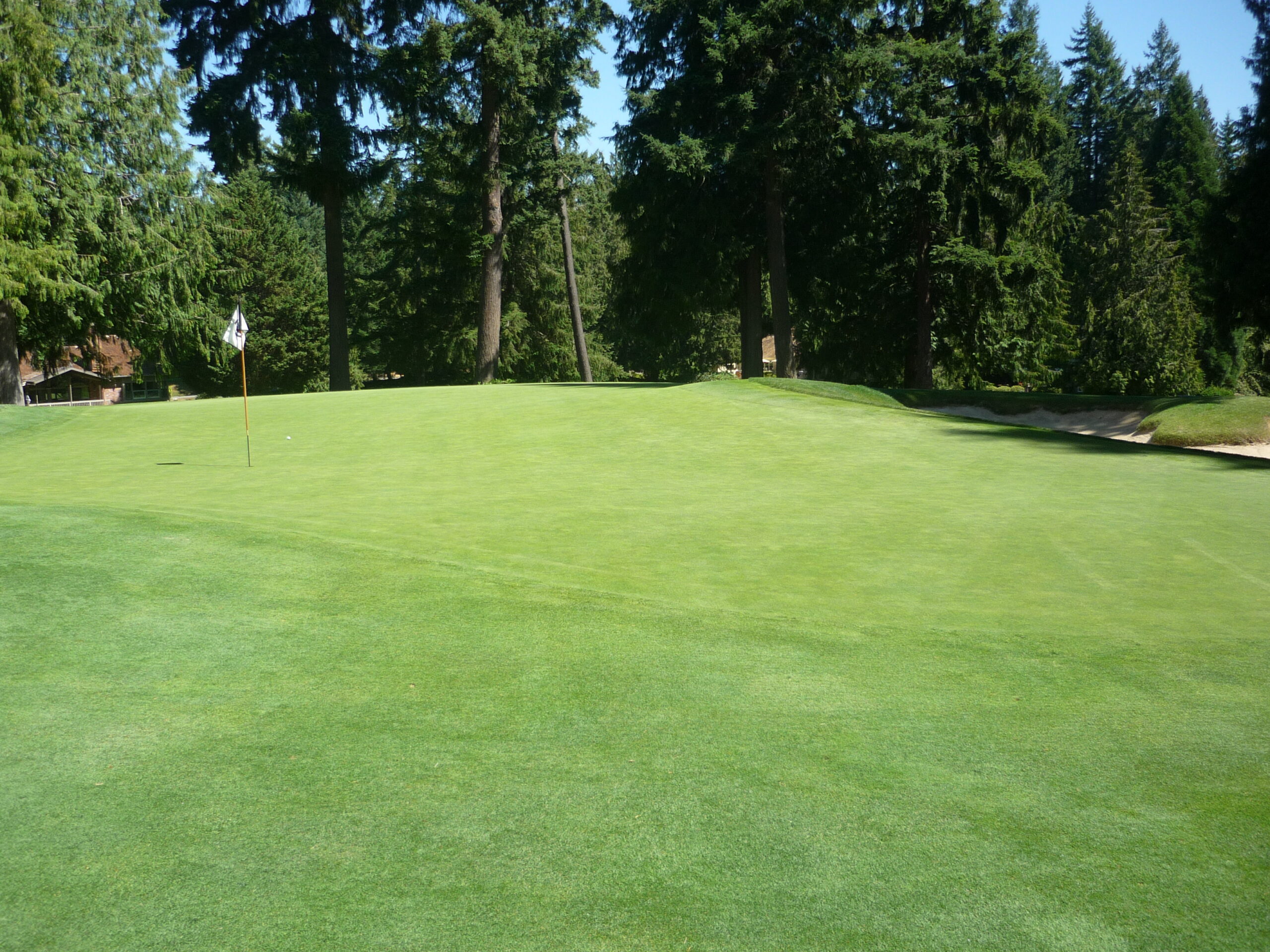
Hole 8 – 159 yards – Par 3
See green, hit green on this uphill one-shotter. The green is tiered, so ideally you’ll be on the proper level. If you’re not, it’s still a manageable putt.
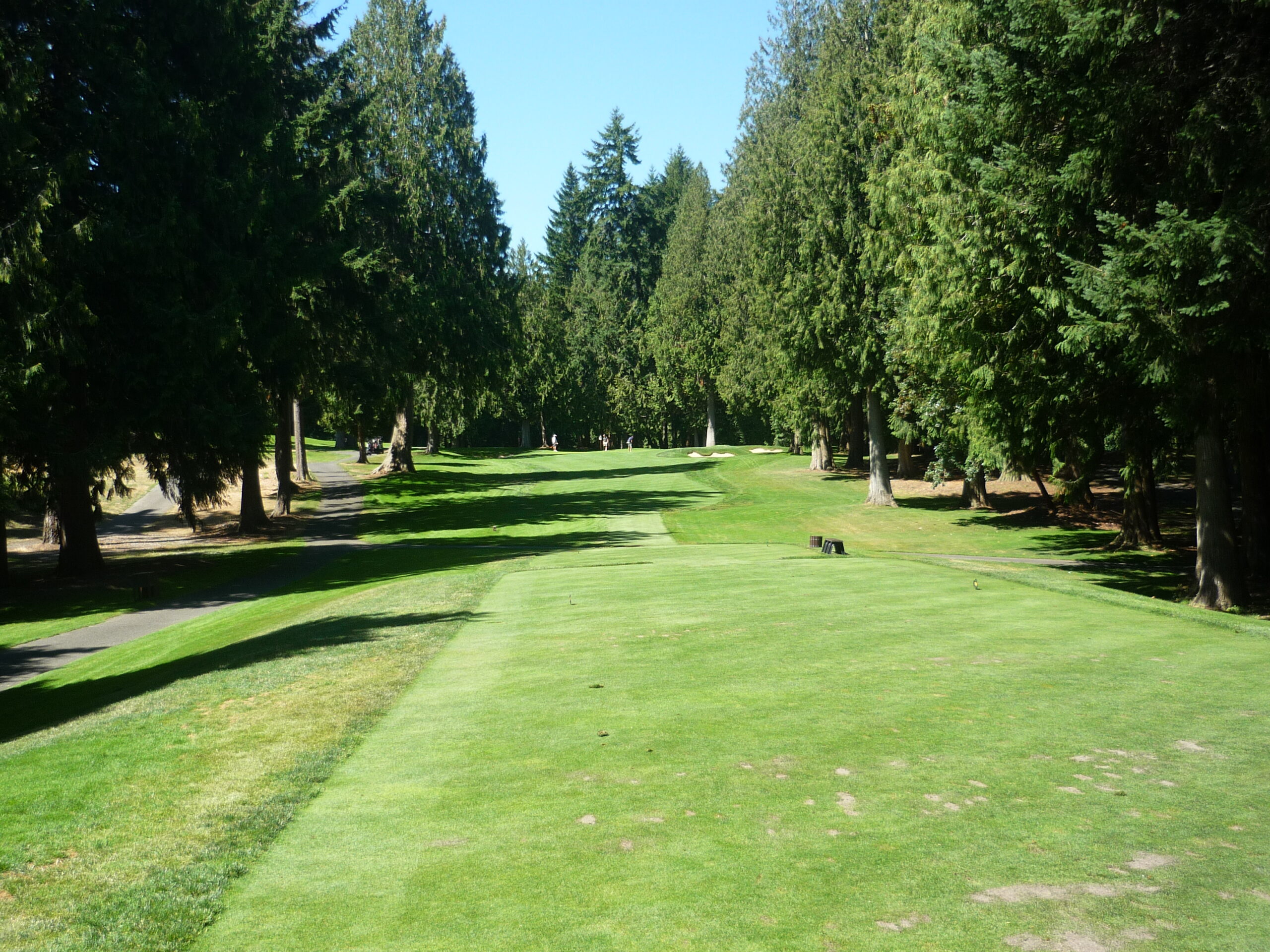
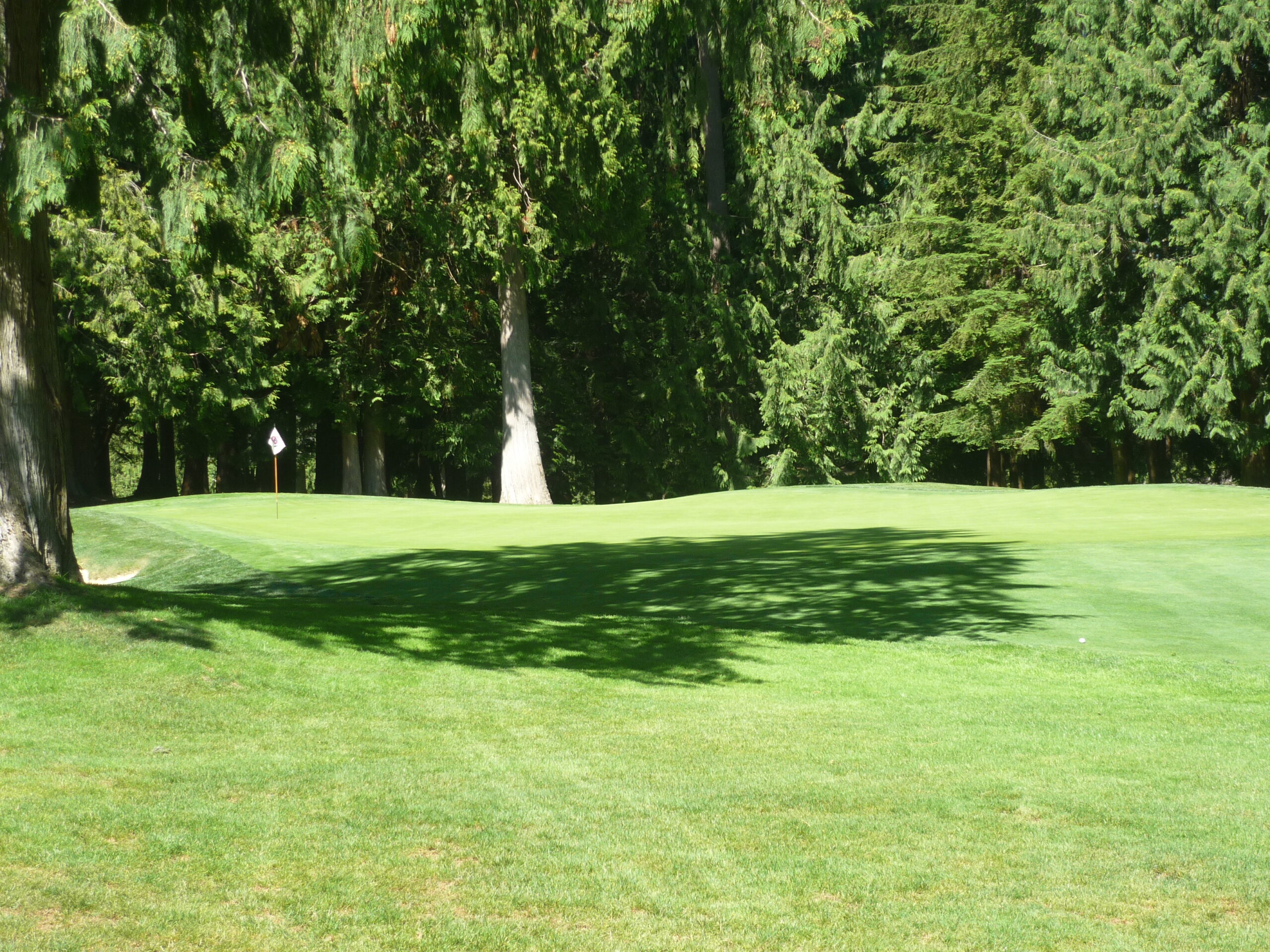
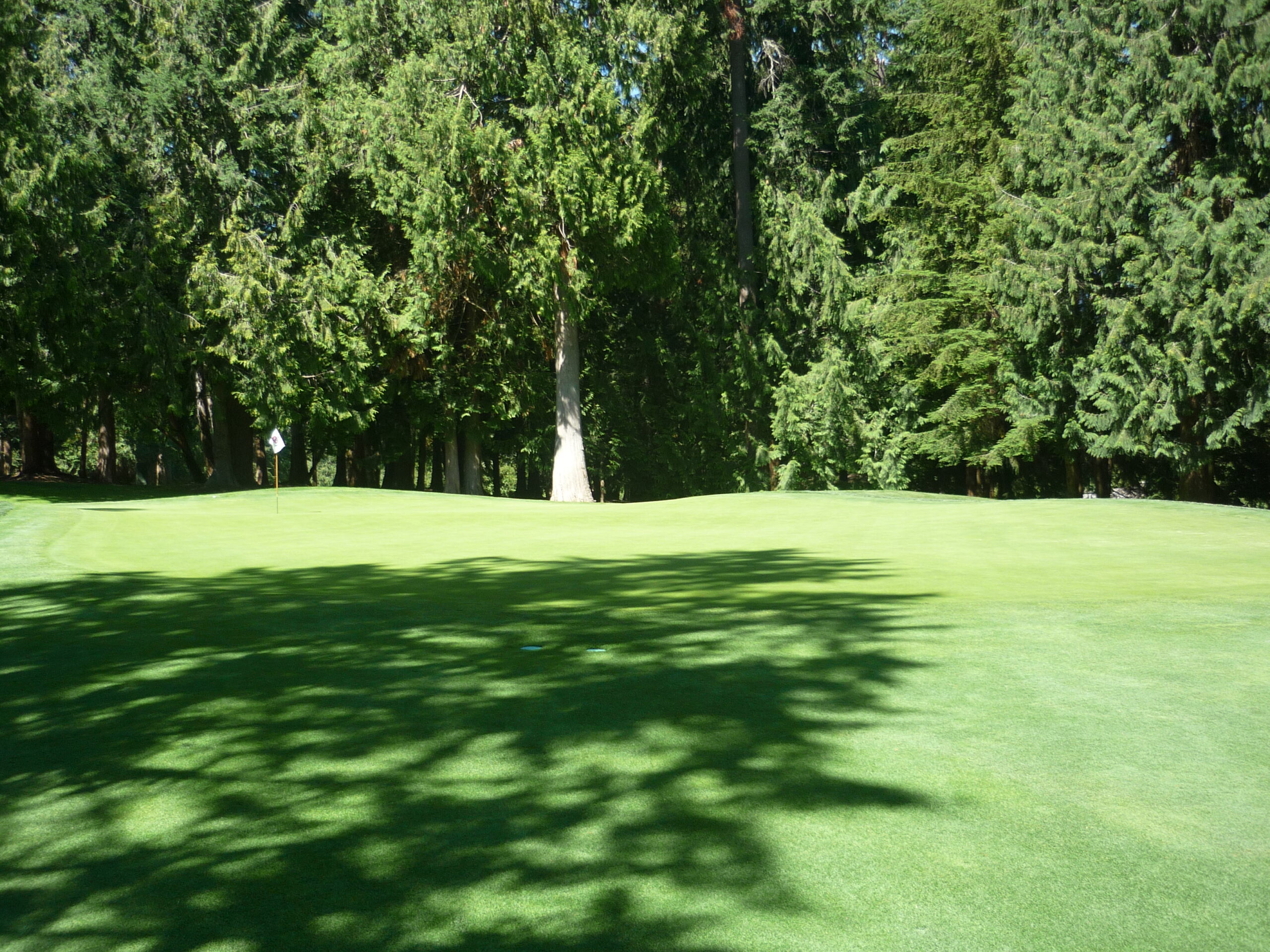
Hole 9 – 378 yards – Par 4
This dogleg left is usually played just short of the fairway bunker. A draw really comes in handy on the drive and approach.
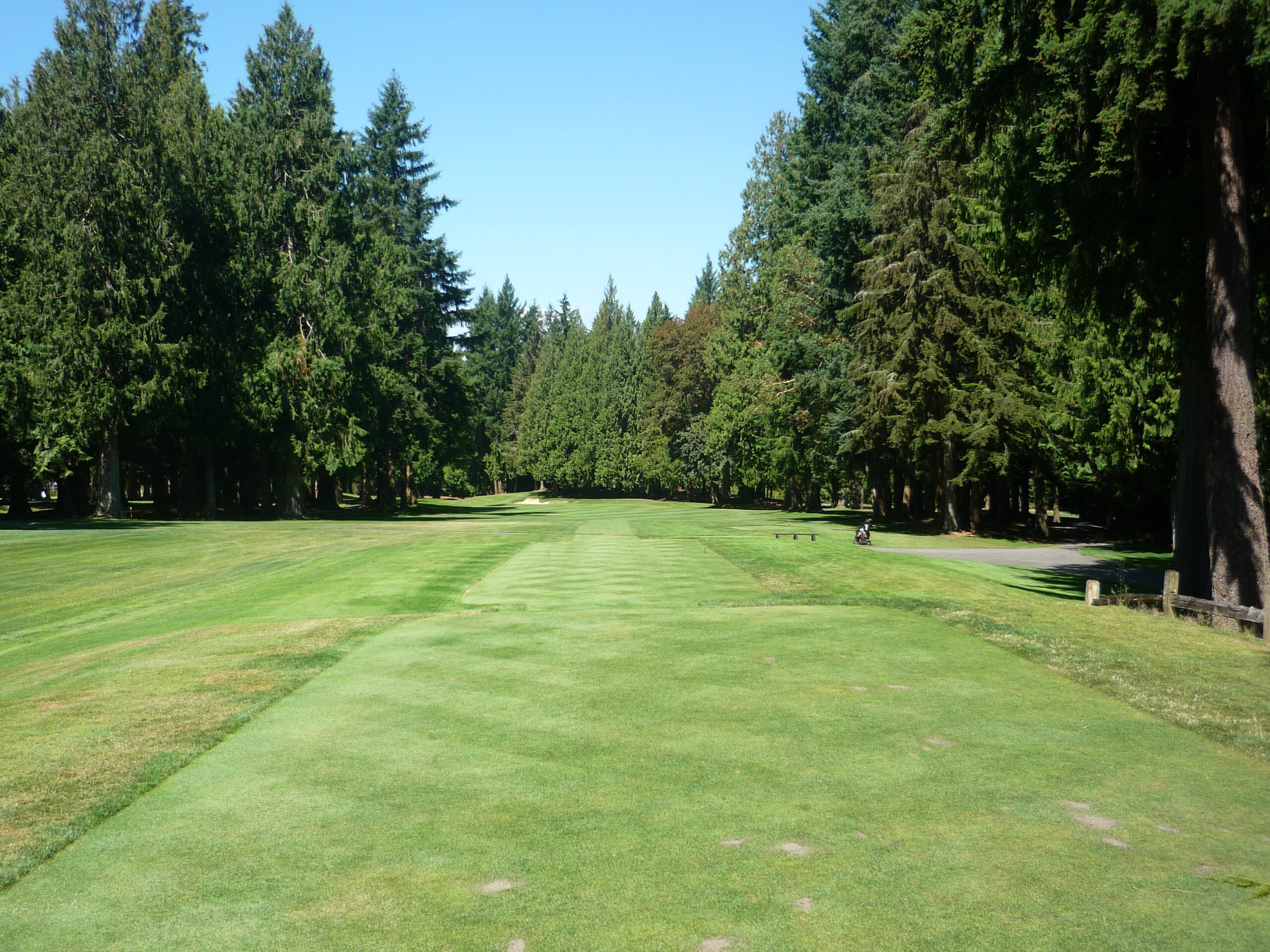
The approach shot is no easy task. A large mound in the right section of the green will influence the second shot and putts.
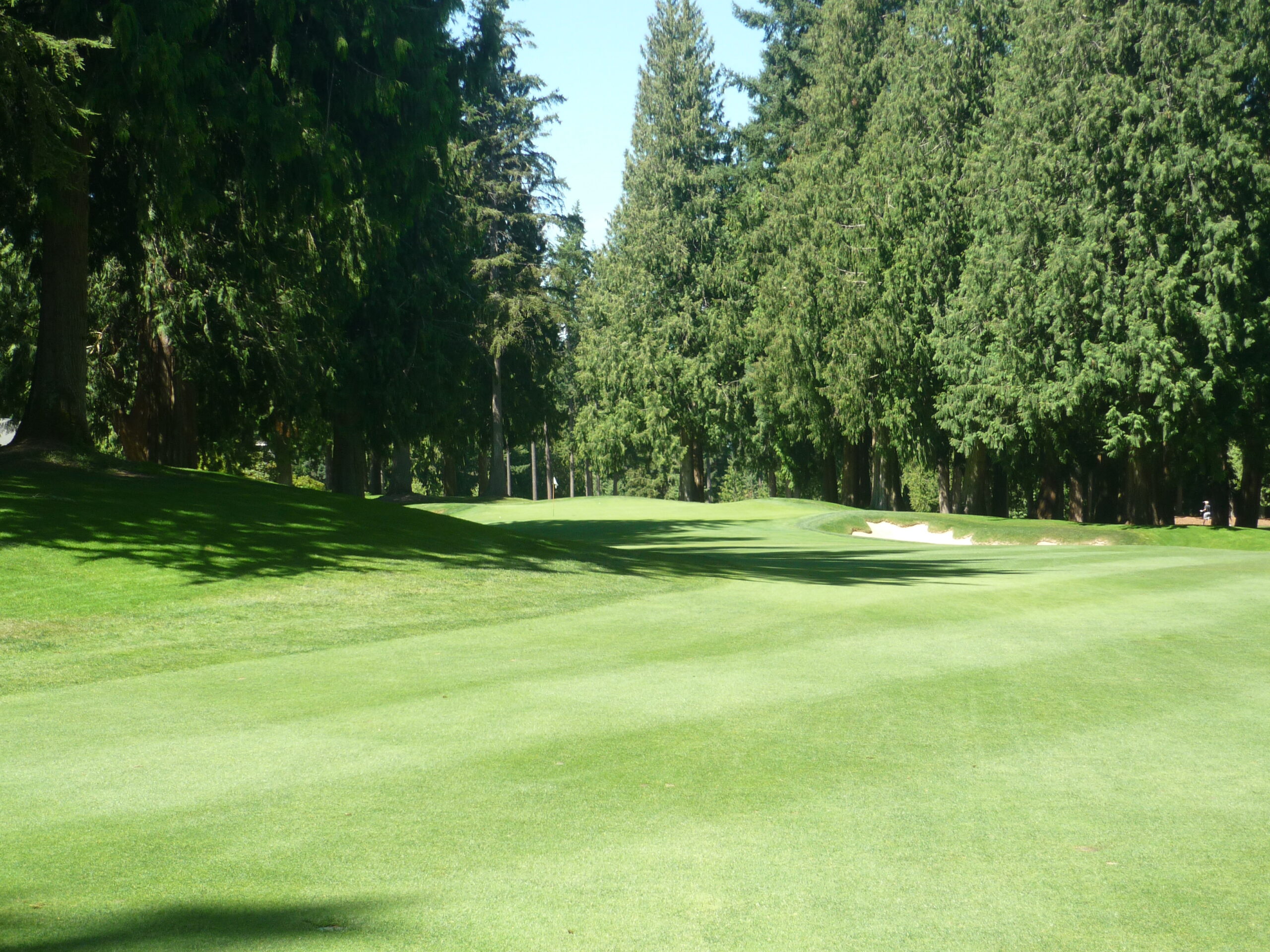
Hole 10 – 374 yards – Par 4
You must avoid the fairway bunker on the left with your tee ball here. The right trees are no good either. Depending on where you end up in the fairway, playing a draw into the green is probably going to be the play.
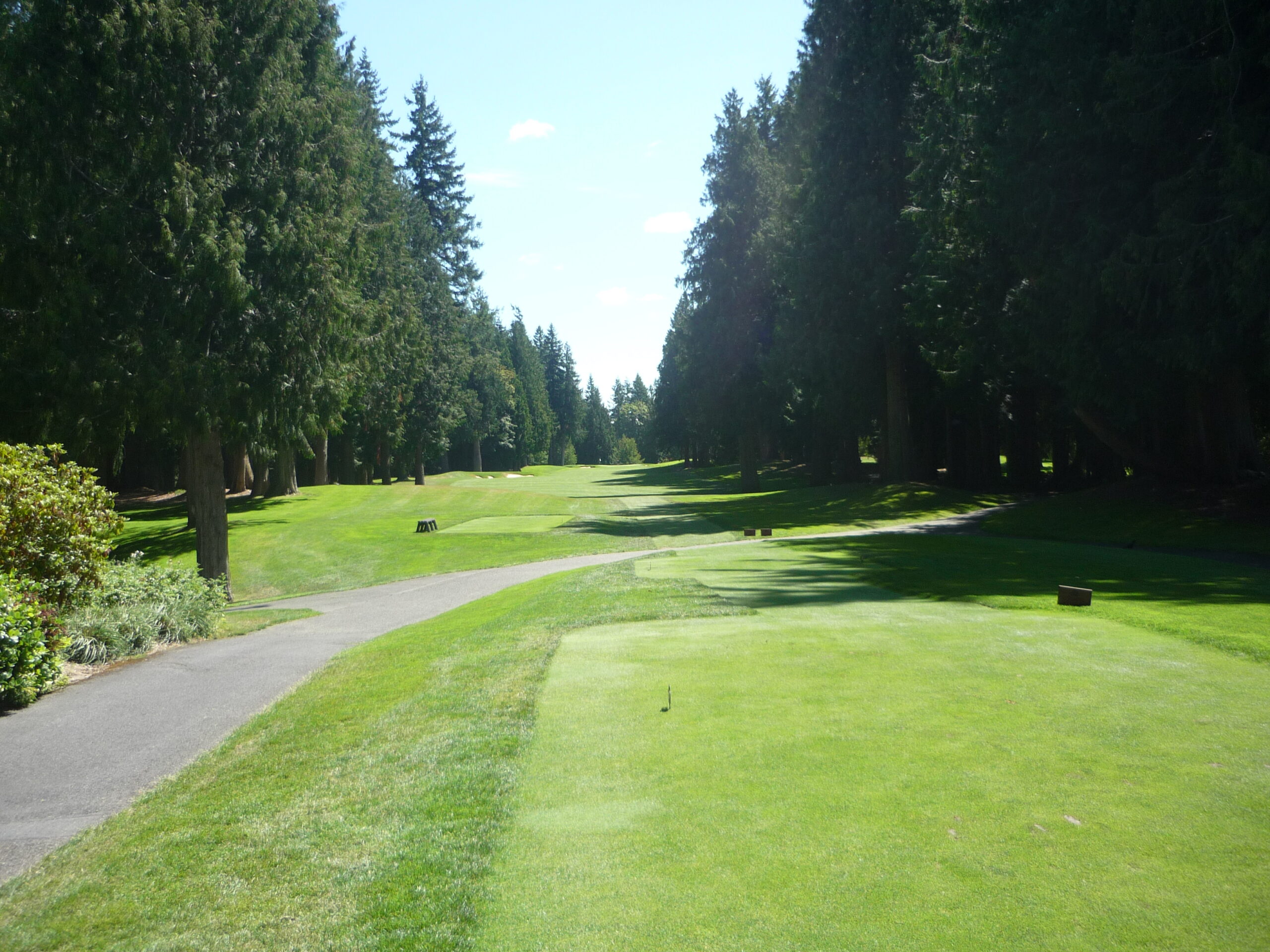
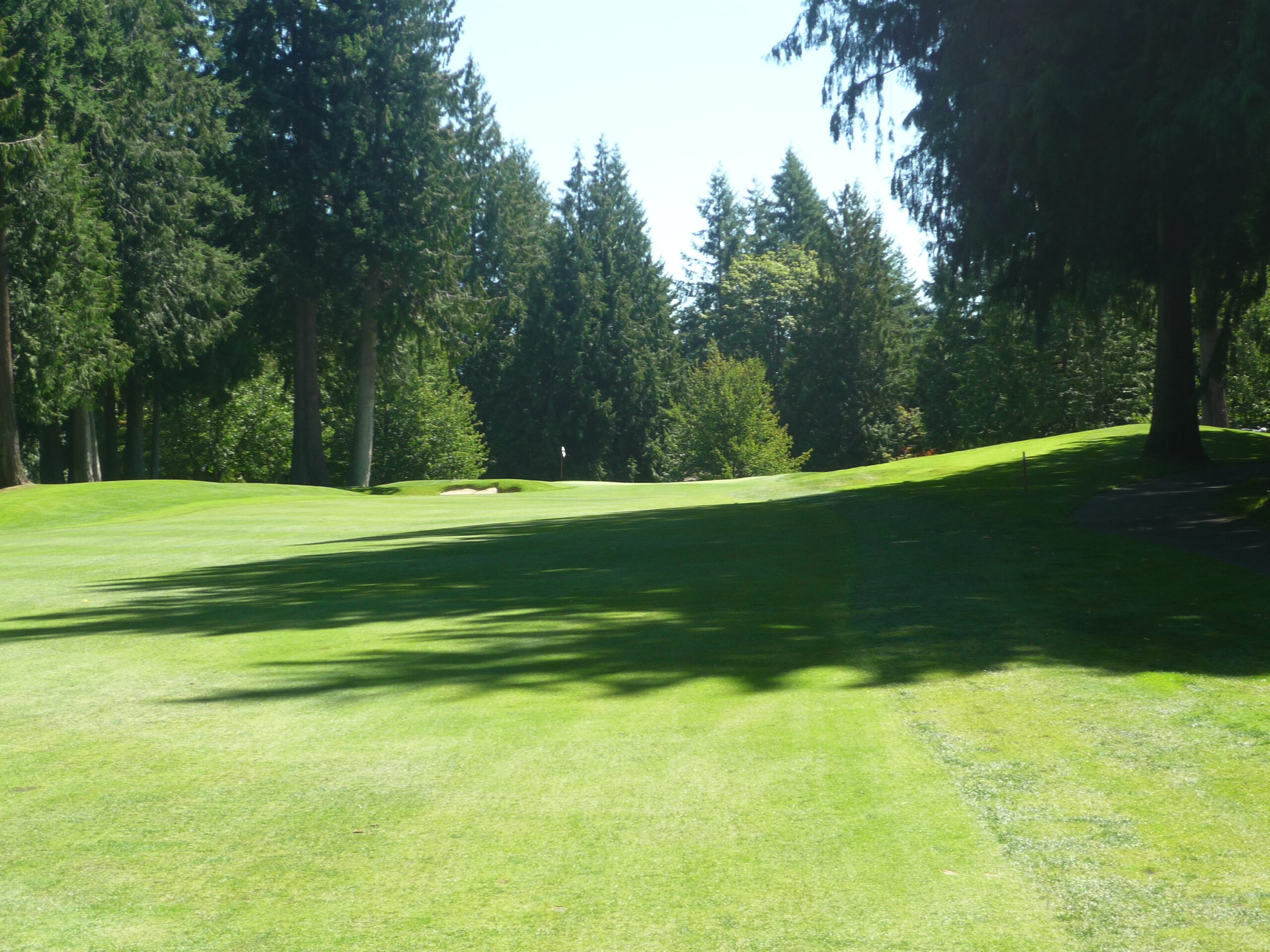
There’s plenty of slope in this green but missing a bit short leaves you with some of the easier chips on the course.
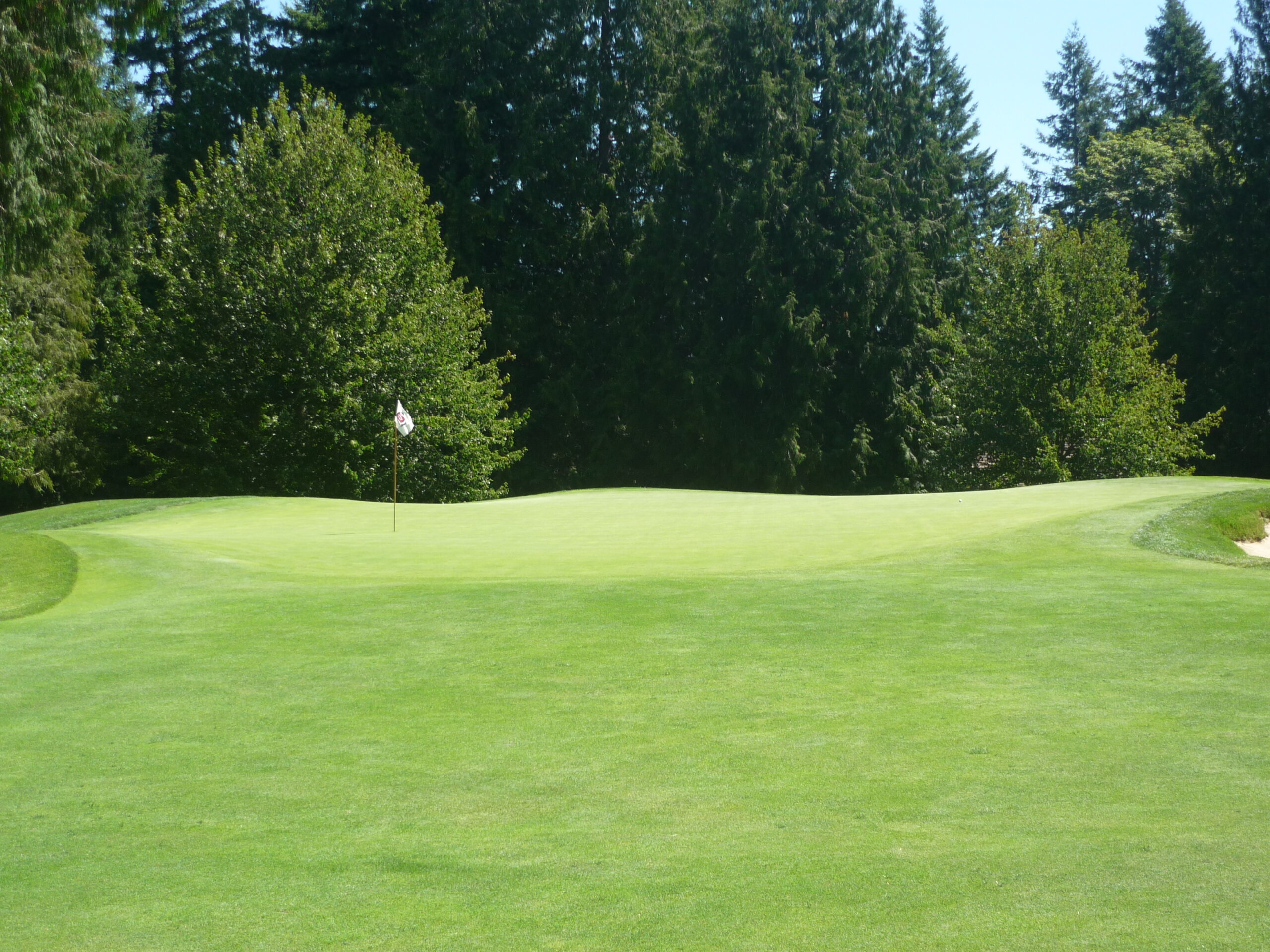
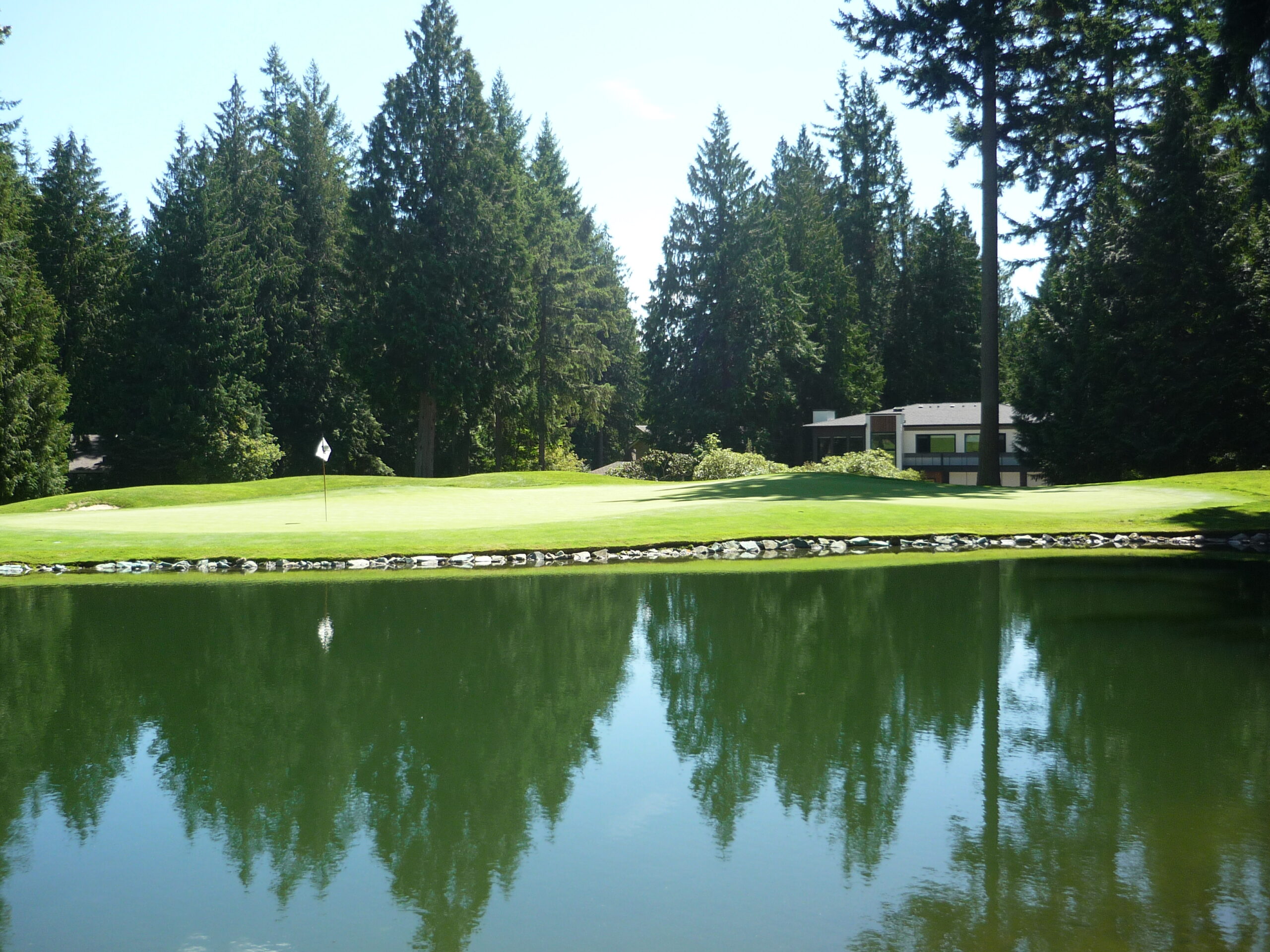
Hole 11 – 478 yards – Par 5
This hole is shaped similarly to our first hole of the day with the bend left and water in front. It just doesn’t have the elevation change from tee to green. if you’re trying to get home in two, make sure to err on the left side.
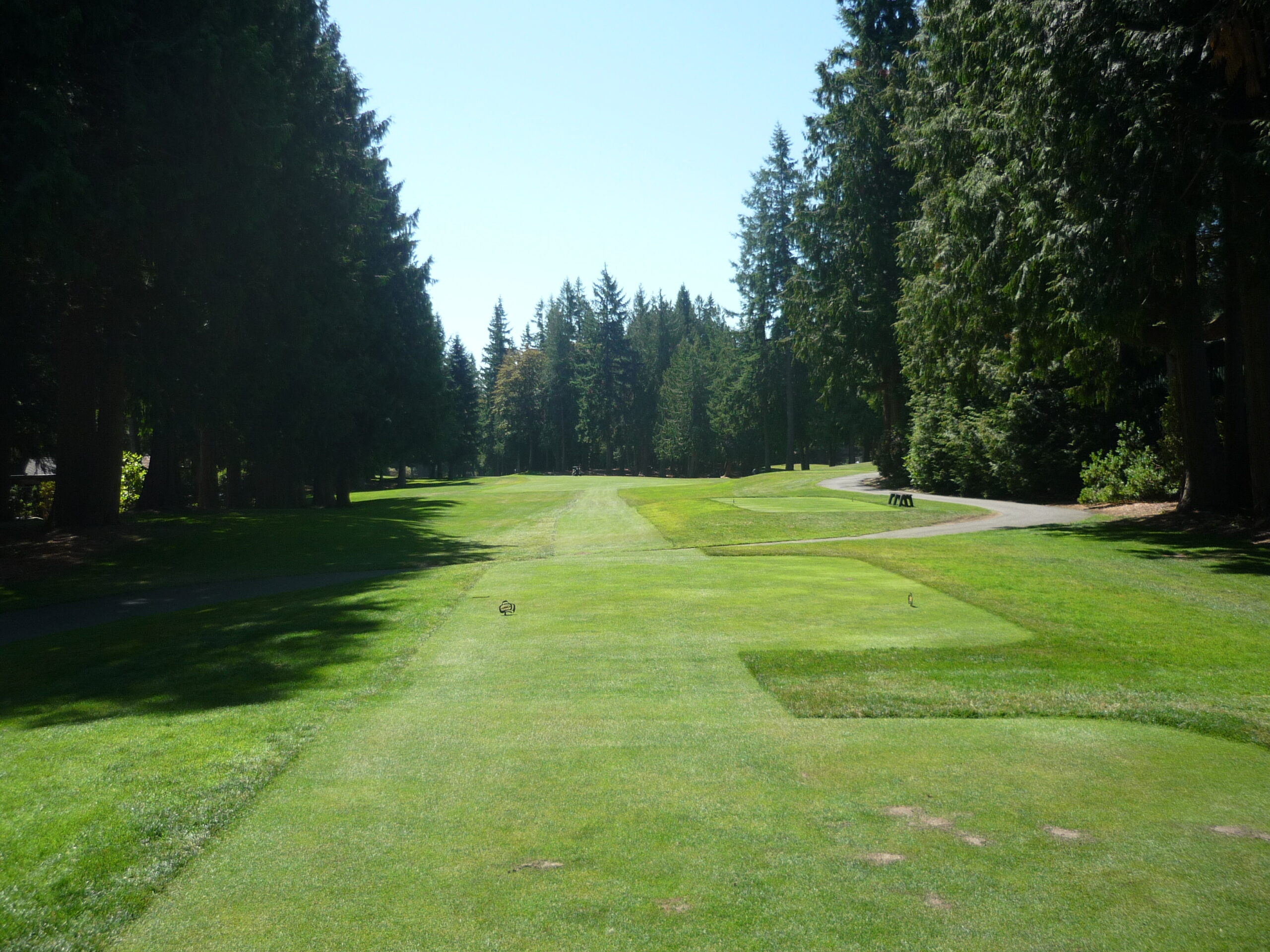
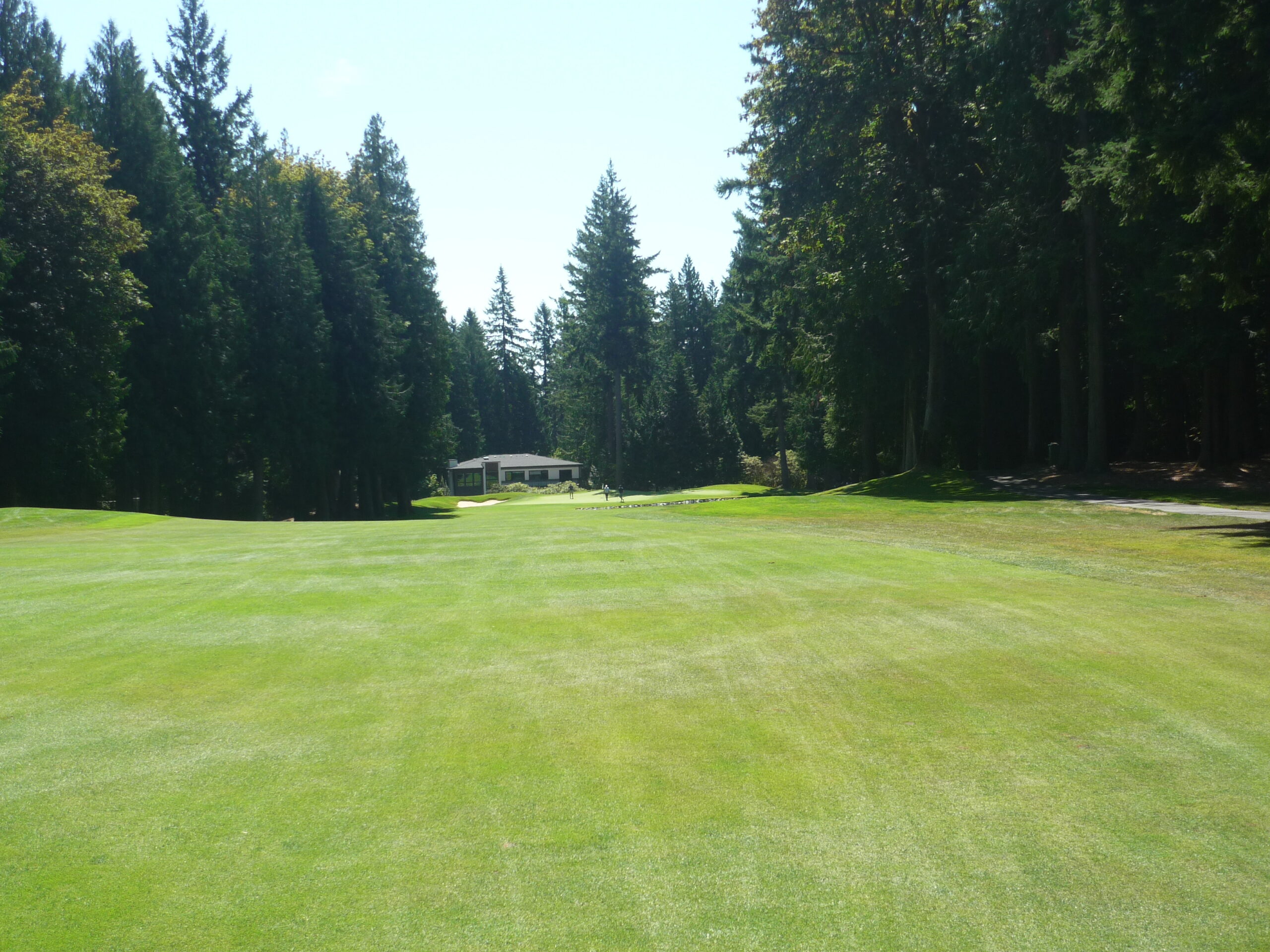
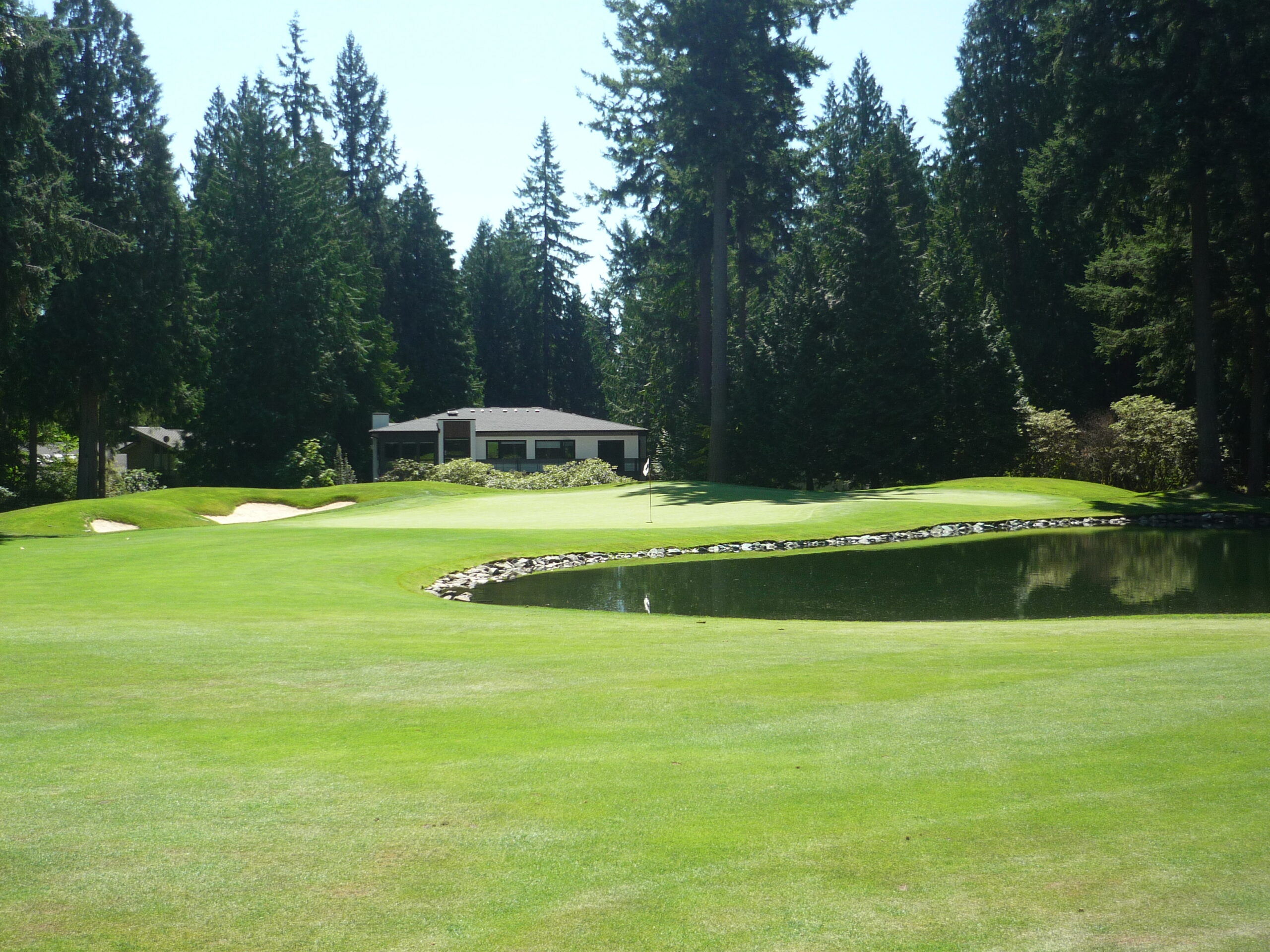
There is very little room for error with how close the pond is to the green.
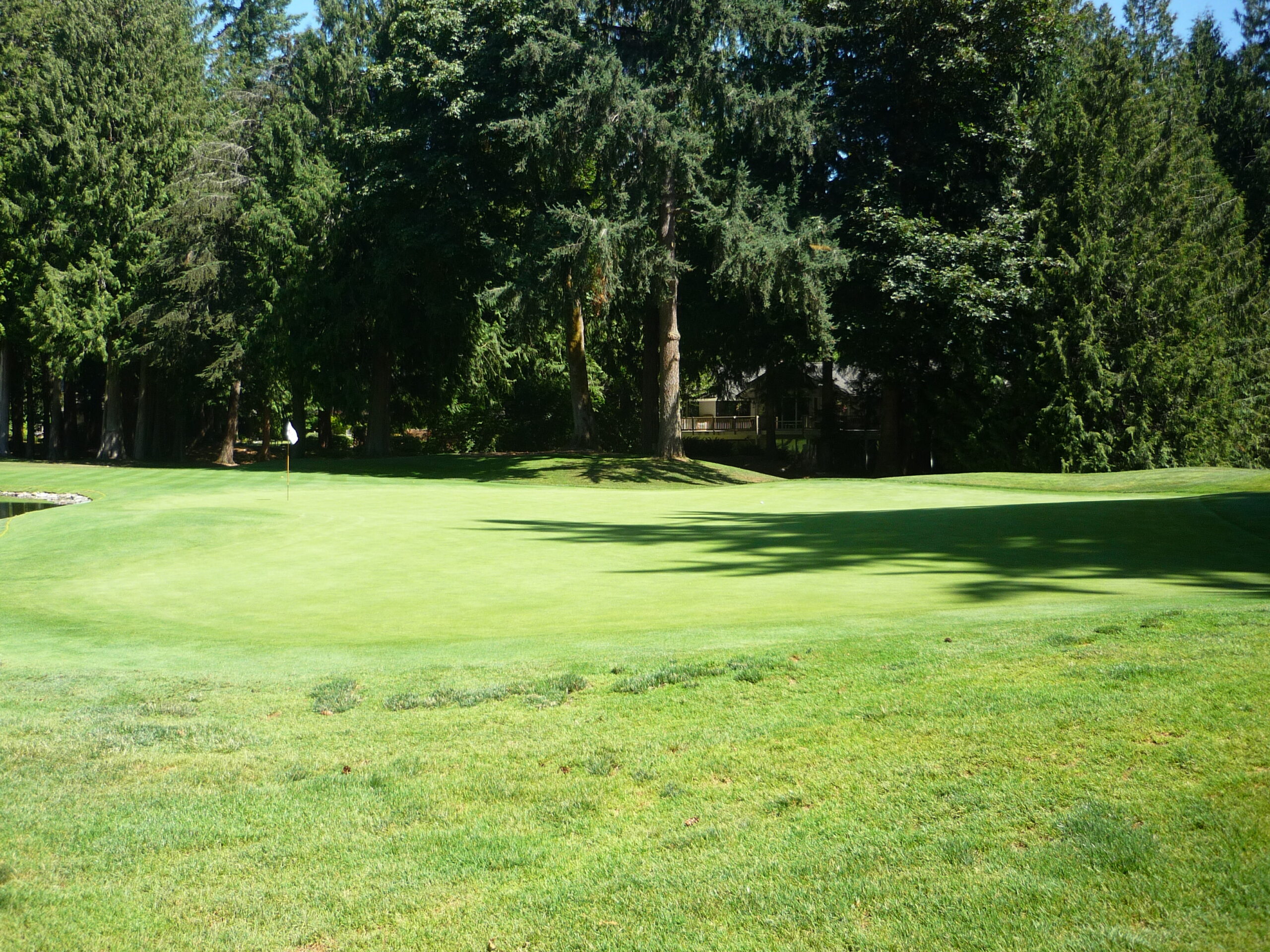
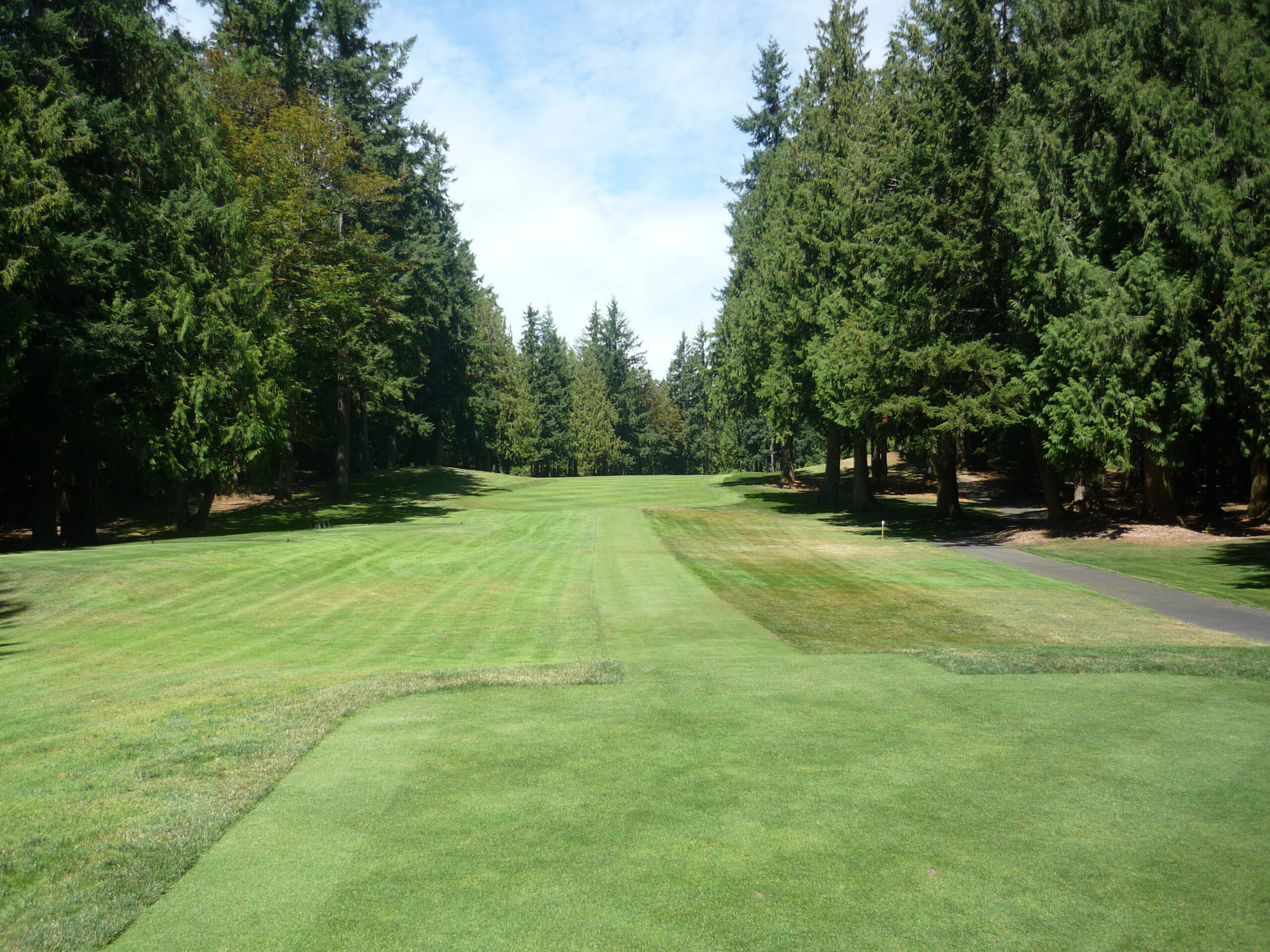
Hole 12 – 382 yards – Par 4
This dogleg right plays slightly uphill and demands an accurate drive.
The approach is guarded on the left by a large tree that is well short of the green. Fitting a draw in here seems to make the most sense.
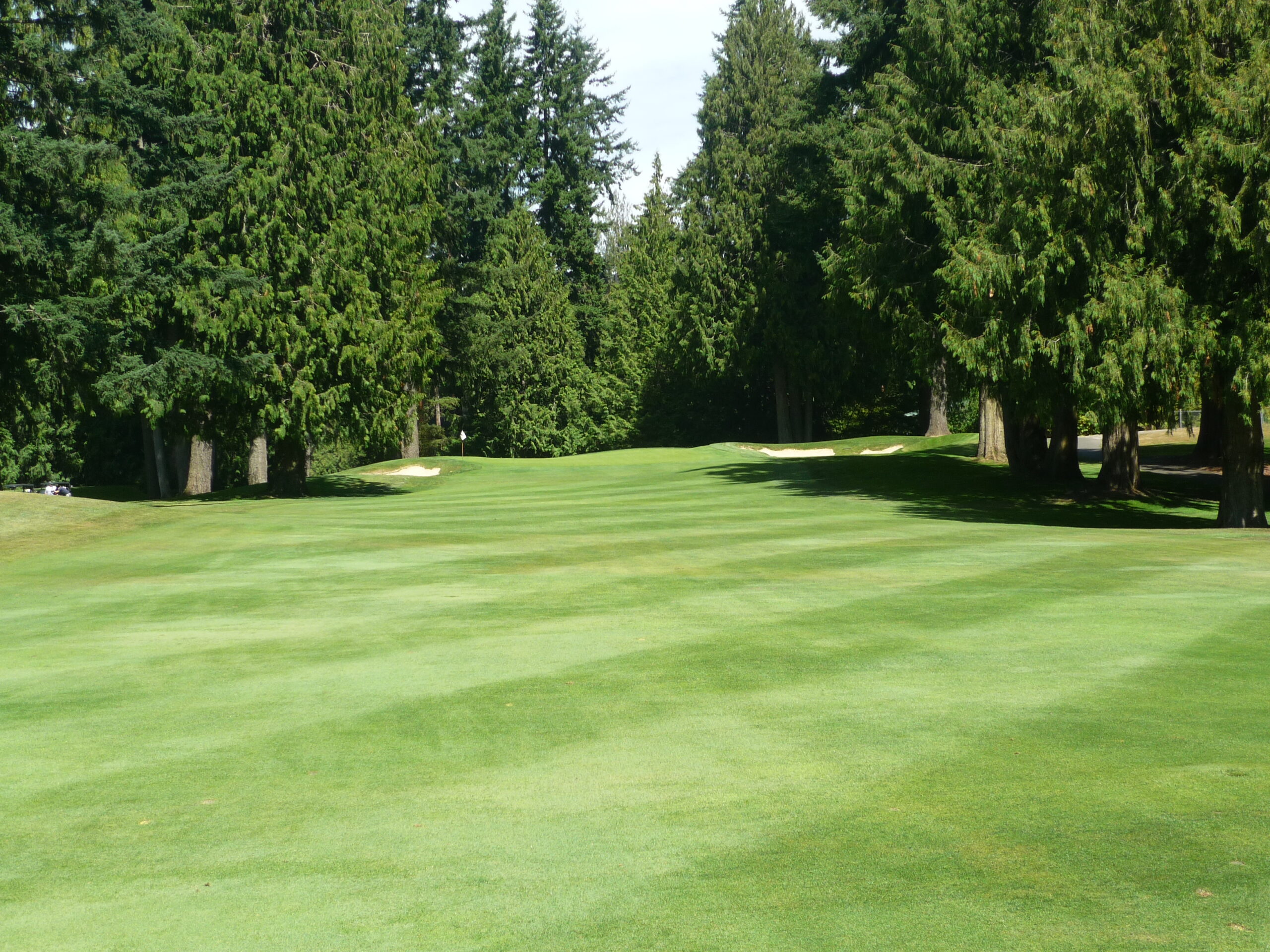
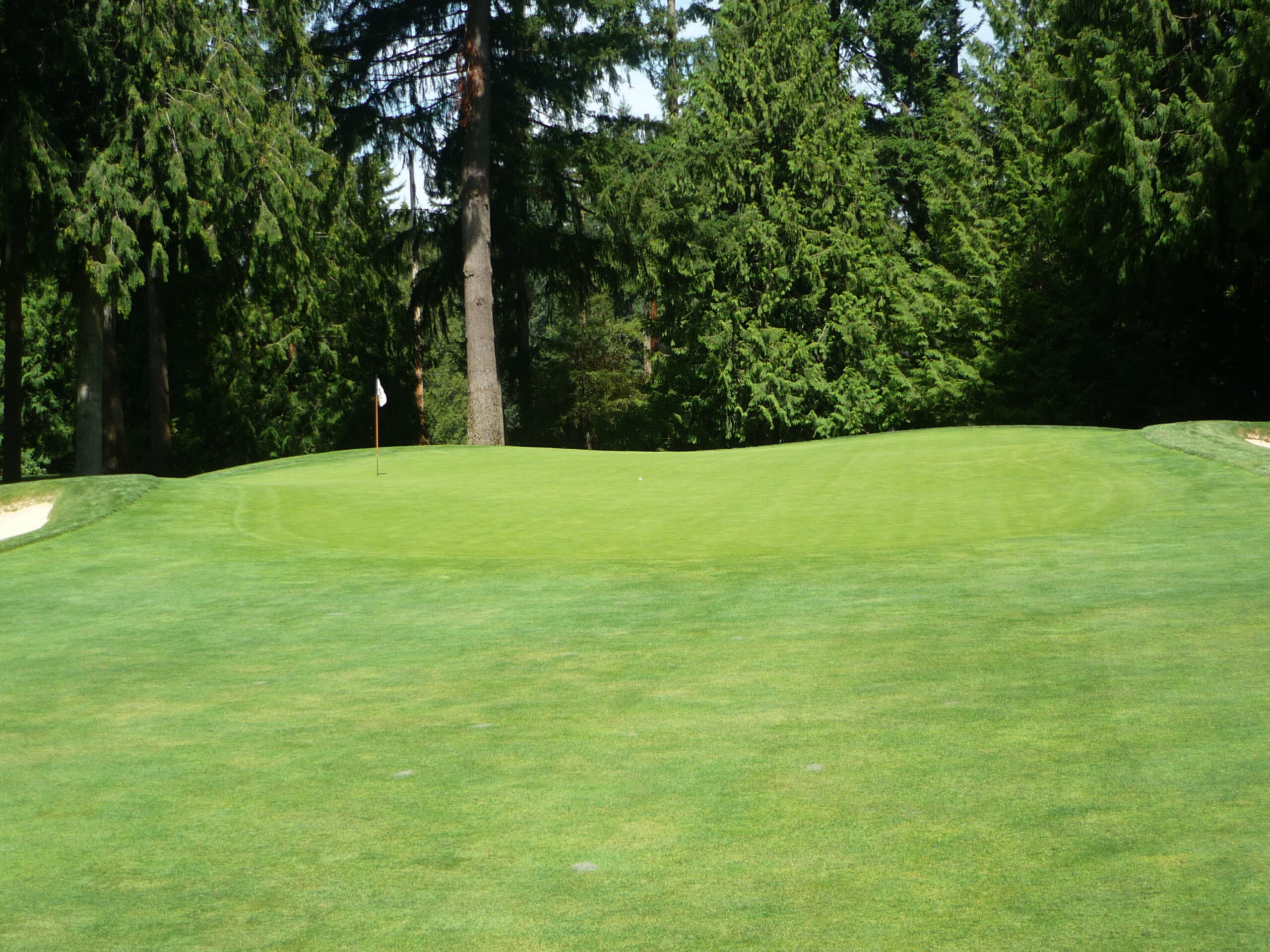
Hole 13 – 357 yards – Par 4
Sahalee is pretty tough but it ramps up on this hole with trees in the line of play. You have to play from point to point here to make par.
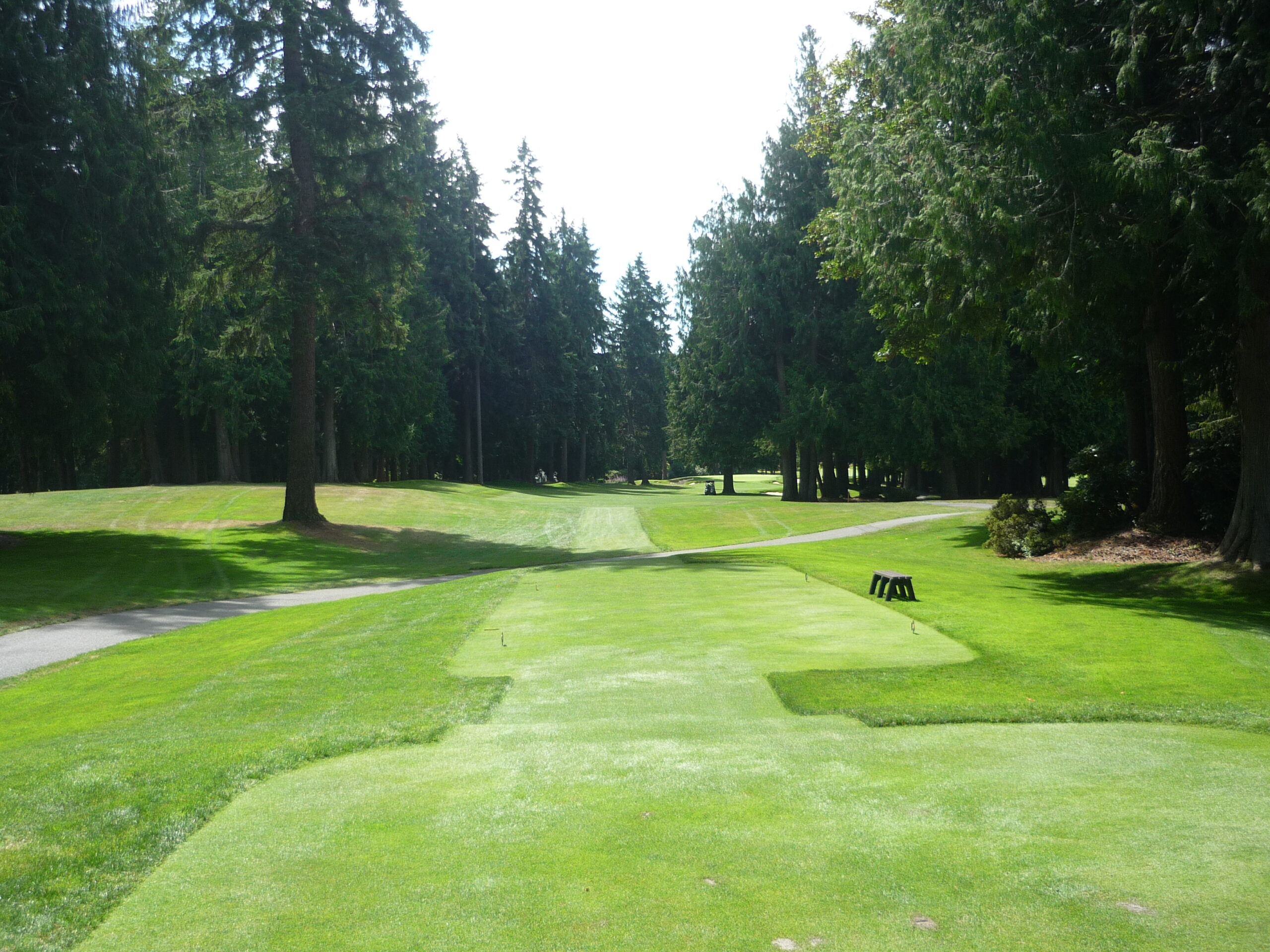
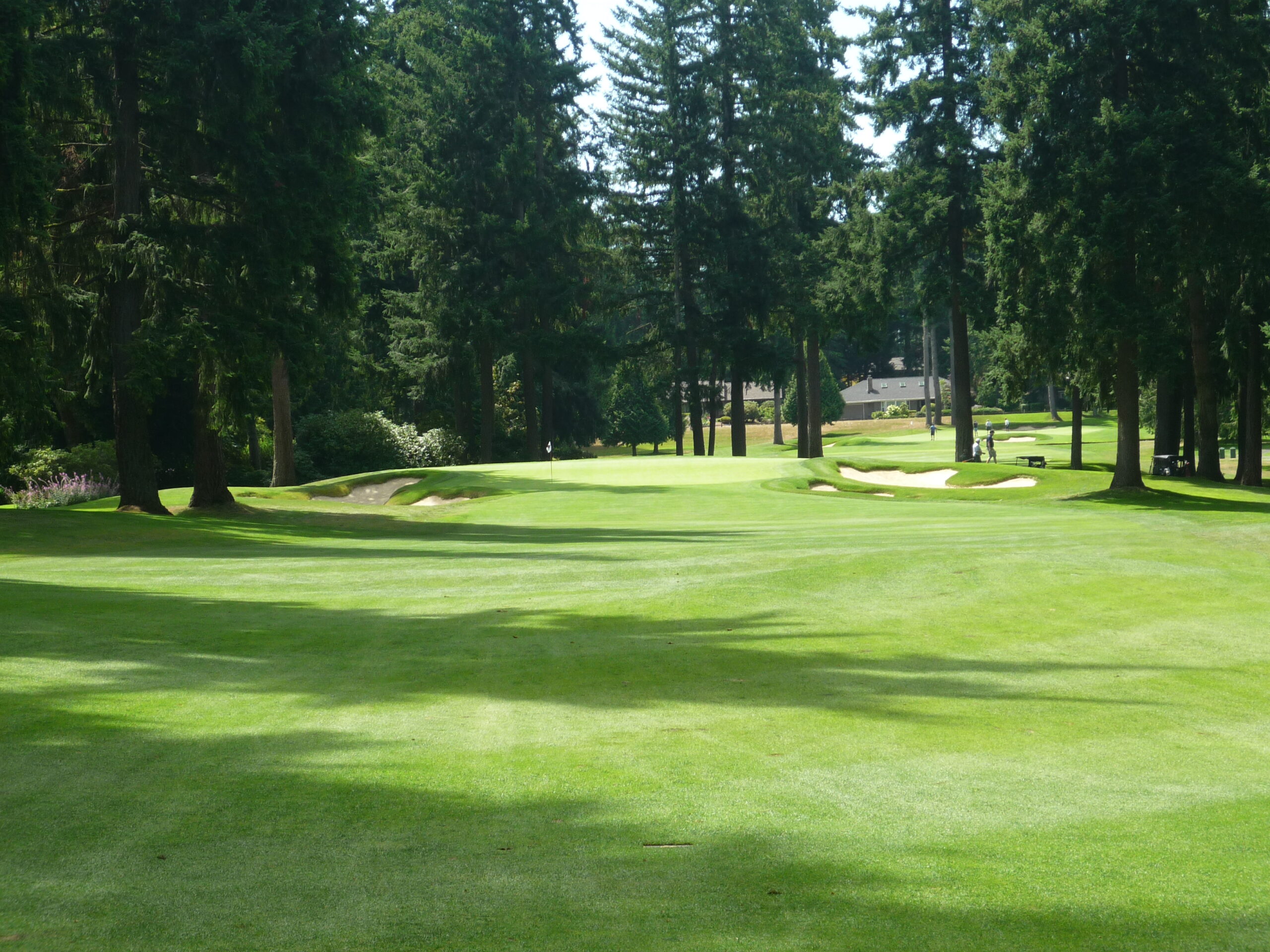
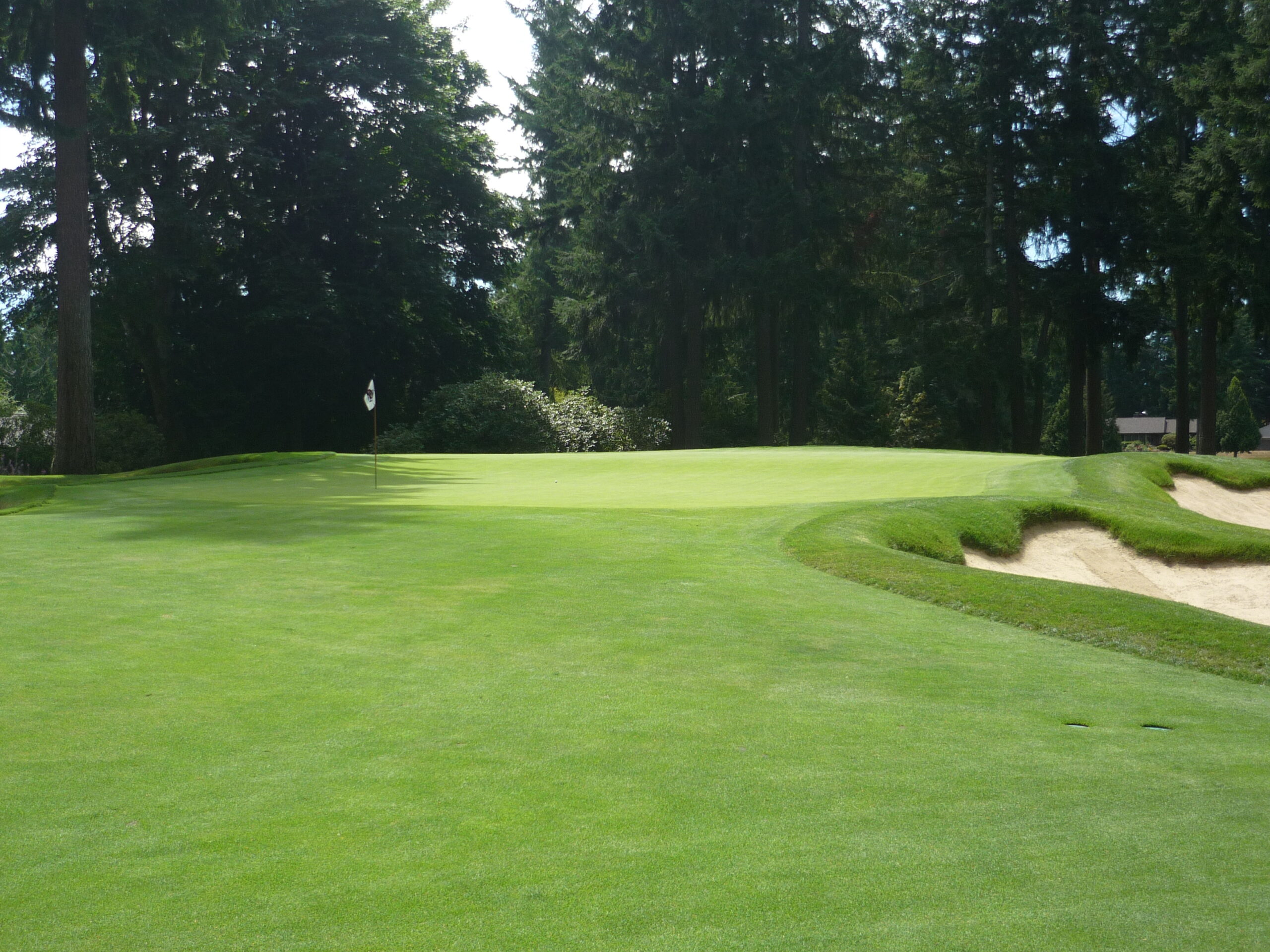
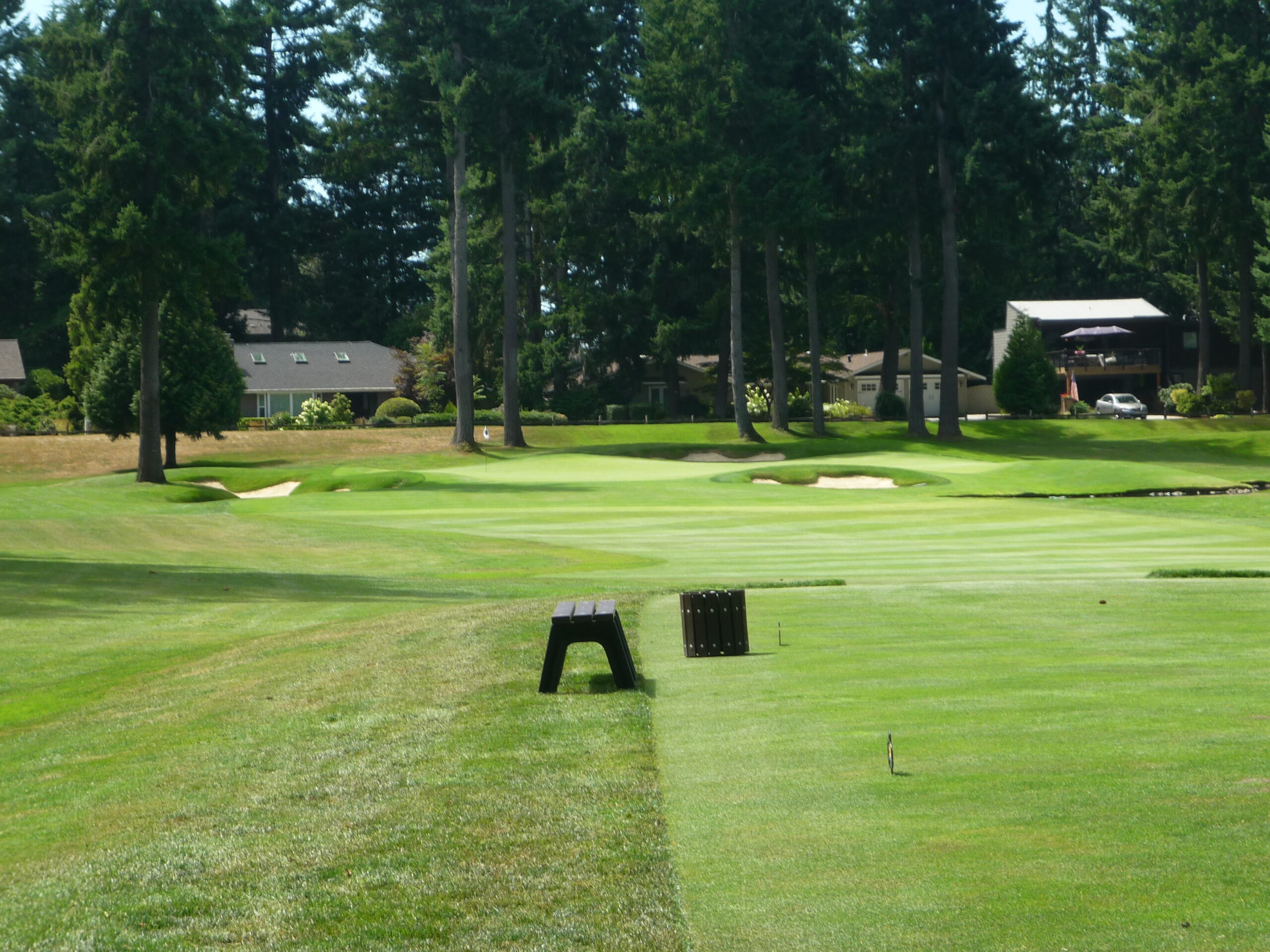
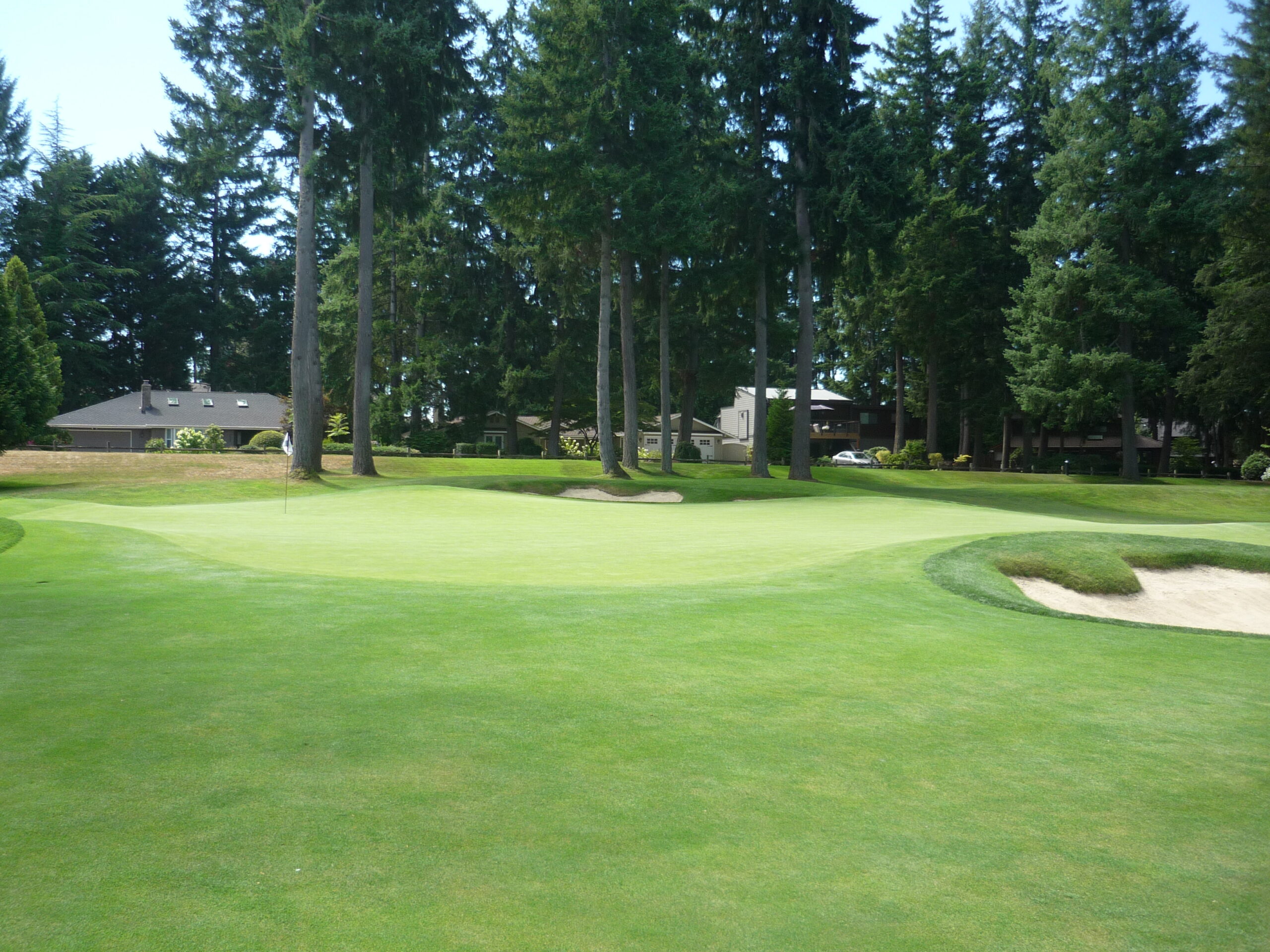
Hole 14 – 166 yards – Par 3
This little section of Sahalee opens up quite a bit, especially compared to what we have seen previously. Be wary of shots leaking to the right because there is a hazard over there.
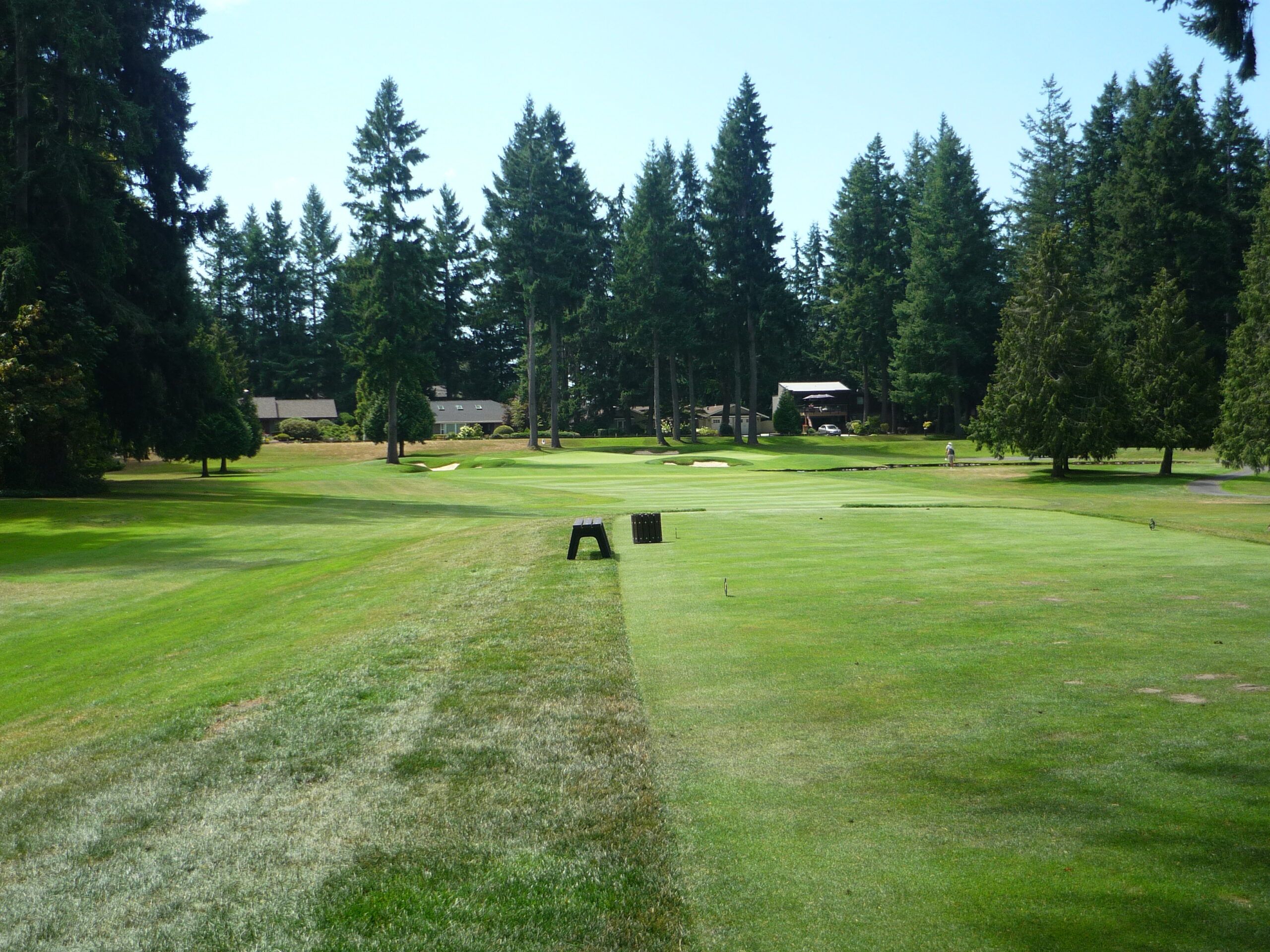
Pins on the left side of the green are welcome since that is the more expansive side of the putting surface.
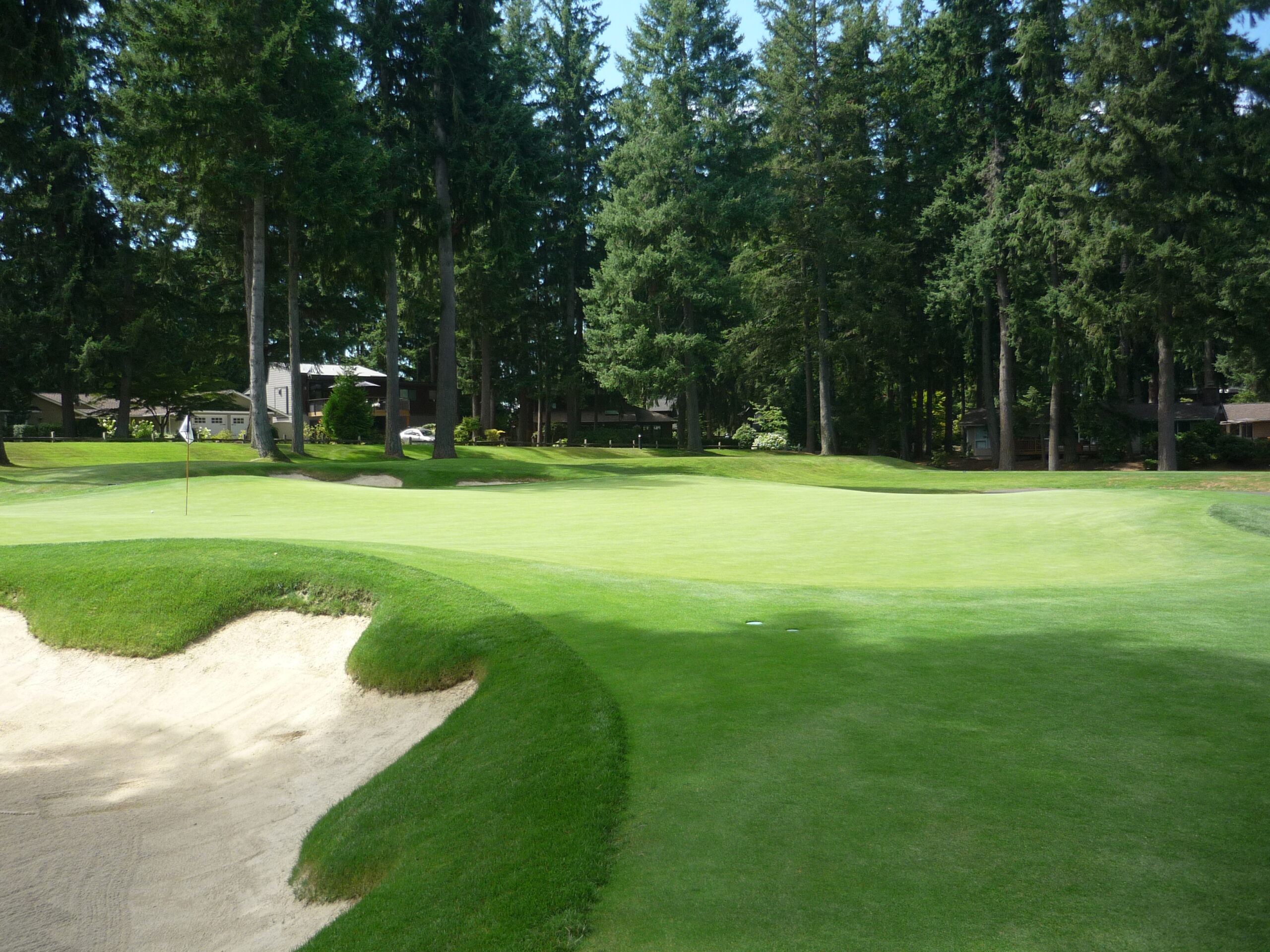
Hole 15 – 474 yards – Par 5
This is probably the most open tee shot you will see all day. As you can see, the hole gradually rises up towards the green and the trees begin to pinch in more as you go along.
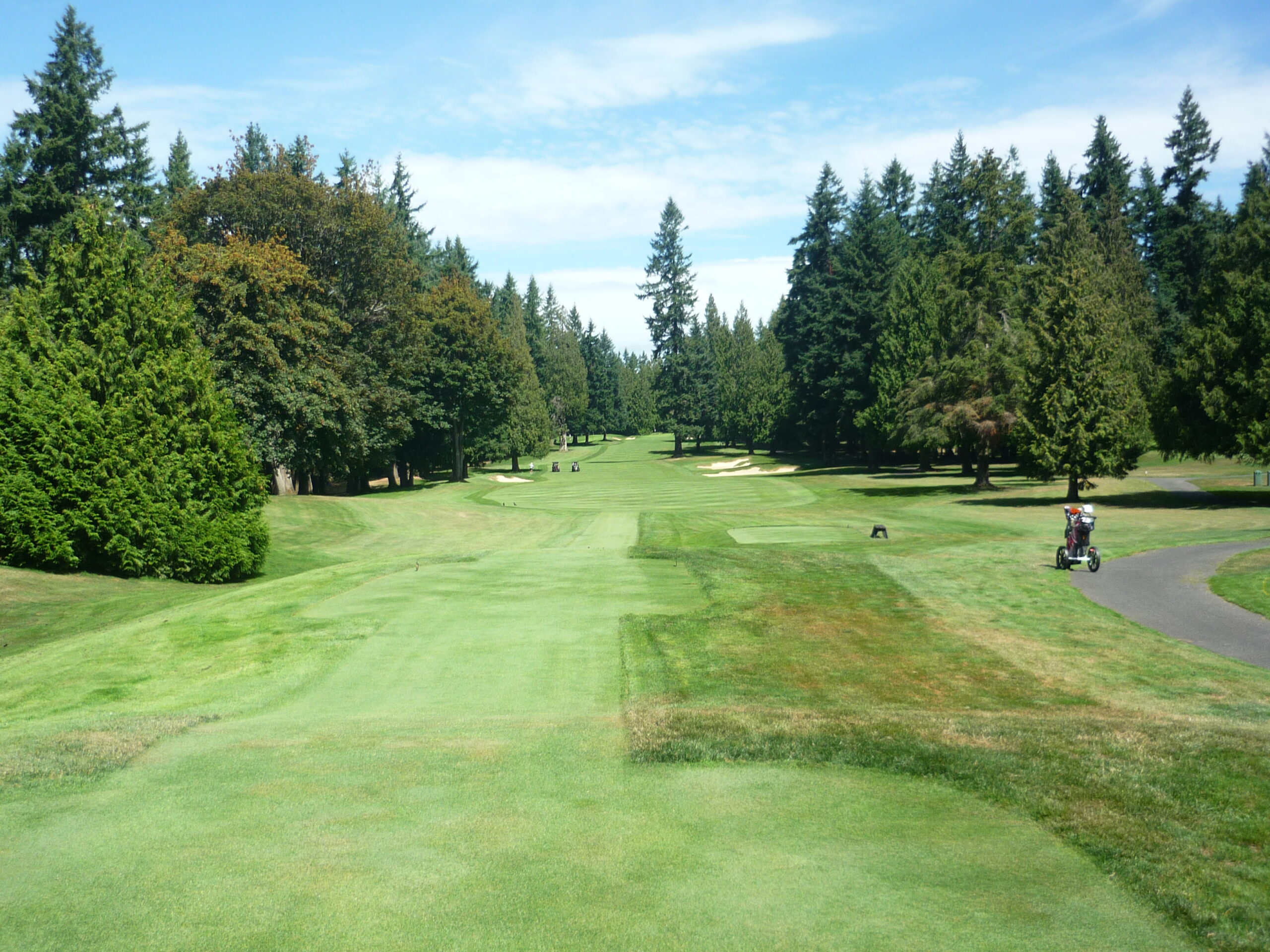
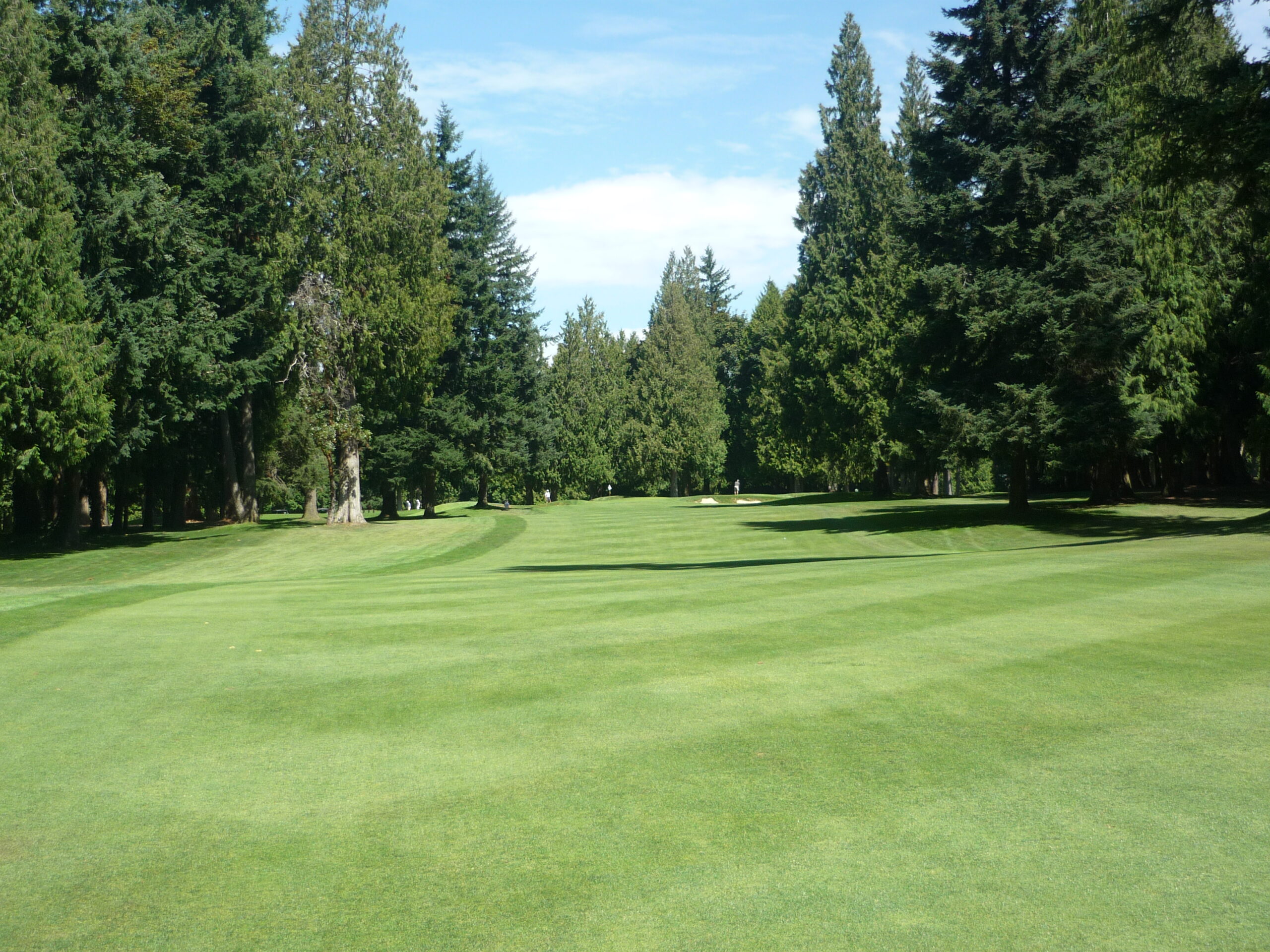
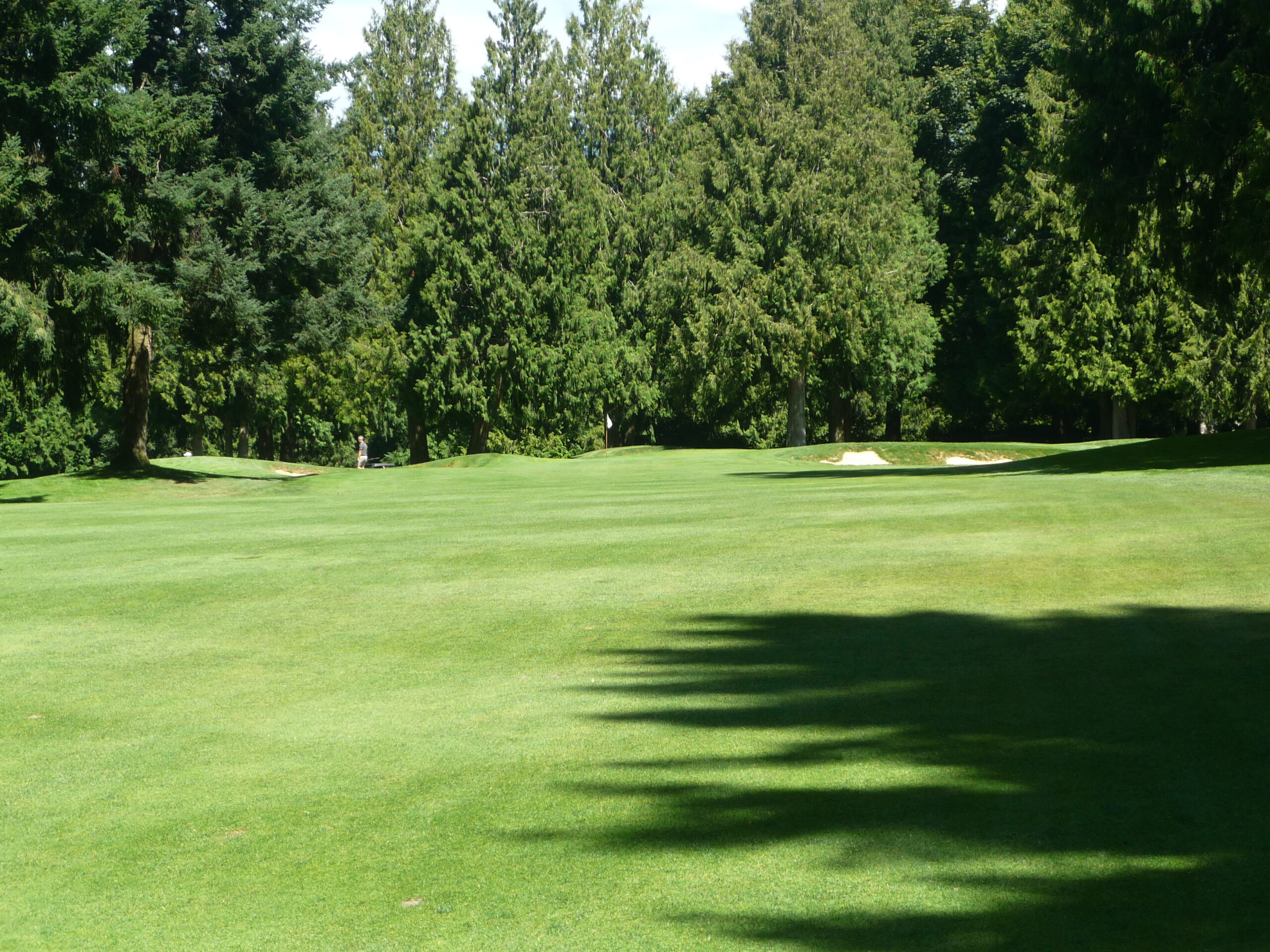
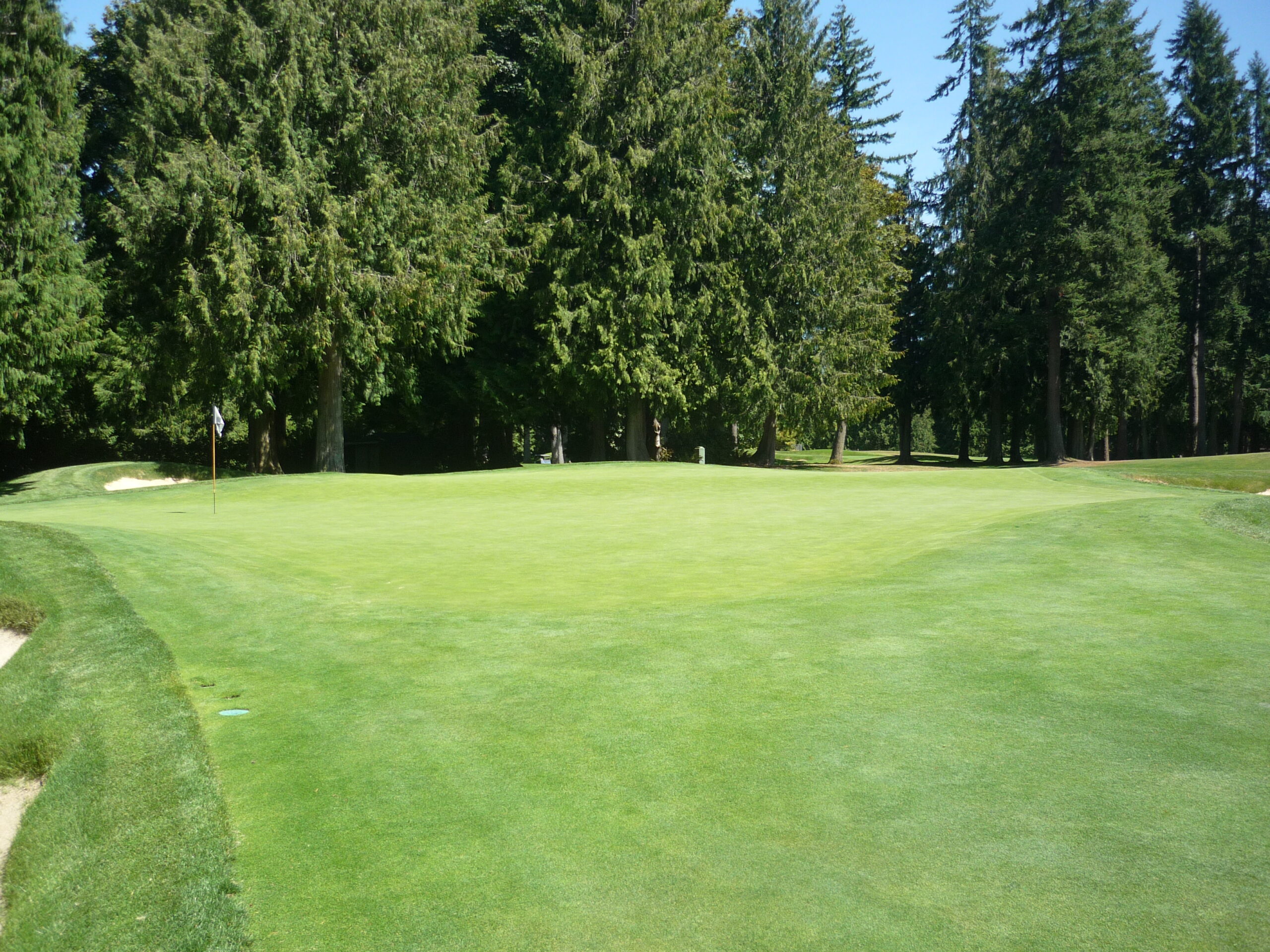
Hole 16 – 380 yards – Par 4
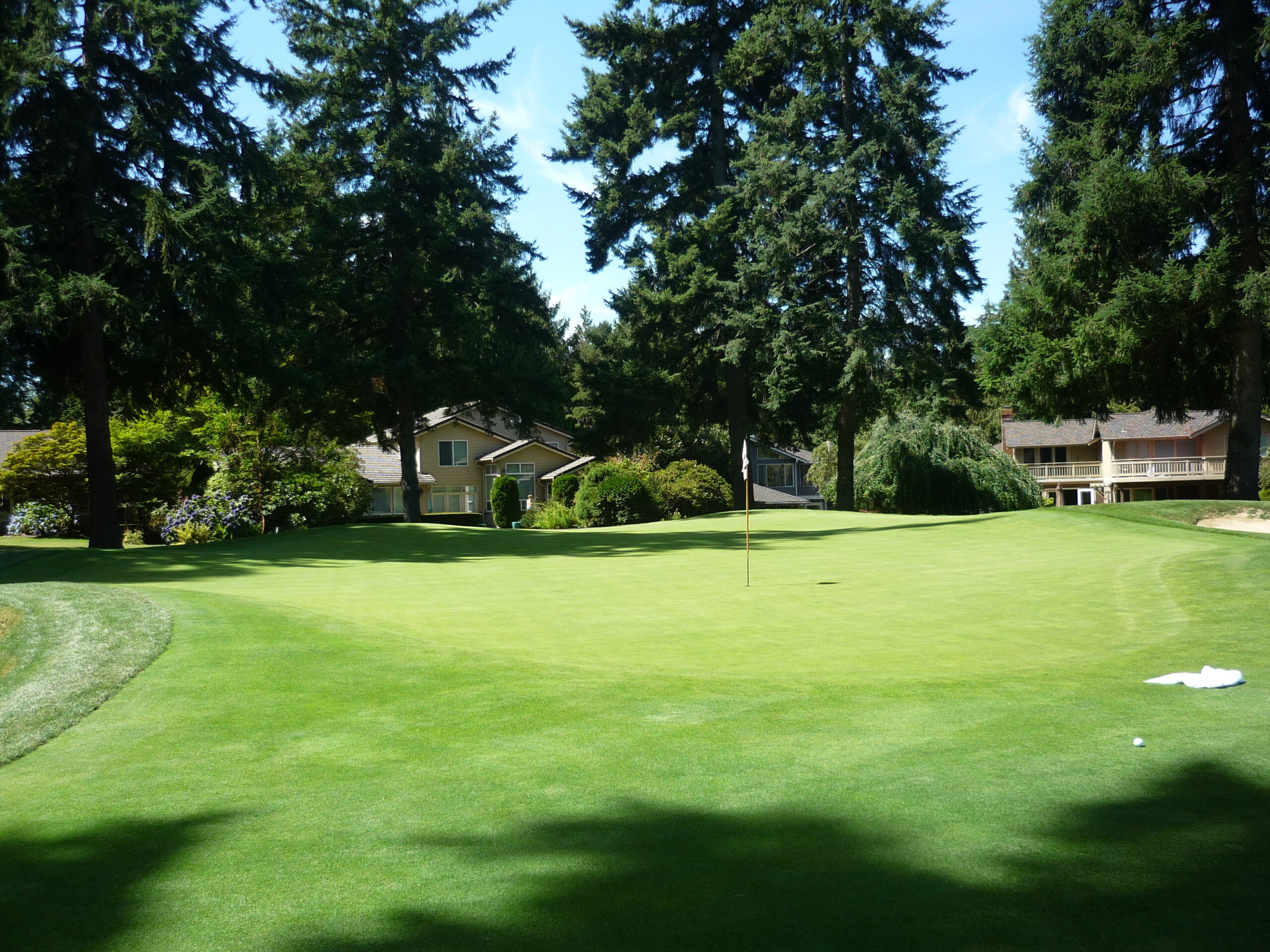
We’ve got a straight hole here where it pays to be on the right side of the fairway. Two trees stand guard just off the left side of the fairway and make shots more difficult from that side.
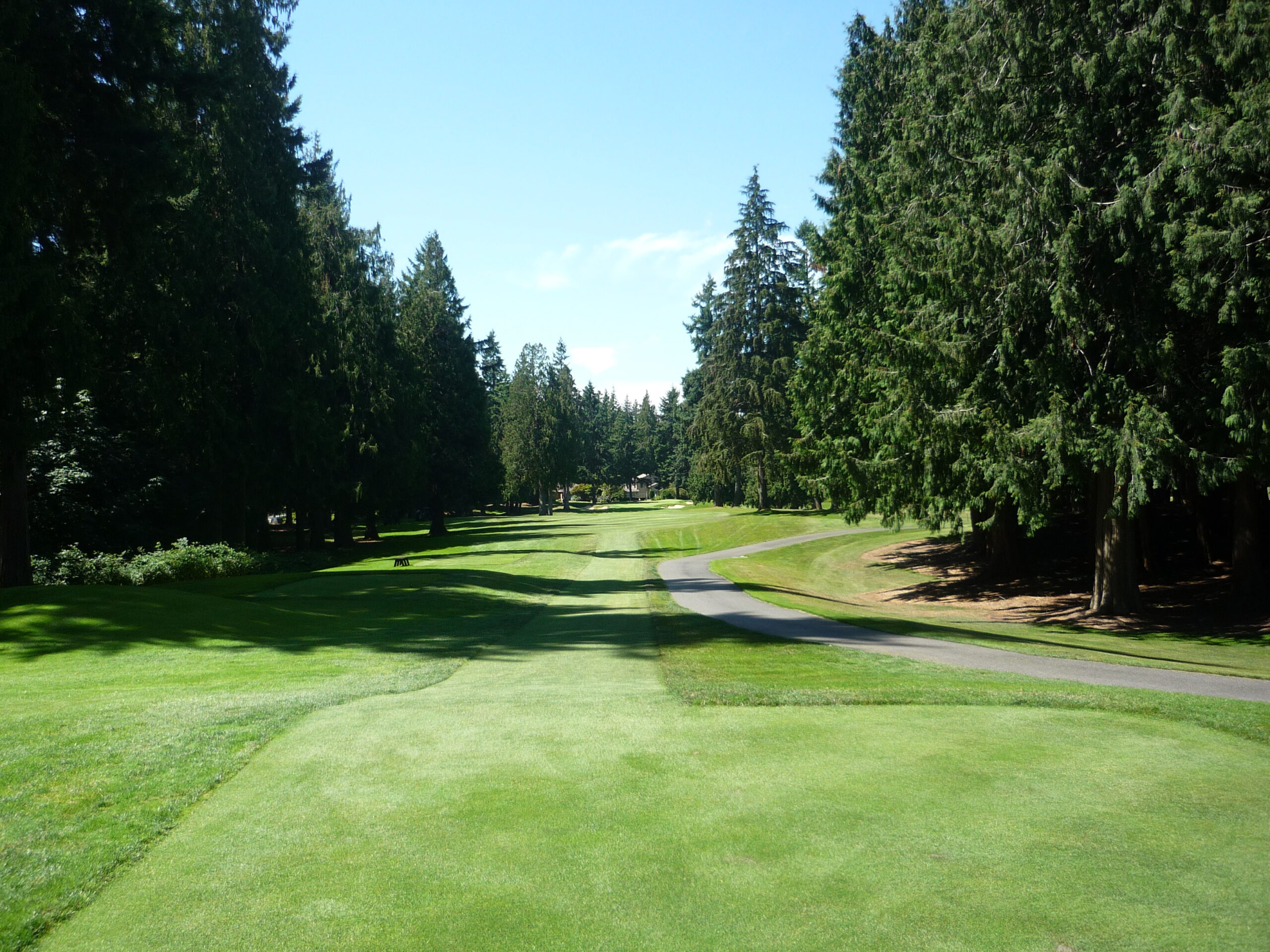
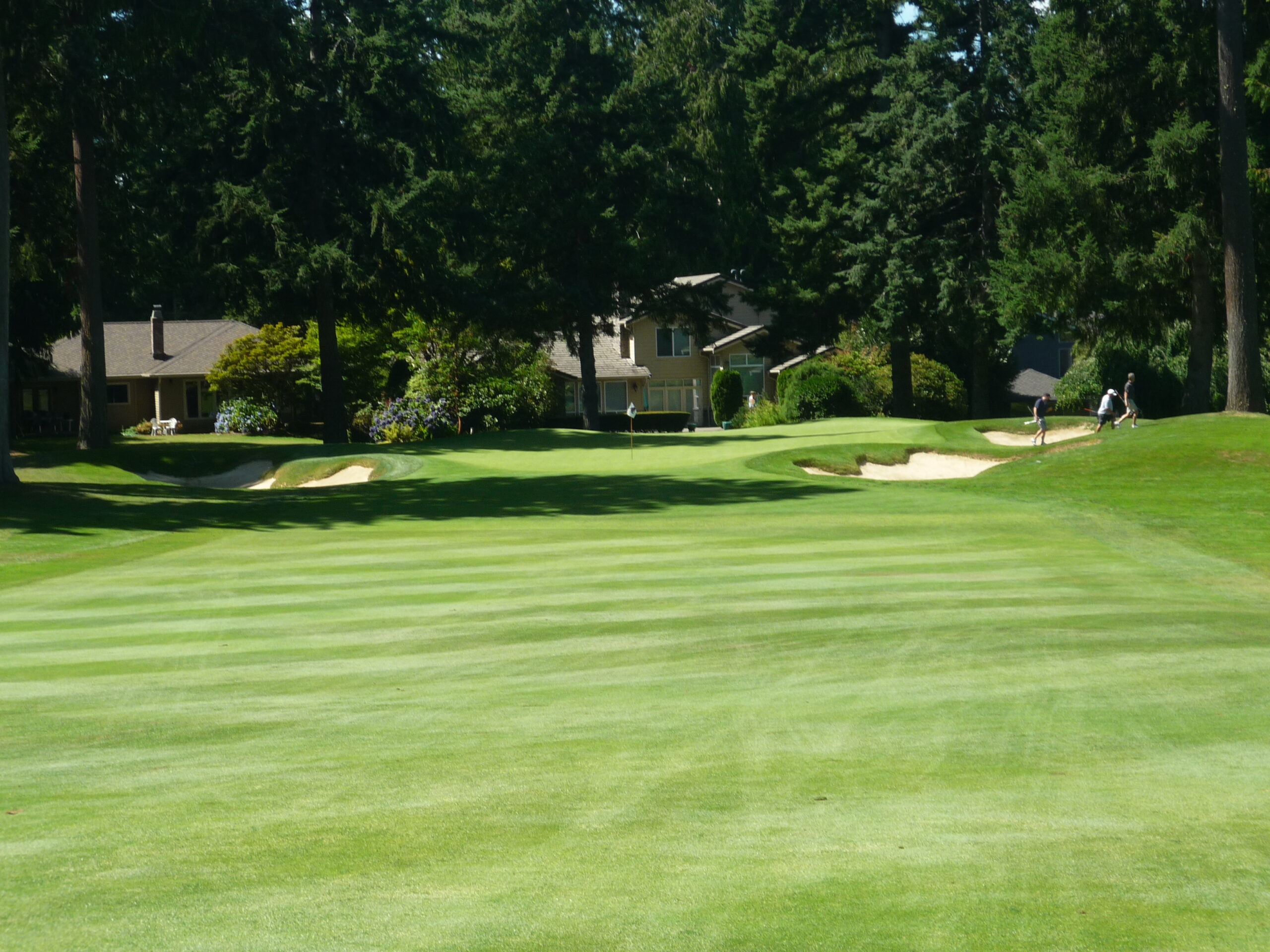
There is added contouring all around the edge of this green.
Hole 17 – 394 yards – Par 4
This is another relatively open tee shot but you’ll want to favor the left side as the trees narrow for the approach shot. You can see that the hole bends to the right and plays ever so slightly uphill.
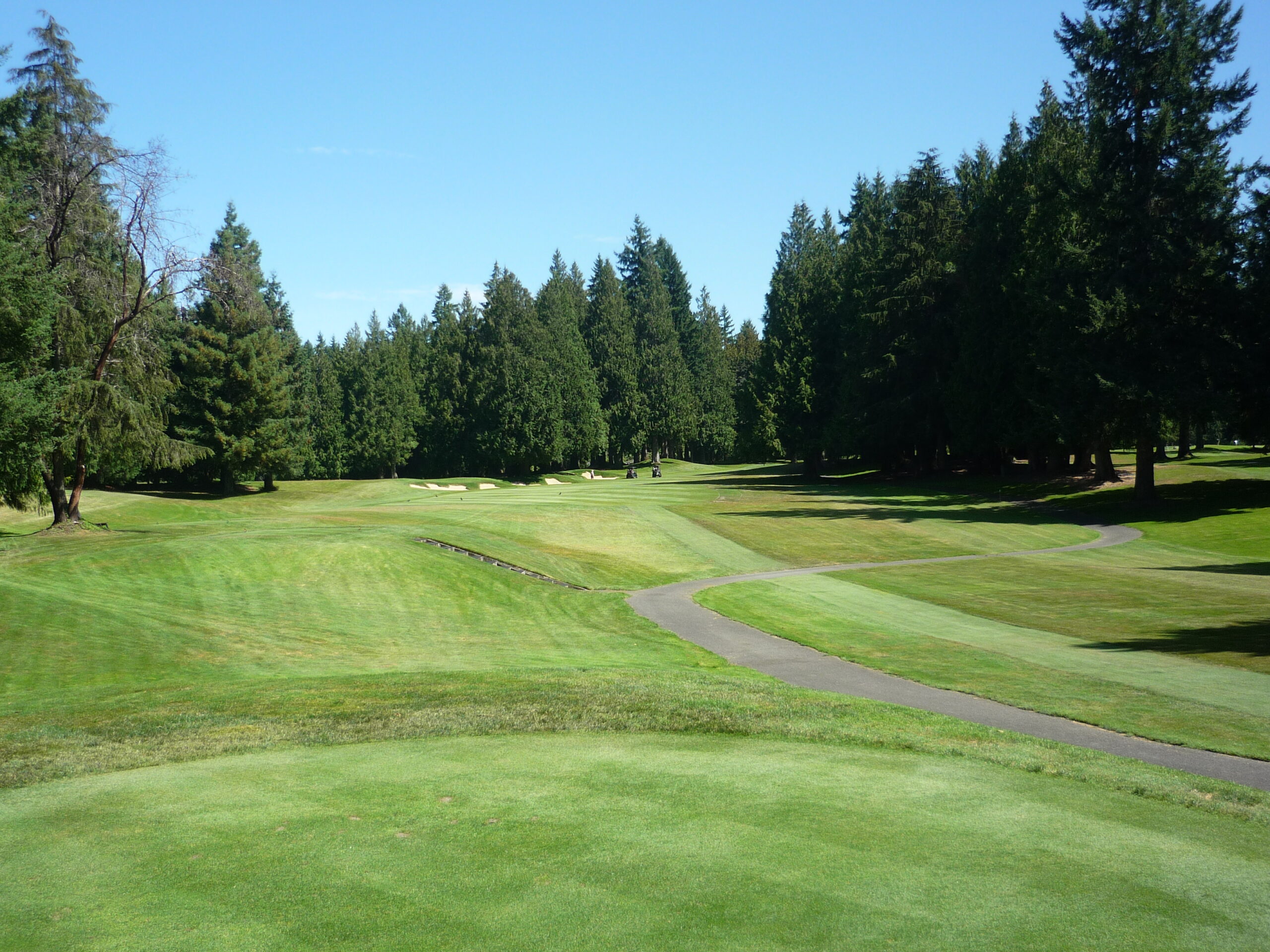
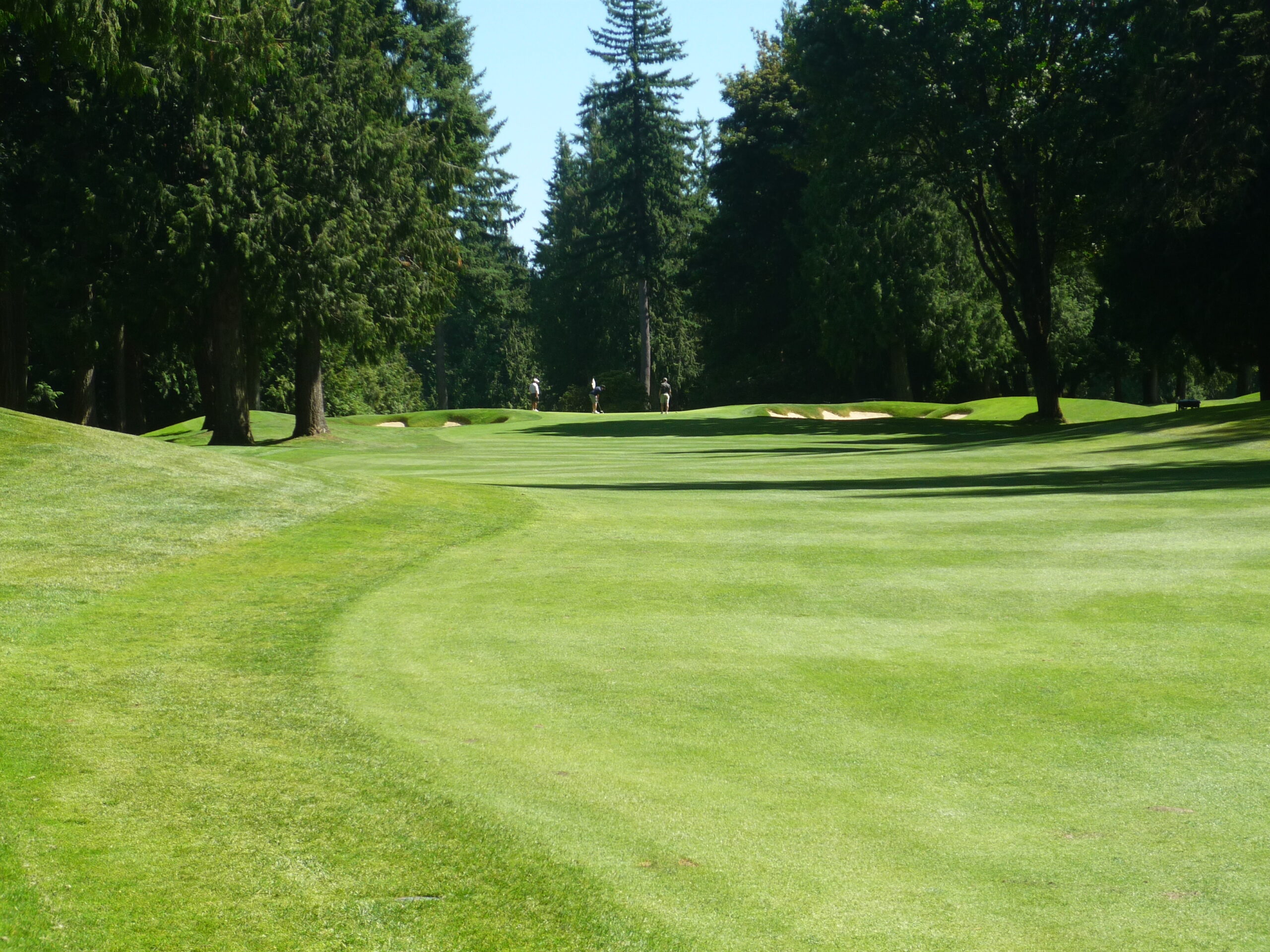
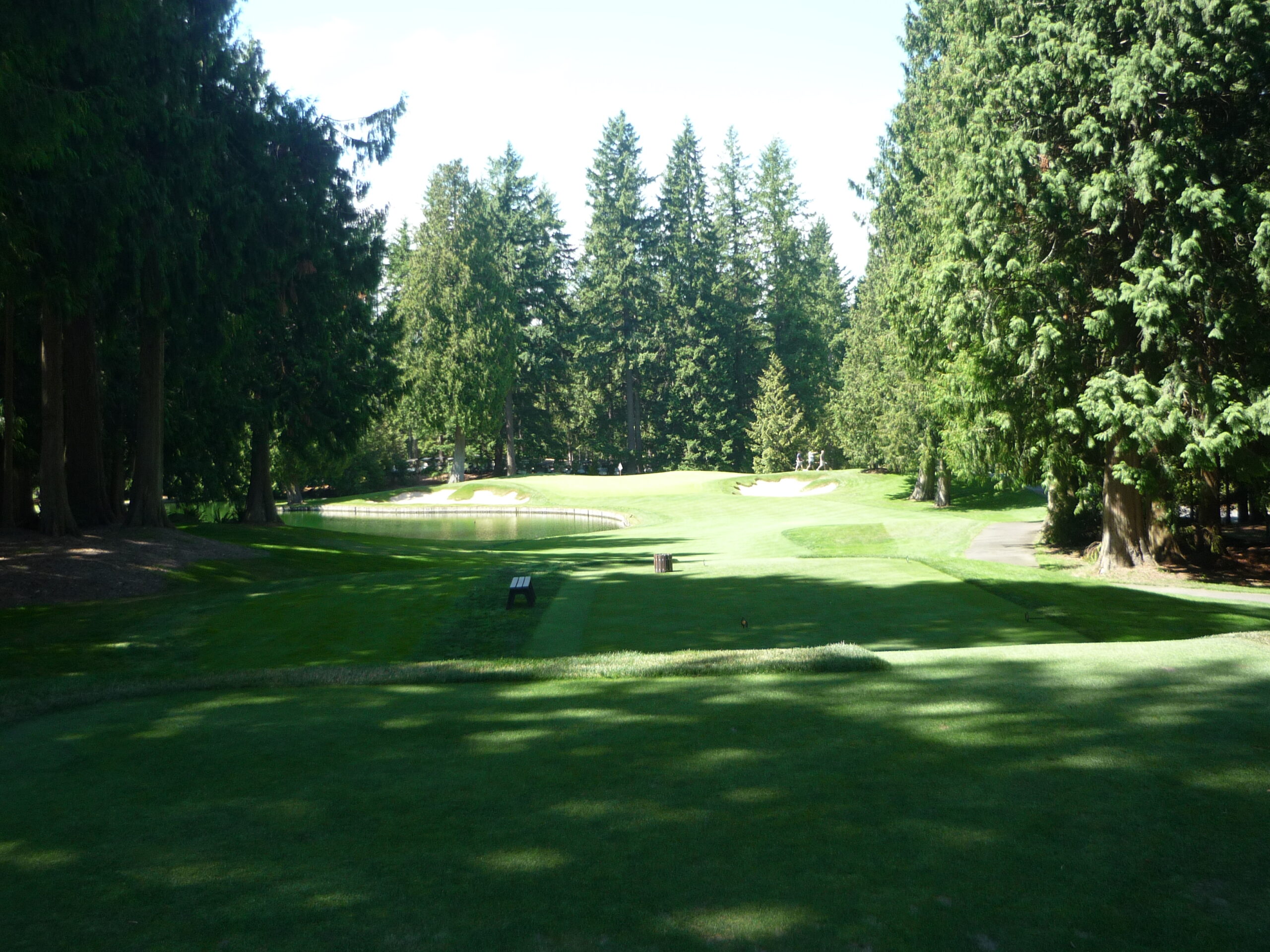
Hole 18 – 146 yards – Par 3
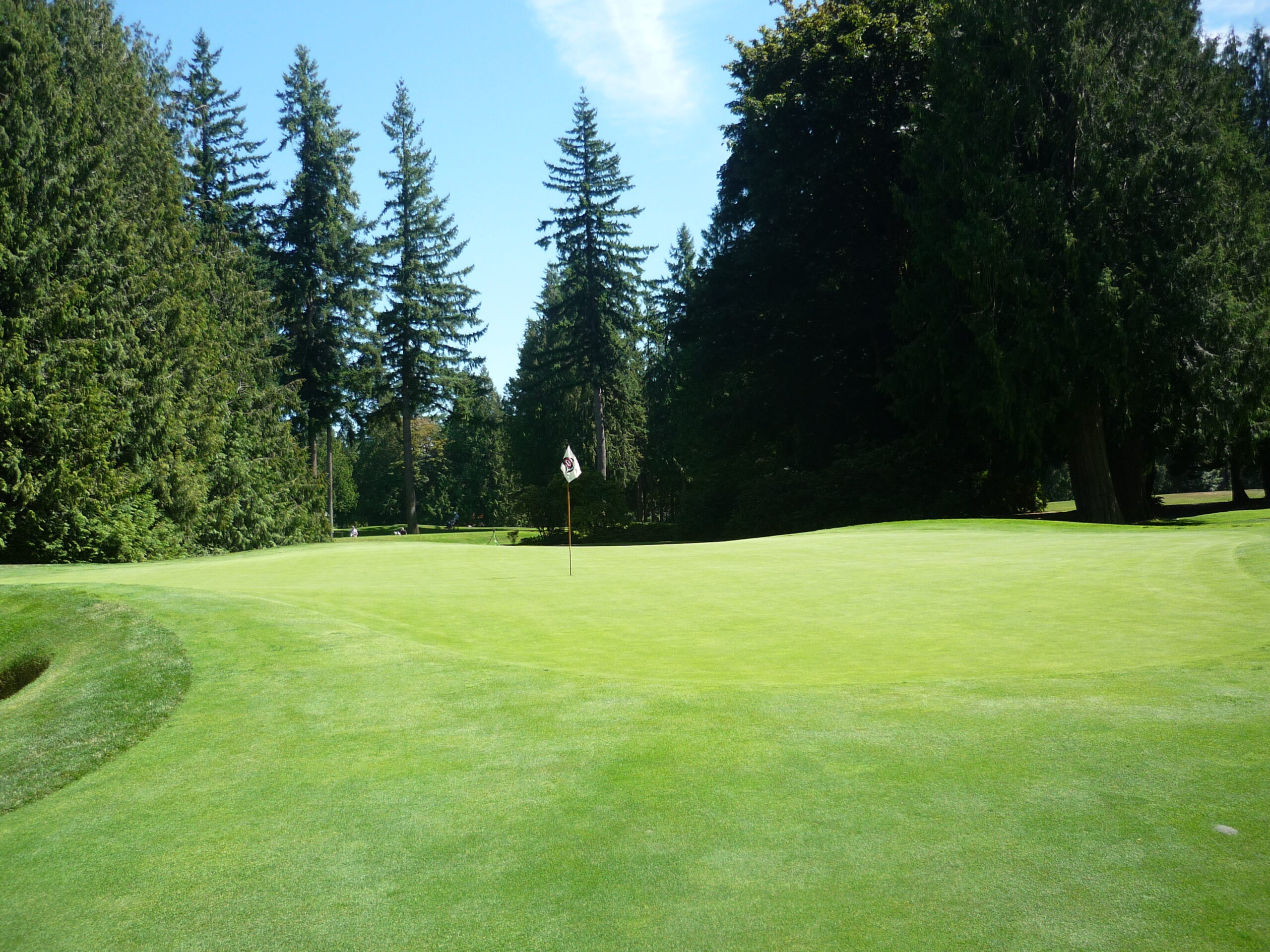
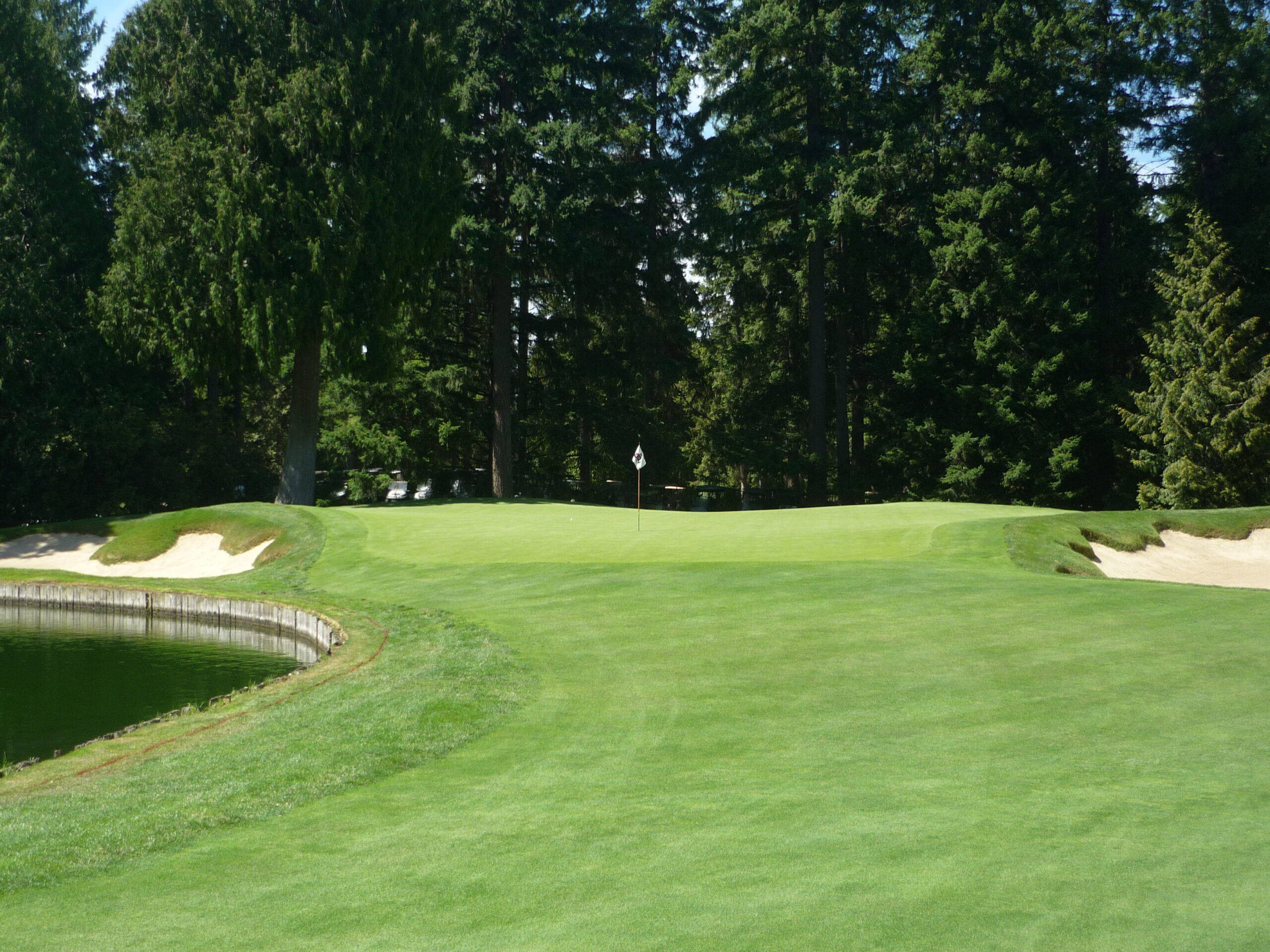
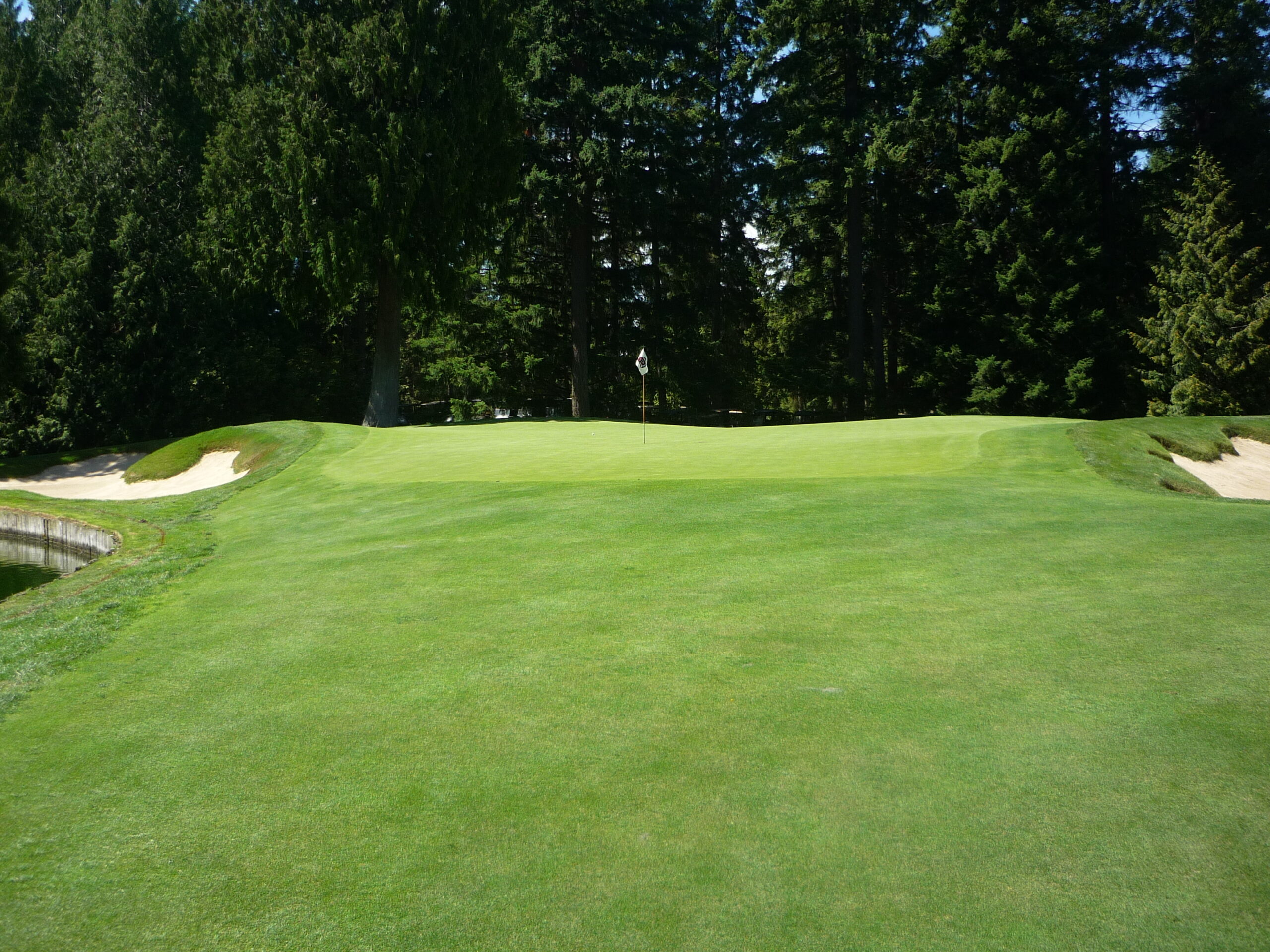
You’ve got a heavily pitched green from back to front here. There is also a smaller false front that will repel shots. Distance control is key here because long is no good.
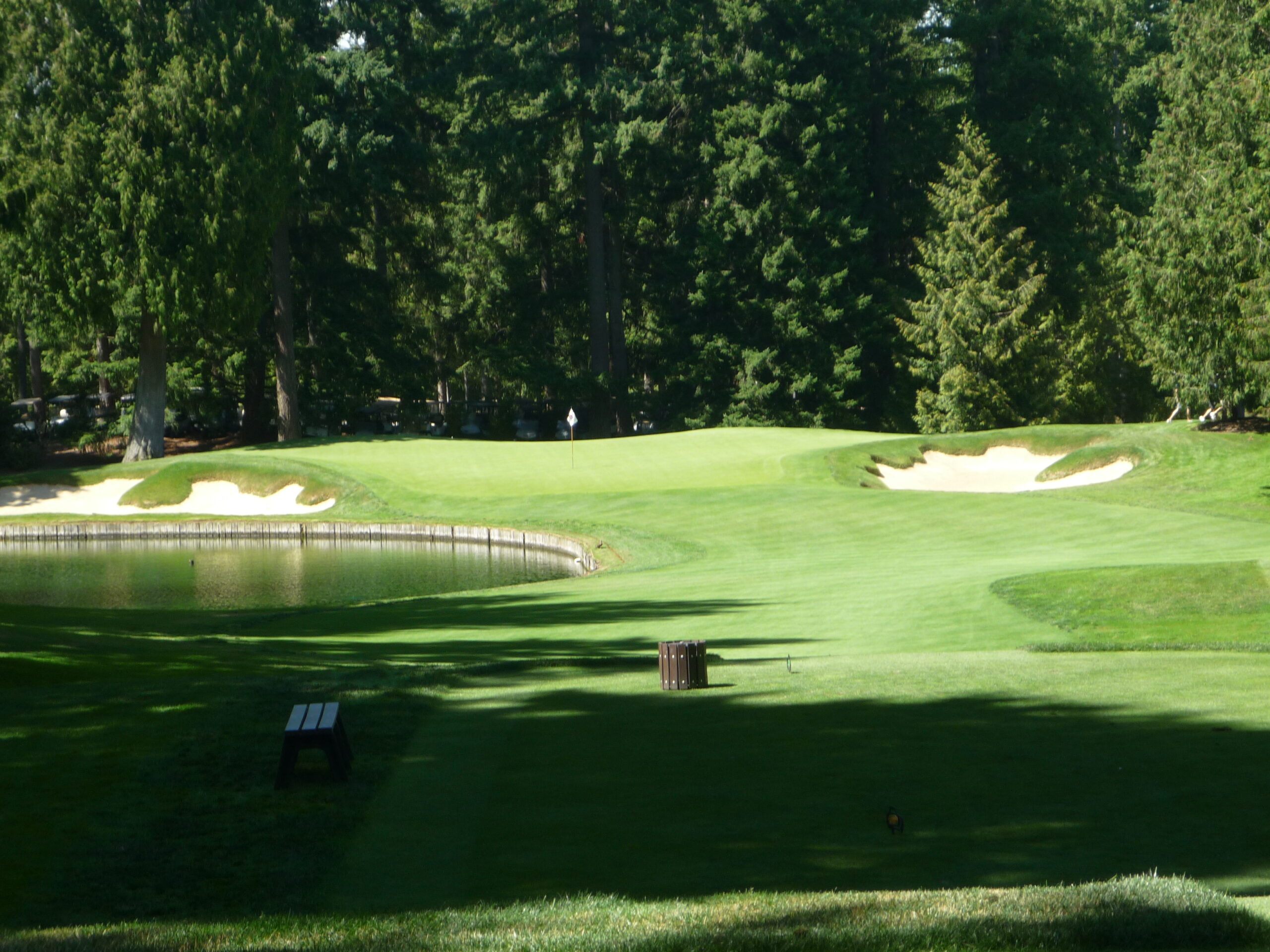
You can see the contouring of the green and the false front below.
Hole 19 – 371 yards – Par 4
The pictures on this side will be a little sparse since I was getting a tour and not actually playing them. I wanted to make sure I wasn’t taking up to much time or interfering with any other players.
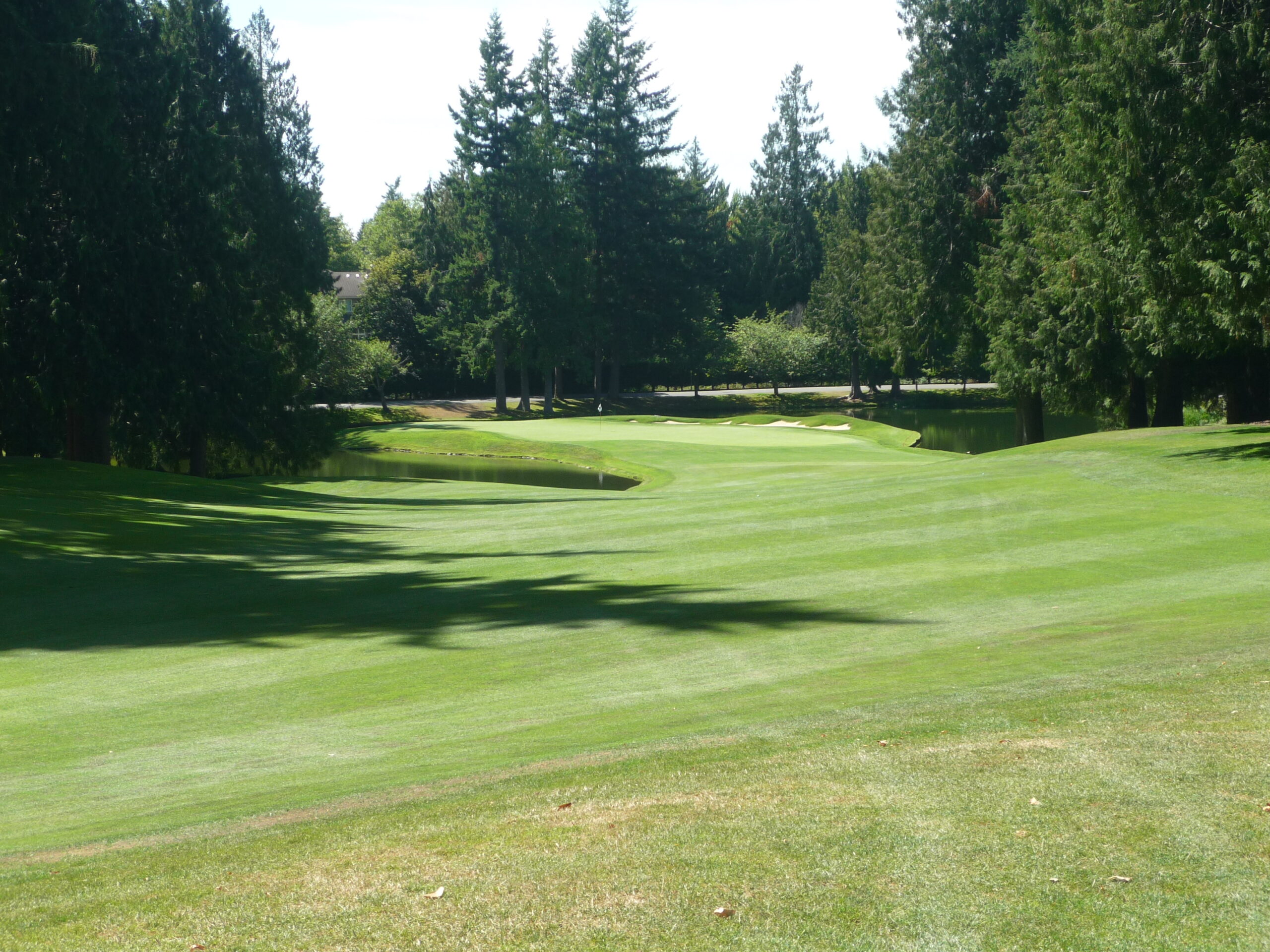
This hole bends left off the tee and opens up a bit. The lake surrounding all but the front portion of the green make this a tough approach shot if you are wayward.
Hole 20 – 503 yards – Par 5
This is a dogleg left that straightens out once you get past the tee shot. As narrow as we have seen the course play, this has got to be a great birdie opportunity.
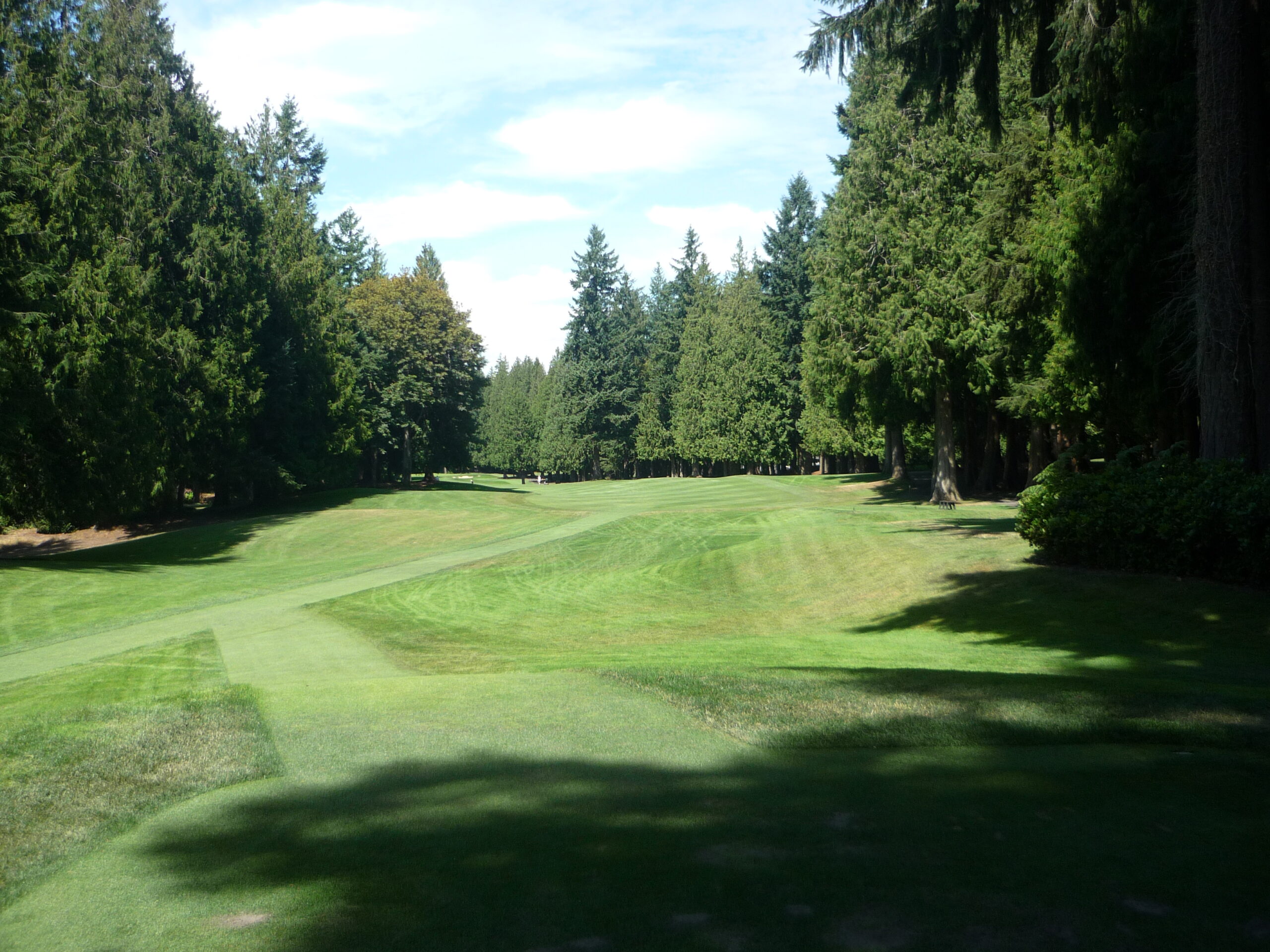
Hole 21 – 401 yards – Par 4
You don’t want any early curve on your tee shot here. Good drives are rewarded with a clear look at the green.
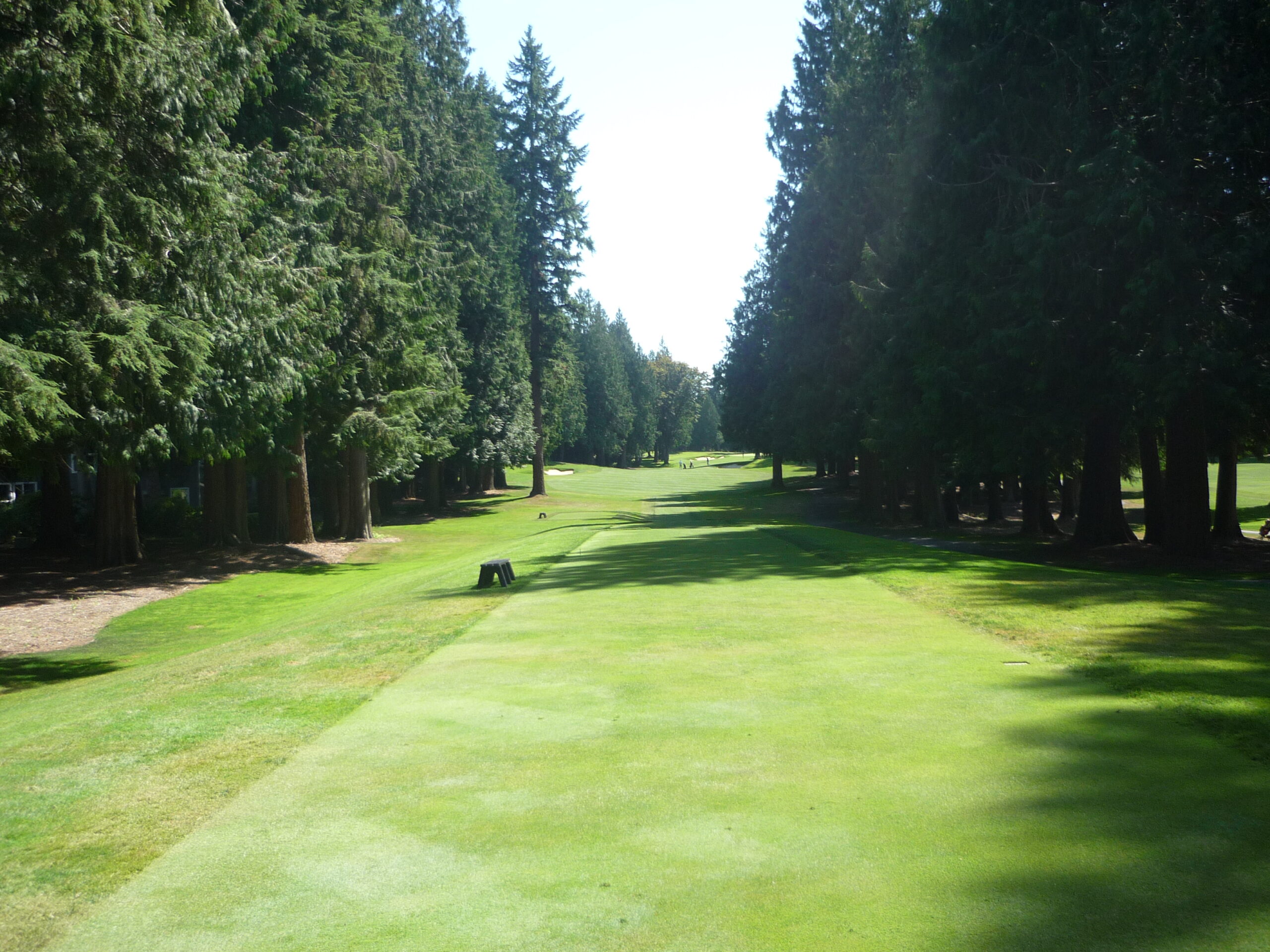
Hole 23 – 350 yards – Par 4
I missed a photo of the fourth hole on the North but we are back with the hard dogleg left fifth. Trees dot the sides of the fairway to enhance the difficulty of the approach shot, which says nothing of the two bunkers around the green.
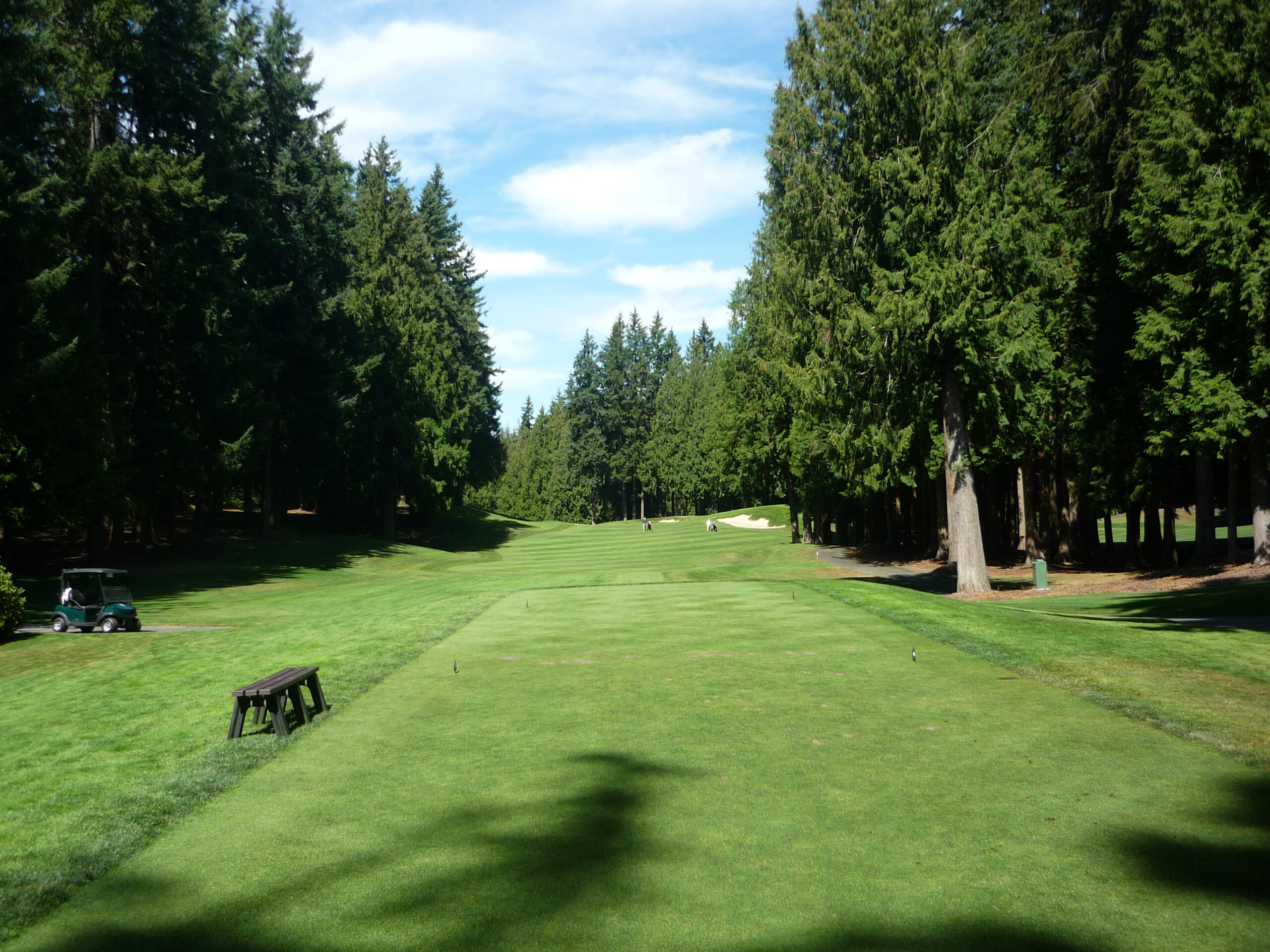
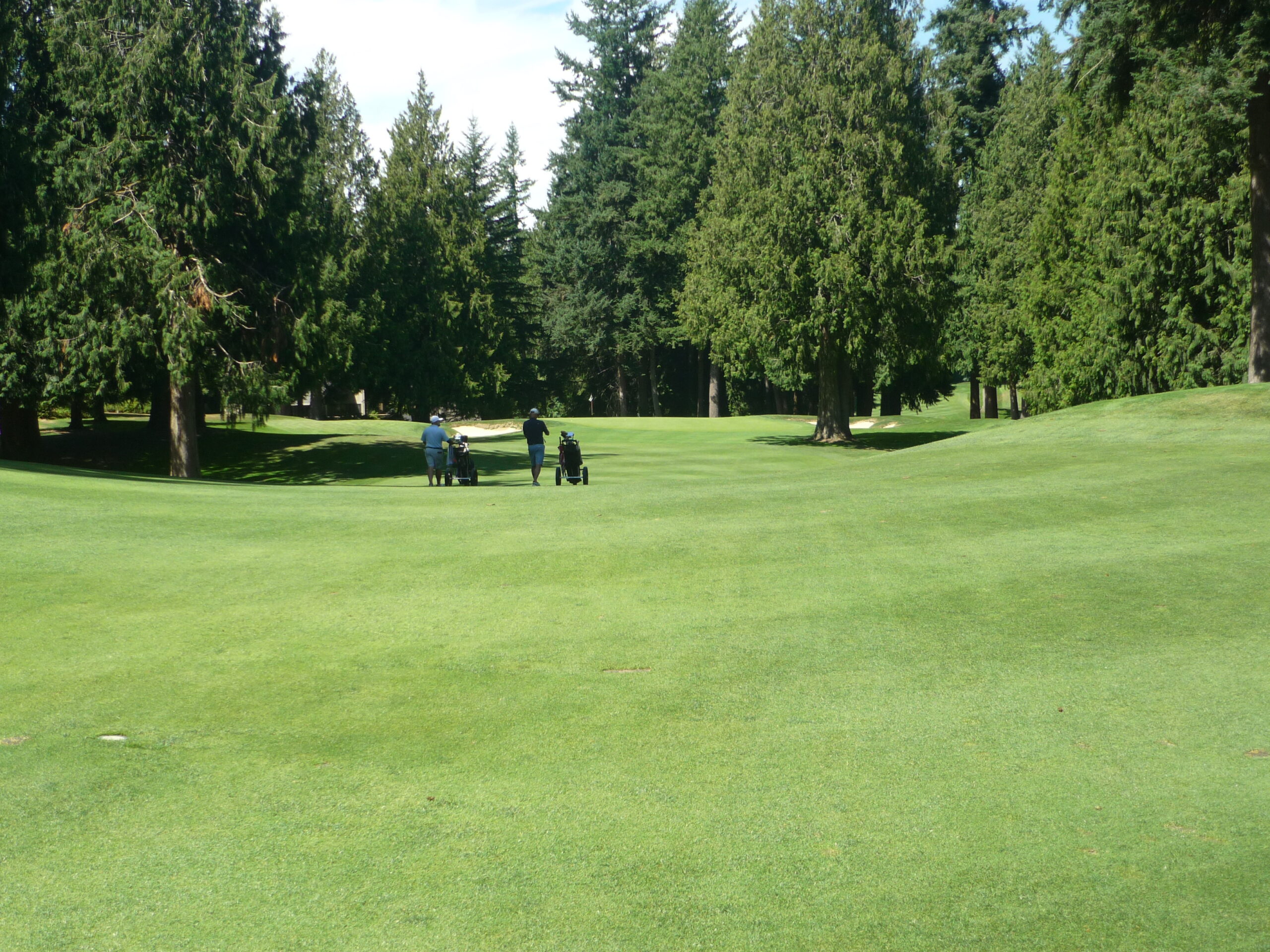
Hole 24 – 375 yards – Par 4
It looks like you can run out of room quickly down the left side here. If you hit the fairway, the approach plays to an elevated green that has a large hump in the middle of the back section.
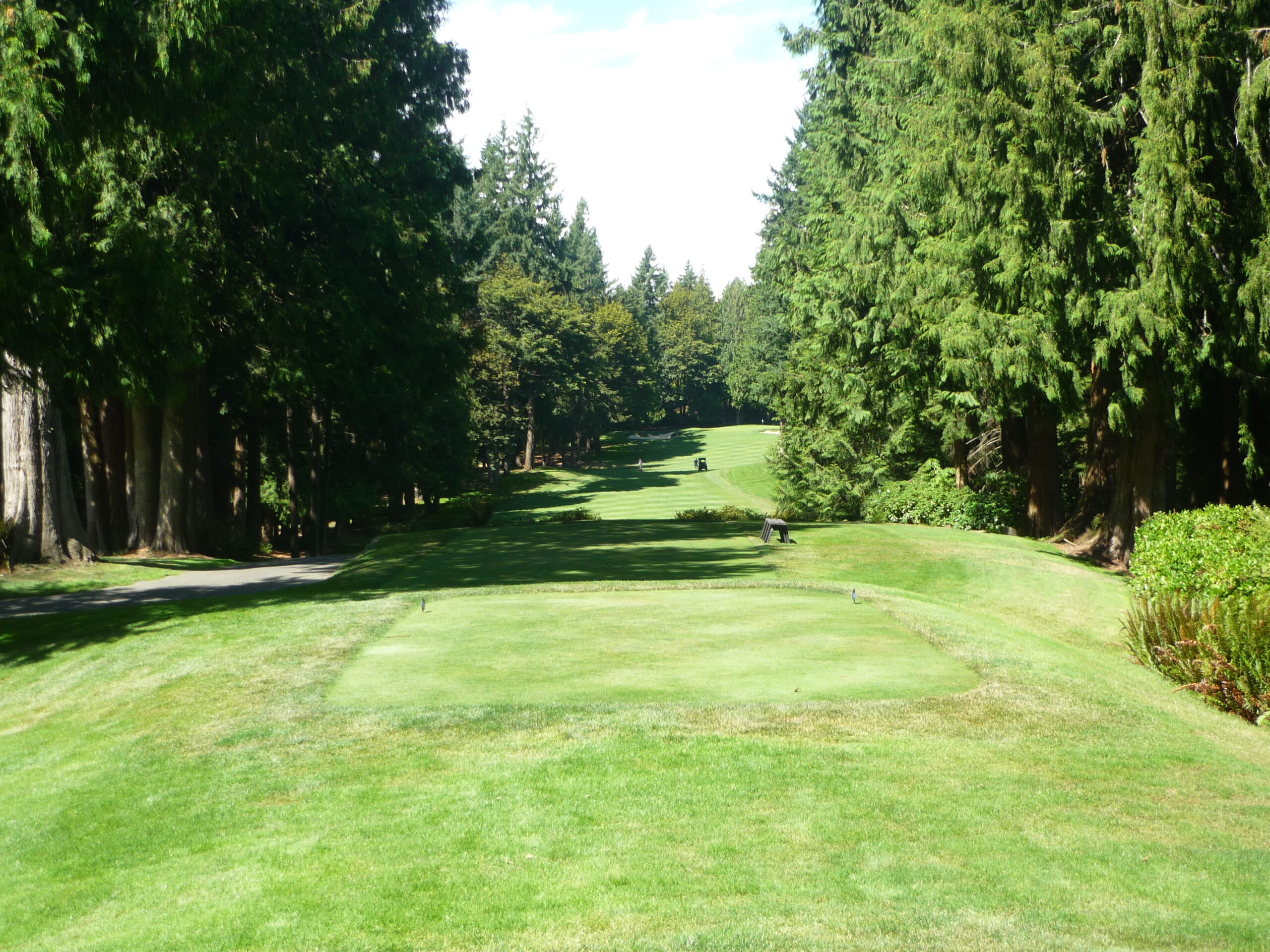
Hole 25 – 356 yards – Par 4
This hole features some serious fairway movement with a large dip. Long hitters must be careful with club selection and navigating the dip. I’d imagine the smart play is just to the top of it to have a clear look at the green.
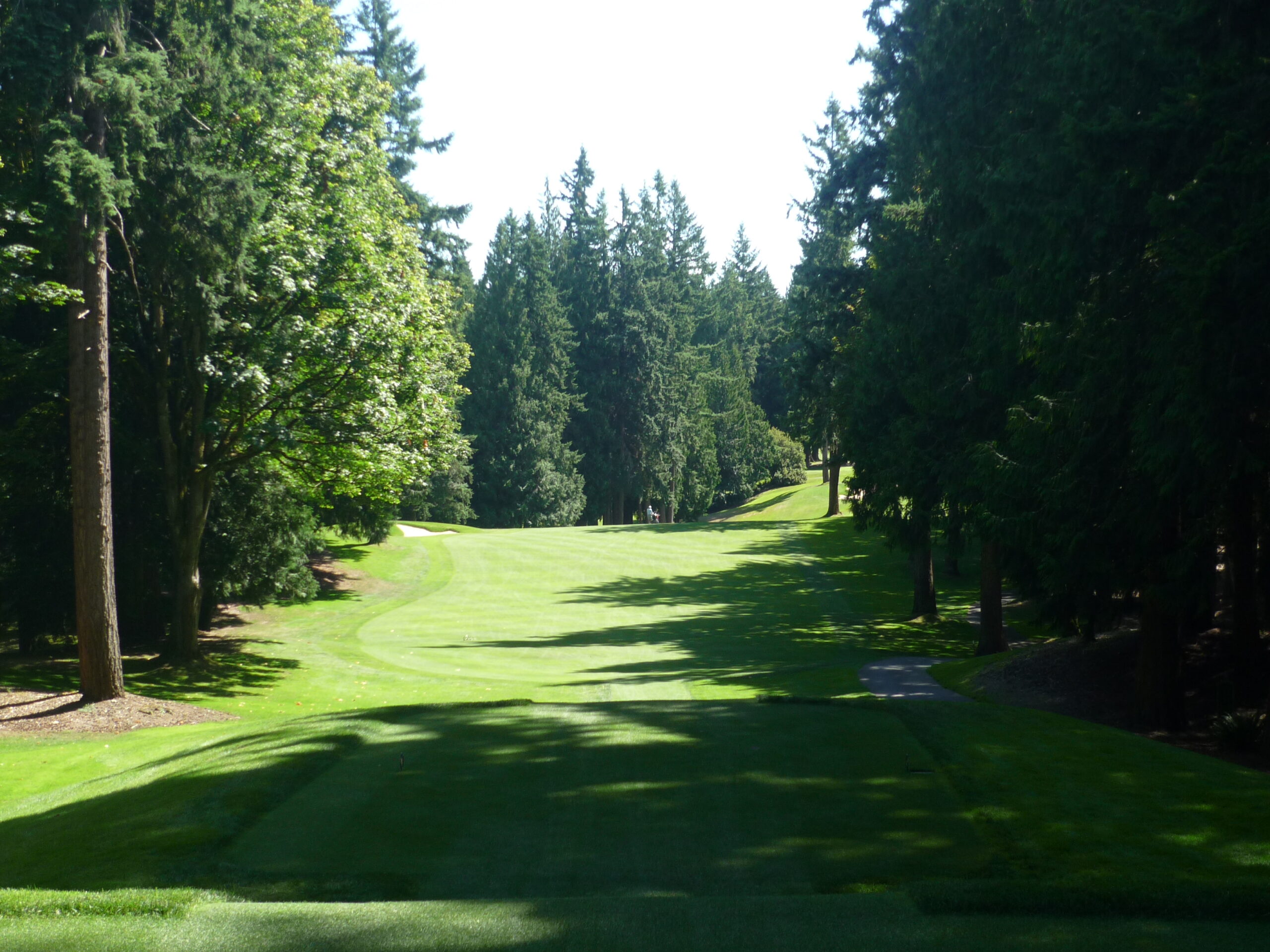
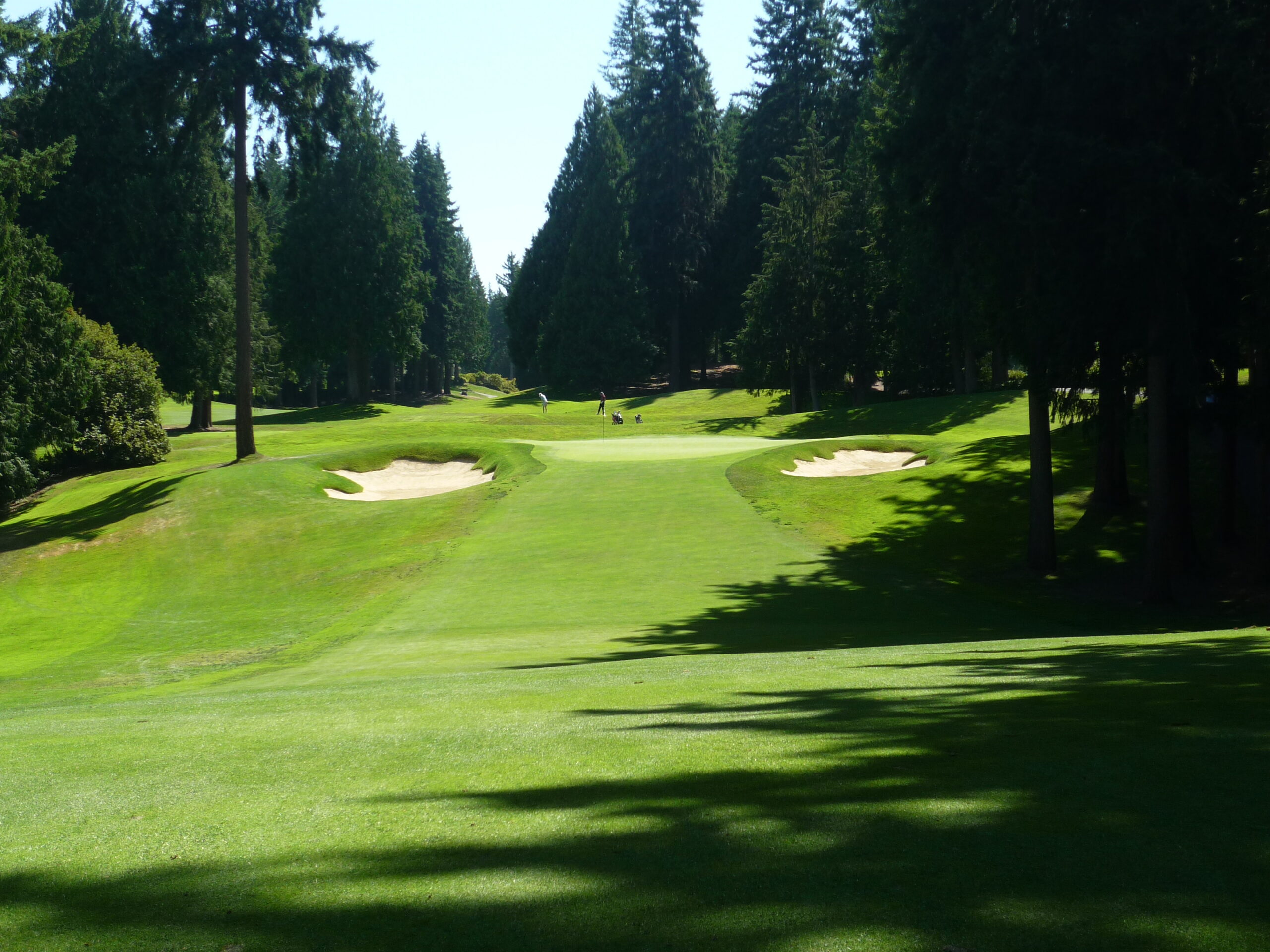
With the slope of the putting surface and the fairway in front of it, you do not want to come up short on this hole.
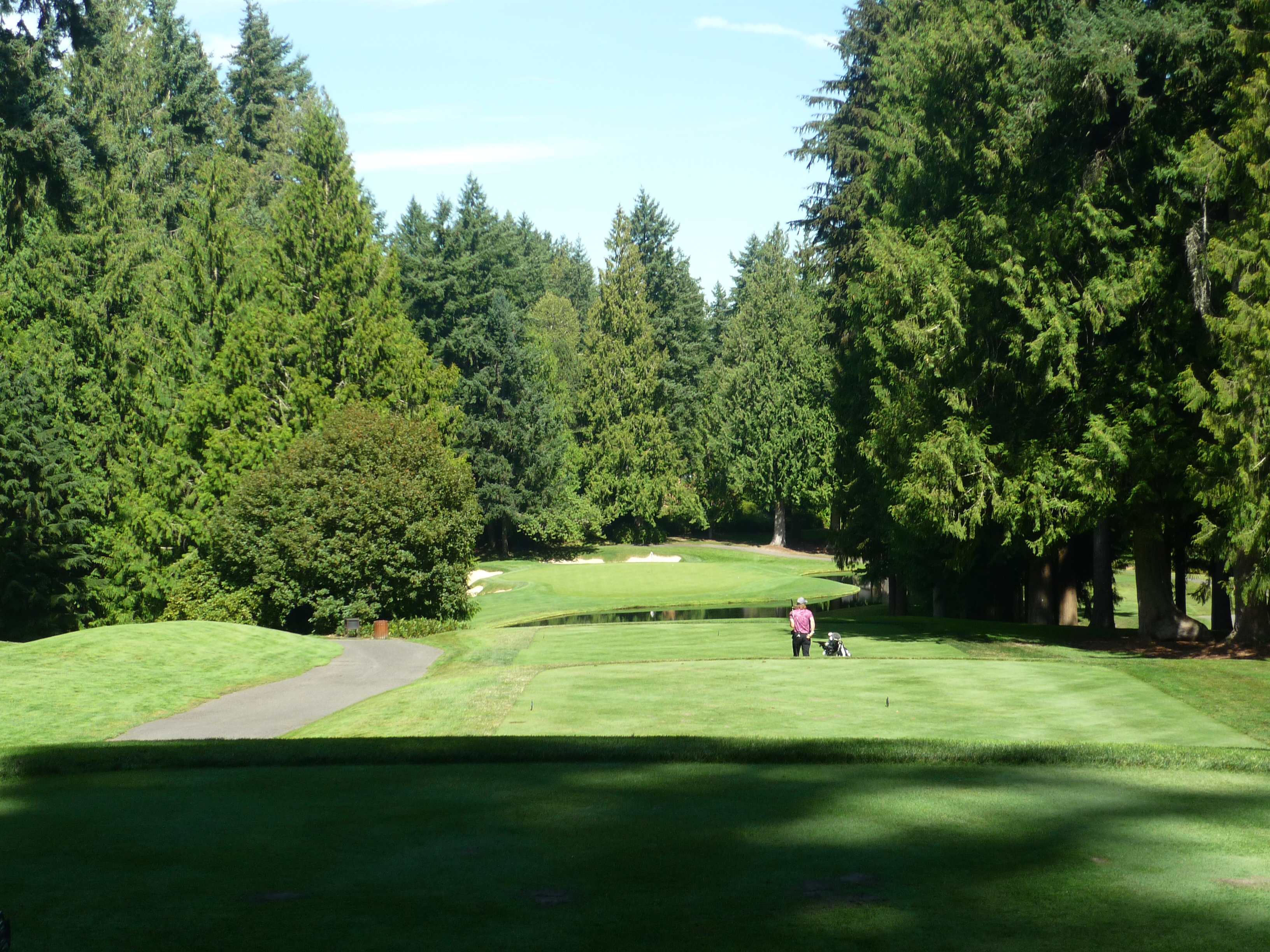
Hole 26 – 155 yards – Par 3
We’ve got a very elevated tee here that plays to a green with trouble short and bunkers long. Dialing in your distance is a must. I’m sure that front pins can be hair-raising if you are a high spin player.
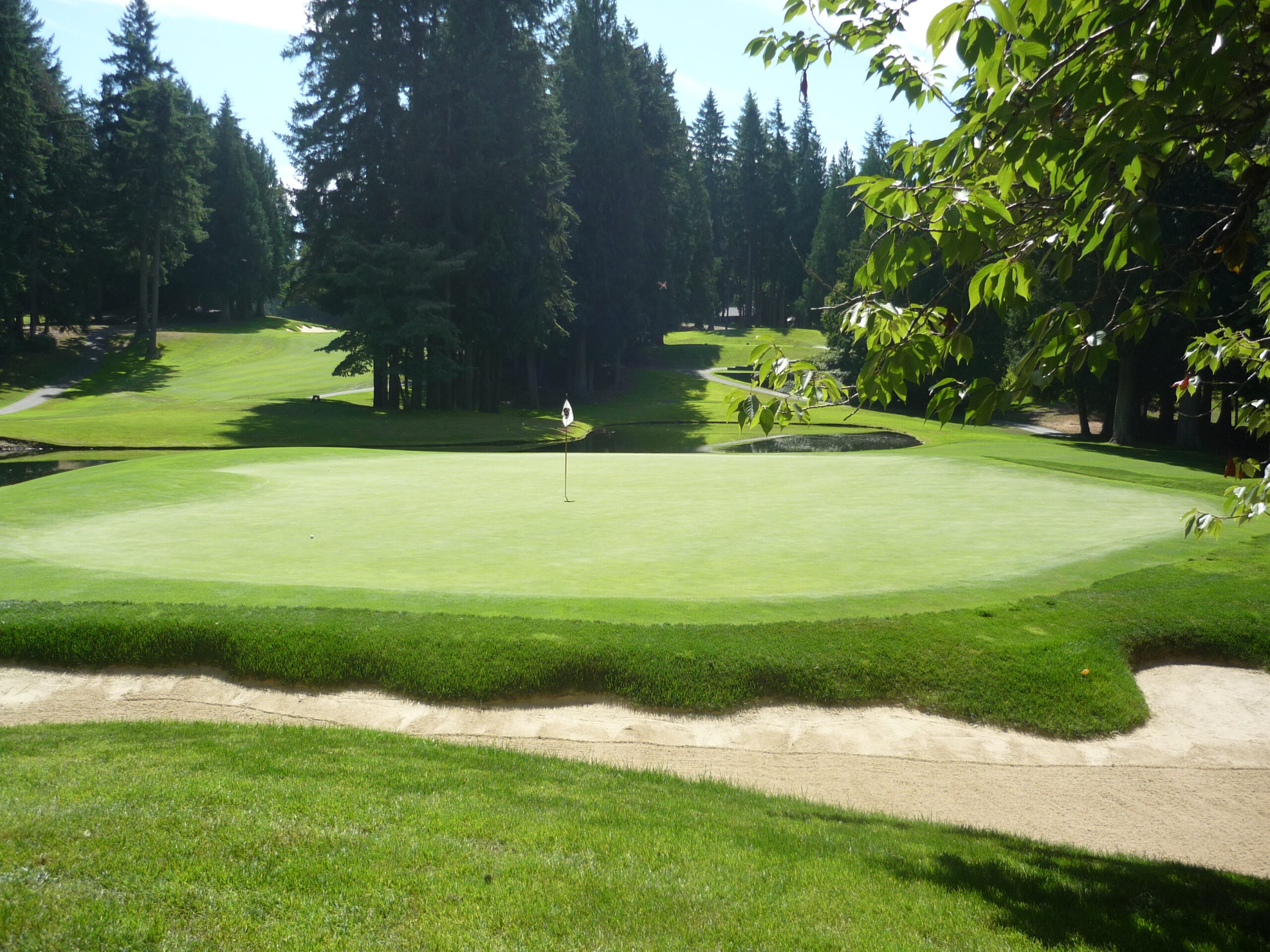
Hole 27 – 475 yards – Par 5
This is a dogleg left where it pays to keep your ball just inside the left bunker to shorten the hole.
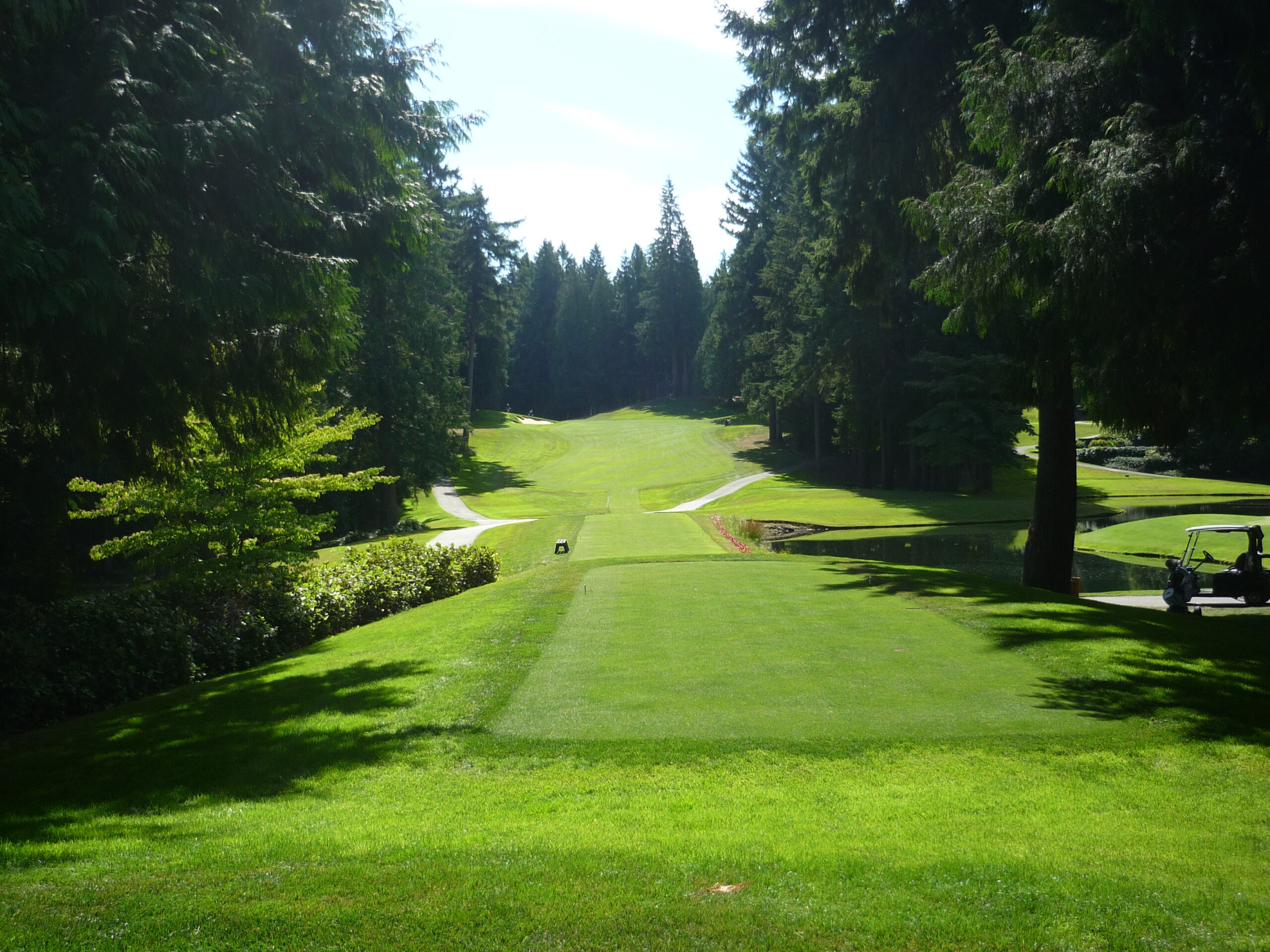
As you approach the green, the difficulty is turned up a notch with the tree short left. You either have to play a draw or be able to play it really high.
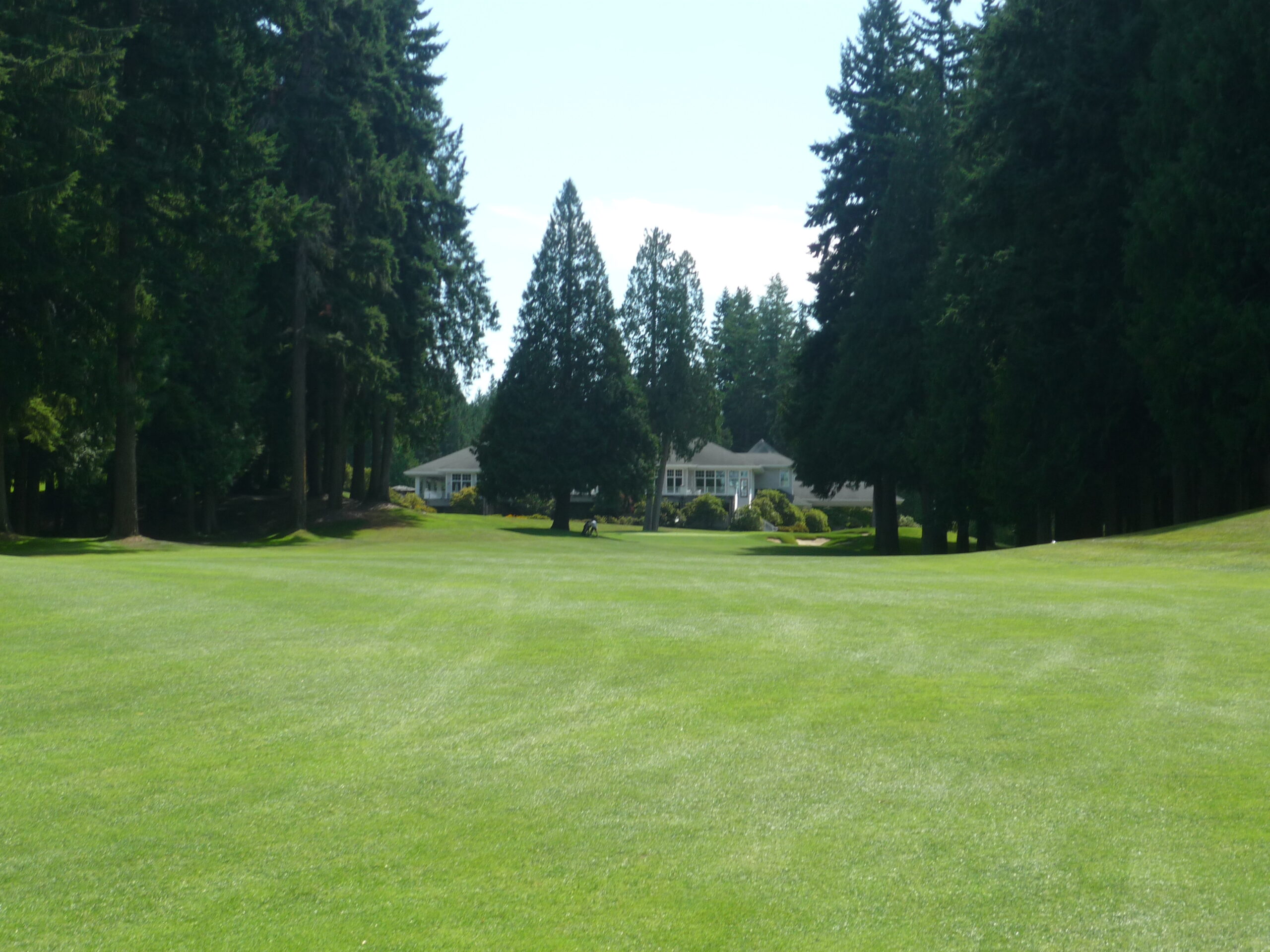
I’ve heard the nickname “Sahallway” for the layout at Sahalee due to the tree-lined fairways. It always seemed to come off as derogatory. While there is no denying that the course is tight, I didn’t find it hard to find wayward shots. You just had to commit to punching out and not trying the hero shot.
Sahalee was a delightful walk and plenty challenging without being unfair. If anything, I found the trees helped me focus on my lines. I wouldn’t want every course to look like this, just like I wouldn’t want everyone to be wide open. Variety is the spice of golf life for me.
As a final thought, there is something soothing about playing among the trees in this part of the country. I’m not sure I can really explain it but the serenity I felt at Sahalee and other treelined PNW courses is very noticeable.